Skip to content
Fence Staining & Sealing in Smithville, MO — Sealing Wood Against the Lake

Fence Staining & Sealing in Smithville, MO — Sealing Wood Against the Lake

By Smithville Lake the enemy is water as much as the sun. Higher lake-side humidity, wet low ground, and daily irrigation keep a bare fence damp, and damp wood grays, molds, and rots years early. RKC Wood Care Pros seals for that: a penetrating, water-shedding finish that makes the wood bead and run water off instead of drinking it in — sealed hardest at the ground line and end grain, coated on the tops and caps that catch rain, deeper on the waterfront and boat-gate wood. Mildew killed on the shaded faces, timed before Lake Season, every coat logged. 4.9 stars from 85 Google reviews. Call (913) 286-1091 for a free walk and quote.

★★★★★
4.9
from 85 reviews
Licensed
& Insured · KS + MO
400+
fences installed
A+ BBB Rated Kansas City Fence Contractor Water-Shedding Lake-Side Seals Sealed In-House, Timed Before Lake Season
View stain options in our catalog ↓

WHY SMITHVILLE HOMEOWNERS STAIN WITH RKC

A Coat That Sheds Water

Most of the metro stains against the sun. By Smithville Lake you stain against the water. Higher humidity, wet ground, and daily irrigation keep a bare fence damp — and damp wood grays, molds, and rots years early. So the whole point of a coat here is water-shedding: a penetrating finish that makes the wood bead and run water off instead of drinking it in. We seal hardest at the ground line and end grain, coat the tops and caps, and carry a deeper pass onto the waterfront wood — a finish that fades instead of peeling, every coat logged and timed before Lake Season.

1

Water beads instead of soaking in

The difference between a lakefront fence that lasts and one that rots is whether the wood sheds water or drinks it. We drive a penetrating finish into the grain so the whole run beads and runs water off — the lake humidity, the rain, the irrigation splash — instead of letting it soak in and gray, mold, and rot the wood from the surface down.
2

Sealed hardest at the ground line

A lakefront fence rots first at the bottom foot, where it meets wet low ground and wicks moisture up the end grain. So that's where we seal hardest — the bottom boards and end grain that drink the most, over a gravel-drained base where we've installed. Protect the ground line and you protect the part of the fence the lake attacks first.

3

The waterfront wood gets more

The boat-gate frames and the runs closest to the lake take the most direct wetting and the open-water sun at once, so they get the heaviest sealing pass — often a deeper-pigment coat that resists moisture and UV together. Sealing the waterfront wood harder is what keeps it aging with the rest of the fence instead of failing first.

4

A finish that fades, never peels

A film-forming sealer is the wrong call by the water — it traps the moisture it's meant to keep out and peels off the damp faces. We lay penetrating finishes that shed water while letting the wood breathe, so re-coating is a wash and a fresh coat, never a scrape. On a lakefront lot, a finish that breathes and beads is what actually lasts.

SMITHVILLE LOCAL CONDITIONS

Why Staining in Smithville Is About Water

Three local factors shape stain work in Smithville: the lake-side moisture that makes water the main enemy, the big hilly wooded lots that pool water and shade the wood, and a recreational-luxury market that seals its premium cedar to last. This is lake-life country, where the fence fights humidity, wet ground, and irrigation as much as sun. Same crew, same standard: map where the water sits, seal hardest at the ground line, weight the waterfront wood, and time the coat before Lake Season.

1

By the lake, water is the main enemy

Most of the metro's stain conversation is about the sun. In Smithville it's about water. Sitting by Smithville Lake means higher ambient humidity, wetter low-lying ground, and manicured lawns running daily irrigation — all of which keep a bare fence damp, and damp wood grays, grows mildew, and rots years earlier than an inland fence. That reframes the whole job: the coat's real work is to shed water, not only to add color and block UV. A penetrating finish makes the wood bead and run water off instead of drinking it in, and on a lakefront lot that difference is most of what decides how long the fence lasts.

2

Big, hilly, wooded lots pool water and shade the wood

Smithville's lots run large, hilly, and wooded — a third to three-quarters of an acre, stepped down the grade toward the water. That terrain concentrates the moisture problem: water runs and pools at the low ground line where the fence meets wet soil, and the tree canopy shades the north and east faces so they stay damp long after the sunny sides dry. So the sealing effort gets weighted — hardest at the ground line and the end grain that wick the most, and with a mildew-killing pass on the slow-drying shaded faces. We map where the water sits on your lot before we quote the coat.

3

A recreational-luxury market that seals to last

Smithville is lake-life country — high-grade cedar on homes worth matching, with owners who care about the fence looking right by the water and are willing to pay for a finish that actually holds. That's a good fit for a water-shedding seal, because the premium cedar here is worth protecting properly, and a rich, deep, well-sealed finish is part of the lake-home look. We treat the coat as an investment in the wood: a matched color that reads rich on a waterfront lot, sealed hardest where the moisture hits, and logged so the next coat keeps it that way. Timing it before Lake Season is part of the standard here.

The Smithville fences we've sealed and brought back run from the lake-home lots around Harborview, Greyhawke Ridge, and Otter Creek to the wooded hillside properties stepping down toward Smithville Lake along M-92 and US-169 — premium cedar privacy, boat-gate frames, and gray, mildew-streaked runs ready for a brighten. Each one gets its water sources mapped up front, the ground line and end grain sealed hardest, the waterfront wood weighted, and the posts probed where the wet ground has softened them. A fence another company built by the water earns the identical treatment — a water-shedding seal has never cared whose truck showed up on install day.

WHERE THE WATER COMES FROM

The Lake-Side Water Map — Every Source We Seal Against

A Smithville fence takes moisture from more directions than an inland one, and a good seal answers each source. This is the water map we work from on a lakefront lot. Here are the six moisture sources that hit a lake-side fence: what each one is, the threat it poses to bare wood, how a water-shedding seal handles it, and where we focus the effort. The through-line — the wood has to shed water, and the ground line and end grain, which drink the most, get sealed hardest.

Water source Threat to bare wood How the seal handles it Where we focus
Lake-side ambient humidity Near Smithville Lake the air holds more moisture, so bare wood stays damp longer and grays and molds faster than an inland fence A penetrating finish makes the wood shed that moisture instead of drinking it — water beads and runs off rather than soaking the grain The whole fence, but especially the lower, water-facing runs
The ground line and wet soil The bottom foot wicks water up from damp, low-lying ground — this is where a lakefront fence rots first We seal the end grain and the bottom boards hardest, the part that drinks the most, over a gravel-drained base where we've installed Priority number one on any lake-side run
Sprinkler and irrigation splash Manicured lake-home lawns run irrigation that hits the fence daily, soaking the same boards over and over A water-shedding coat sends that repeated splash off the board instead of letting it work into the grain and lift the finish Wherever heads throw onto the fence — we note them at the walk
Rain and snowmelt on the tops Post caps and the top edge of every board catch standing water that soaks straight into exposed end grain We coat the tops and caps deliberately, sealing the end grain that would otherwise wick water down into the board Caps, rail tops, and picket tops
Dock-side and boat-gate splash The waterfront wood — boat-gate posts, lower runs near the water — takes the most direct and constant wetting These get the heaviest sealing pass, often a deeper-pigment coat that resists moisture and UV together by the open water Boat-gate frames and the runs closest to the lake
Shaded, slow-drying faces Wooded lakeside lots shade the north and east faces, which stay damp long after the sunny sides dry — mildew's favorite spot We kill mildew, brighten, and coat these with a finish that sheds water so they dry between wettings instead of staying green The shaded lower faces under the tree canopy

The line that runs down the map: by the lake, the fence has to shed water from every direction, and the ground line and end grain — the parts that drink the most — decide how long it lasts. Want us to map where the water hits your lot? A free staining walk does exactly that, or start with a new Smithville wood fence from the same crew that will set it over gravel drainage and seal that first coat.

STAIN SERVICES

Seals, Re-Stains & Restoration — Every Smithville Scenario

The scope your Smithville fence lands in comes straight out of the water map — a water-shedding seal on a lakefront run, a rich re-stain on premium lake-home cedar, a cure-timed first coat sealed before Lake Season, or a brighten-and-restore on a gray, mildew-streaked run. Below are the four we run across Smithville, what each one suits, and honest per-foot numbers. Colors are yours to choose; what stays fixed is the sequence — map the water, kill the mildew, meter for dry wood, seal hardest where the moisture hits, all by our own crew.

Waterproofing Seal Coat by RKC Wood Care Pros in Smithville, MO

Waterproofing Seal Coat

The Smithville specialty · made to shed lake moisture

By Smithville Lake the enemy is water as much as the sun. The higher lake-side humidity, the wet low ground, and the daily irrigation splash keep a bare fence damp, and damp wood grays, molds, and rots years early. So the whole point of a coat here is water-shedding: a penetrating finish that makes the wood bead and run water off instead of drinking it in. We seal the ground line and the end grain hardest, coat the tops and caps that catch rain, and carry the heaviest sealing pass onto the runs closest to the water. A properly sealed lakefront cedar fence sheds what an unsealed one soaks up.

  • Price: $5–10 / LF · typically $750–1,500 per 150 LF
  • Typical use: Lake-side cedar runs, waterfront and boat-gate wood, low-lying and irrigated lots
Luxury Cedar Re-Stain by RKC Wood Care Pros in Smithville, MO

Luxury Cedar Re-Stain

The 2-year cycle on premium lake-home cedar

Smithville is a recreational-luxury market — high-grade cedar on homes worth matching, where owners are willing to pay for a finish that actually holds. On its cycle, premium lake-home cedar wants a re-coat about every two years, and by the water it earns the shorter end of that range because the moisture works harder on the finish. On the day it's a soft wash to lift the lake-side mildew, a meter check, then a rich matched color driven into both faces — deeper where the water and sun hit hardest. We log your product and color so the re-coat matches the run board for board.

  • Price: $5–10 / LF · typically $750–1,500 per 150 LF
  • Typical use: Premium cedar privacy and dog-ear on lake-home lots, rich matched re-stains
New-Cedar First Coat by RKC Wood Care Pros in Smithville, MO

New-Cedar First Coat

Timed to the cure · sealed before Lake Season

New cedar on a lake-home lot needs sealing more than most — but not on day one. Fresh cedar needs about a month for its moisture to fall so a penetrating finish keys into the grain instead of beading off. We time that first coat to the cure and aim to get it on before Lake Season, so the fence heads into the wet, humid summer already shedding water rather than soaking it up bare. On a waterfront lot that first seal is the difference between a fence that ages slowly and one that grays its first summer. Many owners fold this coat into the install.

  • Price: $3–6 / LF · typically $450–900 per 150 LF
  • Typical use: Fresh cedar on new lake-home builds, the opening coat after any RKC install, sealed ahead of summer
Gray-Fence Restoration by RKC Wood Care Pros in Smithville, MO

Gray-Fence Restoration

Bringing a lake-weathered Smithville run back

A lake-side cedar fence left unsealed goes gray and mildew-streaked fast — the moisture does it quicker here than inland. But that gray is a thin weathered skin over sound wood, not a spent fence, especially on the premium cedar Smithville favors. We strip any failed finish, kill the mildew, brighten to one tone with an oxalic treatment, wash and hard-dry, then lay a water-shedding coat sealed hardest at the ground line. Because the wet ground can soften a post base, we probe the posts and the bottom boards first — stain never goes over soft, rotting fiber.

  • Price: $6–12 / LF · typically $900–1,800 per 150 LF
  • Typical use: Gray, mildew-streaked lake-side cedar, homes just changed hands, fences never sealed
Water-shedding cedar fence seal pricing — Smithville, MO — RKC Wood Care Pros

SMITHVILLE STAIN PRICING

What Fence Staining Costs in Smithville

What a Smithville job costs rides on the wood and how hard the water works it — a routine luxury re-stain on sound cedar is one number, a lake-weathered run that needs stripping, mildew kill, and a wet-ground post check runs more. Each quote folds in the water map, the wash and mildew kill, the brighten where needed, the metered dry window, the water-shedding penetrating family sealed hardest at the ground line, the spray-and-back-brush pass by our own two-person crew, and a written next date. The three setups we price most often for Smithville homes are below.

Waterproofing Seal Coat

$5–10 / LF

water-shedding penetrating seal

The Smithville lakefront standard — sealed hardest at the ground line and end grain, tops and caps coated, deeper pass on the water-facing runs. Most 150 LF lake-side cedar runs land at $750–1,500.

Luxury Cedar Re-Stain

$5–10 / LF

wash + rich matched stain

The 2-year coat on premium lake-home cedar — soft wash, mildew lift, meter check, a rich matched color into both faces, next date in writing. Most 150 LF Smithville cedar runs settle near $750–1,500.

Gray-Fence Restoration

$6–12 / LF

strip · brighten · seal

Failed finish stripped, mildew killed, brightened to one tone, washes, a wet-ground post check, then a water-shedding coat. A lake-weathered 150 LF run is usually $900–1,800.

A restoration number comes only after an on-site look at how far the lake moisture has taken the finish and whether the wet ground has softened any post base or bottom board — that check is what stops you paying restoration rates on a fence that only wanted a routine seal, or coating over rot. Every Smithville estimate is free, written, and itemized — call (913) 286-1091 or set up a walk. While the crew's on site they can flag any Smithville fence repair — a wet-ground-rotted post or bottom board — that should be handled before a seal protects the run — one trip, same hands.

OUR STAIN PROCESS

How a Smithville Stain Job Comes Together

Four steps from the phone call to the final walk. Most Smithville stain jobs span 2 to 4 days — and mapping the water, done first, is what the whole seal is built around. The coat itself is usually a single day on site for a standard run. The rest of the clock is the water map, the mildew-kill and brighten cycle, and the metered dry window the lake humidity complicates. Here's what each step looks like on a Smithville fence.

1

Walk it and map where the water sits

Step one on a Smithville fence is a moisture map, not just a measurement. Josh or a lead measures the footage, identifies the wood, takes a moisture reading, and walks the lot for where the water works: the low ground line, the irrigation heads that throw onto the fence, the shaded faces under the canopy, the runs closest to the lake. On any older fence we probe the post bases and bottom boards the wet ground tends to soften. That map is what the sealing plan is built around, because on a lakefront lot the coat's real job is water-shedding. The estimate's free, itemized, and sampled on a hidden board.

2

Wash, kill the mildew, and meter dry

By the lake this step matters more than anywhere. A run due on schedule gets a soft wash and a mildew-kill, because the humidity grows more of it here and stain over living green growth flakes in a season. A weathered run takes an oxalic brightener to one tone; any failed film gets stripped. Then the meter goes on the wood — and this is the catch on a lakefront lot: the higher humidity and shaded faces mean a board can hold moisture inside while the surface reads dry. We wait for a true dry reading through the board, because a water-shedding seal laid over damp wood traps the moisture it's meant to keep out.

3

Seal it for water, hardest where it hits

Surface clean and truly dry, we lay a penetrating, water-shedding finish the way a lakefront fence needs it: sprayed and back-brushed into both faces, then sealed hardest where the moisture works — the ground line and end grain that wick the most, the tops and caps that catch rain, and the runs closest to the water. On the waterfront and boat-gate wood we carry a deeper pass that resists moisture and UV together. Back-brushing drives the seal into the grain so it beads water rather than sitting on top, which is exactly what turns a bare, soaking board into one that sheds the lake damp.

4

Walk it together, then log the schedule

Last is your eyes alongside ours — a full pass checking that the ground line, the caps, the shaded faces, and the water-facing runs are all sealed, any thin spot touched in before we sign off. Then the finish lands on your file: the date, the wood, the product, the exact color, the footage, and when the next coat is due — about two years, favoring the shorter end by the water. That record is why your re-coat matches and why the reminder comes from us, timed before Lake Season. On a lakefront lot where moisture never lets up, staying on schedule is what keeps the seal ahead of the water.

RECENT SMITHVILLE STAIN JOBS

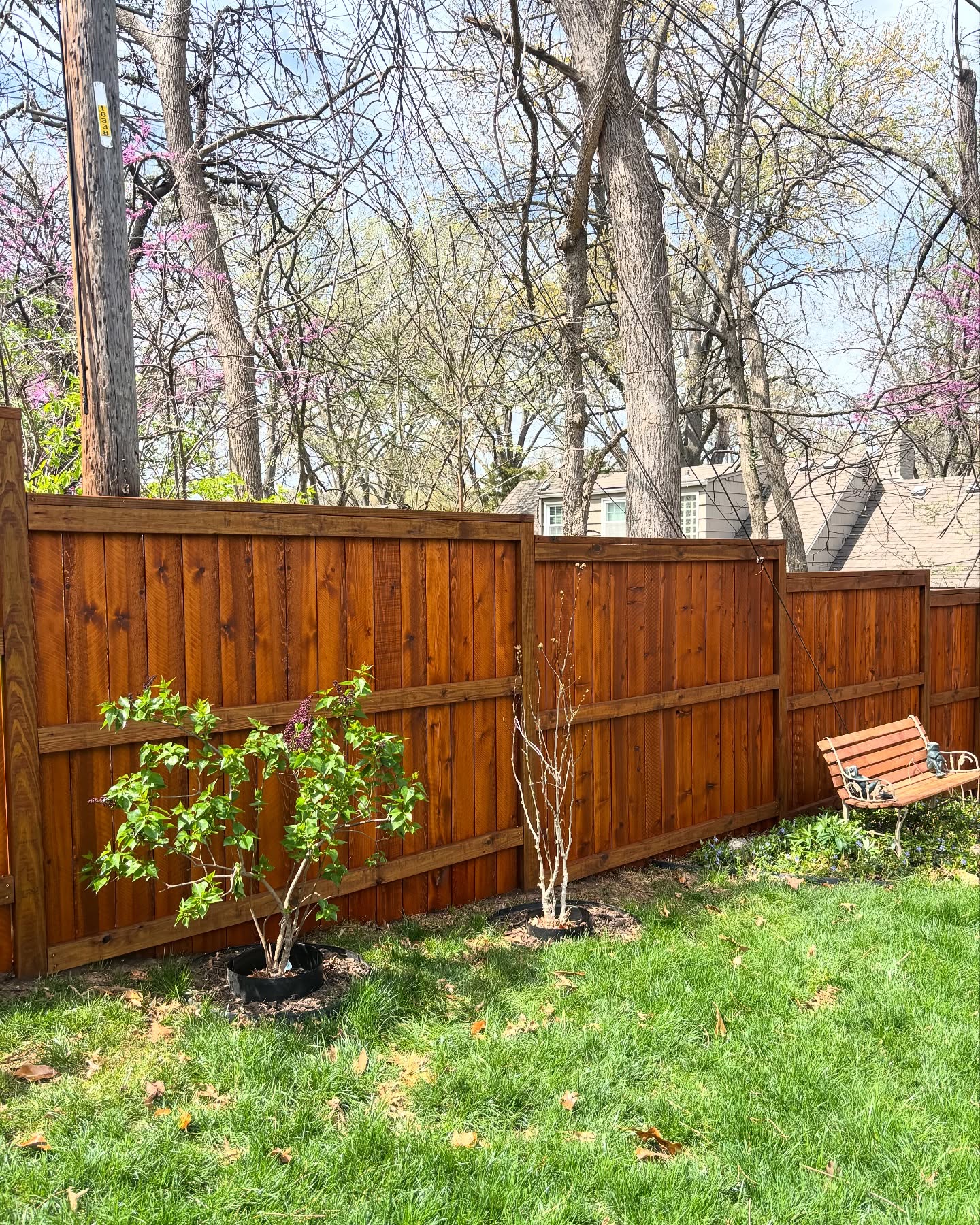
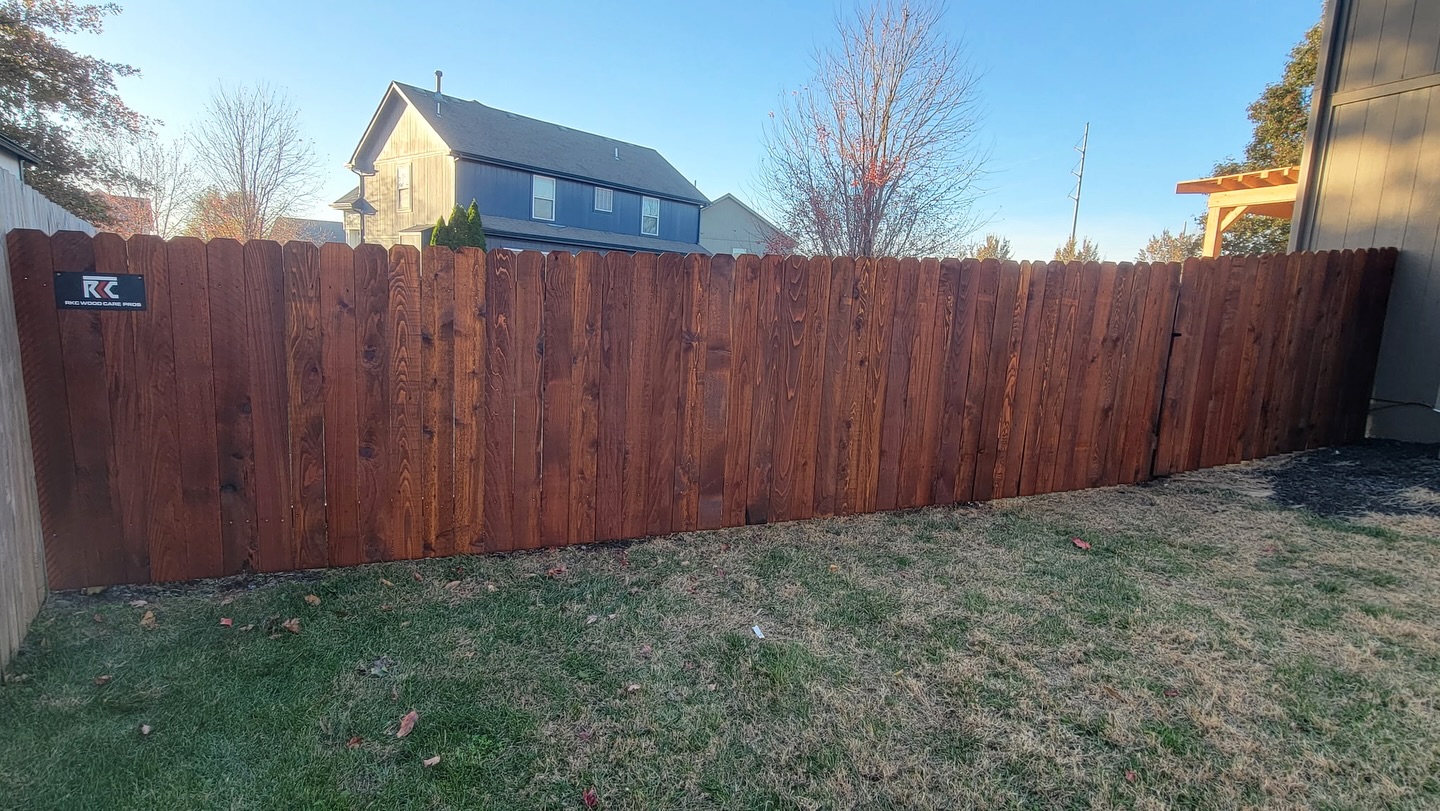
Deep walnut water-shedding seal on a cedar fence in Smithville, MO by RKC Wood Care Pros
Waterproofing Seal · Smithville
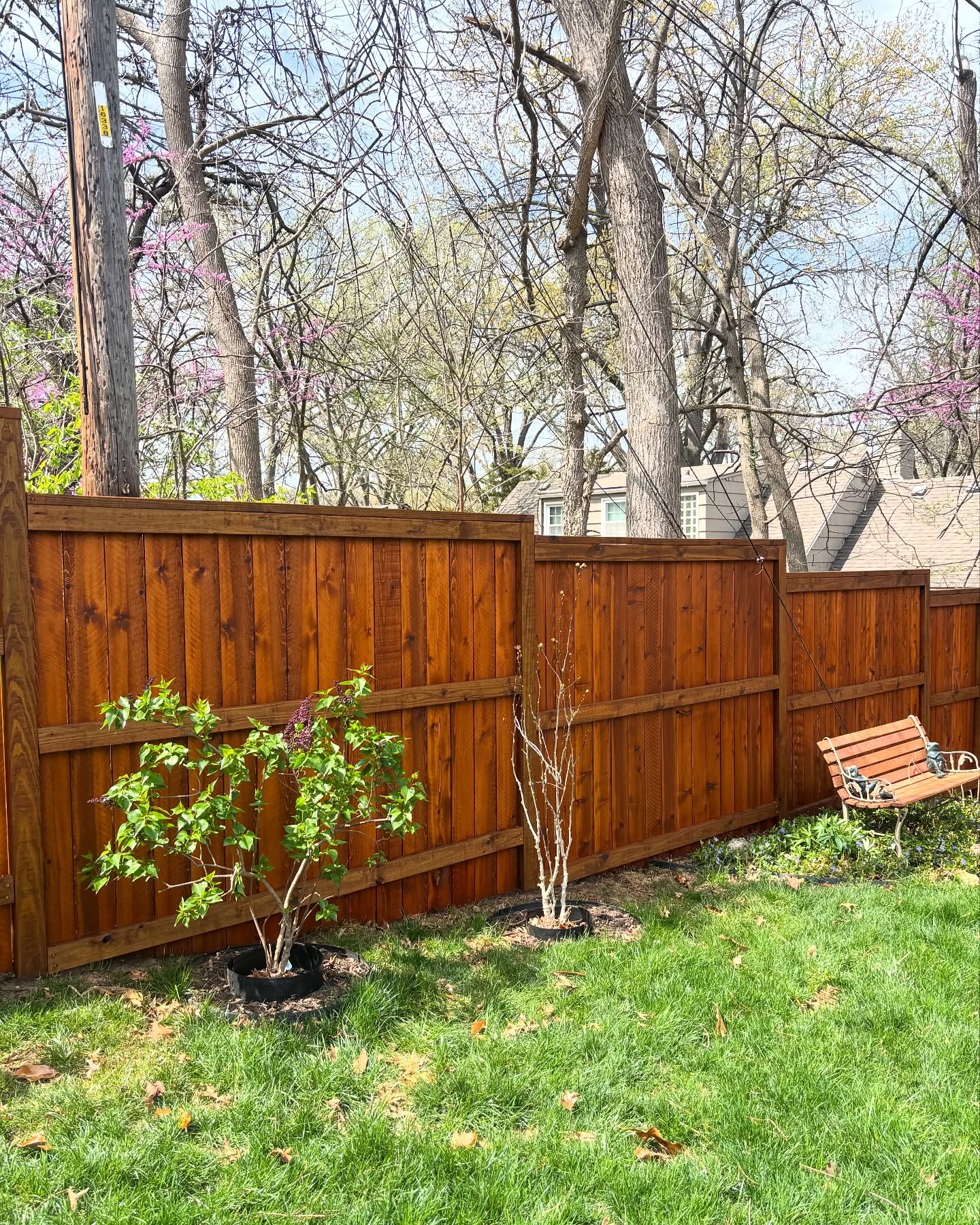
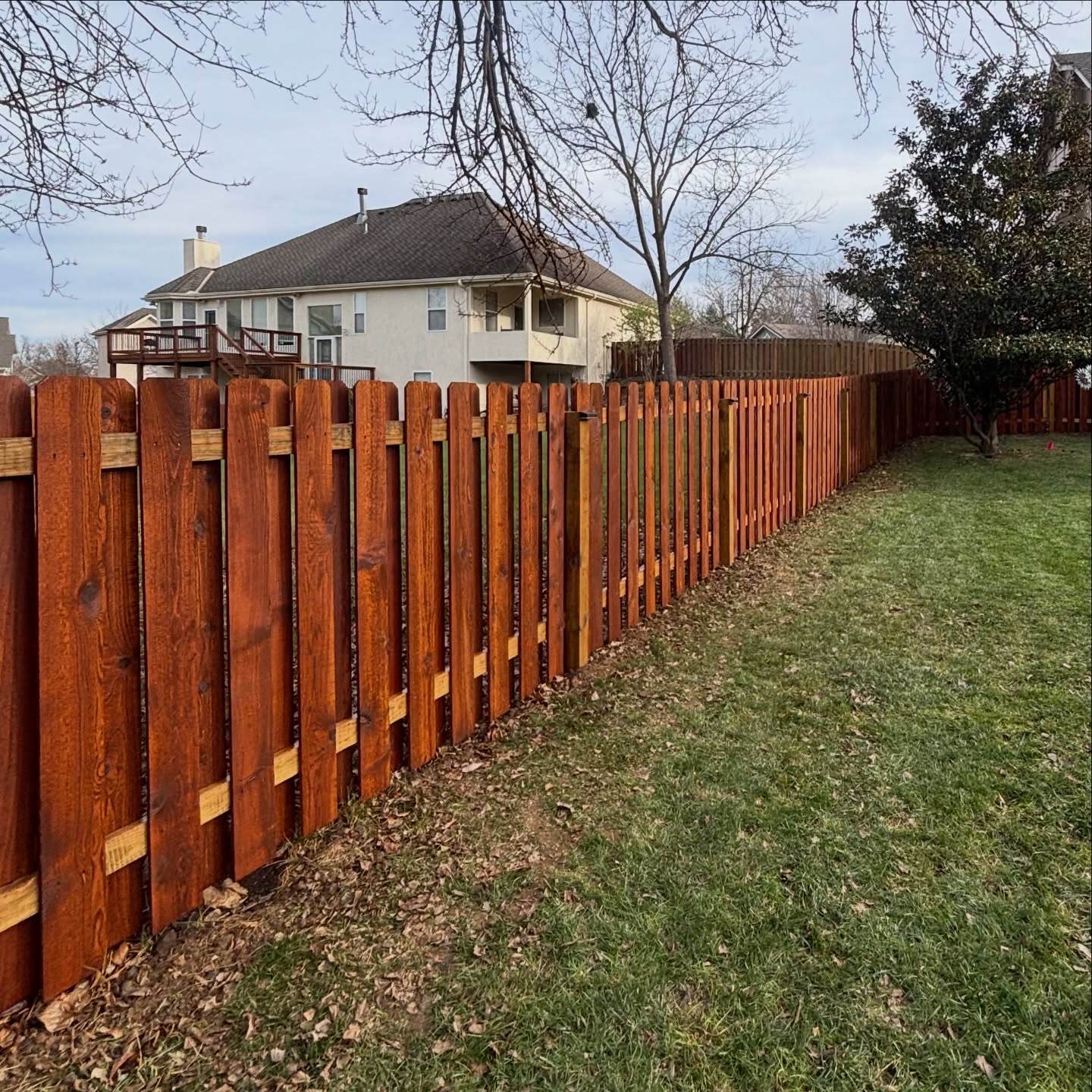
Rich mahogany stain on a dog-ear cedar fence in Smithville, MO
Luxury Re-Stain · Smithville
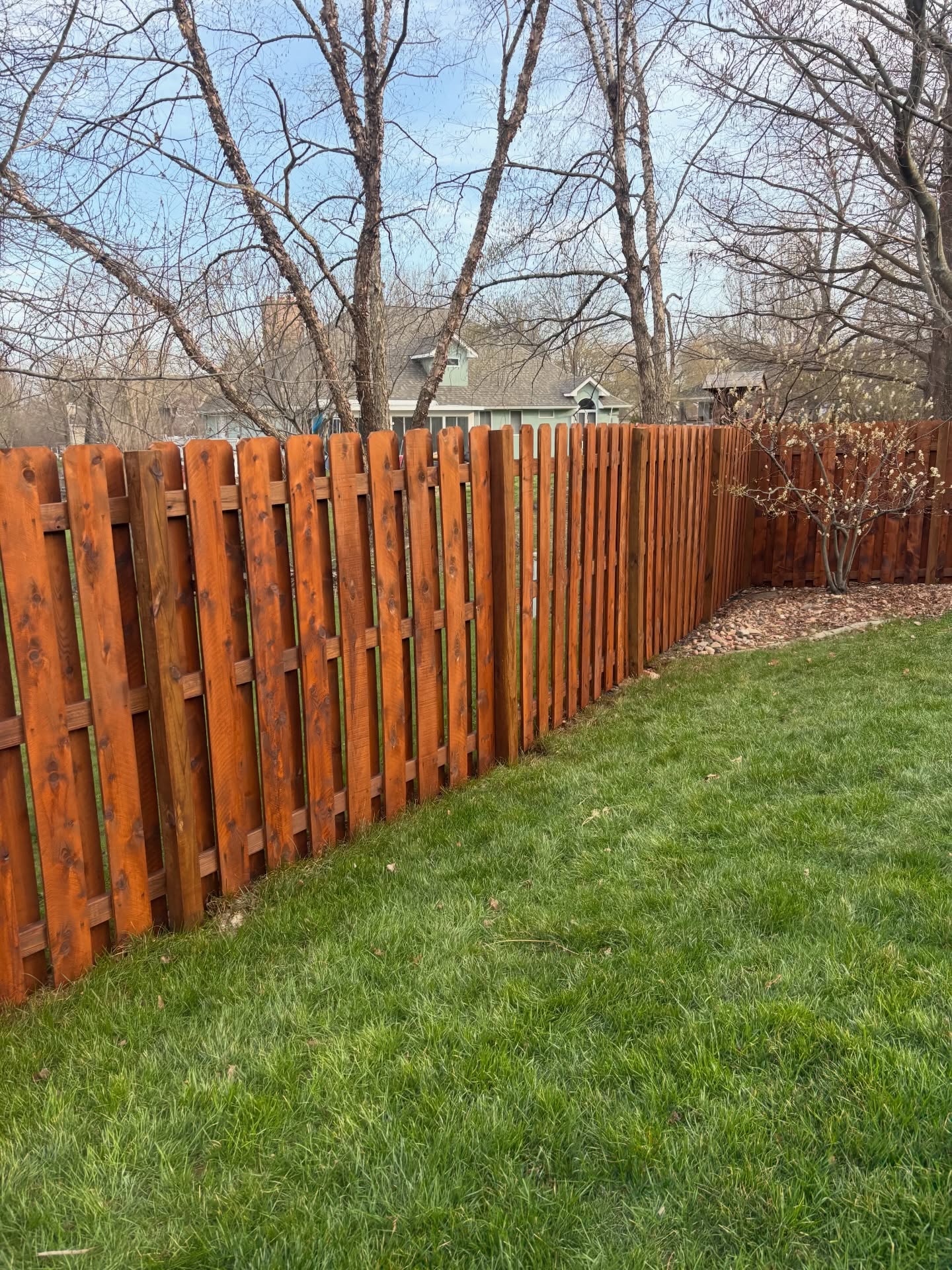
Honey stain on new cedar in Smithville, MO
New-Cedar Coat · Smithville
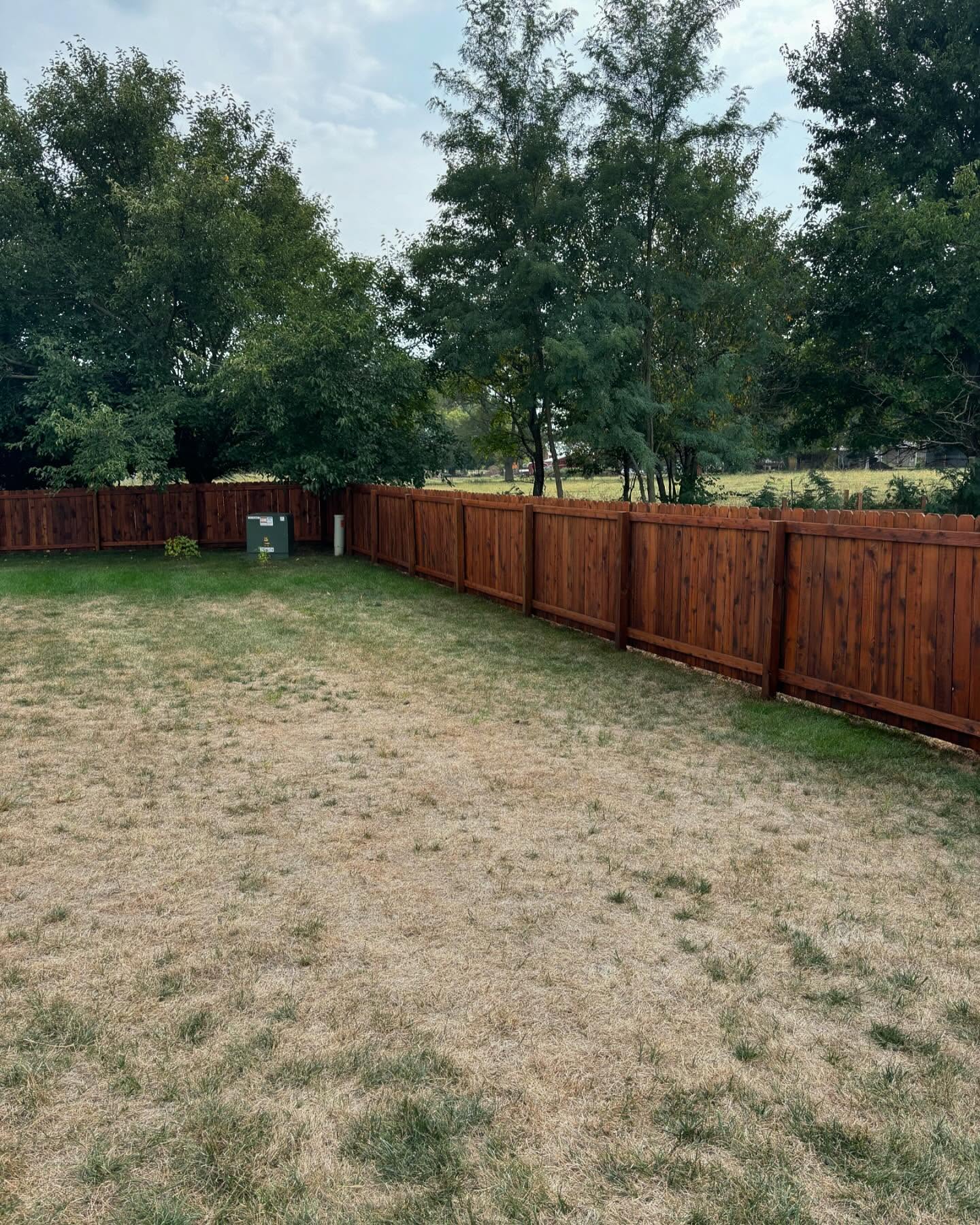
Cedar fence after a water-shedding stain job near Smithville Lake, MO
Lake-Side Run · Smithville

REVIEWS

What Kansas City Homeowners Say About RKC

4.9 ★ · 85 Google reviews

Every review is on our Google Business Profile — read them there, unedited.

Read all 85 reviews on Google

SMITHVILLE STAIN QUESTIONS

Stain Questions Smithville Homeowners Ask Most

Three questions decide most Smithville stain jobs: how to seal a fence against the lake moisture, what the shade and mildew do to it, and how to time a new or gray lakefront run. These are the ones Smithville homeowners raise at the estimate — sorted by topic, each answer tied to the water map, the shaded-face mildew, and the timing before Lake Season. Don't see yours? Call (913) 286-1091 and ask.

Smithville, MO fence staining by RKC Wood Care Pros

Sealing Against the Lake

How do I keep my Smithville fence from rotting near the lake?
The key is water-shedding, and it starts at the ground line. A lakefront fence takes moisture from three directions — the humid lake air, the wet low ground, and daily irrigation splash — and the bottom foot of the fence, where it meets damp soil, is where it rots first. We seal the end grain and the bottom boards hardest, coat the tops and caps that catch rain, and lay a penetrating finish that makes the whole run bead and shed water instead of drinking it. On our own installs we set the posts over a gravel-drained base so water moves away from the wood. The water-exposure map above shows every source we seal against and where we focus.
Does a fence by the water really need staining more often?
It earns the shorter end of the re-coat cycle, yes. A cedar fence runs about a 2-year coat, but by Smithville Lake the constant moisture — humidity, wet ground, irrigation — works the finish harder than an inland fence would face, so the seal thins a little faster. Staying on schedule is what keeps the wood ahead of the water; let it lapse and a lakefront fence grays and molds noticeably quicker than one in a dry suburban yard. We log your next date, favor the shorter end for water-facing runs, and remind you before it's due — timed ahead of Lake Season so the fence heads into the wet summer freshly sealed.
My sprinklers hit the fence — is that a problem?
It is if the fence isn't sealed for it. Irrigation on a manicured lake-home lawn often throws water onto the same fence boards every day, and repeated splash works into bare grain, lifts a weak finish, and feeds mildew on the shaded faces. A water-shedding penetrating coat sends that splash off the board instead of letting it soak in — and we note where your heads hit the fence at the walk so those runs get sealed deliberately. If you can adjust a head to throw less directly at the wood, that helps too, but the seal is what does the real work of keeping the repeated wetting from taking a toll.

Mildew & Shaded Faces

The shaded side of my lakeside fence keeps growing green — will staining stop it?
The right coat over the right prep slows it a lot, but the prep is the key. Wooded lakeside lots shade the north and east faces, which stay damp long after the sunny sides dry, and that lingering moisture feeds the mildew and algae you're seeing. Stain over living green growth and it flakes off in a season no matter the product. So we kill and wash the mildew first, brighten the wood, then lay a water-shedding finish that lets the shaded face dry between wettings instead of staying green. On heavily shaded runs a slightly deeper pigment resists the mildew's return better than a bare or clear surface. Staying on schedule keeps it from getting a foothold again.
Should the boat gate and waterfront posts be sealed differently?
Yes — they take the most direct and constant wetting on the property, so they get the heaviest sealing pass. The wide boat-gate frames and the runs closest to the water are exposed to splash, humidity, and open-water sun all at once, which is the hardest combination on a finish. We carry a deeper-pigment, water-shedding coat onto that waterfront wood so it resists moisture and UV together, and we pay special attention to the end grain on the gate posts, which wick water fastest. It's the same product family as the rest of the fence, just laid heavier where the lake works hardest — so the whole run ages together instead of the waterfront wood failing first.

New Cedar & Timing

I just had a new cedar fence built on my lake lot — when should I seal it?
Give new cedar about 30 days to cure first, so a penetrating finish keys into the grain instead of beading off wet wood. But there's a lakefront wrinkle: you want that first seal on before Lake Season, so the fence heads into the humid, wet summer already shedding water rather than soaking it up bare. On a waterfront lot, an unsealed first summer is enough to gray and mildew new cedar noticeably. So we time the coat to the cure and the calendar, seal it hardest at the ground line, and log it so the re-coat matches. On our own installs the first seal is often folded into the price and timed before summer.
Is it worth sealing a fence that's already gone gray by the lake?
Usually very much so, especially on the premium cedar Smithville favors. Lake-side gray comes on fast, but it's almost always a thin weathered skin over sound wood, not a spent fence. We strip any failed finish, kill the mildew, brighten the run back to one tone, wash and hard-dry it, then lay a water-shedding coat sealed hardest at the ground line. The one thing we check first is the wet-ground post bases and bottom boards — years of damp soil can soften them, and there's no return on sealing over rot. Where the wood's sound, the restored fence has years left; where a probe finds soft fiber, we reset it before finishing.

OTHER SMITHVILLE FENCE SERVICES

More Fence Services Available in Smithville

Each link below keeps you in Smithville — its own page, with pricing, conditions, and recent job photos tied to this city rather than the metro at large. Weighing a fresh install, a repair, a gate, or one specific material alongside the staining? Here's where each of those picks up.

Ready when you are

Get a free estimate — we usually respond the same day.

Call (913) 286-1091