Skip to content
Fence Staining & Sealing in Independence, MO — The Wood You Have Decides the Job

Fence Staining & Sealing in Independence, MO — The Wood You Have Decides the Job

Independence runs plenty of treated pine, not just cedar — and pine takes a finish completely differently. Put the wrong product on the wrong wood and it beads off or peels; match it and the same fence holds a coat for years. RKC Wood Care Pros reads the wood first: an oil-based penetrating stain for the dense treated pine that's the value pick here, a waterborne for cedar, a brightener before either on a never-sealed run. We probe the old 4x4 posts for the rot that's the common failure in town before a drop of stain goes on. Penetrating finish that fades instead of peeling, every coat logged to the wood, the re-coat date on your invoice. 4.9 stars from 85 Google reviews. Call (913) 286-1091 for a free walk and quote.

★★★★★
4.9
from 85 reviews
Licensed
& Insured · KS + MO
400+
fences installed
A+ BBB Rated Kansas City Fence Contractor Species-Matched Oil & Waterborne Stain · Spray + Back-Brush 2-Year Cedar / 3-Year PT Cycle
View stain options in our catalog ↓

WHY INDEPENDENCE HOMEOWNERS STAIN WITH RKC

Right Product, Right Wood

The most common reason an Independence fence coat fails early isn't a bad stain — it's the right stain on the wrong wood, a cedar product laid over treated pine that skins and peels. This is a treated-pine town as much as a cedar one, and the two don't take a finish the same way. Read the wood, match the product to it, brighten a never-sealed run back to sound color, and lay a penetrating finish that wears by fading — so the next coat is a wash-and-recoat, not a scrape-and-start-over.

1

Pine gets an oil, cedar can take water

The call that decides how long an Independence coat holds is matching the product to the wood. Treated pine's dense fiber wants an oil-based penetrating stain that sinks in; cedar takes a fast-drying waterborne fine. Get that backward — a waterborne skinning over pine — and it peels in a season. Matching the family to the species is the step a one-product crew skips, and the reason our coats last.

2

A finish that fades, never peels

The other big choice is penetrating versus film. A penetrating semi-transparent soaks into the grain and wears by fading, so re-coating is a wash and a fresh coat. A solid film sits on top, looks sharp a season, then peels under freeze-thaw and has to be scraped — worse on pine than anything. Everything we lay in Independence penetrates, so the fence never reaches the scrape-it-all-off stage.

3

Never-sealed doesn't mean spent

A lot of Independence fences were never sealed after they went up, and the gray scares owners into thinking replacement. It's rarely that. Bare wood that's silvered is oxidized on the surface, not rotted through — an oxalic brightener neutralizes it and one penetrating coat brings it back. Treated pine especially takes to this, because the wood underneath is so durable. The one real exception is post-rot, which we probe for and call honestly.

4

One coat, one look, across a patched run

Many older Independence fences are patchworks — cedar pickets, pine posts, a replaced section, a stretch someone once sealed. A blanket coat over that reads like a quilt. We brighten the whole run to a common baseline first, then carry one family and tone over all of it so it levels out. That's most of what a re-stain here actually is, and it's why an RKC-finished run reads as one fence from the yard rather than a repair history.

INDEPENDENCE LOCAL CONDITIONS

Why Staining in Independence Starts With the Wood

Three local factors shape stain work in Independence: a market that runs far more treated pine than cedar, the old 4x4 posts that rot at the base, and the patched, mixed-material runs that a repair-and-extend history leaves behind. This is a value-first town where the wood in front of us is as likely to be pine as cedar, and where a beautiful coat over a failing post is money lost. Same crew, same standard: identify the wood, probe the posts, level the surface, match the product to the species.

1

Pine and cedar are not the same job

More than most metro cities, Independence is a treated-pine market — the value wood on the big enclosures and the long runs, where Johnson County would default to cedar. And pine and cedar simply don't take the same finish. Pine's dense, wax-treated fiber resists a coat until the factory chemistry cures, then wants an oil-based penetrating stain that can push into it; cedar opens up as it weathers and takes a waterborne fine. Match the product to the wrong wood and it beads off or blotches. So the first thing we settle on any Independence fence is what it's actually made of — because the whole job follows from it.

2

The old 4x4 posts are the weak point

The most common structural problem on an older Independence fence is post-rot at the base of the original 4x4 treated posts — decades of ground moisture and the storm-battered open east side of town take their toll there before the pickets ever give out. That matters for staining because there's no sense finishing a run whose posts are about to go. So on any weathered fence we probe the posts and the bottom rail before we quote a coat; where the wood's sound we seal it and move on, and where a probe finds soft fiber we call the reset honestly, because a beautiful stain over a failing post is money you'll lose in a season.

3

A market full of mixed and patched runs

Independence homes span 1950s ranches to 19th-century estates, and a lot of their fences have been patched, extended, and repaired over the years — cedar pickets on pine posts, a replaced section three shades off, a stretch a prior owner sealed and another he never touched. Lay one blanket coat over that and it reads like a quilt. The move is to brighten the whole run to a common baseline first, then carry one product and tone over all of it so it levels out. Matching a finish someone else applied takes a test square, but it's most of what a re-stain here actually is.

The Independence streets we've stained and brought fences back on run from the 1950s-ranch neighborhoods near the Independence Square and Noland Road out through Bingham Estates, Glendale, Santa Fe Trails, and Highland Manor to the storm-exposed streets on the open eastern edge — treated pine, cedar dog-ear, board-on-board, and plenty of mixed and patched runs. Each one gets the wood identified up front, the posts probed, the same brighten-to-baseline wherever a finish has quit or the wood's gone gray, and the same species-matched penetrating coat to close. A fence another company built earns the identical treatment — the right product for the wood has never cared whose truck showed up on install day.

MATCHING THE PRODUCT TO THE WOOD

The Independence Wood Guide — What Each Species Needs

Before the color, the thing that decides how long an Independence fence holds a coat is the wood it's made of — cedar, treated pine, weathered pine, economy whitewood, or a mix all want different products and different clocks. Here's how each wood we see around Independence takes a finish, the product family it needs, and the re-coat rhythm that fits it. The short version is that pine wants oil and cedar can take water — but the fence in front of us decides it, which is why we identify the wood and brush a sample before anything goes on the run.

Wood / material How it takes a finish Product it needs Re-coat clock
Western Red Cedar (the premium upgrade) Naturally oily, opens up as it weathers — a penetrating stain keys into the grain easily and holds pigment well Waterborne or oil semi-transparent Re-coat ~2 years
Pressure-treated pine (the Independence workhorse) Dense, wax-treated fiber that resists finish while it's fresh — a waterborne skins over instead of sinking in Oil-based semi-transparent only First coat ~90 days · then ~3 years
Older weathered pine, never sealed Oxidized gray on the surface, often with green or blackened patches — won't take even color until it's neutralized Brightener first, then oil Probe the 4x4 posts first
Economy whitewood / SPF pickets Soft and thirsty, drinks finish unevenly and blotches without help — common on budget and older DIY runs Conditioner + toned penetrating sealer Shorter re-coat cycle
Mixed-material run (cedar pickets, pine posts/rails, patched sections) Each part drinks at a different rate, so one blanket pass reads three shades — the classic older-Independence patch job Brighten to one baseline, one family over all Matched to the dominant wood
Fresh wood on a chain-link conversion Brand-new pickets carry mill glaze and high moisture — a coat now beads off and wastes the product Wait for cure, then first-coat system Cedar ~30 days · pine ~90

The line that runs down the guide: the wood chooses the product, not the other way around — oil for dense treated pine, waterborne for cedar, a brightener before either on anything that's grayed, and a cure wait on anything fresh. Most Independence fences are pine or a pine-and-cedar mix, which is exactly why identifying the wood is step one. Want us to read your fence and spec the right product? A free staining walk identifies the wood and brings the sample boards, or start with a new Independence wood fence from the same crew that will finish it.

STAIN SERVICES

Pine Re-Stains, Cedar Coats & Gray-Fence Restoration — Every Independence Scenario

The scope your Independence fence lands in comes straight out of the read — cured treated pine ready for its oil coat, cedar due for a matched re-stain, raw new wood awaiting its opening system, or a never-sealed run that has to be brightened and brought back. Below are the four we run across Independence, what each one suits, and honest per-foot numbers. You can swap colors inside any scope; what stays fixed is the sequence — identify the wood, level the surface, lay a species-matched penetrating coat with a spray-and-back-brush pair, all by our own crew.

Pressure-Treated Pine Re-Stain by RKC Wood Care Pros in Independence, MO

Pressure-Treated Pine Re-Stain

The everyday Independence call · 90-day first coat, 3-year cycle

Treated pine is the volume wood in Independence — the value pick on the big backyard enclosures and the long boundary runs — and it wants its own product and its own clock. That factory treatment has to fully cure before a finish will bite, about three months out from a new install, and then it calls for an oil-based semi-transparent that penetrates the dense treated fiber where a waterborne would only skin over and peel. Any board still tinged green or blackened gets a brightener first so the color doesn't blotch. Get the product right and pine holds a coat for a solid three years around here.

  • Price: $3–7 / LF · typically $450–1,050 per 150 LF
  • Typical use: Treated-pine privacy and boundary runs on the larger older lots, big pet enclosures, economy installs carried over from other builders
Existing Cedar Re-Stain by RKC Wood Care Pros in Independence, MO

Existing Cedar Re-Stain

The 2-year cycle on the premium upgrade

Cedar is the step-up wood in Independence, and it keeps reading like cedar instead of drifting to silver when it's kept on a two-year rhythm. On schedule it's a soft wash to lift oxidation and mildew, a meter check for the dry window, then the matched color driven back into both faces of the run. Because we log your exact product and color the day we finish, the re-coat pulls the same can off the shelf — no two-tone patch where a different crew guessed at the shade. Your next date goes on the invoice before the crew rolls out.

  • Price: $4–8 / LF · typically $600–1,200 per 150 LF
  • Typical use: Cedar dog-ear and privacy runs in the newer neighborhoods, straight color refreshes, evening out a run a prior crew touched up in the wrong finish
New-Install First-Coat Stain by RKC Wood Care Pros in Independence, MO

New-Install First-Coat Stain

The opening system on every RKC Independence build

The coat that sets how an Independence fence ages before its first summer hits it — and on a chain-link-to-wood conversion, it's the coat that protects a run you just paid to build. Fresh cedar needs roughly four weeks for the internal moisture to drop far enough that a penetrating finish keys in rather than beading off; treated pine needs closer to a season for the factory chemistry to cure. Which family goes on gets decided at install week and staged before the crew arrives. Plenty of our cedar packages carry this first coat inside the install price — worth asking Josh when he walks it.

  • Price: $3–6 / LF · typically $450–900 per 150 LF
  • Typical use: Fresh cedar and pine after any RKC build, chain-link conversions getting their first protection, locking the finish in from week one
Gray-Fence Restoration by RKC Wood Care Pros in Independence, MO

Gray-Fence Restoration

Bringing weathered, never-sealed Independence runs back

This is the call off the older streets — a fence gone gray, splotchy, or green because it was never sealed after it went up. That silver is usually a thin weathered skin over wood that's still sound, not a fence at the end of its life. Failed finish gets stripped rather than painted over; the whole run gets an oxalic brightener to a single even tone, several wash passes, a hard dry, a meter check, then one honest penetrating coat. Independence's weak point is the old 4x4 treated posts, so we probe them before we coat — if a probe sinks into soft fiber, we reset or replace those posts first, because stain never goes over rot.

  • Price: $6–12 / LF · typically $900–1,800 per 150 LF
  • Typical use: Silvered pine and cedar on the 1950s-ranch streets, homes just changed hands, storm-battered runs a former owner never sealed

Species-matched cedar and pine fence stain pricing — Independence, MO — RKC Wood Care Pros

INDEPENDENCE STAIN PRICING

What Fence Staining Costs in Independence

What an Independence job costs rides on the wood and the prep, not the color — a cured pine run caught on its cycle runs a fraction of a never-sealed one that has to be brightened and its posts reset before a drop of stain goes on. Each quote folds in the wash, the brightener where the wood's grayed, the metered dry window, the species-matched penetrating family, the spray-and-back-brush pass by our own two-person crew, and a written date for the next coat. The three setups we price most often for Independence homes are below.

Pressure-Treated Re-Stain

$3–7 / LF

brighten + oil stain

Wash, brightener on the green and blackened patches, then the oil-based semi-transparent that bites into treated fiber, with the 3-year mark logged. A 150 LF Independence pine run generally lands at $450–1,050 — the value wood's value showing up in the number.

Cedar Re-Stain

$4–8 / LF

wash + penetrating stain

Soft wash, a meter check to catch the dry window, the matched family driven into both faces, a shared walk of the run, and your next date in writing. Most 150 LF Independence cedar privacy runs settle near $600–1,200.

Gray-Fence Restoration

$6–12 / LF

strip · brighten · stain

Failed finish taken off, the silvered boards leveled with an oxalic brightener, repeated wash passes, a 4x4 post probe, then a single penetrating coat. Quoted from an on-site look at how far the old finish has let go — a weathered 150 LF Independence run is usually $900–1,800.

Restoration on a never-sealed run (strip + oxalic brighten to one baseline + repeated wash cycles + a 4x4 post probe + stain) gets its number after an on-site look at how far the gray has gone — that look is exactly what stops you paying restoration rates on a fence that only wanted a routine re-coat. Every Independence estimate is free, written, and itemized — call (913) 286-1091 or set up a walk. While the crew's on site they can flag any Independence fence repair the old posts need before staining earns its keep — one trip, same hands.

OUR STAIN PROCESS

How an Independence Stain Job Comes Together

Four steps from the phone call to the final walk. Most Independence stain jobs span 2 to 4 days — but only one of them is stain day. The stain itself is usually a single day on site for a standard run. The rest of the clock is identifying the wood, probing the posts, and the brighten-wash-dry cycle that gets the surface ready. Here's what each step looks like on an Independence fence.

1

Identify the wood, meter it, probe the posts

Step one on an Independence fence is figuring out exactly what it's made of — cedar, treated pine, economy whitewood, or a mix — because the wood decides the product. Josh or a lead measures the footage, takes a moisture reading, and probes the 4x4 posts and bottom rail for the rot that's the common failure here. That read sets both the product family and whether any structural work comes first. Estimate's free and broken out line by line, and we brush a tone sample on a tucked-away board so you judge the color on your own fence.

2

Brighten the gray, kill the green, dry it hard

This is the stage that makes or breaks the coat. A run that's never been sealed gets a wash to pull oxidation, and the green or blackened patches common on old treated pine take an oxalic brightener back to a true tone; any failed finish gets stripped rather than buried. On a mixed or patched run everything gets leveled to one common baseline so the color lands even. Then the meter goes back on the slowest-drying section — pine holds moisture longer than cedar — and nothing gets opened until it reads ready. A coat won't hold over damp wood or living mildew.

3

Match the product to the wood, spray and back-brush

Surface level and dry, we load whatever the wood asked for — oil across the treated pine and the weathered runs, waterborne on the newer cedar — and put it on the one way that works: a sprayer moving the finish, a second hand right behind back-brushing it into the grain before it sets. That pairing is what gets an even face and deep penetration at once, and on pine especially the back-brush is what drives an oil coat into fiber that would otherwise let a sprayed film sit on top and peel.

4

Walk it together, then log the wood and the product

Last is your eyes alongside ours — a full pass catching any board that reads thin or skipped, touched in on the spot before we sign off. Then the finish lands on your file: the date, the wood, the product family, the exact color, the footage, and when the next coat is due — two years for cedar, three for pine. That record is why your re-coat matches instead of going patchy, and it's how we know to send the reminder on the right clock for the wood you actually have rather than a generic one.

RECENT INDEPENDENCE STAIN JOBS

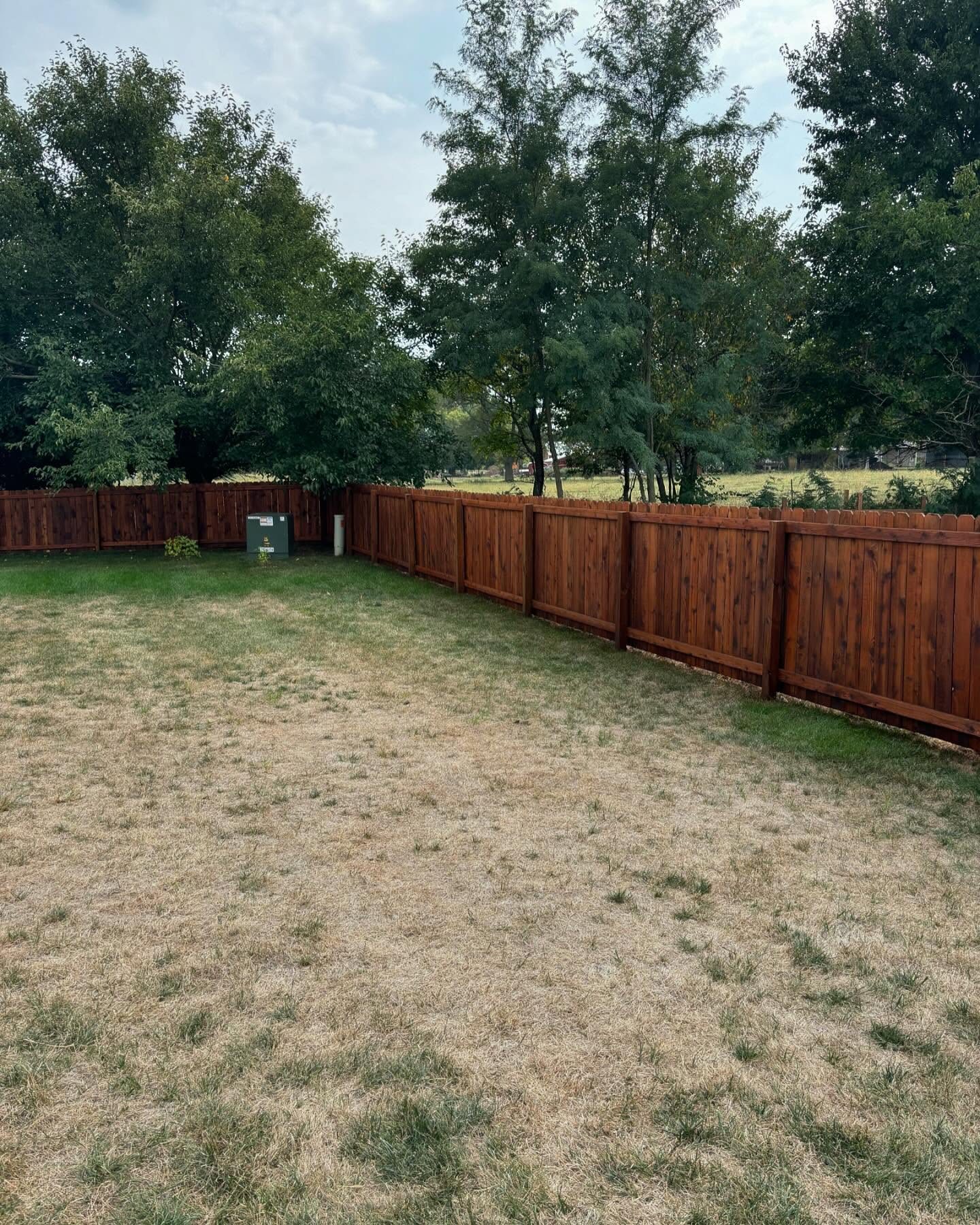
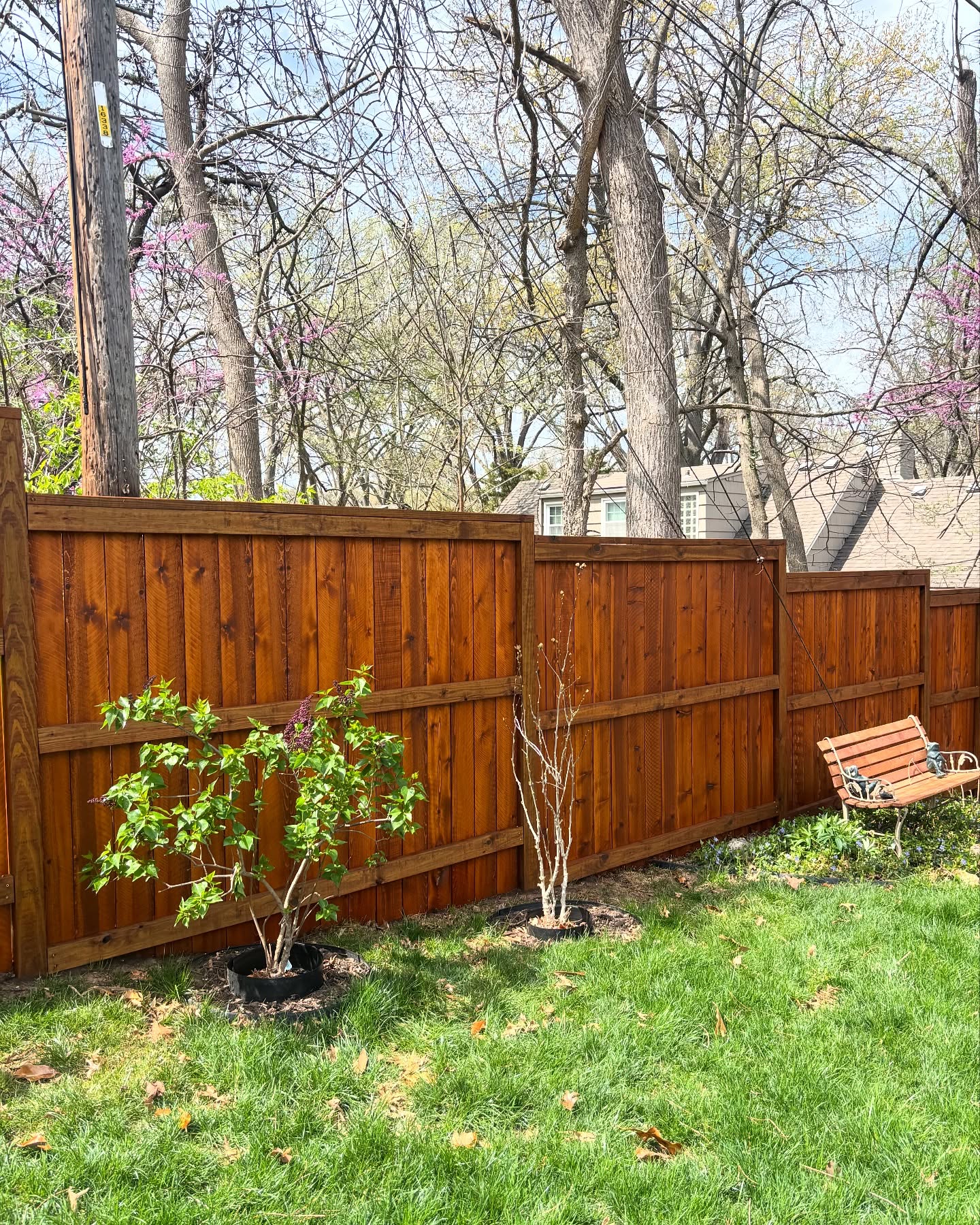
Cedar re-stain in mahogany red in Independence, MO by RKC Wood Care Pros
Cedar Re-Stain · Independence
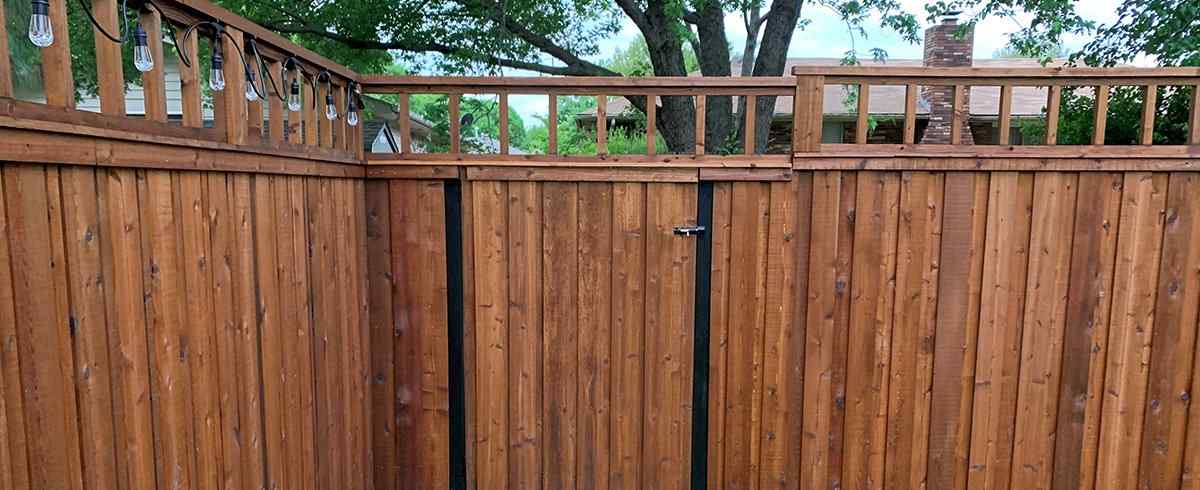
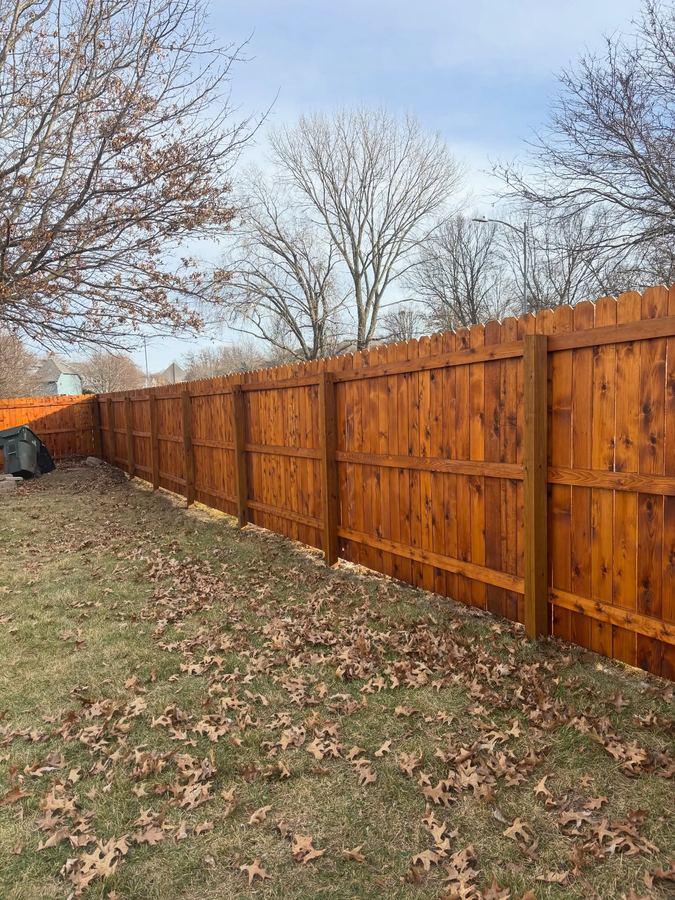
Freshly stained wood fence first coat in Independence, MO
First Coat · Independence
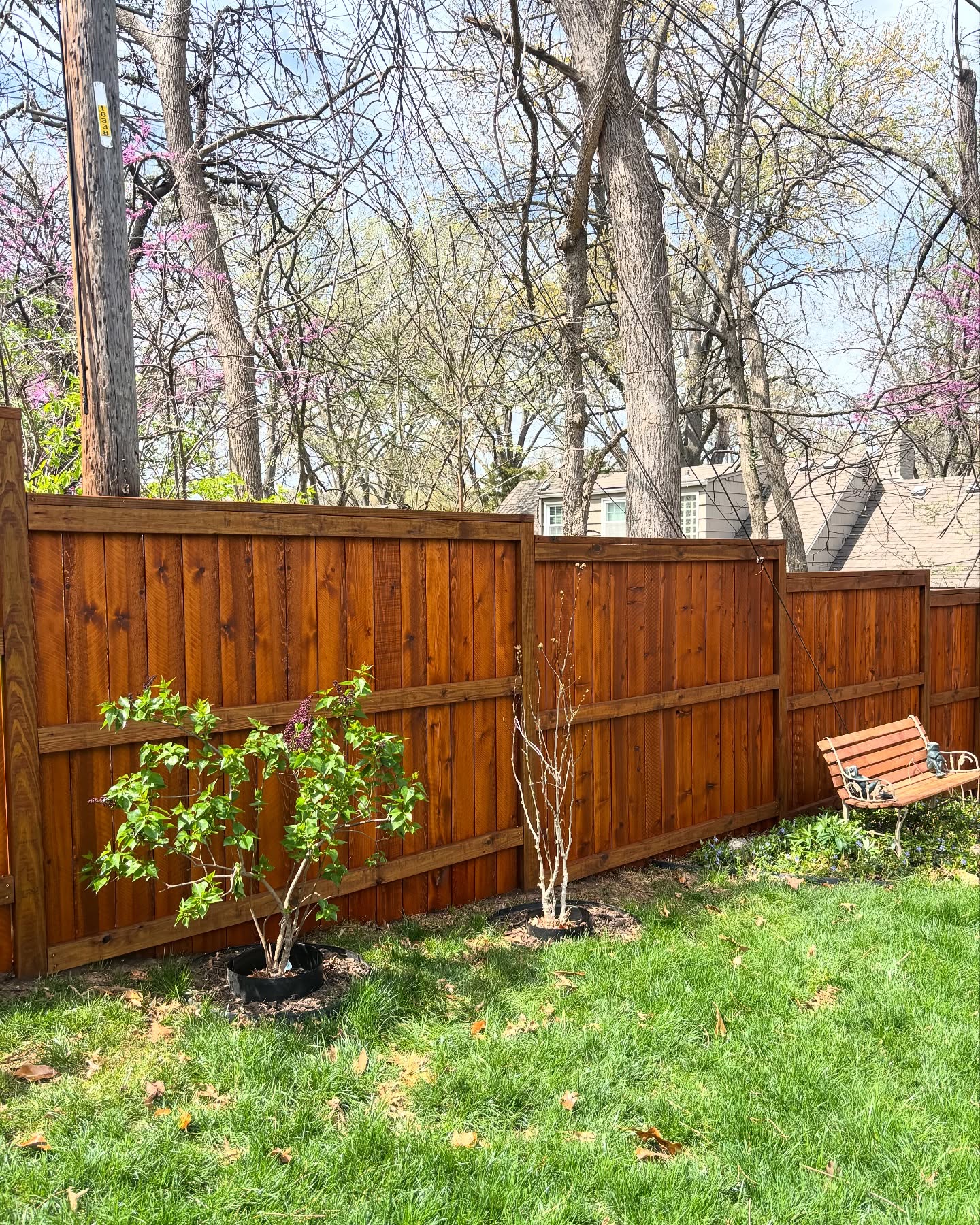
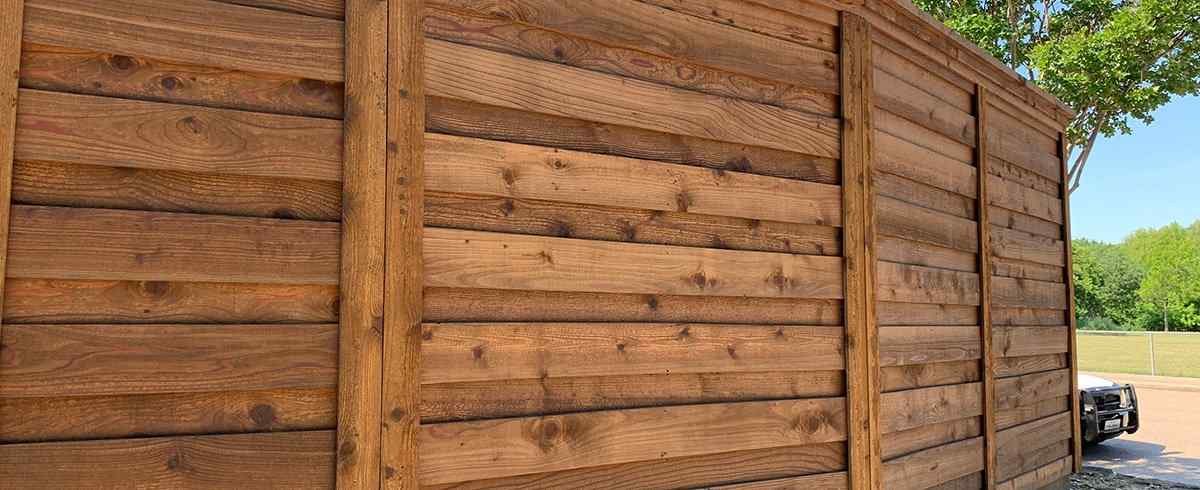
Pressure-treated pine re-stain in Independence, MO
PT Re-Stain · Independence
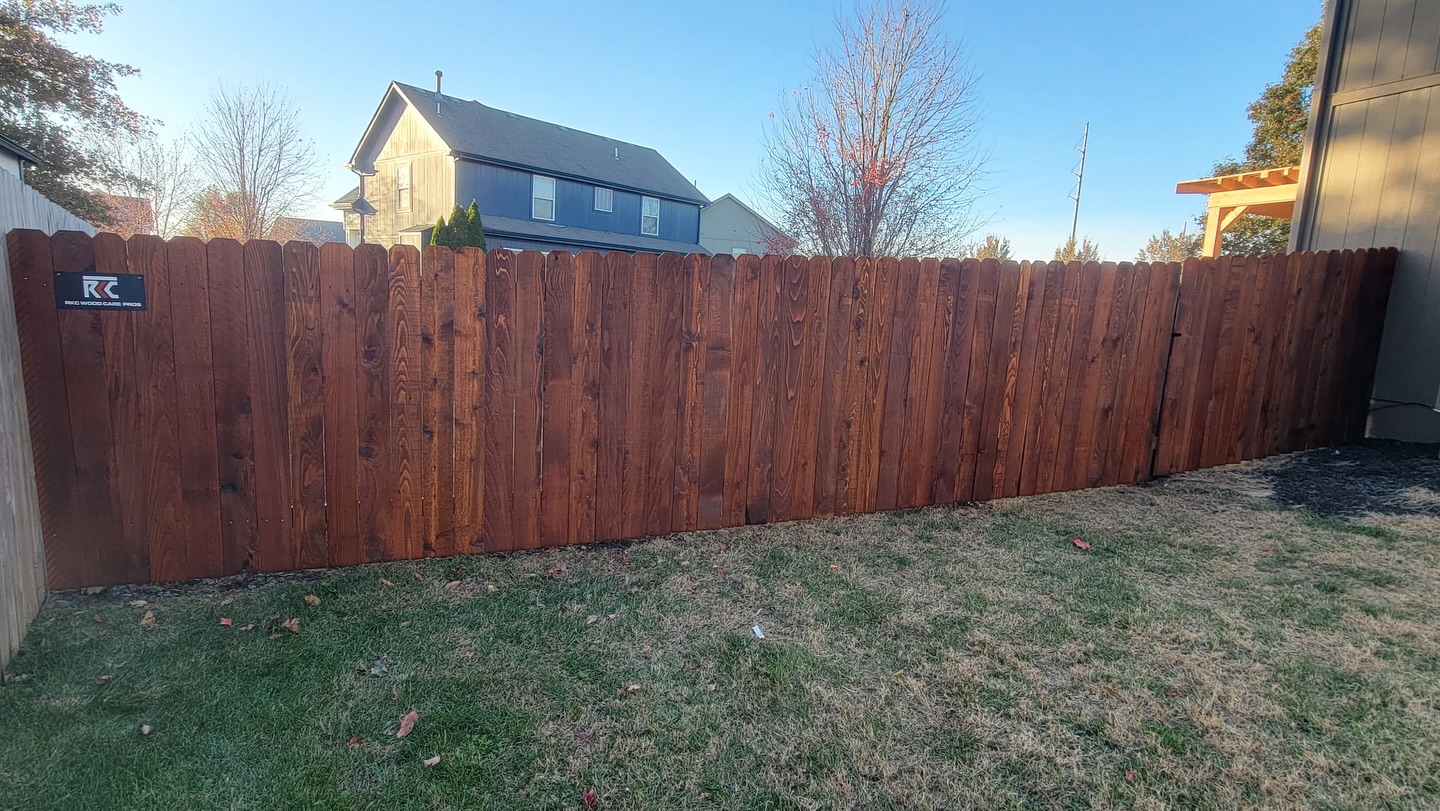
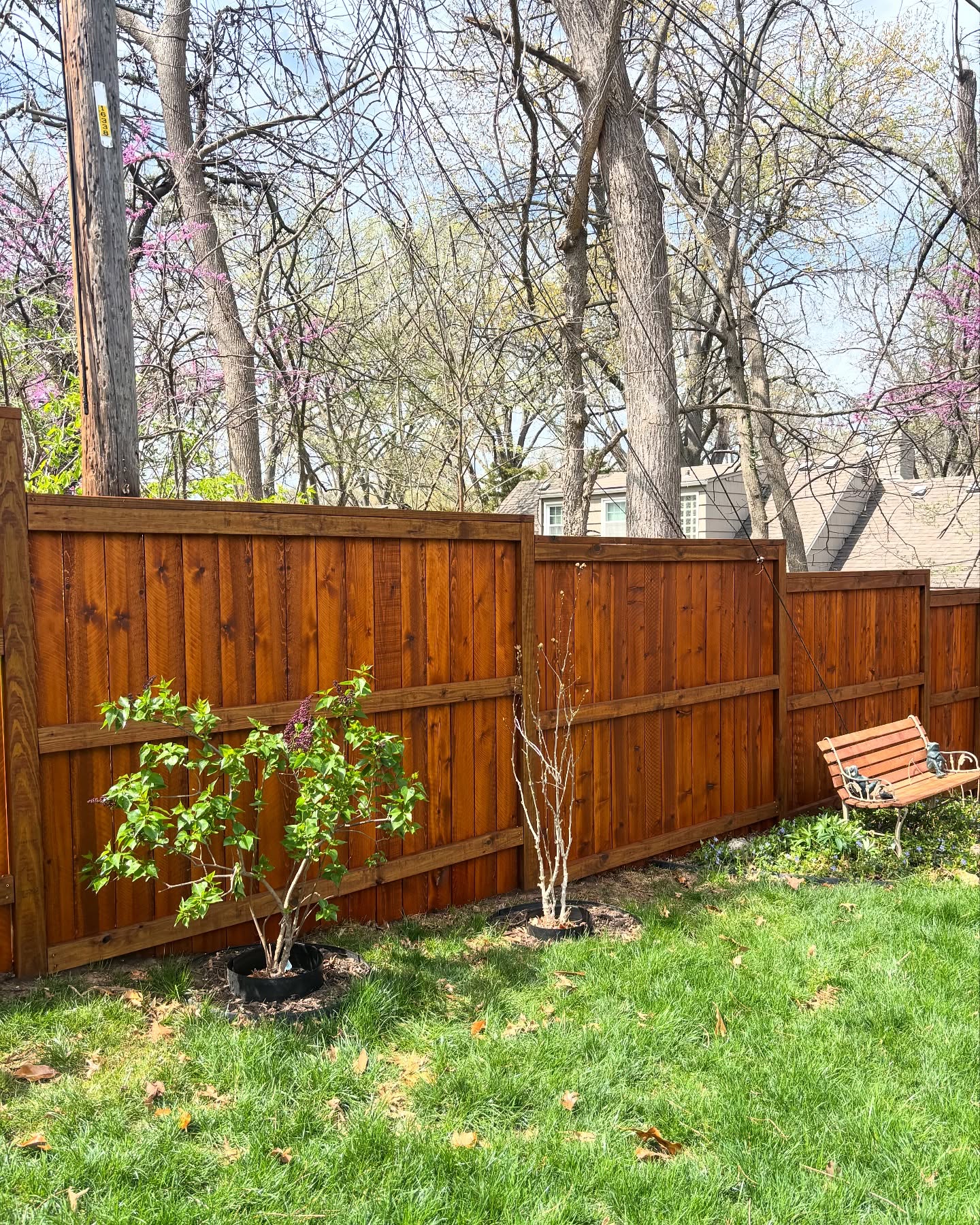
Gray-fence restoration brought back to color in Independence, MO
Gray-Fence Restoration · Independence

REVIEWS

What Kansas City Homeowners Say About RKC

4.9 ★ · 85 Google reviews

Every review is on our Google Business Profile — read them there, unedited.

Read all 85 reviews on Google

INDEPENDENCE STAIN QUESTIONS

Stain Questions Independence Homeowners Ask Most

Three questions decide most Independence stain jobs: which product the wood is asking for, whether it's even worth it on a value fence, and whether a never-sealed run with soft posts can be saved instead of torn out. These are the ones Independence homeowners raise at the estimate — sorted by topic, each answer tied to the pine-versus-cedar call, the 4x4 post-rot check, and bringing a never-sealed fence back. Don't see yours? Call (913) 286-1091 and ask.

Independence, MO fence staining by RKC Wood Care Pros

Pine, Cedar & the Right Product

Does treated pine need a different stain than cedar?
Yes, and it's the single most important call on an Independence fence. Pine's dense, wax-treated fiber resists a finish, so it wants an oil-based penetrating semi-transparent that can push into it — a fast-drying waterborne tends to skin over the surface and peel within a season. Cedar is naturally oily and opens up as it weathers, so it takes a waterborne fine and holds pigment well. Put a cedar product on pine, or vice versa, and you'll be redoing the job early. The substrate matrix above lays out what each wood wants; we identify your wood at the estimate before we spec anything.
My fence is pressure-treated and pretty new — when can it be stained?
Give it roughly 90 days from install. That factory treatment leaves the wood full of moisture and chemistry that has to cure before a finish will bite; coat it too early and it beads right off. Cedar moves faster — about 30 days — because it doesn't carry the treatment. If you're not sure how old the pine is or whether it's ready, we take a moisture reading at the estimate rather than guessing off the calendar. On a brand-new run we'll often tell you to wait a few more weeks and come back, because a coat laid at the right moment lasts years longer than one rushed on.
Half my fence is cedar and half is pine — can you make it match?
We can get it close, and it's a common ask here given how many Independence fences got patched and extended over the years. The two woods will never be identical because they take pigment differently, but we brighten the whole run to a common baseline first, then choose a color and lay it so the cedar and pine read as one fence from the yard. The trick is matching to the dominant wood and proving the tone on a test square of each before the full run goes on. A blanket coat with no baseline prep is what leaves you with the quilt look.

Timing & Schedule

How often does an Independence fence need re-staining?
It depends on the wood, which is the theme here. Figure a cedar coat roughly every 2 years and treated pine every 3 — pine's density holds a coat a bit longer once it's cured. Between the storm-heavy summers, the open eastern exposure, and Missouri's freeze-thaw swings, a fence around here chews through finish faster than the 'every few years' advice written for gentler climates. Your next date goes on the invoice keyed to your actual wood, and we're the ones who circle back when it arrives rather than leaving you to track two different clocks.
Is it worth staining a fence I'm only keeping a few more years?
Usually yes, and here's the honest math. In a value-first market like Independence, a stained fence reads as maintained and holds its look for resale, while an unsealed one grays out and drags the whole backyard down with it. A single re-coat is a fraction of what a buyer's inspector will ding you for on a tired, rotting run — and it's cheap insurance against the pine posts giving out early from unsealed ground moisture. If you truly only have a year or two, we'll tell you straight whether a coat pencils out or whether your money's better held for the next owner.

Rot, Posts & Restoration

My old fence is gray and the posts feel loose — is it too far gone to stain?
The gray usually isn't the problem; the posts are the question. On the older Independence streets a silver, blotchy fence is almost always a weathered skin over sound wood we can brighten back. But the common failure here is rot at the base of the original 4x4 treated posts, and a loose post is a warning sign. So we probe them before we quote a coat. Where the posts are sound, we seal the run and it has years left. Where a probe finds soft fiber, we reset or replace those posts first — there's no sense laying a finish over a fence that's about to lean.
Can a fence that's never been sealed still be brought back?
Almost always, yes — and a lot of Independence fences were never sealed after they went up. Bare wood that's grayed is oxidized on the surface, not rotted through, so an oxalic brightener neutralizes the silver and the green, several wash passes clear it to clean fiber, and one penetrating coat pulls it back to looking like a real fence again. Treated pine that's gone gray takes especially well to this because the wood underneath is so durable. The only wood we can't bring back is wood that's actually breaking down — which is why the probe comes first.

OTHER INDEPENDENCE FENCE SERVICES

More Fence Services Available in Independence

Each link below keeps you in Independence — its own page, with pricing, conditions, and recent job photos tied to this city rather than the metro at large. Weighing a fresh install, a repair, a gate, or one specific material alongside the staining? Here's where each of those picks up.

Independence Fence Installation

Cedar, treated pine, chain link, and ornamental iron built across Independence, every post concreted three feet down and one in-house crew carrying the job from estimate through the last board.

Independence Fence Installation →

Fence Repair in Independence

4x4 post-rot resets, storm-run rebuilds off the open eastern plains, rotted-board swaps, and gate-sag fixes on wide driveways — the structural work that comes before stain can earn its keep.

Fence Repair in Independence →

Gate Installation in Independence

Walk, single-drive, and double-drive gates sized for the wide old detached-garage driveways here, on welded frames and concreted posts, finished to the same tone as the run they hang on.

Gate Installation in Independence →

Independence Wood Fence Installation

Cedar and treated-pine privacy, dog-ear, board-on-board, and shadow box — installed by the same crew that returns to key the right first coat into whichever wood you chose.

Independence Wood Fence Installation →

Independence Privacy Fence Installation

Solid cedar, treated pine, and vinyl privacy screens sized to Independence yards — the wood ones folded straight into the re-coat schedule we track.

Independence Privacy Fence Installation →

Independence Fence Installation Hub

The full Independence overview — every material, from the 1950s-ranch streets near the Square to the newer neighborhoods where we've installed and brought fences back.

Independence Fence Installation Hub →

Ready when you are

Get a free estimate — we usually respond the same day.

Call (913) 286-1091