Skip to content
Gate Installation in Smithville, MO — Wide for the Boat, Set Through the Rock

Gate Installation in Smithville, MO — Wide for the Boat, Set Through the Rock

In Smithville, a gate gets sized to whatever the family hauls to the water — the boat, the pontoon, the camper — and set on the hilly, rock-heavy ground the lake country is built on. RKC Wood Care Pros installs walk gates, single-drive, double-drive, and sliding gates across Smithville from one local crew — welded steel frames, hinge posts cored a true 36 inches through the Northland shelf rock, and hot-dip galvanized hardware that holds in lake-air humidity. A+ BBB rated, 4.9 stars from 85 Google reviews. Call (913) 286-1091 and we'll walk the opening the same week.

★★★★★
4.9
from 85 reviews
Licensed
& Insured · KS + MO
400+
fences installed
A+ BBB Rated 400+ Fences Installed Since 2021 Welded Gate Frames · Galvanized Hardware Free On-Site Estimates
See gate styles in our catalog ↓

WHY SMITHVILLE GATES ARE BUILT FOR THE LAKE

What a Gate Sized for Lake Life Actually Changes

In the lake-life capital of the Northland, a gate isn't sized to the car — it's sized to the rig you pull to the water and set on the rock-heavy ground the lake sits on. Almost every Smithville gate call comes down to one of four things: an opening finally wide enough for the boat, a pool-yard gate that latches itself, a rear leaf that frames the water instead of walling it off, or a footing that won't lean once the shelf rock and the humidity go to work. Get those four right and the gate stops being something you manage and starts being something that's solved.

1

A gate wide enough for the boat and the trailer

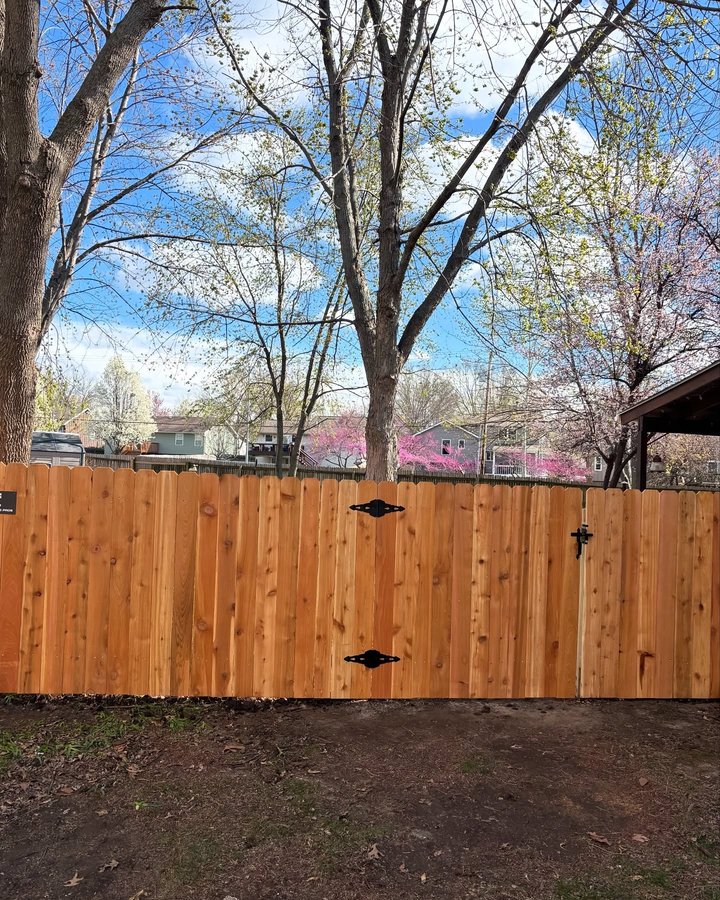
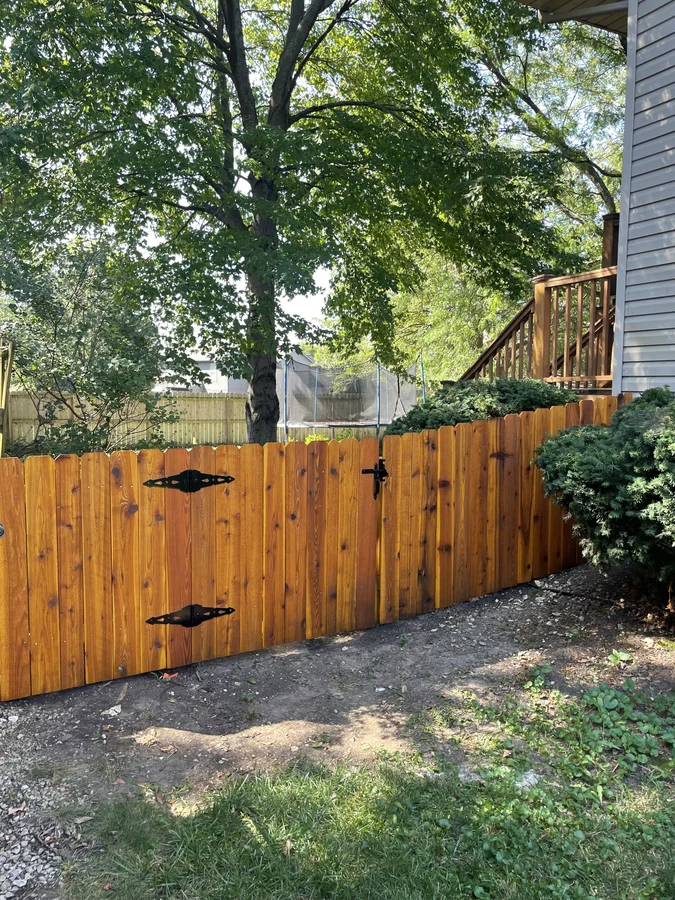
Lake life means a rig in the driveway, and the number-one reason Smithville homeowners call us for a gate is an opening that finally fits it. A split double-drive gives 14 to 20 feet of clear passage for the pontoon, the fifth-wheel, or the bass boat with the mirrors out — two braced leaves off 36-inch posts meeting at a center drop rod, sized to what you actually haul, not to the car.
2

A pool-yard gate that latches itself

On the recreational-luxury lots that fill this market, the backyard pool makes the walk gate a barrier first and a convenience second. Ours self-closes and self-latches above a child's reach every time, on hardware that won't seize in the lake humidity — so it does its job whether or not the last person through remembered to pull it shut. It's the detail most of the pool gates we get called to fix never had.

3

A rear gate that frames the water instead of hiding it

The whole appeal of a lake lot is the view, and a solid gate across the rear line throws it away. An open, powder-coated aluminum leaf keeps the water in frame while still closing the yard — the look the lake-view market leans toward, built in a finish that shrugs off the humidity a raw-steel gate would streak-rust in by its second season.

4

A gate that hasn't leaned by year ten

Two things lean a Smithville gate early: a footing that stopped on top of the shelf rock, and cheap hardware the lake air rusted through. We beat both — the hinge post cored a true 36 inches into the rock or belled in the deep clay, and hinges sized half-again over the leaf in hot-dip galvanized on a welded frame that can't rack. The latch still lines up after ten summers by the water.

WHERE THE RIG MEETS THE ROCK

Why a Lake-Country Gate Is Built Differently

The gate a Smithville family wants — wide enough for the boat, standing on ground that falls toward the water — is exactly the gate the shelf rock and the lake humidity conspire against, and that tension drives every build decision. Out here a footing can hit rock a foot down, a lot can drop hard toward the shoreline, and the lake air works on hardware the way it works on a dock. Three decisions separate a gate that still swings wide and latches true in year ten from one that leans by year two. Built for Every Storm comes down to these three on every RKC gate in Smithville.

1

We size the opening to the rig, not the driveway

In most towns a gate gets sized to the car. In Smithville it gets sized to whatever the family hauls to the water — a bass boat, a pontoon on a wide trailer, a camper — because the fence style out here is built around wide boat and RV access on the bigger side-yards. So we measure the rig with the mirrors out, not the drive at rest, and the moment the clear opening needs to pass much over 14 feet we split it into a double-drive. One 16-foot leaf is a lever no single hinge should carry; two braced leaves on a center drop rod share the load and still swing light.

2

The hinge post is cored through Northland rock to a true 36 inches

Smithville's lake country is hilly, wooded, and rock-heavy — hitting the Northland shelf rock a foot down is a common hurdle here, not a surprise. A footing that stops on top of that shelf looks set and isn't; the first freeze-thaw season walks it loose. Every hinge post we set gets cored the full 36 inches through the rock where the shelf is shallow, or bell-bottomed in the deep clay up on the plateaus — below the frost line either way. On a lot that falls toward the water, the downhill footing goes wider so the settling that leans a lakeside gate can't start.

3

Lake-air humidity eats cheap hardware — ours is galvanized and welded

The moisture that rots a waterfront fence works on a gate's hardware first. Big-box zinc hinges pit and seize within a season or two of lake-air humidity, and a bolted frame gives up its square not long after. We hang every leaf on hot-dip galvanized, stainless, or powder-coated hinges sized 50 percent over the leaf's real weight, and we weld every corner of the frame instead of bolting it. It's the unseen half of the gate that decides whether it still latches first-try after ten summers by the water.

Smithville lots we've installed gates across run from Greyhawke Ridge, Harborview, and The Hills to Otter Creek and Diamond Crest, plus the infill lots and older streets nearer downtown and the US-169 corridor. Same rig-sized openings, same rock-cored 36-inch posts, same welded frames on every one.

START WITH WHAT YOU HAUL

Match Your Smithville Gate to the Rig — and How We Build It to Fit

The fastest way to spec a Smithville gate is to name what has to pass through it and where it parks — the boat, the pontoon, the RV, the pool yard, the lake view — because the rig and the lot decide the opening before the material does. Find the row that sounds like your property. The left column is the situation; the middle is the gate that fits it; the right is how we build it to hold up on rock-heavy ground by the water. Two lots the same width often get two different gates once you know what each one has to pass.

What it has to pass The gate that fits How we build it to last
A ski or bass boat on a single-axle trailer A 12-foot clear single-drive One car's worth of drive plus a trailer's beam usually lands right around twelve feet of clear opening — the edge of what a single welded, braced leaf handles well. We hang it on a rock-cored 36-inch hinge post and a diagonal brace so a summer of weekend launches doesn't drop the latch corner.
A pontoon on a wide trailer, a fifth-wheel or a motorhome A 14-to-18-foot double-drive The wide rigs won't thread a single opening, so two leaves meet at a center drop rod for the full passage. Each leaf carries half the span, both posts go 36 inches down, and the drop rod pins the closed pair solid against a lake-country gust so the meeting edge never rattles loose.
A boat kept on a side-yard parking pad off the fence run A wide cedar side gate in the privacy line The classic Smithville call — a wide gate cut into the side-yard privacy run so the boat tucks out of sight beside the house. We match the dog-ear or board-on-board of the run, oversize the hinge for the extra width, and set the post to carry a leaf that opens far less often but has to swing true when it does.
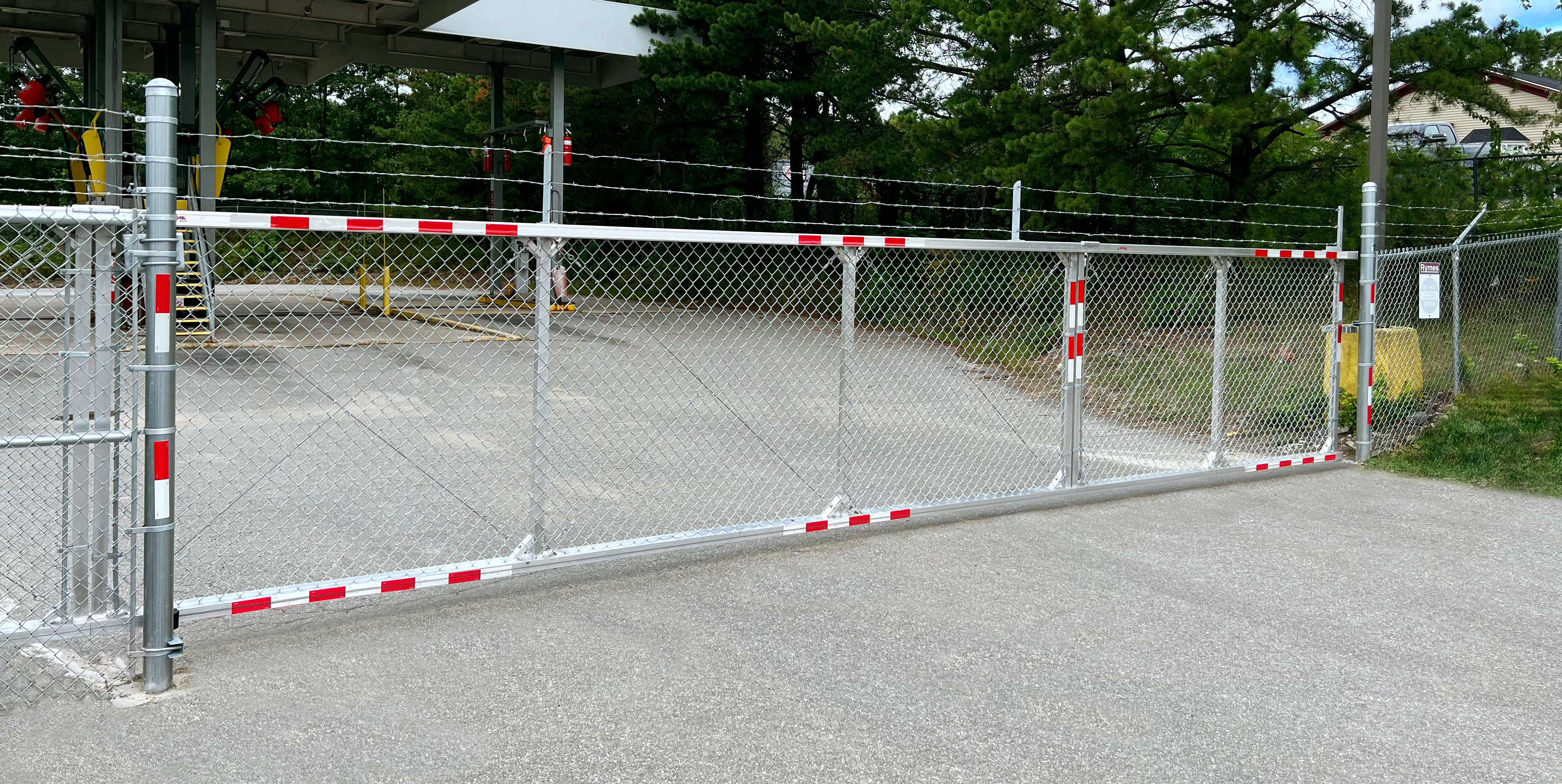
A drive that climbs off the lake road or runs past a retaining wall A cantilever slide gate Swing leaves catch on a rising approach or a wall-tight fence line. A cantilever rolls sideways clear of the rock cut with no arc into the drive — the right answer whenever the grade or the wall won't give a swing gate its room, which on hilly lakeside lots is often.
A backyard pool on a recreational-luxury lot A self-closing, self-latching walk gate On the pool yards this market is full of, the walk gate is a safety barrier before it's anything else. It self-closes and self-latches above a child's reach every single time, on hardware that won't seize in the humidity — so the gate does its job whether or not anyone remembered to push it shut.
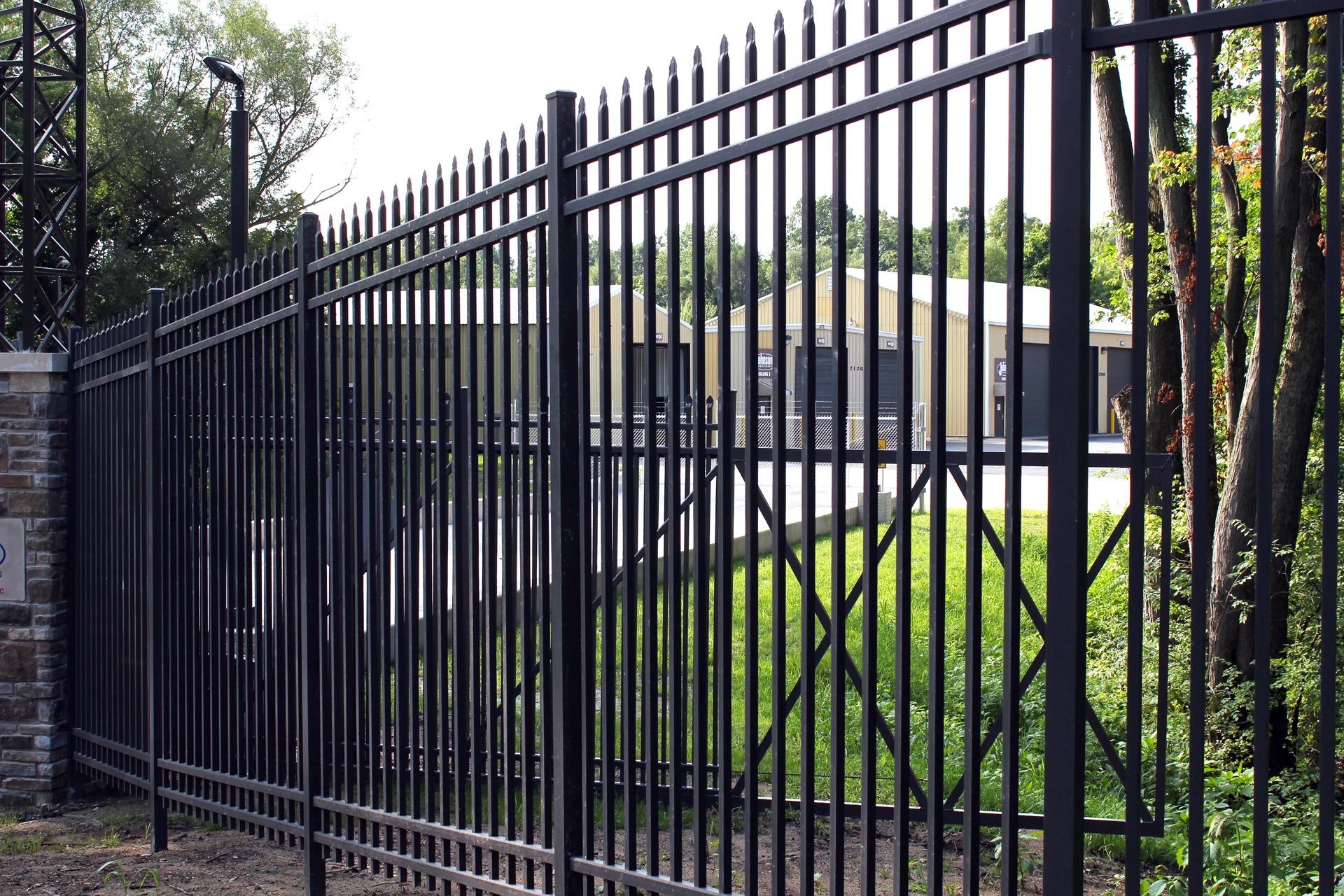
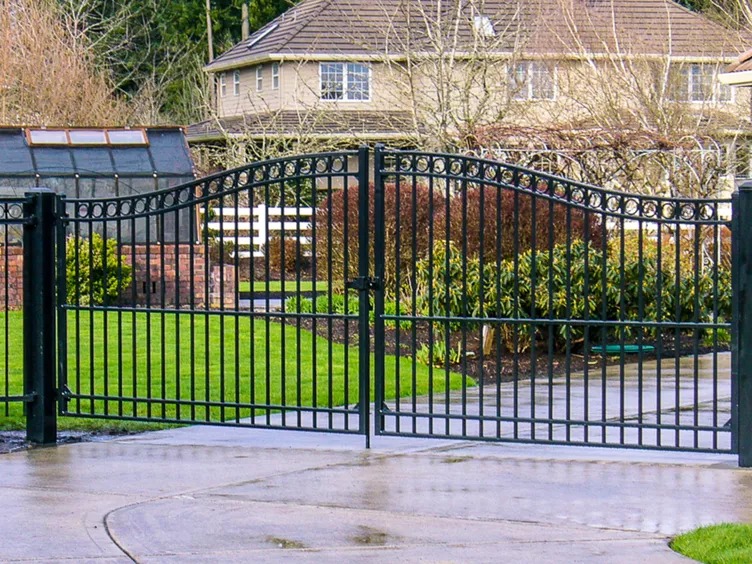
A rear lot where the gate faces the water An open ornamental aluminum leaf Many lakeside lots run an open, see-through aluminum or iron gate on the rear line so it frames the water instead of walling it off — the look the whole lake-view market leans toward. We build it in powder-coated aluminum that shrugs off the lake air and won't streak-rust down a light picket the way raw steel would.

This isn't a menu you order from cold. On the estimate visit Josh measures the rig with the mirrors out, reads how far the lot falls toward the water, and checks how shallow the shelf rock sits — and the opening, the split, and the footing all follow from that. Size the gate to what you haul and set it through the rock, and a Smithville gate swings wide for years instead of leaning by its second winter.

GATE TYPES

Walk, Drive, Double & Sliding — Every Gate for Your Smithville Property

The right gate follows from what you pull to the water and what the lot allows — a pool yard to close, a boat to fit, a drive that climbs off the lake road. Here are the four gate types we build across Smithville, what each one fits, and real install pricing. The material swaps within each — cedar to match the privacy run, black aluminum on a rear lake-view line — but the welded frame, the galvanized hardware, and the rock-cored 36-inch post stay the same underneath every one.

Walk Gate install by RKC Wood Care Pros in Smithville, MO

Walk Gate — 3–4 ft wide

The dock-path and pool-yard gate

The leaf the family actually lives with — the one somebody carries a tackle box through on the way to the truck, or a wet kid runs through coming up from the pool. We build it into the cedar run rather than bolting a store panel beside it: matched boards over a welded square-tube skeleton, and a self-close latch that shuts on its own when a pool or a dog sits behind it. On the pool yards Smithville's recreational-luxury lots are full of, that self-latch isn't a nicety — it's the barrier.

  • Price: $300–600 (wood) · $450–850 (aluminum)
  • Typical use: Pool-yard barrier, dock-path access, side-yard walk-through
Single-Drive Gate install by RKC Wood Care Pros in Smithville, MO

Single-Drive Gate — 10–14 ft wide

The everyday car-and-trailer leaf

One leaf across a normal drive, sized so a car clears it every day and a small ski-boat trailer clears it every summer weekend. It rides a welded frame with a brace angling from the low hinge to the high latch, and hinges chosen with weight to spare. What decides how long it lasts is out of sight: the hinge post, cored a true 36 inches down — often straight through the shelf rock Smithville's hilly lake lots hide inches under the grass — so the leaf hangs off ground that won't move.

  • Price: $650–1,200 (wood) · $900–1,800 (aluminum)
  • Typical use: Single-vehicle drive, small trailer clearance, cedar or black-aluminum finish
Double-Drive Gate install by RKC Wood Care Pros in Smithville, MO

Double-Drive Gate — 14–20 ft wide

The boat, the pontoon, the RV

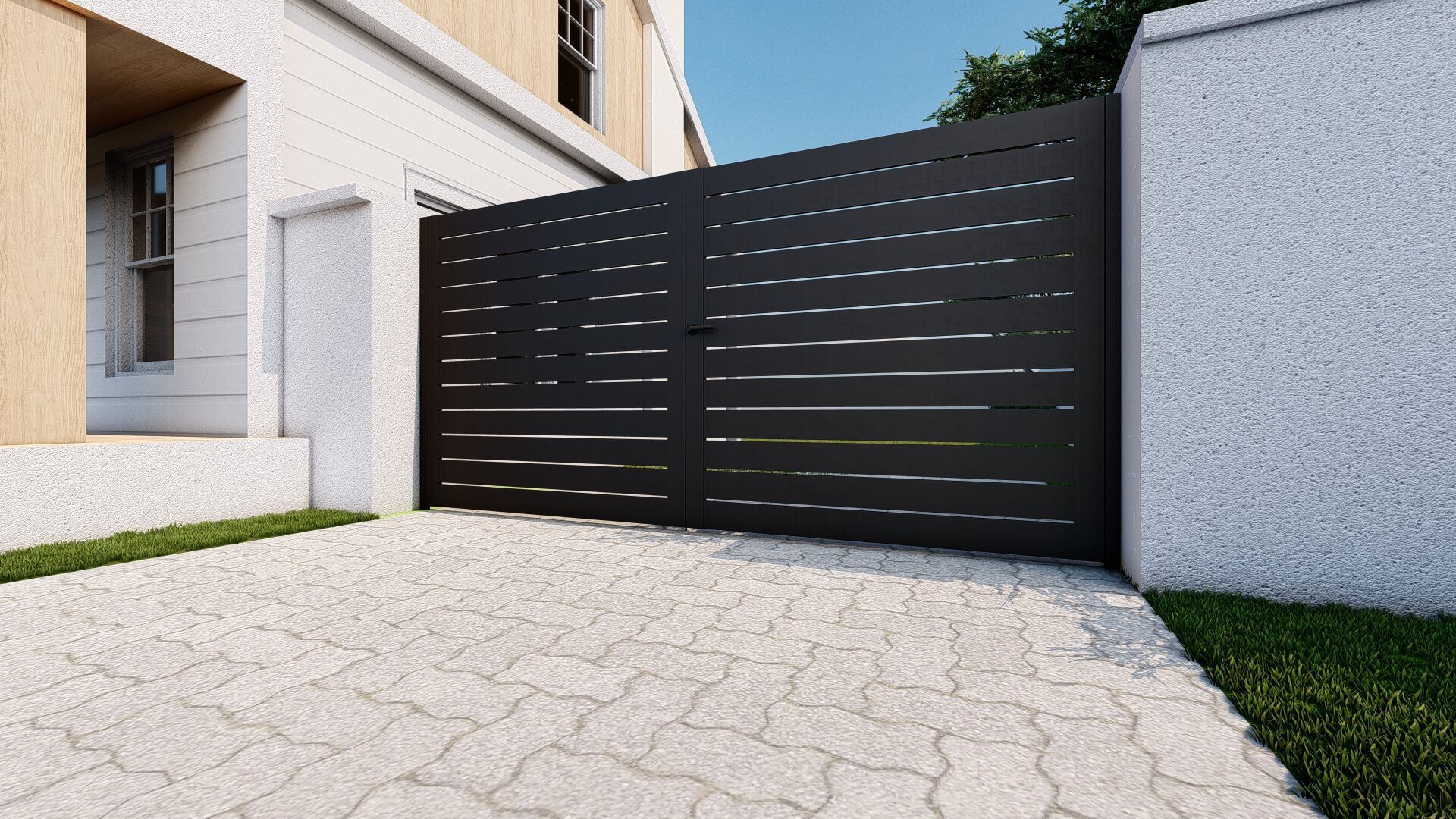
This is the one lake life is built around. A pontoon on a wide trailer, a fifth-wheel, a bass boat with the mirrors out — none of it threads a single-car opening, so two leaves swing off opposite posts and meet at a center drop rod for 14 to 20 feet of clear passage. Splitting the span halves each leaf's lever arm, which matters on the big 0.33-to-0.75-acre lots out here where a wide gate cycles hard all summer. Both posts down 36 inches, both leaves cross-braced.

  • Price: $950–2,800 installed
  • Typical use: Boat, pontoon and RV access, wide side-yard parking pads, larger lake lots
Sliding Gate install by RKC Wood Care Pros in Smithville, MO

Sliding Gate — 10–20 ft travel

For a drive that climbs off the lake road

Plenty of Smithville drives rise straight off a lake road or run tight past a retaining wall, and a swing leaf catches halfway open on ground like that. A sliding gate answers the geometry instead — cantilevered on rollers or riding a track, it rolls sideways clear of the rock cut with zero arc into the drive. It's the honest call whenever the approach grade or a wall won't give a swing gate the room it needs to open.

  • Price: $1,200–2,400 installed
  • Typical use: Climbing lakeside drives, retaining-wall fence lines, narrow rock-cut approaches
Black steel perimeter fence and gate on a Smithville, MO property by RKC Wood Care Pros

SMITHVILLE GATE PRICING

What Gate Installation Costs in Smithville

Gate pricing in Smithville comes down to type, material, size, and how wide the rig makes the opening. Every quote includes a welded steel frame, galvanized heavy-duty hardware, and a hinge post set a true 36 inches in poured concrete — cored through the shelf rock where the lot has it. Below are the three configurations we quote most often for Smithville properties.

Wood Walk Gate

$300–600

installed

Cedar or pressure-treated pine. Welded frame, galvanized strap hinges, self-close pool-yard latch where it's a barrier.

Single-Drive Driveway Gate

$650–1,800

installed

Wood $650–1,200 · Aluminum $900–1,800. Welded frame, diagonal brace, ball-bearing hinges, rock-cored 36-inch post.

Double-Drive & Sliding

$950–2,800

installed

The wide boat, RV, and pontoon openings — split double-drives on a center drop rod, or a cantilever slide for a climbing drive. Custom widths and finials quoted on site.

Building gates elsewhere around the lake or across the metro? The Kansas City gate installation hub lays out the full gate-type scope and pricing. Every Smithville gate estimate is free, written, and itemized — call (913) 286-1091 or request an on-site walkthrough.

OUR PROCESS

How a Gate Install in Smithville Actually Happens

Four steps from the phone call to the first swing. Most Smithville gate projects run 1 to 4 weeks start to finish. Install days themselves are short — walk gates are often same-day, drive gates one to two, plus a half day where shelf rock has to be cored. The longer stretch is fabrication and letting the footings cure, plus the up-front spec work that sizes the gate to the rig and plans the footing for the rock. Here's what each step looks like on a gate install in Smithville.

1

On-site measurement — the opening and the ground

Josh comes out and does two things a phone quote can't. He tapes the actual opening — and if boat or RV access is the point, he measures the rig itself, mirrors out, not the drive at rest. Then he reads the ground: how far the lot falls toward the water and how shallow the Northland rock sits, because on a lake lot that's what decides whether the hinge footing gets cored. A written estimate follows the same week with post depth, hinge, and frame all spelled out.

2

Spec the gate to the rig, the run, and the rock

Before anything's built we settle three things: what the gate has to pass, what fence it ties into, and what it stands on. A wide boat or pontoon opening gets planned as a split double-drive so no single leaf is a lever; a rear lake-view line gets an open aluminum leaf that frames the water; a shelf-rock lot gets a coring plan for the hinge footing. That up-front spec is the step that keeps a lakeside gate from being the part that leans first.

3

Install — footings first, welded frame second, hardware on site

Day one is footings: hinge posts cored or dug a true 36 inches, wider on the downhill side, poured wet and left to set overnight. The welded frame and panels go up once the concrete has cured. We hang and tune the hinges right there in the drive rather than presetting them in the shop, so the leaf ends up square to the slope you actually have and the latch meets the catch you actually have. A walk gate is usually a one-day job; a drive gate runs two, plus a half day where rock has to be cored.

4

Walkthrough and a 30-day settling check

We don't take the last payment until we've cycled the gate a full ten times with somebody watching every hinge take the load — any drag, scrape, or missed latch gets fixed before we leave. Then, because a footing on hilly ground keeps settling a touch through the first month, we swing back at the 30-day mark to re-true anything that shifted and re-time the self-close, free. On the way out we'll show you the one quarter-turn adjustment to make yourself if the gate ever asks for it down the road.

RECENT SMITHVILLE GATE INSTALLS

Wood privacy double-drive gate install in Smithville, MO by RKC Wood Care Pros
Wood Double-Drive Gate · Smithville
Cantilever sliding gate install in Smithville, MO by RKC Wood Care Pros
Cantilever Slide Gate · Smithville
Cedar fence and gate install in Smithville, MO by RKC Wood Care Pros
Cedar Fence & Gate · Smithville
Black ornamental iron front-yard fence and gate install in Smithville, MO by RKC Wood Care Pros
Ornamental Front Line · Smithville

REVIEWS

What Kansas City Homeowners Say About RKC

4.9 ★ · 85 Google reviews

Every review is on our Google Business Profile — read them there, unedited.

Read all 85 reviews on Google

SMITHVILLE GATE QUESTIONS

Gate Questions Smithville Homeowners Ask Most

Gate installation in Smithville comes down to sizing the opening to the rig, setting a footing through the rock, and choosing hardware the lake air can't beat. Below are the questions Smithville homeowners actually ask during the estimate — grouped by topic, each answer specific to the lake country's boat-access openings, shelf rock, and waterfront conditions. If your question isn't here, call (913) 286-1091 and ask.

Custom gate project in Smithville, MO by RKC Wood Care Pros

Gate Types & Sizing

How wide does a gate need to be to get my boat trailer through in Smithville?
Measure the rig at its widest — mirrors, fenders, and all — and give it a comfortable foot of margin on each side. A ski or bass boat on a single-axle trailer usually wants about twelve feet of clear opening, which a single braced leaf still handles. A pontoon on a wide trailer, a camper, or a fifth-wheel pushes you to fourteen or more, and past fourteen we split the opening into a double-drive rather than hang one long leaf off a single hinge. On the estimate visit we measure the rig, not just the driveway, so the gate fits what you actually pull to the water.
Can a gate hang off my existing fence posts, or do they need replacing?
The post decides it, not the fence panel. If the current hinge post was sunk a genuine 36 inches in concrete, it can usually carry a new leaf — but a lot of older Smithville fences, especially on the lake lots, were set shallow onto the rock rather than through it, and those posts are already working loose. If it's shallow, surface-mounted, or leaning, it comes out and a properly cored post goes in, because a gate can never hang straighter than what it's bolted to. We read post depth and lean at the estimate before we'll put a number on the gate.
How long does a cedar drive gate last on a lakefront lot?
Figure fifteen to twenty years for the gate as a unit, with the welded steel bones easily outliving the boards and the cedar itself reaching toward twenty-five if it's kept coated. The one thing lake proximity changes is the stain calendar — the extra moisture off the water weathers wood a touch faster, so on waterfront lots we suggest a fresh coat about every eighteen months instead of the two-year cycle that's fine up on the drier plateaus. The hardware, sized over the leaf and galvanized, tends to outlast everything.
Swing gate or a slide for a driveway that climbs off the lake road?
If the approach rises or the fence line runs tight past a retaining wall, lean toward a slide. A swing leaf needs flat, clear ground to arc across, and on a climbing lakeside drive it catches halfway open every time. A cantilever slide rolls sideways clear of the rock cut with no arc into the drive at all, which is why we install so many of them on Smithville's sloped waterfront approaches. On a flat plateau lot a swing gate is simpler and cheaper; the grade is what makes the case for a slide, and it runs roughly $400 to $900 more than the same-size swing.

Smithville Lake-Country Conditions

Why do gate posts near Smithville Lake have to be cored through rock?
The ground around the lake is hilly and rock-heavy, and hitting the Northland shelf rock a foot or so under the grass is one of the most common hurdles we run into here. A footing that just stops on top of that shelf looks set the day it's poured, but it hasn't reached below the frost line — so the first freeze-thaw winter starts walking it loose, and a leaning gate follows. We core the hole the full 36 inches through the rock instead. It's slower and it's why a rocky lot can add a half day, but it's the difference between a gate that holds and one that drifts.
How long does gate installation take in Smithville?
The install itself is short: a walk gate is usually a single day on site, a single-drive runs one to two days, and a double-drive takes about two. A shelf-rock lot that needs the hinge footings cored can add roughly a half day. From approval, plan on one to two weeks for a walk gate and two to four for a drive gate, most of which is fabrication and letting the concrete footings cure properly before the leaf goes on. Sliding hardware adds about a week of lead time.
Why do so many rear lake-view lots use open ornamental gates?
It's the view. On a lot where the backyard opens toward the water, a solid privacy gate across the rear line walls off the exact thing the property is worth, so the market here leans hard toward open, see-through ornamental — aluminum or iron picket that closes the yard while leaving the water in frame. We build those in powder-coated aluminum rather than raw steel because the lake air will streak-rust a bare metal picket fast; powder-coat shrugs the humidity off. It's a style call driven by the water, and it's why the rear gate and the front gate on the same lake lot often aren't the same gate at all.

Pricing & Hardware

Why is a welded gate frame worth more than a bolted one?
Welding costs shop hours — every corner cut, fitted, tacked, then burned in with a clean pass — and what that buys is a frame that keeps its shape. A bolted frame has play in every joint, and near the water that play turns into trouble fast: the corners work loose, the leaf racks into a lazy parallelogram, and the latch drifts out of reach within a season or two. The welded premium runs about 15 to 25 percent on the frame, against a near-certain sag call later. We weld every corner, and the bolted gates are the ones we get called out to replace.
What hardware do you use so a lakefront gate doesn't rust out?
Only hot-dip galvanized, stainless, or powder-coated — never the bright-zinc hardware the big boxes stock, which pits and seizes inside a season or two of lake-air humidity. Every hinge is sized to the leaf's real weight plus a 50 percent margin: strap hinges rated past 100 pounds on a walk gate, ball-bearing or J-bolt pivots rated past 400 on a drive gate. On a waterfront lot the hardware is doing the hardest job on the whole gate, so it's the last place we'll let anyone cut a corner.
What's the warranty on gate hardware?
Whatever the manufacturer stamps rides on their coverage — generally around a decade on ball-bearing hinges and five to ten years on straps, latches, drop rods, and cane bolts. The frame is on us: our workmanship warranty means that if a welded corner racks, the latch side droops, or a bead fails under normal use, we come back and set it right. And every job carries the no-charge check at the one-month mark, when we re-true anything the first few weeks of settling nudged and re-dial the self-close.

OTHER SMITHVILLE FENCE SERVICES

More Fence Services Available in Smithville

Every service below stays in Smithville — dedicated pages with local pricing, lake-country conditions, and recent project photos specific to your city. If you're adding a wide boat gate to a new privacy run, refreshing waterfront cedar on the stain cycle, or straightening a fence the hillside settled, here's where to go next.

Ready when you are

Get a free estimate — we usually respond the same day.

Call (913) 286-1091