Skip to content
Fence Staining & Sealing in Liberty, MO — The Right Finish for the Wood You Have

Fence Staining & Sealing in Liberty, MO — The Right Finish for the Wood You Have

When a Liberty fence goes gray or starts peeling, it's usually the finish that failed — the wrong product for the wood — not the wood itself. Match the right penetrating system to the fence and most of them have years left. RKC Wood Care Pros reads the wood first: strip a failed film off an older core-Liberty run, or get the right first coat on new western cedar. We spec oil-based penetrating stain for treated pine and the hard-sun faces, a fast-drying waterborne for new cedar — both fade instead of peeling — and prove the tone on a hidden board before the run is committed. Every coat logged, the re-coat date on your invoice. 4.9 stars from 85 Google reviews. Call (913) 286-1091 for a free walk and quote.

★★★★★
4.9
from 85 reviews
Licensed
& Insured · KS + MO
400+
fences installed
A+ BBB Rated Kansas City Fence Contractor Oil & Water-Based Penetrating Stain · Spray + Back-Brush 2-Year Cedar / 3-Year PT Cycle
View stain options in our catalog ↓

WHY LIBERTY HOMEOWNERS STAIN WITH RKC

A Finish That Fades Instead of Failing

The reason a Liberty fence looks tired is almost never that the wood gave out — it's that the finish on it was the wrong one, and it peeled or let the cedar gray. Match a penetrating system to the wood and the exposure and the same fence has years left in it. That's the whole job here: read what failed, strip it if it filmed, and lay a finish that wears by fading — so the next coat is a wash-and-recoat, not a scrape-and-start-over.

1

A finish that fades, never peels

The single biggest choice on a Liberty fence isn't the color — it's penetrating versus film. A penetrating semi-transparent soaks into the grain and wears by slowly fading, so re-coating is a wash and a fresh coat. A solid film sits on the surface, looks sharp for a season, then peels under freeze-thaw and has to be scraped. Everything we lay in Liberty penetrates, so the fence never reaches the scrape-it-all-off stage.
2

The gray usually isn't the wood giving up

Most calls off the older streets near the college come in as "my fence is shot." It rarely is. The silver-gray is a shallow weathered layer over sound cedar, and the peeling is a failed film — both fixable without replacing a board. We brighten the gray back, strip what filmed, and lay one penetrating coat. The exception is real rot, which we probe for and call honestly before you spend a dollar on finish.

3

The right product for pine versus cedar

Treated pine and cedar don't take the same finish. Pine's dense treated grain wants an oil-based penetrating stain that sinks in; new cedar takes a fast-drying waterborne semi-transparent fine, and the hard-sun south and west faces want the deeper-pigment oils that carry more UV block. Matching the family to the wood is why a re-coat lands even instead of blotchy — and it's the step a one-product crew skips.

4

Still one tone at year five

The five-year mark is the tell: a Liberty run either still looks like one fence or it's started to blotch. Staying on the right side of that comes from three things working together — a penetrating product that fades rather than lifts, the family actually suited to the wood, and a two-year rhythm that re-evens the tone before the sun-struck faces get out ahead of the shaded ones. The fences we've kept on schedule since 2021 still carry a single, deliberate finish, and each coat lines up with the last because it's written down.

LIBERTY LOCAL CONDITIONS

Why Fence Staining in Liberty Comes Down to the Finish

Three local factors shape stain work in Liberty: a split between an old historic core and a young western edge, the clay hills that set the dry window, and the oil-versus-water decision that actually decides how long a coat lasts. This is a market where a peeling film in a century-old block needs stripping the same week a new western cedar run wants its first careful coat. Same crew, same standard on both: read what's on the wood, level the surface, match the system to the fence.

1

A town of two fence ages

Liberty is really two staining markets on the same map. The historic streets around William Jewell College and the downtown square carry decades-old cedar — much of it wearing a finish that's already failed, a solid film peeling in sheets or a clear sealer that let the wood gray. Out in the western developments like Benson Place and Shoal Creek Valley the fences are young cedar cycling through first coats and early re-stains. The first thing we settle at the estimate is which one your fence is, because the whole job — strip a failed finish, or get the right first system on — follows from it.

2

Clay hills change the dry window

The Missouri clay around Liberty holds water longer than sandier ground, and the rolling Clay County terrain leaves one face of a run in sun while the low corner sits shaded and damp. Both mean the wood dries unevenly after rain, so we don't stain on a calendar — we meter the wettest section and hold off until it reads ready, usually a 24-to-48-hour window after a heavy rain. A penetrating finish laid over damp wood beads up and flakes off inside a season, so that one rule doesn't bend for schedule.

3

Oil or water-based is the real decision

Once the wood is level, the choice that actually decides how long a Liberty fence holds isn't the color — it's the finish system. Oil-based penetrating stain grips treated pine and carries more pigment on the hard-sun south and west faces that bleach first; a fast-drying waterborne semi-transparent suits new cedar and lighter tones. Both fade instead of peeling, which is the whole point over a solid film. We spec the family to the wood and the exposure, and prove the tone on a hidden test square before the run is committed.

The Liberty streets we've stained and brought fences back on stretch from the older blocks by William Jewell College and the downtown square out to the newer western builds in Benson Place, Shoal Creek Valley, Claybrooke, Canterbury Estates, and Woodneath Farms — cedar privacy, treated pine, board-on-board shadow box, mixed material. Each one gets the same grading up front, the same strip-and-brighten wherever a finish has quit, the same matched penetrating coat to close. A fence another company built earns the identical treatment — sound wood, honest prep, and the right family have never cared whose truck showed up on install day.

CHOOSING A FINISH

The Liberty Finish-System Guide — Oil, Water-Based, or Film

Before the color, the decision that decides how long a Liberty fence holds is the finish system itself — penetrating or film, oil or water-based, matched to the wood and the sun it takes. Here's how the finish families we run in Liberty work, how each one wears, and which fence each suits. The short version is at the bottom of the table — but the fence in front of us decides it, which is why we read the wood and brush a sample before anything goes on the run.

Finish system How it works in the wood How it wears Best Liberty match
Oil-based penetrating semi-transparent Pigment on an oil carrier soaks deep and cures inside the board, not as a skin on top Fades evenly Pressure-treated pine, and the high-sun south and west runs on Liberty's open hilltop lots
Water-based acrylic semi-transparent Pigment in a fast-drying waterborne resin — sits a touch higher in the grain, low odor, short recoat window Fades evenly New cedar in the western Liberty subdivisions, lighter and natural tones, tighter schedules
Waterborne-oil hybrid semi-transparent Oil-modified waterborne — near oil penetration with soap-and-water cleanup and a faster dry Fades evenly Owners who want oil durability without the long oil dry window between coats
Penetrating toned sealer (light pigment) Mostly water repellency with just a hint of tone; shows the most raw cedar grain Grays early The natural-look crowd who accept a shorter re-coat cycle — never a high-sun exposed face
Solid / opaque film stain A pigmented film laid ON the surface — the most color, the least grain visible Peels / scrapes Almost nothing on Liberty cedar; the finish we steer owners off — it flakes under freeze-thaw
Brightener + oil (restoration pairing) An oxalic wood brightener neutralizes the gray first, then an oil penetrating coat keys into the reopened grain Brings gray back Weathered cedar in the historic core that was never sealed, or that's wearing a failed old film

The line that runs down the table: penetrating finishes fade and re-coat; a film peels and has to be scraped — and oil suits pine and the hard-sun faces while waterborne suits new cedar and speed. Most Liberty fences land on an oil or waterborne penetrating semi-transparent for exactly that reason. Want to see two families on your own wood? A free staining walk brings the sample boards, or start with a new Liberty wood fence from the same crew that will finish it.

STAIN SERVICES

First Coats, Re-Stains & Gray-Fence Restoration — Every Liberty Scenario

The scope your Liberty fence lands in comes straight out of the read — raw wood awaiting its opening system, cedar ready for a matched re-coat, treated pine ticking on its 3-year clock, or a failed-finish run that has to be stripped and rebuilt. Below are the four we run across Liberty, what each one suits, and honest per-foot numbers. You can swap product families and tones inside any scope; what stays fixed is the sequence — read the finish, level the surface, lay a matched penetrating coat with a spray-and-back-brush pair, all by our own crew.

New-Install First-Coat Stain by RKC Wood Care Pros in Liberty, MO

New-Install First-Coat Stain

The starting system on every RKC Liberty install

The coat that sets how a Liberty fence ages before its first summer ever hits it. Fresh cedar needs roughly four weeks for the internal moisture to drop far enough that a penetrating finish keys in rather than beading off; treated pine needs closer to a season for the factory chemistry to cure. Which family goes on gets decided at install week — a fast-drying waterborne on most new western cedar, an oil where the line faces open hard sun — so the product is staged before the crew arrives. Plenty of our Liberty cedar packages carry this first coat inside the install price; worth asking Josh when he walks it.

  • Price: $3–6 / LF · typically $450–900 per 150 LF
  • Typical use: Fresh cedar on the newer western streets, the opening coat after any RKC build, locking the finish in from week one
Existing Cedar Re-Stain by RKC Wood Care Pros in Liberty, MO

Existing Cedar Re-Stain

The 2-year cycle · the everyday Liberty call

The coat that keeps cedar reading like cedar instead of drifting to silver. On schedule it's a soft wash to lift oxidation and mildew, a meter check for the dry window, then the matched family driven back into the grain end to end. Because we log your exact product and color the day we finish, the re-coat pulls the same can off the shelf — no two-tone patch where a different crew guessed at the shade. Your following date is written on the invoice before the crew rolls out.

  • Price: $4–8 / LF · typically $600–1,200 per 150 LF
  • Typical use: Cedar at the four-to-six-year mark, straight color refreshes, evening out a run a prior crew touched up in the wrong finish
Pressure-Treated Pine Re-Stain by RKC Wood Care Pros in Liberty, MO

Pressure-Treated Pine Re-Stain

90-day first coat, 3-year cycle after

Pine runs on its own clock and demands its own product. That factory treatment has to fully cure before any finish will bite — about three months out from a new install — and then it calls for an oil-based semi-transparent that penetrates the dense treated fiber where a waterborne would only skin over. Any board still tinged green or blackened gets a brightener first so the color doesn't blotch. This is the scope we see most on the long perimeter runs and value builds around the older side of Liberty.

  • Price: $3–7 / LF · typically $450–1,050 per 150 LF
  • Typical use: Treated-pine privacy and boundary runs, bigger lots, economy installs carried over from other builders
Gray-Fence Restoration by RKC Wood Care Pros in Liberty, MO

Gray-Fence Restoration

Bringing failed-finish core-Liberty runs back

This is the call that comes off the historic streets most — a fence gone gray, peeling, or splotched because whatever finish was on it never suited the wood. That silver is usually a thin weathered skin sitting on cedar that's still sound underneath, not a fence at the end of its life. Failed film gets stripped off, not painted over; the whole run gets an oxalic brightener to a single even tone, several wash passes, a hard dry, a meter check, then one honest penetrating coat that pulls it back to looking like one fence. If a probe sinks into soft fiber, we halt and replace those boards first — stain never goes over rot.

  • Price: $6–12 / LF · typically $900–1,800 per 150 LF
  • Typical use: Gray, peeling cedar on the college-side streets, homes just changed hands, runs a former owner never once sealed
Oil and water-based penetrating cedar fence stain pricing — Liberty, MO — RKC Wood Care Pros

LIBERTY STAIN PRICING

What Fence Staining Costs in Liberty

What a Liberty job costs rides on the prep, not the product — a fence caught on its cycle runs a fraction of one carrying a failed film that has to be stripped down before a drop of stain goes on. Each quote folds in the wash, the metered dry window, the matched penetrating family, the spray-and-back-brush pass by our own two-person crew, and a written date for the next coat. The three setups we price most often for Liberty homes are laid out below.

Cedar Re-Stain

$4–8 / LF

wash + penetrating stain

Soft wash, a meter check to catch the dry window, the matched family driven into both faces, a shared walk of the run, and your next date in writing. Most 150 LF Liberty cedar privacy runs settle near $600–1,200.

Pressure-Treated Re-Stain

$3–7 / LF

brighten + oil stain

Wash, brightener on the green and blackened patches, then the oil-based semi-transparent that bites into treated fiber, with the 3-year mark logged. A 150 LF Liberty pine run generally lands at $450–1,050.

Gray-Fence Restoration

$6–12 / LF

strip · brighten · stain

Failed film taken off, the silvered boards leveled with an oxalic brightener, repeated wash passes, a moisture read, then a single penetrating coat. Quoted from an on-site look at how far the old finish has let go — a weathered 150 LF Liberty run is usually $900–1,800.

Restoration on a failed-finish run (strip + oxalic brighten to one baseline + repeated wash cycles + stain) gets its number after an on-site look at how far the old coat has gone — that look is exactly what stops you from paying restoration rates on a fence that only wanted a routine re-coat. Every Liberty estimate is free, written, and itemized — call (913) 286-1091 or set up a walk. While the crew's on site they can point out any Liberty fence repair the wood needs before staining earns its keep — one trip, same hands.

OUR STAIN PROCESS

How a Liberty Stain Job Comes Together

Four steps from the phone call to the final walk. Most Liberty stain jobs span 2 to 4 days — but only one of them is stain day. The stain itself is usually a single day on site for a standard run. The rest of the clock is the read, the strip-wash-brighten-dry cycle that gets the surface ready, and the finish-system decision before it. Here's what each step looks like on a Liberty fence.

1

Walk it, meter it, read the old finish

Step one is diagnosing what's already on the boards: a film flaking off, a clear that let the cedar silver, a sound coat simply due, or raw new wood still waiting on its first system. Josh or a lead measures the footage, takes a moisture reading, and grades that finish — the grade is what decides both how much prep the run needs and which product family fits it. Estimate's free and broken out line by line, and we brush a tone sample on a tucked-away board so you judge the color on your own fence.

2

Strip what failed, wash, brighten, dry

This is the stage that makes or breaks the coat. A finish that's let go gets stripped clean rather than buried under a fresh layer; the run then gets a gentle wash to pull oxidation and mildew, and any silvered or blackened boards take an oxalic brightener back to a true tone. Between Liberty's clay ground and the shaded college-side yards, boards give up their moisture at different rates, so the meter goes back on the slowest-drying section and nothing gets opened until that reads ready. A coat won't hold over damp wood — or over a finish that's already peeling.

3

Match the system, spray and back-brush

Surface level and dry, we load whatever family the fence asked for — oil across the pine and the sun-beaten faces, waterborne on the newer cedar — and put it on the one way that works: a sprayer moving the finish, a second hand right behind it back-brushing it into the grain before it sets. On Liberty's rolling ground that duo holds an even tone from the shaded low corner up to the sunlit crest, exactly where a solo sprayer would pool heavy at the bottoms and starve the tops.

4

Walk it together, then log the system

Last comes your eyes alongside ours — a full pass down the run catching any board that reads thin or skipped, touched in on the spot before we sign off. Then the finish lands on your file: the date, the product family, the exact color, the footage, and when the next coat is due — two years for cedar, three for pine. That file is the reason your re-coat matches instead of going patchy down the road, and the reason the reminder comes from us rather than slipping your mind.

RECENT LIBERTY STAIN JOBS

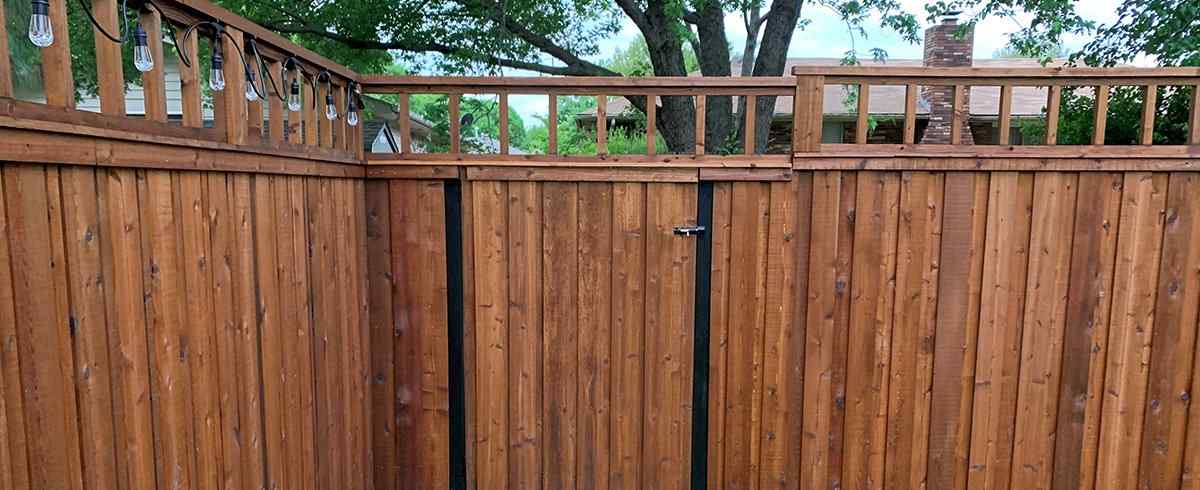
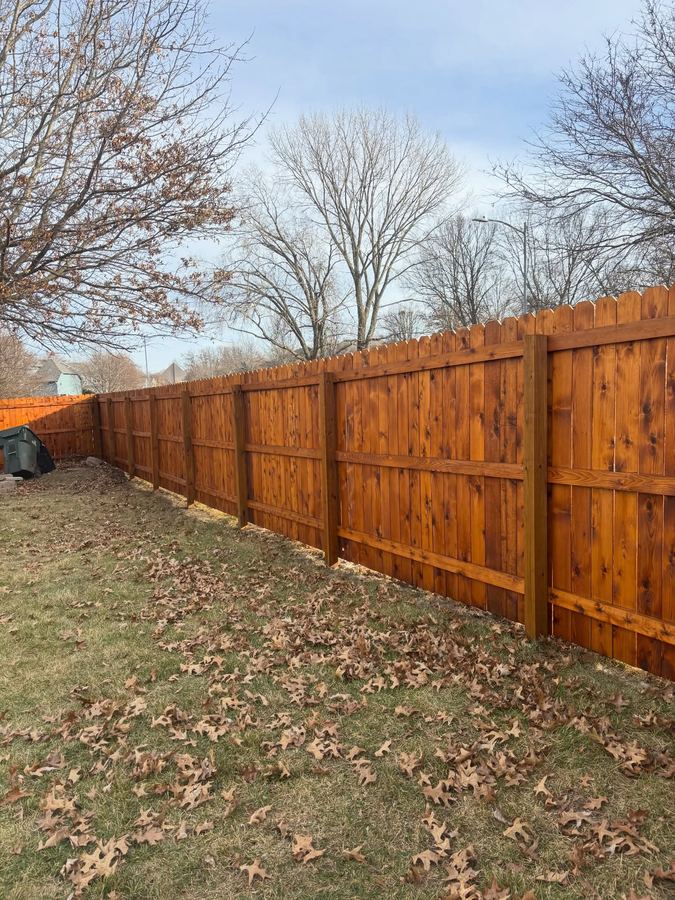
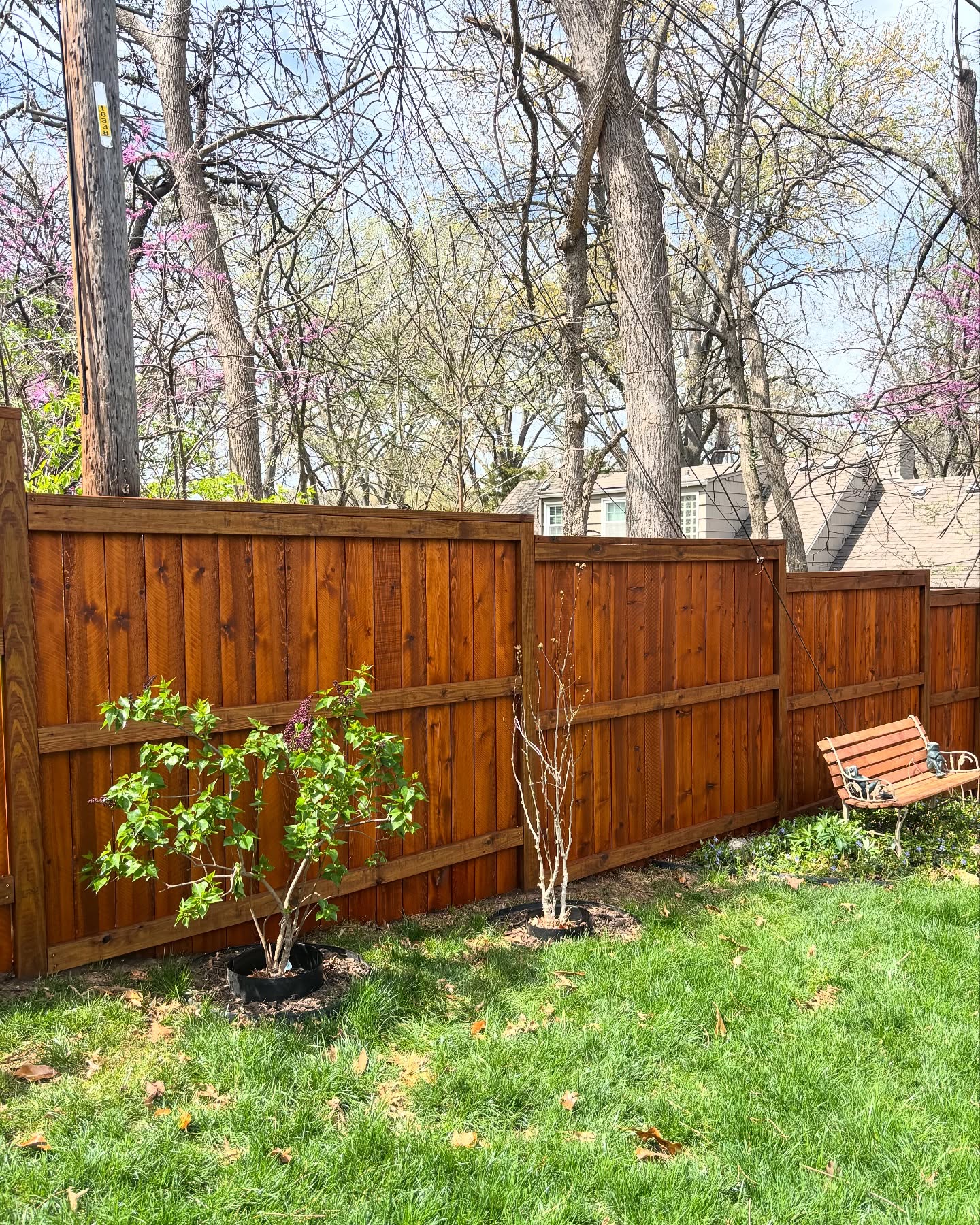
Cedar re-stain in mahogany in Liberty, MO by RKC Wood Care Pros
Cedar Re-Stain · Liberty
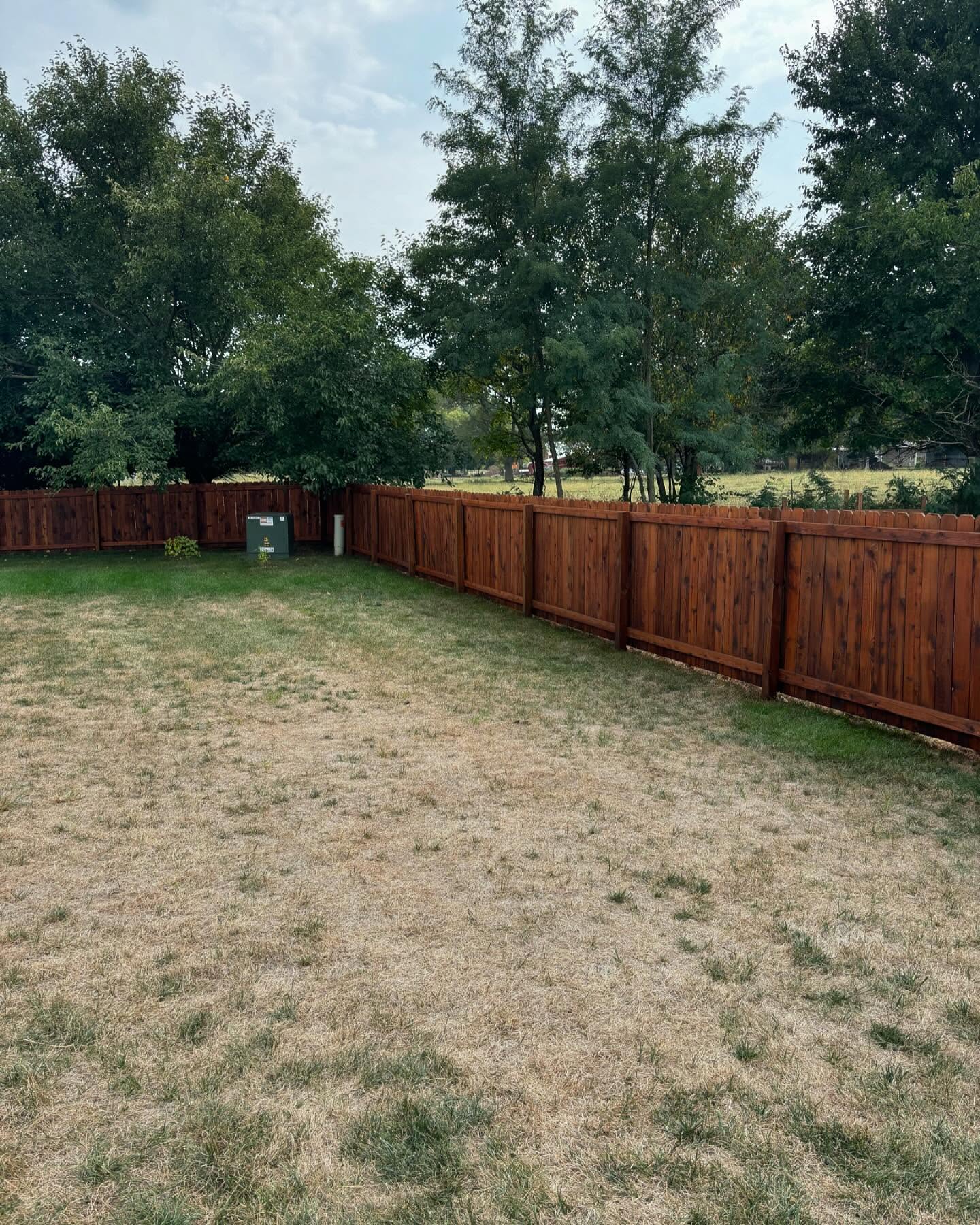
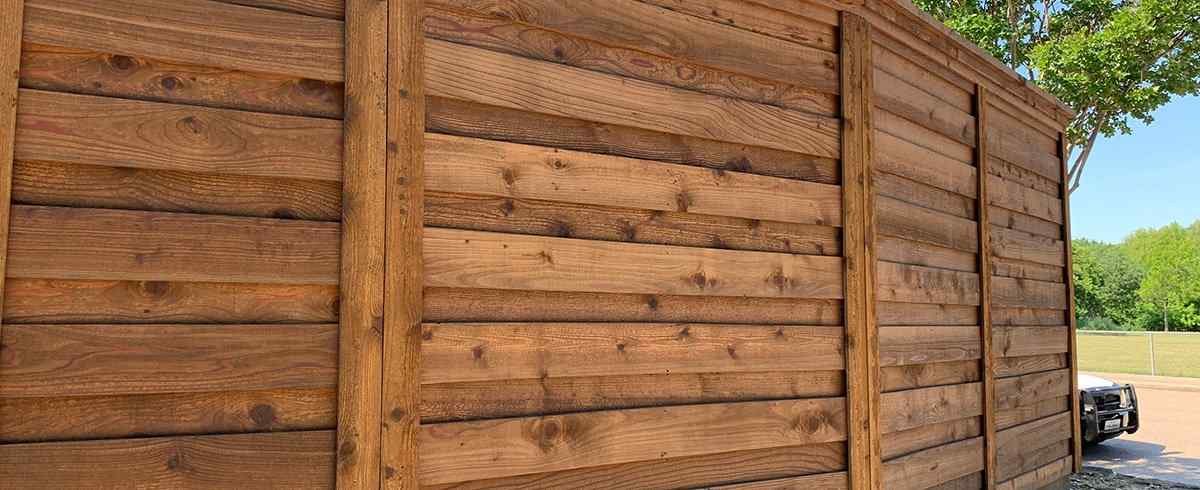
Freshly stained cedar first coat in Liberty, MO
First Coat · Liberty
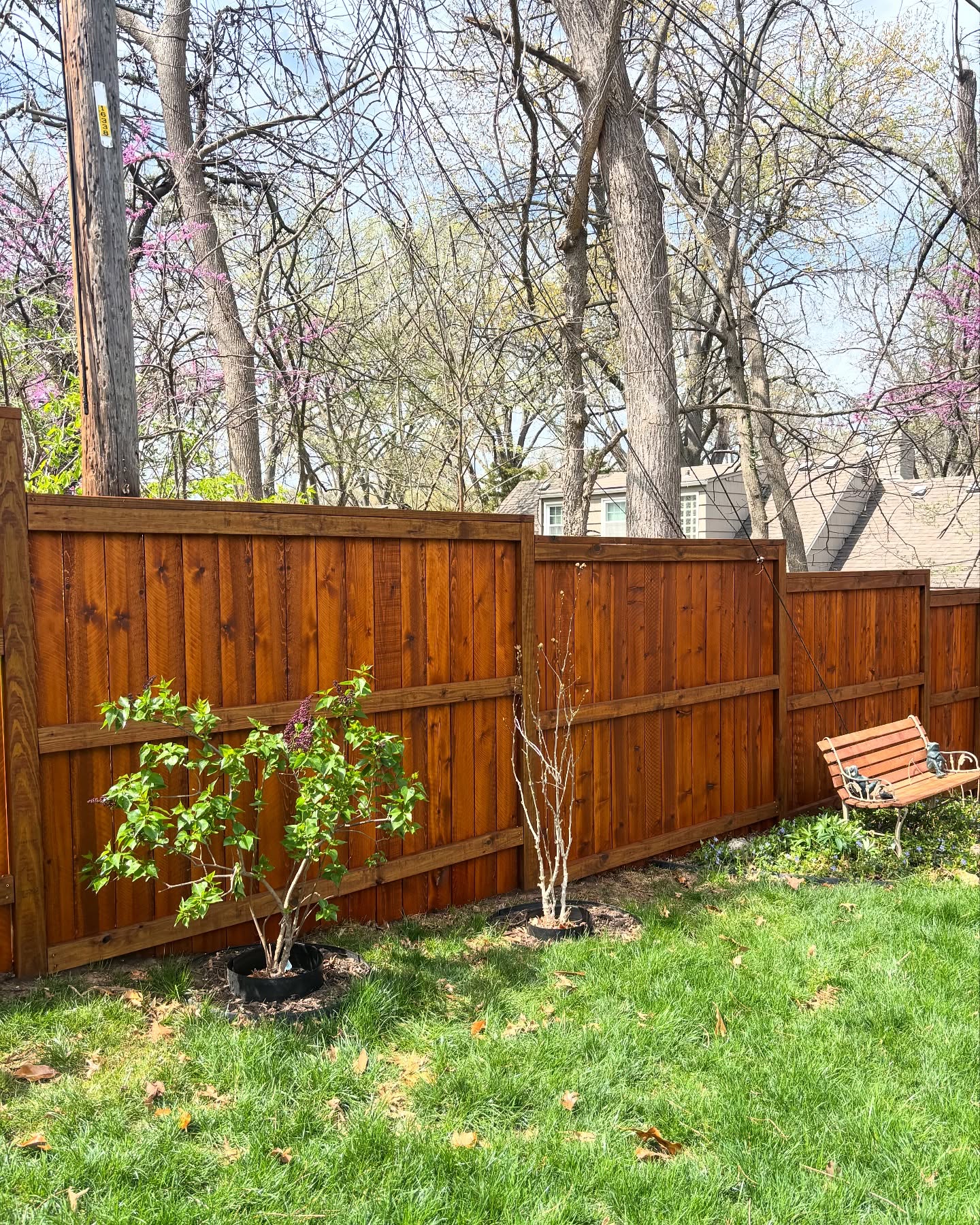
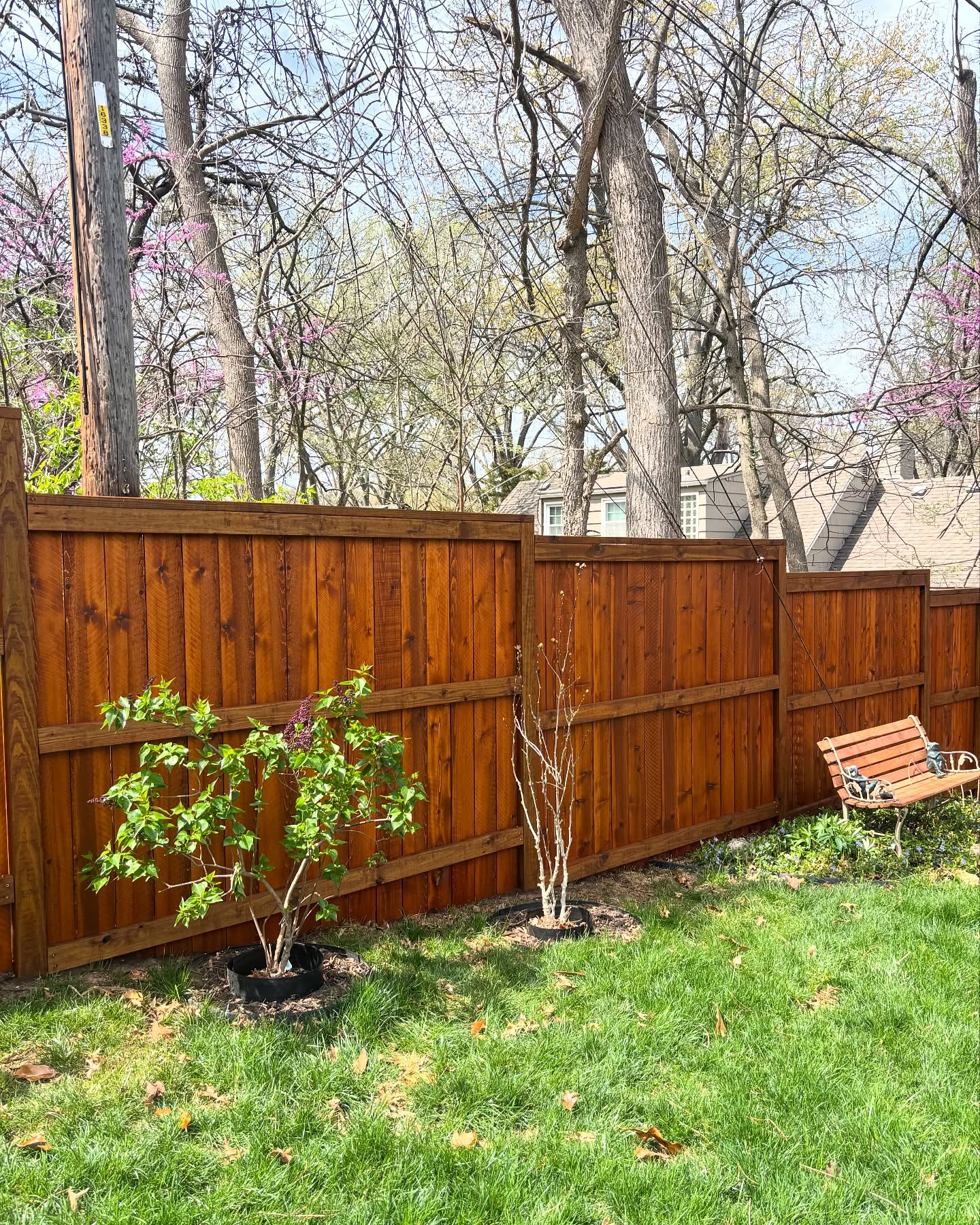
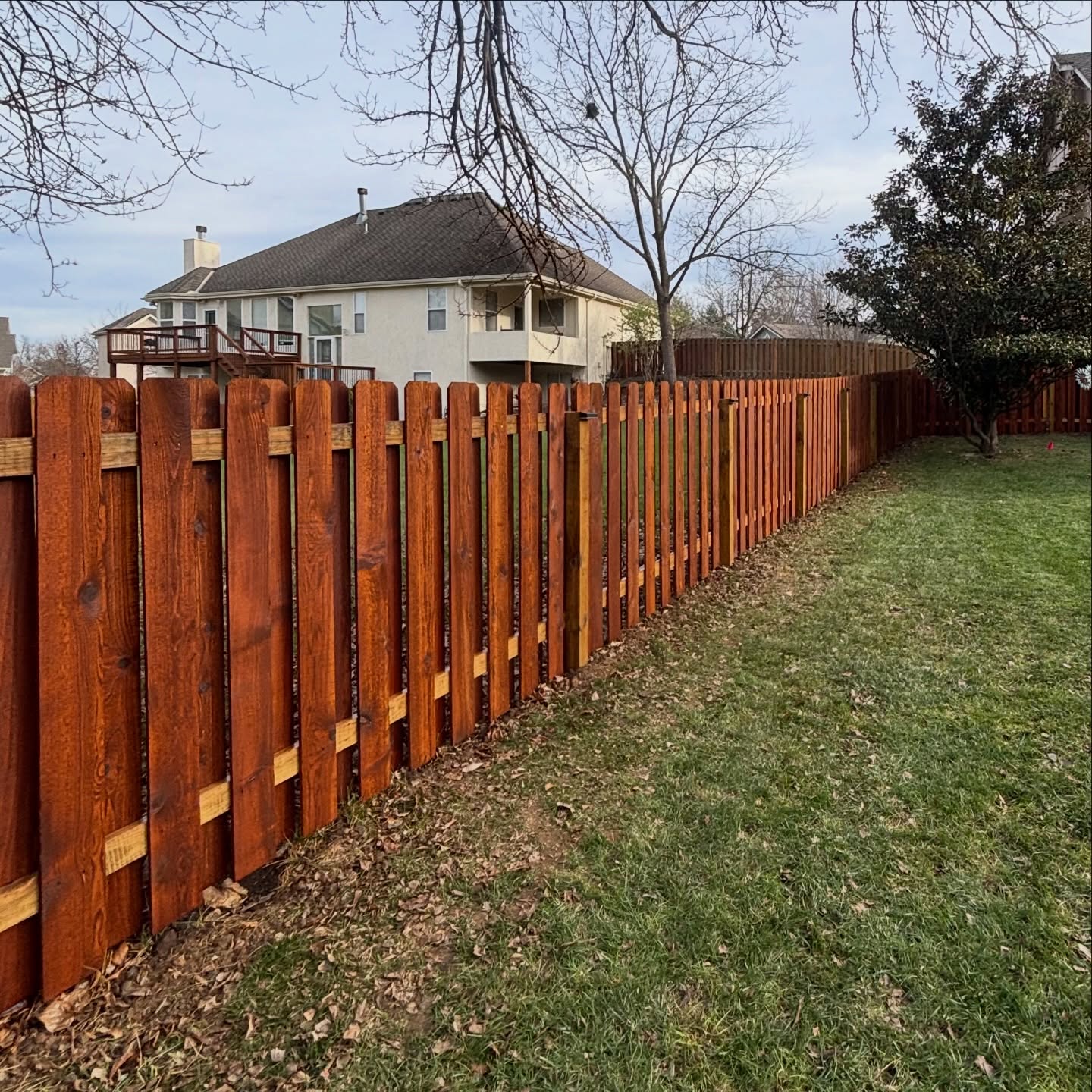
Pressure-treated pine re-stain in Liberty, MO
PT Re-Stain · Liberty
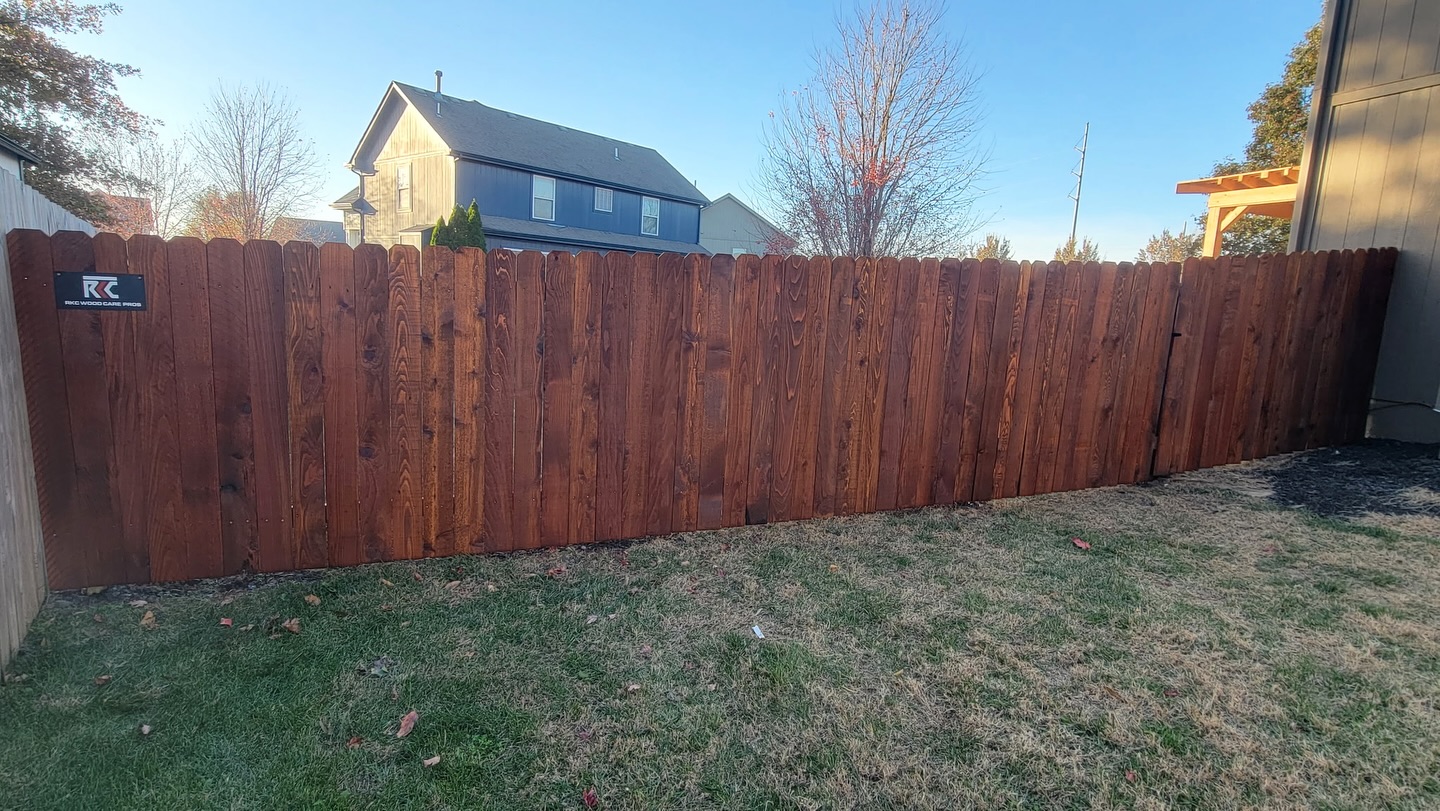
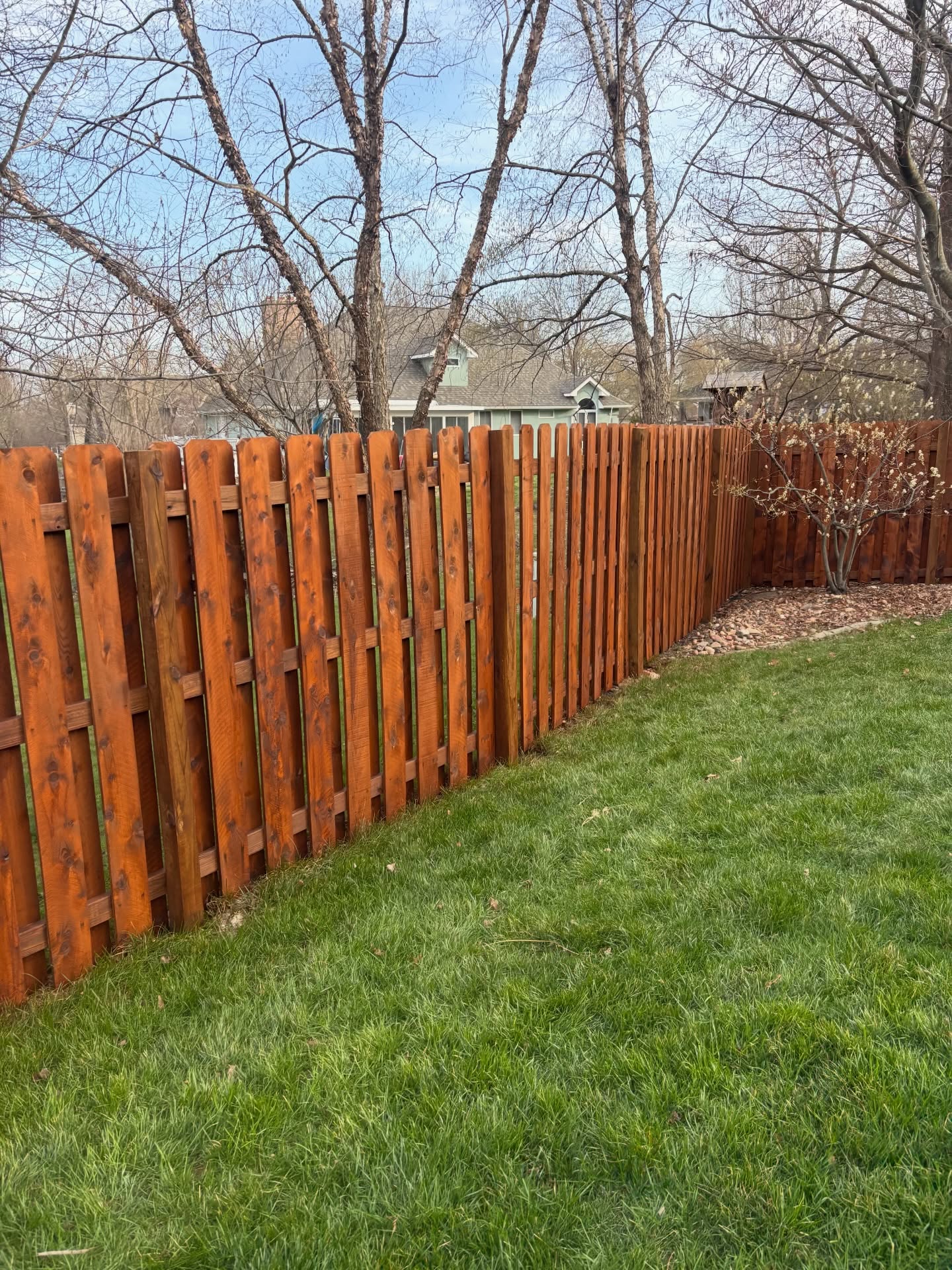
Gray-fence restoration to a dark walnut finish in Liberty, MO
Gray-Fence Restoration · Liberty

REVIEWS

What Kansas City Homeowners Say About RKC

4.9 ★ · 85 Google reviews

Every review is on our Google Business Profile — read them there, unedited.

Read all 85 reviews on Google

LIBERTY STAIN QUESTIONS

Stain Questions Liberty Homeowners Ask Most

Three questions decide most Liberty stain jobs: which finish system the wood is asking for, when the coat should go on, and whether a run that looks done-for can actually be saved instead of torn out. These are the ones Liberty homeowners raise at the estimate — sorted by topic, each answer tied to the oil-versus-water call, the clay-hill dry window, and pulling a failed finish back. Don't see yours? Call (913) 286-1091 and ask.

Liberty, MO fence staining by RKC Wood Care Pros

Oil, Water-Based & Finish Types

Oil-based or water-based stain — which does a Liberty fence want?
It depends on the wood and the exposure, and the finish guide above lays it out. Oil-based penetrating stain grips pressure-treated pine and carries more pigment on the hard-sun south and west faces that bleach first, so it's our default there. A fast-drying waterborne semi-transparent suits new cedar, lighter tones, and tight schedules. Both are penetrating finishes that fade instead of peeling — the important line isn't oil-versus-water so much as penetrating-versus-film. We match the family to your fence and prove the tone on a hidden board first.
Why penetrating stain instead of a solid stain or a clear sealer?
It comes down to how each one fails. A solid opaque stain carries the most color but builds a skin on top of the wood — and under Liberty's freeze-thaw that skin cracks and lifts, so renewing it means scraping the whole run back first. A clear sealer keeps the natural grain but has no pigment to block UV, so the cedar silvers on schedule regardless. A penetrating semi-transparent threads the needle: pigment enough to hold off the sun, thin enough to sink into the grain and wear by fading. Because it fades rather than lifts, the next coat is just wash-and-reapply — and over a full Liberty backyard that's most of what the fence costs you over its life.
What is 'spray and back-brush,' and why insist on it?
It's the pairing that gets you an even face and deep penetration at the same time. Spraying on its own is fast but drops the finish unevenly — pooling at the picket bottoms, going thin up top. Brushing on its own is even but crawls across a full perimeter and leaves lap marks where wet meets dry. Do both — one hand spraying, the other brushing that wet finish straight into the grain before it can set — and you get speed and depth together. Every Liberty crew we send works that way as a rule; across a hilly lot it's what separates one continuous tone from a fence that looks like it was done in two sittings.

Timing & Schedule

When should a new Liberty cedar fence get its first coat?
About 30 days after install for cedar — that window lets the internal moisture fall so a penetrating finish keys into the grain instead of beading on top. Pressure-treated pine runs closer to 90 days, because the factory treatment has to cure before it will accept a stain properly. Every RKC install in Liberty leaves with that first-coat date written on the invoice, and we schedule it rather than leaving it to you to remember.
How often does a Liberty fence need re-staining?
Figure a fresh cedar coat roughly every 2 years around here, and every 3 on treated pine. Between the exposed hilltop sun, the 40-plus inches of rain a year, and 80-some freeze-thaw swings, a Liberty fence chews through finish faster than the 'every few years' advice written for gentler climates — and a pale or clear finish gives out sooner than a pigmented one. Let cedar drift much past the two-year point and the even tone you paid for starts to mottle as the sun-facing runs lighten ahead of the shaded ones. Your next date goes on the invoice, and we're the ones who circle back when it arrives.

Prep & Restoration

My Liberty fence is gray and peeling — is it too far gone to stain?
Usually not. On the older streets a gray, blotchy, or peeling fence is almost always a finish that failed — a film that flaked or a clear that let the cedar oxidize — over wood that's still sound. We strip whatever failed, brighten the gray back to a common tone with oxalic, wash and dry it hard, then lay one penetrating coat so it reads as a single fence again. The one exception is rot: where a probe finds soft fiber we stop and replace boards first, because no finish saves wood that's already breaking down.
Can you match a fence that's gone two-tone or was patched?
Yes — in the historic core that's a lot of what a re-stain is. A prior owner's touch-up in the wrong product, a replaced section that never weathered in, a west face three shades lighter than the rest: we brighten the whole run to a common baseline first, then lay one family and tone over all of it so it levels out. Matching a finish we didn't apply takes a test square, but we get it close before the full run goes on.

OTHER LIBERTY FENCE SERVICES

More Fence Services Available in Liberty

Each link below keeps you in Liberty — its own page, with pricing, conditions, and recent job photos tied to this city rather than the metro at large. Weighing a fresh install, a repair, a gate, or one specific material alongside the staining? Here's where each of those picks up.

Ready when you are

Get a free estimate — we usually respond the same day.

Call (913) 286-1091