
1
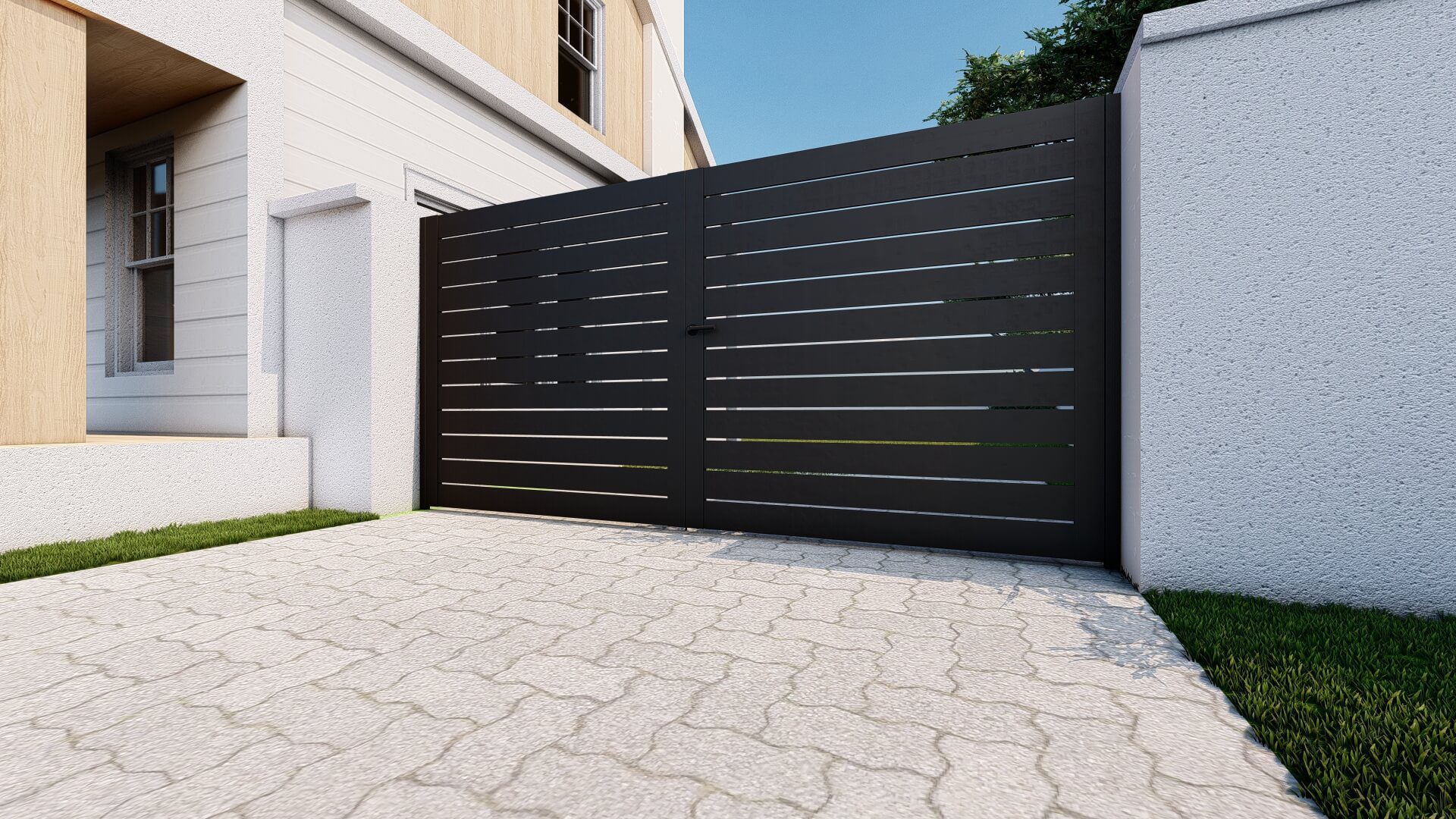
Gate Installation in Liberty, MO — For the Historic Core and the New West Side
RKC Wood Care Pros builds gates across both Libertys — the century-old William Jewell core and the new cedar-and-aluminum subdivisions west of I-35 — from one local crew, on welded steel frames with hinge posts cored a true 36 inches through the Clay County rock. One day it's a spear-top steel entrance matched to a home near the Square; the next it's a dog-ear cedar drive gate out in Benson Place. The steel bones and the 36-inch footing don't change; the face on top does. Every leaf is built to Liberty's rolling grade so it clears the drive and latches on the first pull. 4.9 stars from 85 Google reviews. Tell us the opening and we'll walk it the same week.
★★★★★
4.9
from 85 reviews
Licensed
& Insured · KS + MO
400+
fences installed
A+ BBB Rated 400+ Fences Installed Since 2021 Welded Gate Frames · Galvanized Hardware Free On-Site Estimates
WHY LIBERTY HOMEOWNERS INSTALL NEW GATES
A Gate That Fits the House — Whether It's 1890 or 2020
Liberty is really two towns — a historic college core and a fast-growing west side — and the gate that looks and works right in one is wrong in the other. A property near William Jewell and the Square wants a gate that reads like the architecture. A new Benson Place or Shoal Creek lot wants a clean cedar or aluminum leaf that matches the run. Under both, the same welded steel and the same 36-inch rock-cored footing. Four things separate a Liberty gate that still swings square in year ten from one that sags by year two.
2
A hinge post cored a true 36 inches — through the rock
3
A leaf built to the rolling grade so it never gaps or drags
4
A latch that catches on the first pull, checked at 30 days
LOCAL CONDITIONS FOR GATES
What Liberty's Rock and Rolling Hills Mean for Your Gate
A gate is the highest-stress thing on any fence — its own weight hanging off two hinges, cycled thousands of times a year — and Liberty's ground makes it harder in two very specific ways. The 'Clay County Rock' — a limestone-and-shale shelf sitting shallow under much of the city — tempts every crew to stop a hinge footing short. And the rolling hills that make standard panels gap at the bottom will drag a level gate leaf across a sloping drive. Get those two right, plus a welded frame under whatever face the property calls for, and Built for Every Storm holds on both sides of Liberty.
1
The hinge footing gets cored to a true 36 inches — through the rock
In Clay County you hit rock digging. The limestone-and-shale shelf that runs under so much of Liberty is exactly why crews stop a footing short, packing gravel on top of the shelf instead of getting through it — and a hinge post that only bites the top of the rock walks loose the first time a full-weight leaf swings on it. We bring the heavy-duty auger, core past the shelf, and set the hinge post a genuine 36 inches in wet-poured concrete. The one post carrying the gate is the one you cannot cheat.
2
The leaf is hung to the rolling grade, not to a level fiction
Liberty rolls. That's why standard fence panels 'gap' at the bottom out here — the ground drops under the run and a level panel leaves a dog-sized wedge of daylight. A gate has the same problem, worse: hang a rectangular leaf across a sloping drive and it either drags the high side or swings up off the low side. We measure the actual fall across the opening and build the leaf to it, so it clears the pavement through the whole arc and closes flush to the latch instead of into it.
3
Welded frame, hardware rated over the leaf, finish matched to the property
Every frame is a welded steel square tube — clad in cedar for a Benson Place privacy run, powder-coated spear-top for a historic property near the college — never bolted, because a bolted joint racks out of square and the latch stops finding the catch. Hinges are specced to the leaf weight plus a 50-percent margin: strap pairs over 100 lbs on walk gates, ball-bearing pivots over 400 lbs on drive leaves, all hot-dip galvanized or powder-coated so KC humidity can't rust them out. Same steel bones under two very different Liberty faces.
Liberty neighborhoods we've installed gates across include Benson Place, Shoal Creek Valley, Claybrooke, Canterbury Estates, and Woodneath Farms on the west side, plus the historic parcels around William Jewell and Liberty Square. Same rock-cored footing, same welded frame — a different face on top of each.
START WITH WHICH LIBERTY YOU'RE IN
The Property Picks the Gate — The Ground Picks the Build
The single biggest decision on a Liberty gate is which side of town it's for: an era-matched leaf for the historic core, or a matched cedar-and-aluminum leaf for the new west side. Find the row that sounds like your property. The left column is where you are; the middle is the material that fits; the right is how the leaf actually gets built for Clay County rock and rolling grade. The face changes across town — the steel bones and the 36-inch footing don't.
| Your Liberty property | The material that fits | How we build the leaf here |
|---|---|---|
| A century property near William Jewell or Liberty Square | Custom wood or spear-top steel | A hand-built walk or entrance gate matched to the era of the house — picket profile, cap detail, or powder-coated ornamental — welded steel underneath so it holds, wood or spear-top over it so it belongs. |
| A new 6-ft cedar privacy run out in Benson Place | Dog-ear or board-on-board cedar | A matched cedar leaf on a welded frame, hung to the subdivision's rolling grade so it clears the drive, self-latching catch for the dog. The everyday walk-and-drive combo the west side asks for most. |
| A black-aluminum 'view' lot toward Shoal Creek | Powder-coated aluminum panel | A gate leaf that carries the same rail-and-picket line as the aluminum fence, self-latching, sized so nothing about it reads as an add-on. The material the western view lots gravitate to. |
| An older core lot trading tired chain link for privacy | Cedar over the new run | A new cedar walk gate sized up from the narrow old chain-link opening and tied into the upgraded line — the single most common upgrade driving fence calls in Liberty's original neighborhoods. |
| A drive that climbs off the street on the rolling west side | Cedar or steel on a slide | A cantilever or V-track slide with no swing arc to catch on the rising pavement — the fix when a swing leaf would bind halfway up a Clay County grade. |
| The boat, camper, or trailer parked in the side yard | Cedar or steel double-drive | A true 14-to-20-foot clear opening split into two braced leaves at a center drop rod, both hinge posts cored 36 inches through the rock. Built to the vehicle, not to a catalog width. |
This isn't a menu you order from cold. On the estimate visit Josh reads the property and the run it ties into, probes how shallow the rock sits, and measures the fall across the opening — then the gate follows from all three. A historic Square-area entrance and a Benson Place drive gate are worlds apart to look at, and identical in the one place that keeps them swinging: the footing.
GATE TYPES
Walk, Drive, Double & Sliding — Every Gate for Your Liberty Property
The right gate depends on how you use your property — and what the driveway geometry actually allows. Here are the four gate types we install across Liberty, what each one fits, and real pricing for each. Materials (cedar for residential, vinyl in Shoal Creek area, custom wood for historic William Jewell-area properties) are swappable within each category; the frame and post engineering stay the same.
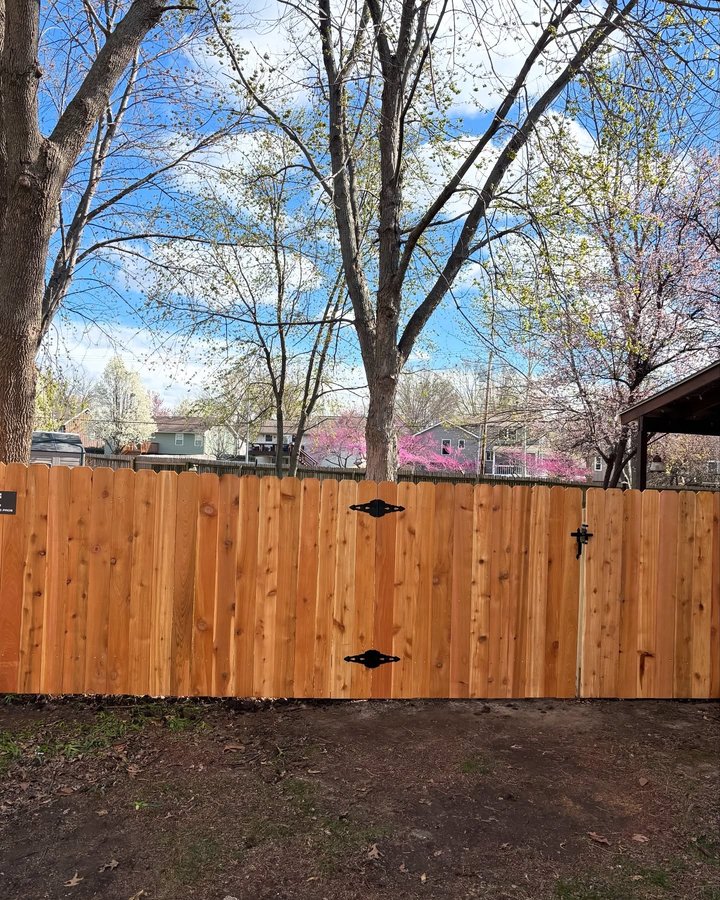
Walk Gate — 3–4 ft wide
The everyday Liberty side-yard gate
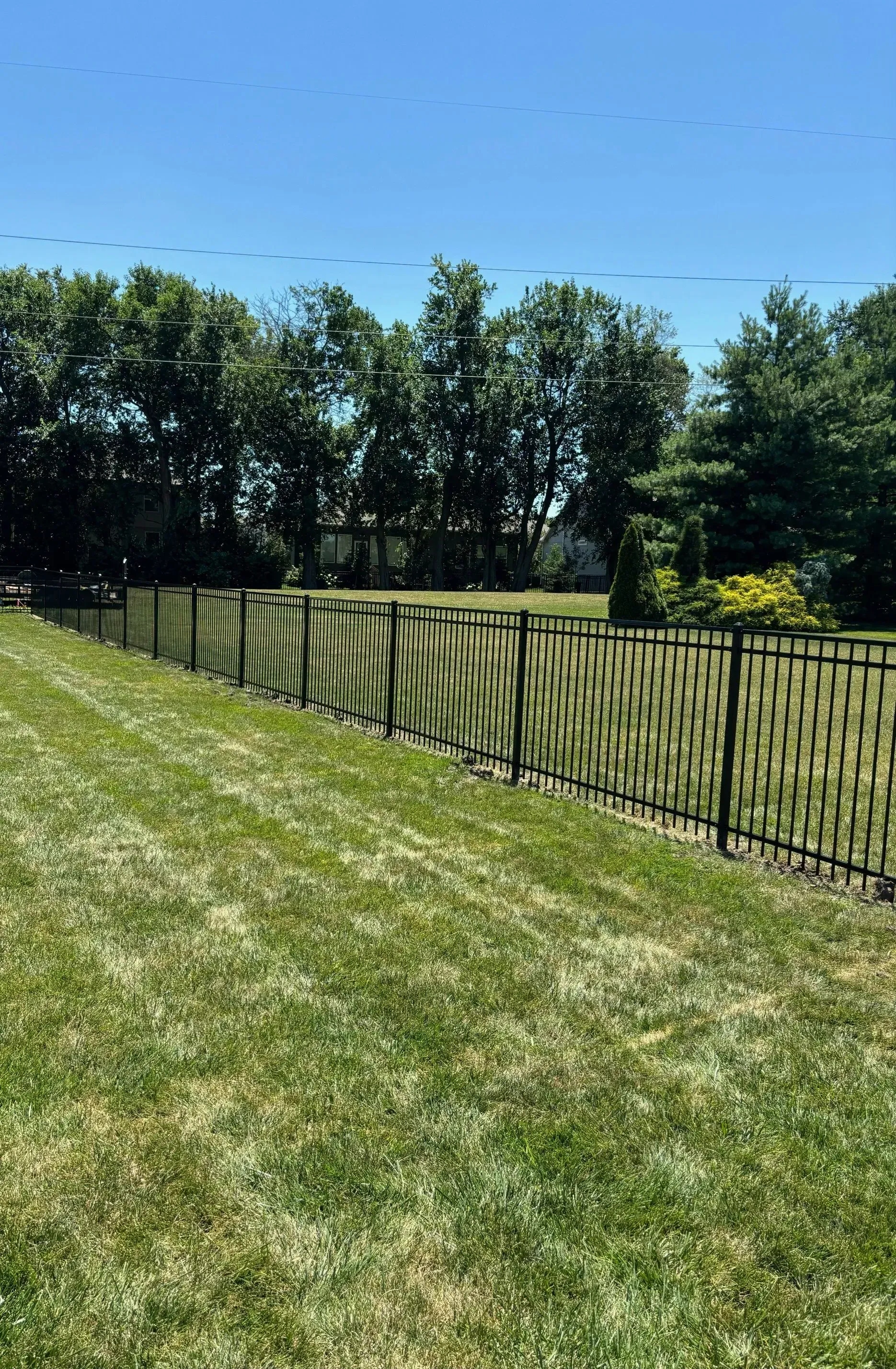
A pedestrian gate cut into the run you already have — the door you actually use every day carrying groceries in or wheeling the bin out. On a new Benson Place cedar line it's a matched dog-ear leaf; on a century property near the Square it's a hand-built wood or spear-top steel gate that reads like it was always there. Welded frame, strap hinges sized past the leaf weight, and a latch tuned to catch on the first pull.
- Price: $300–600 (wood) · $450–850 (steel)
- Typical use: Side-yard entry, backyard walk-through, pool-side gate
Single-Drive Gate — 10–14 ft wide
The common new-subdivision drive width
One swing leaf across a standard Liberty drive. Welded square-tube frame, a diagonal brace running bottom-hinge to top-latch, ball-bearing or J-bolt hinges rated over the leaf's wet weight. On the rolling Clay County grade the leaf is hung to the actual slope of the approach so it clears the pavement through its whole arc instead of dragging at the high side. Hinge post cored a true 36 inches even where the limestone shelf sits shallow.
- Price: $650–1,200 (wood) · $900–1,800 (steel)
- Typical use: Newer-subdivision driveway, single-vehicle entry, cedar or steel finish
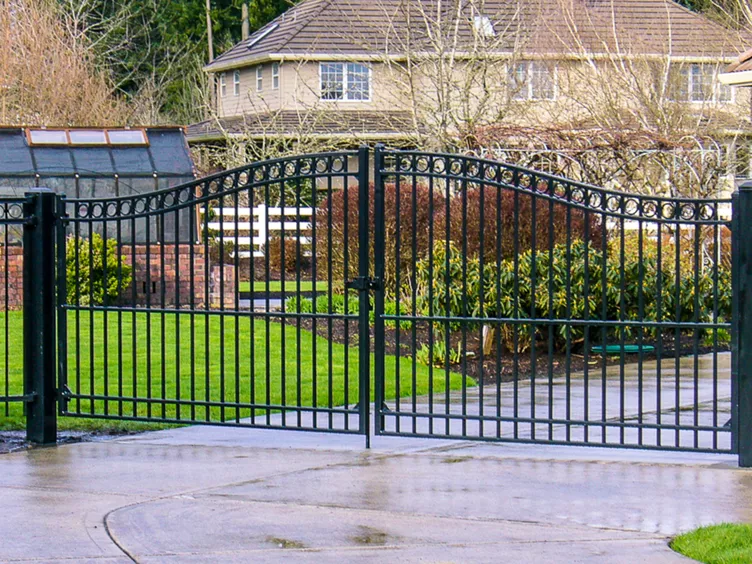
Double-Drive Gate — 14–20 ft wide
Trailers, boats, wider estate entries
Two leaves off opposite hinge posts closing to a center drop rod. Splitting a wide opening in half means each hinge carries a short leaf, not one long 16-foot lever that racks itself out of square by year two. The build the western estate lots reach for when a boat, camper, or work trailer has to clear. Both posts down a full 36 inches, both leaves braced corner to corner.
- Price: +30–50% over single-drive
- Typical use: Wider drives, boat/RV clearance, estate entries out on the west side
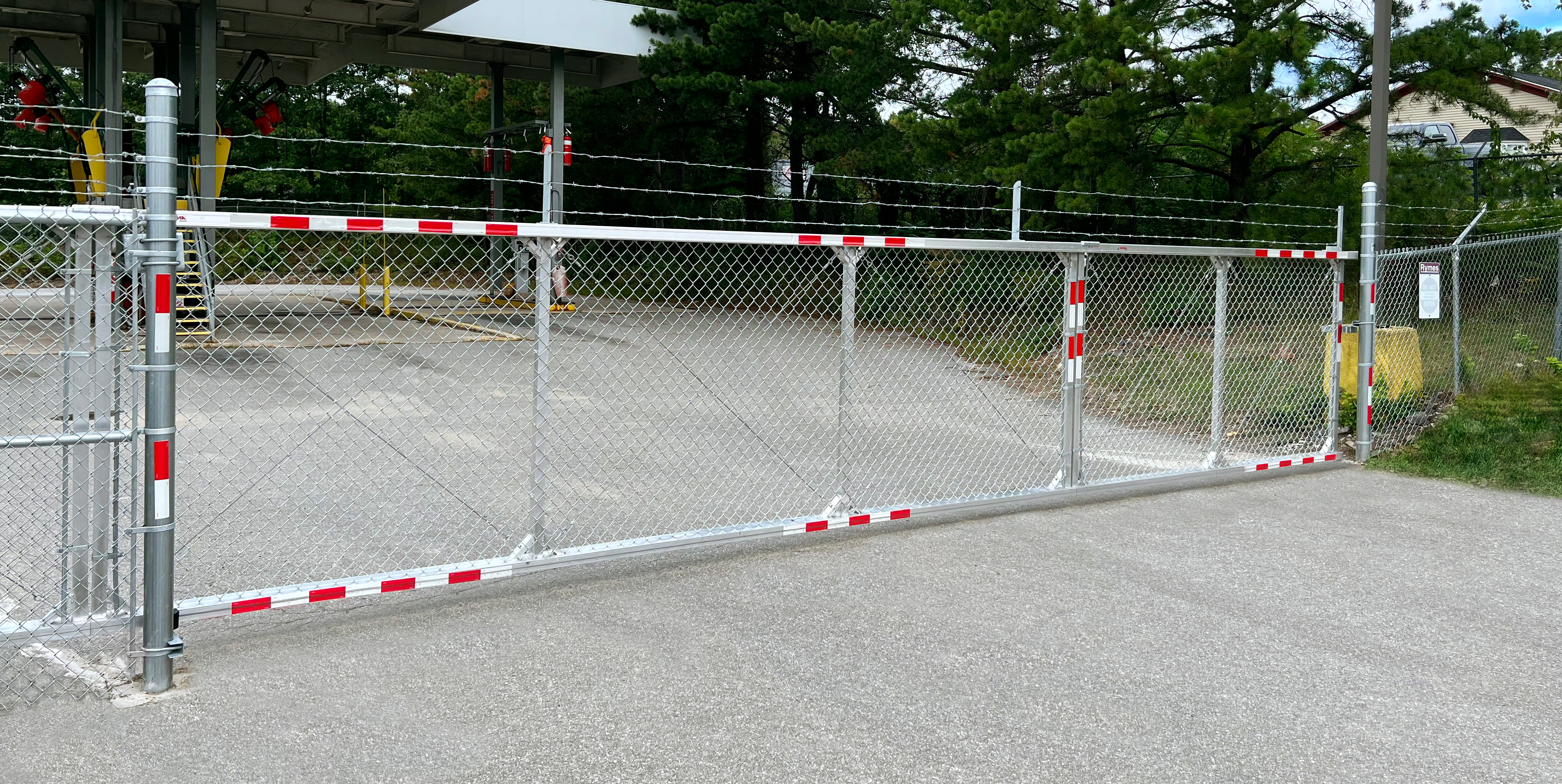
Sliding Gate — 10–20 ft travel
For openings a swing arc can't clear
Where the drive climbs off the street, the lot is tight, or a retaining wall sits inside the swing path, the leaf rides sideways on a cantilever or V-track instead of swinging out. No arc to clear, so a rising Clay County approach can't stop the gate halfway. The answer on the steeper west-side and infill lots where a swing would bind on the grade.
- Price: +$400–900 over swing-gate pricing
- Typical use: Climbing driveways, narrow lots, retaining-wall fence lines
LIBERTY GATE PRICING
What Gate Installation Costs in Liberty
Gate pricing in Liberty tracks with gate type, size, and how much the era-matching costs — a plain cedar leaf and a custom historic-core gate are different builds. Every quote includes welded steel frame construction, galvanized heavy-duty hardware, and a hinge post cored a true 36 inches through the Clay County rock. Below are the three configurations we quote most often across both sides of Liberty.
Wood Walk Gate
$300–600
installed
Cedar or pressure-treated pine. Welded frame, strap hinges, gravity or drop-rod latch.
Single-Drive Driveway Gate
$650–1,800
installed
Wood $650–1,200 · Iron $900–1,800. Welded frame, diagonal cross-brace, ball-bearing hinges.
Double-Drive / Custom Gates
+30–50%
over single-drive
Custom widths, era-matched wood or ornamental detailing, matched finials, and specialty hardware quoted on site.
Every Liberty gate estimate is free, written, and itemized down to the hinge brand, the post depth, and the frame material — no verbal numbers and no surprises on install day. Building a full run to hang the gate on? Start at the metro Kansas City gate installation hub, then call (913) 286-1091 or request an on-site walkthrough.
OUR PROCESS
How a Gate Install in Liberty Actually Happens
Four steps from the phone call to the first swing. Most Liberty gate projects run 1 to 3 weeks start to finish. Install days themselves are short — walk gates are often same-day, drive gates are one to two days. The longer stretch is fabrication, especially on a custom era-matched leaf for the historic core, plus concrete cure time. Here's what each step actually looks like on a gate install in Liberty.
1
Josh walks the opening and reads which Liberty you're in
Josh measures the actual opening — almost never the number the homeowner remembers — and reads the run it ties into: a matched cedar leaf for a new western subdivision line, an era-right wood or ornamental gate for a property near the college. He checks the fall across the drive, probes for how shallow the rock sits, and confirms swing direction and clearance. You get a written, itemized estimate the same week listing hinge, post depth, and frame material. No verbal numbers, no hardware decided on install day.
2
We match the gate to the fence, the era, and the budget
Before anything is cut we lock the leaf to the run it belongs to — dog-ear cedar to a Benson Place privacy line, powder-coated steel or custom wood to a historic Square-area façade, aluminum picket to a Shoal Creek view lot — and to a number you signed off on. On a rolling lot we lay out how the leaf gets built to the grade so it clears the drive. You approve the drawing and the hardware list before we order steel.
3
Install — hinge post first, welded frame second, hardware on site
The hinge post goes in on day one, cored a true 36 inches through the Clay County shelf and set in wet-poured concrete to cure overnight. Frame and panels hang day two once the footing is solid. Hinges and latch are mounted and dialed in on site — not preset at the shop — so the leaf swings square against the real slope of your drive and closes flush to the actual catch. Most walk gates finish in a day; drive gates usually take two.
4
Ten-swing walkthrough and a free 30-day settle check
Before final payment we swing the gate open and shut ten times and watch every hinge under load — any drag, scrape, or missed latch gets corrected on the spot. New footings settle a hair in the first month, so we come back at 30 days to realign the latch and take out any hinge drift, no charge. We also show you the one quarter-turn adjustment to make yourself down the road. Most Liberty homeowners never touch it — but you'll know how.
RECENT LIBERTY GATE INSTALLS
REVIEWS
What Kansas City Homeowners Say About RKC
4.9 ★ · 85 Google reviews
Every review is on our Google Business Profile — read them there, unedited.
Read all 85 reviews on GoogleLIBERTY GATE QUESTIONS
Gate Questions Liberty Homeowners Ask Most
Gate installation in Liberty comes down to type and sizing, building for the rock and the rolling grade, and hardware spec. Below are the questions Liberty homeowners actually ask during the estimate — grouped by topic, each answer specific to the historic core, the new west side, and the Clay County ground under both. If your question isn't here, call (913) 286-1091 and ask.
Gate Types & Sizing
What gate width fits a typical Liberty driveway?
Out in the western subdivisions the single-drive openings usually land 10 to 14 feet, and 12 feet is the number we build most as a single leaf. One welded, cross-braced leaf carries that span with no trouble. Cross 14 feet and we move you to a double-drive — two shorter braced leaves meeting at a center drop rod — because a single 16-foot leaf is a long lever the hinges have to fight every day, and it racks itself out of square by the second season. Walk gates sit at 3.5 to 4 feet, wide enough for a mower or a wheelbarrow on a single strap-hinge pair.
I've got a century home near the college — can a gate actually match it?
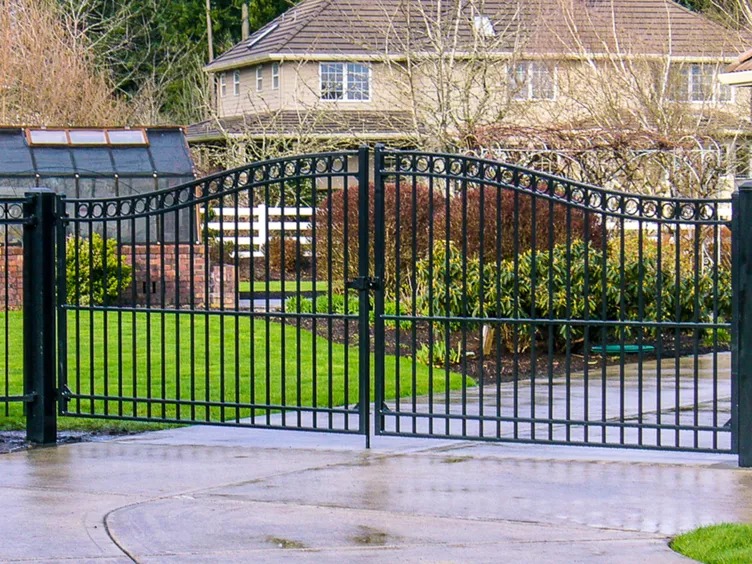
That's a lot of what we do in the historic core. The trick is a welded steel frame underneath — so the gate holds and latches like a modern one — dressed on top to the era of the house: a matched picket profile, a specific cap or scallop, or a powder-coated spear-top steel leaf where the property calls for ornamental. The old chain-link or big-box gate hanging on a Square-area property almost never fits the architecture; a built-to-match leaf does, and it still swings true because the bones are current.
Can a gate go on my existing fence, or do the posts need replacing?
It comes down to the hinge post. If it's already 36 inches into concrete — rare on an older Liberty install, standard on anything we've built — we can often hang a new leaf off it. If it's shallow, surface-bolted, or showing any lean, it comes out and a proper 36-inch concrete-set post goes in, because a gate is only ever as straight as the post it hangs from. On the Clay County rock that often means re-drilling the footing to get real depth. We check the post on the estimate visit before we quote the leaf.
Swing or slide — how do I know which my drive needs?
Default to swing: a single leaf on one post or a double on two, simpler and cheaper, whenever the drive is flat enough to arc the leaf open. Go to a slide when the geometry blocks that — a drive that climbs off the street on the rolling west side, a lot too tight for the arc, or a retaining wall inside the swing path. A cantilever or V-track slide rides sideways with no arc to catch on rising pavement, and the hardware runs $400 to $900 over the equivalent swing. On a Liberty grade, the slope usually makes the call for you.
Building for Liberty Ground
Everyone says they hit rock digging in Liberty — how do you handle it?
You will hit it — the 'Clay County Rock,' a limestone-and-shale shelf that sits shallow under a lot of the city, is the number-one thing that stops a footing short. The lazy move is to pack gravel on top of the shelf and call it a post; that post walks loose the first season a full gate swings on it. We bring a heavy-duty auger, core through the shelf, and set the hinge post a true 36 inches in wet-poured concrete. It's slower on install day and it's the whole reason the gate still swings square years later.
My yard rolls — will a drive gate drag or leave a gap at the bottom?
Not if it's built for the grade. The rolling hills are exactly why standard panels 'gap' at the bottom out here, and a gate has the problem worse: a rectangular leaf hung across a sloping drive either drags the high side or floats up off the low side. We measure the actual fall across your opening and fabricate the leaf to it — stepped or raked to the slope — so it clears the pavement through the entire arc and shuts flush to the latch instead of jamming into it or gapping under it.
How long does gate installation take in Liberty?
A walk gate is usually a single day on site, one to two weeks from approval once you count concrete cure and hardware lead time. A single-drive runs one to two days on site, two to three weeks of lead time for fabrication. A double-drive is about two days on site, three to four weeks of lead. A slide adds roughly a week for the track and rollers. A custom era-matched leaf for a historic property adds fabrication time up front — worth it for a gate that actually fits the house.
Pricing & Hardware
Why does a welded frame cost more than a bolted one?
It's more shop time — every corner cut, fit, tacked, and run with a finish weld — but that frame stays square for the life of the gate. A bolted frame flexes at each joint under load, works loose, racks out of square inside two seasons, and then the latch quits lining up and the leaf drags the catch. Welding adds maybe 15 to 25 percent to the frame cost and buys you out of the sag call at year five. Every gate we build in Liberty is welded at every corner; bolted gates are mostly what we get called to replace.
Does the material change much between the historic core and the new west side?
It changes the look far more than the structure. A Benson Place run is usually dog-ear or board-on-board cedar, or black aluminum on a Shoal Creek view lot; a property near the Square leans to custom wood or powder-coated steel matched to the era. The steel frame, the 36-inch cored hinge post, and the hardware rating stay the same across both — that's the part that has to hold. What shifts on the estimate is the cladding and the detailing, and that's where the price moves.
What's the warranty on the gate and its hardware?
The hinges, latches, drop rods, and cane bolts carry their manufacturer warranty — typically 10 years on ball-bearing hinges, 5 to 10 on strap hinges and latches. The welded frame is covered by our own workmanship warranty: if it racks out of square, sags at the latch corner, or a weld lets go under normal use, we come back and make it right. And every install includes the free 30-day settle check, where we realign the latch and take out any hinge drift once the footing has fully cured.
OTHER LIBERTY FENCE SERVICES
More Fence Services Available in Liberty
Every service below stays in Liberty — dedicated pages with local pricing, material notes, and recent project photos specific to your city. If you're hanging the gate on a brand-new fence, matching a historic-core run, or restoring an older install, here's where to go next.
Wood Fence in Liberty
Cedar privacy and board-on-board for the new western subdivisions, custom wood matched to the era near the college — 36-inch posts, first stain coat at 30 days included.
Wood Fence in Liberty →Ornamental Iron in Liberty
Powder-coated steel and aluminum — the material the historic core and the western 'view' lots both reach for when a run has to stay open to the sightline.
Ornamental Iron in Liberty →Vinyl Fence in Liberty
White, tan, and gray panels with aluminum-insert rails — the low-maintenance option growing fast across the Shoal Creek developments. Zero stain schedule.
Vinyl Fence in Liberty →Fence Repair in Liberty
Leaning-post resets, rolling-hill gap correction, and rock-anchored footing rebuilds — across the older core where mid-century fences are reaching end-of-life.
Fence Repair in Liberty →Fence Staining in Liberty
Semi-transparent penetrating stain, back-brushed in-house by the same crew that built the fence — color matched to your subdivision or your century home.
Fence Staining in Liberty →Liberty Fence Installation Hub
The full Liberty overview — every material, every neighborhood from the historic Square to Benson Place. Start here if you're not sure what fits your property.
Liberty Fence Installation Hub →Looking at gates beyond Liberty? Visit the metro Kansas City gate installation hub for the full gate-type scope across the KC metro.