Skip to content
Vinyl Fence Installation in Liberty, MO — Set Through Clay County Rock, Stepped to the Northland Hills

Vinyl Fence Installation in Liberty, MO — Set Through Clay County Rock, Stepped to the Northland Hills

Two things decide a Liberty fence: the rock under the post line and the roll of the ground. We drill a full 36 inches through Clay County stone and rack the panels to the grade — then hand you a vinyl line that never needs a coat of stain. Most Liberty lots hide Clay County rock and sit on rolling Northland ground, which makes the footing the whole battle and the grade the detail most crews botch. The panels we hang are capped, co-extruded PVC in white, sand, or woodgrain — Bufftech, CertainTeed, and Veka — carried on a steel-reinforced rail, cut to depth through the stone and stepped down any slope so the line meets the ground clean. It won't rot, it won't want staining, and the crew that first probes your rock is the same one that answers a warranty call down the line.

★★★★★
4.9
from 85 reviews
Licensed
& Insured · KS + MO
400+
fences installed
A+ BBB Rating 400+ Fences Installed Since 2021 Owner-Operated Free On-Site Estimates
Browse vinyl options ↓

WHY LIBERTY OWNERS PICK VINYL

Shoal Creek to Liberty Square — Vinyl for a Northland Lot

A quote is just a figure. What you're really buying in Liberty is a fence set right through the rock and made to sit on a hillside — one that works for the new west side or the historic core, and never wants a coat of stain. Nobody in Liberty picks a house for the fence. They call once the rock and the slope get in the way, once a west-side subdivision yard needs closing in, once a tired chain-link line in the old core is dragging the block down. As the Kansas City vinyl fence contractor that installs, repairs, and stains in-house, we build it for the ground it actually stands on.

1

The no-upkeep pick that's gaining on the new west side

Cedar is still Liberty's gold standard, but out in the new west-side builds — Benson Place, Shoal Creek Valley — vinyl is taking a real and growing share, and the reason is plain: a young family settling a fresh subdivision doesn't want a stain weekend on the calendar every couple of years. A hose-down is the whole upkeep. For a busy Northland household, it's the fence that asks nothing after the crew pulls out.
2

A run that steps down a Clay County hill without gapping

The rolling Northland ground is easy on the eyes and rough on a fence: set a privacy run dead-level across a slope and you leave a triangle gap under every panel — an open invitation at the low corner. We rack the panels to the grade or step them down in clean drops so the line follows the hill and closes to the ground. On a Liberty slope, how the fence meets the grade is half the job.

3

The modern upgrade the older core is making

In the historic streets near William Jewell and Liberty Square, a lot of the fence work is swapping tired, sagging chain link for a clean modern privacy line — and it lifts the look and the value of a century-old block. Vinyl gives that upgrade a crisp, finished face that holds for decades without a repaint, which is exactly what an owner improving an older Liberty property is after.

4

Cedar-town looks without the cedar chore

Plenty of Liberty homeowners love the warm wood-fence look their street is known for but not the maintenance that comes with it. A sand or woodgrain vinyl carries that warmth and skips the whole re-seal routine — no scraping, no coating, no graying under the Northland sun. It's the way to sit right among the cedar neighbors and never open a can of stain.

LOCAL CONDITIONS · LIBERTY

Clay County Rock, Rolling Hills & a Two-Sided Town — What Shapes a Liberty Fence

Four things set a Liberty install apart: the Clay County rock under the post line, the rolling Northland grade, the freeze-thaw that heaves a shallow post, and a town that's half historic core and half booming west-side suburb. Get the rock and the grade wrong and you're left with a fence that heaves or gaps at the bottom by the first hard winter. Each one gets built for by name below — a rocky, rolling Northland lot takes a plan of its own, not a spec borrowed from a flat suburb.

1

Clay County rock — the dig that needs a heavy auger

Ask any Liberty homeowner about their last fence and the story is hitting rock while digging. The Clay County stone under these lots is real, and it's the number-one thing that trips up a crew that shows up with a light auger and a shovel. We come equipped to drill and cut a full 36-inch hole through it — because a post that stops short of depth on stony ground is a post that heaves, and Josh confirms the depth on site before anything gets backfilled.

2

Rolling hills that gap a fence that isn't stepped

Clay County rolls, and that grade is exactly what leaves a standard fence gapping at the bottom — a level panel across a slope opens a triangle under its low end. The fix isn't complicated but it has to be planned: we rack the panels to follow the grade or step them down in clean increments so the run stays tight to the ground the whole way. Skip that and a hillside fence looks wrong and lets everything under it.

3

Northland freeze-thaw that levers a shallow post loose

Under the rock and topsoil, Liberty's ground takes the same winter cycle as the rest of the metro — freezing hard, thawing, refreezing — and that repeated heave is what walks an under-set post out of true over a few seasons. A footing driven the full three feet, seated in the rock rather than perched in loose fill, is what rides that out. It's the difference between a fence still plumb at year ten and one drifting by year three.

4

Two Libertys, two different fence jobs

Liberty is a historic college town and a booming Northland suburb at the same time, and the fence work splits with it: a custom picket or ornamental line on a century-old parcel near the Square one day, a 200-foot standardized privacy run in a west-side subdivision the next. We bid each for what it actually is — the old core and the new west aren't the same lot, and a fence built for one won't sit right on the other.

THE LONG-RUN NUMBER, NOT THE STICKER

Cedar or Vinyl on a Liberty Lot? The Fifteen-Year Math

Cedar is Liberty's gold standard, and on a historic street it's frequently the board that fits — no argument. But long-term, what settles the choice isn't the sticker at install; it's the tab the fence quietly runs up over the time you hold the house. Wood wants a fresh coat every year or two and a rebuild eventually; vinyl is one heavier payment that then goes silent. Below, honest dollars run against a 200-foot west-Liberty subdivision run — the size we bid most out there — the Clay County rock counted into both columns.

Over 15 yearsCedar (wood)Vinyl
Day-one install (≈200 ft, 6-ft privacy)About $7,000 for a solid cedar run — the gold-standard board hereAbout $9,600, steel-set rails and the rock dig already figured in
Coating and upkeep, 15 yearsSeven or so re-coats near $4,200, purely to keep the color from going grayZero — a garden hose is the entire chore
What the Clay County rock addsHeavy-auger and drill time on the holes, billed no matter the boardSame stone, same dig — then a base that won't rot out and need redoing
How long it standsFifteen to twenty years, then the boards check and it's a tear-outThirty years and up, the warranty moving to whoever buys next
Where the 15-year tally landsWell over $11,000 with the re-coats folded inA hair above the $9,600 you paid at the start
Who it's honestly forThe owner set on the gold-standard wood who'll keep the coat fresh — still most of LibertyThe west-side family that would sooner never think about it again

The honest split: want the gold-standard wood and willing to keep a coat on it? Cedar is the board that belongs on a historic street, and the Liberty wood page lays out that sealing routine. Rather pay once and be done with upkeep? Vinyl makes back its higher number by dropping off the chore list for good. We'll price both on your lot and stand the totals side by side — no lean either way.

THE LIBERTY COLD-AND-SLOPE QUESTION

Does Vinyl Crack in a Northland Winter? Only the Cheap Kind

It's a fair question on a rocky, rolling Liberty lot, and it sorts out cleanly: a panel built right and set deep rides out the cold, while the bargain board on a shallow post is the one that lets go. The cold does harden PVC, no question, and a hillside run leans on the rail harder than a flat one — so a thin, under-braced board really can fail. These are the four build choices that keep the cracking off a Liberty fence.

The outer cap is the panel's cold-weather layer

The panels worth buying are co-extruded: a thick, additive-heavy outer layer is fused onto the core, and that layer is where the fade-resistance and the cold-tolerance both sit. A single-wall board has no such layer — its protection is watered down across one thin hollow wall — so it's the one that pales and goes brittle after a Liberty winter or two. Capped is all we'll put in a quote.

On a racked hillside run, the rail carries the line

Step or rack a fence down a Clay County slope and the rail is spanning uneven ground the whole way — exactly where a hollow one starts to sag and then splits at the low post when it freezes. A steel-reinforced rail holds that span dead-straight down the grade. It's the piece that lets a stepped privacy run follow a hill without waving or cracking after a couple of Northland winters.

A post set in the rock stays put — and so does the panel

A vinyl panel is only ever as straight as the posts under it. Liberty's Clay County rock means a footing that's drilled or heavy-augered into stone rather than loose soil, and a post seated in rock doesn't heave when the ground freezes and thaws. That's the quiet reason the panels above stay in plane through the winters instead of racking loose at the joints like a shallow-set fence does.

The build gives the panel room to move

PVC grows a bit in summer heat and shrinks back in a deep freeze — small, but not nothing. Bolt the rails rigid and all of it concentrates on one joint until that joint cracks; give the run the deliberate play we build into every splice and it lengthens and draws back with the seasons, unmarked. It's an unglamorous step that quietly hands a fence years the cut-rate builds never reach.

WHAT WE INSTALL MOST

The Vinyl Liberty Homeowners Order Most

This handful of builds is what most Liberty vinyl orders come down to — each shown with a plain price, the years you'll actually get, and what little upkeep it wants. Which one fits comes down to your lot — a new west-side backyard, a historic-core frontage, or a run that has to step down a Clay County hill — and how warm you want it to read on a cedar street. We bring the samples out to the estimate, so you're choosing against your own siding rather than a catalog chip.

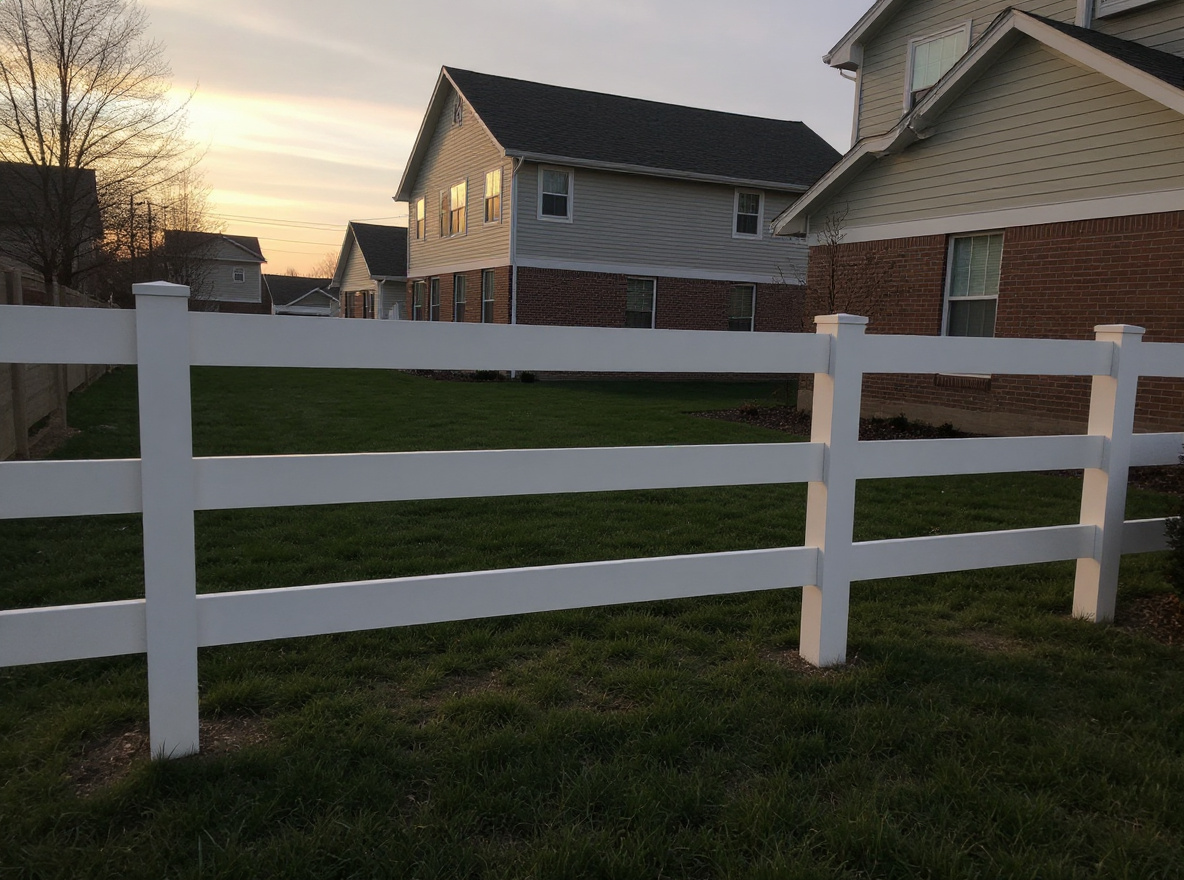
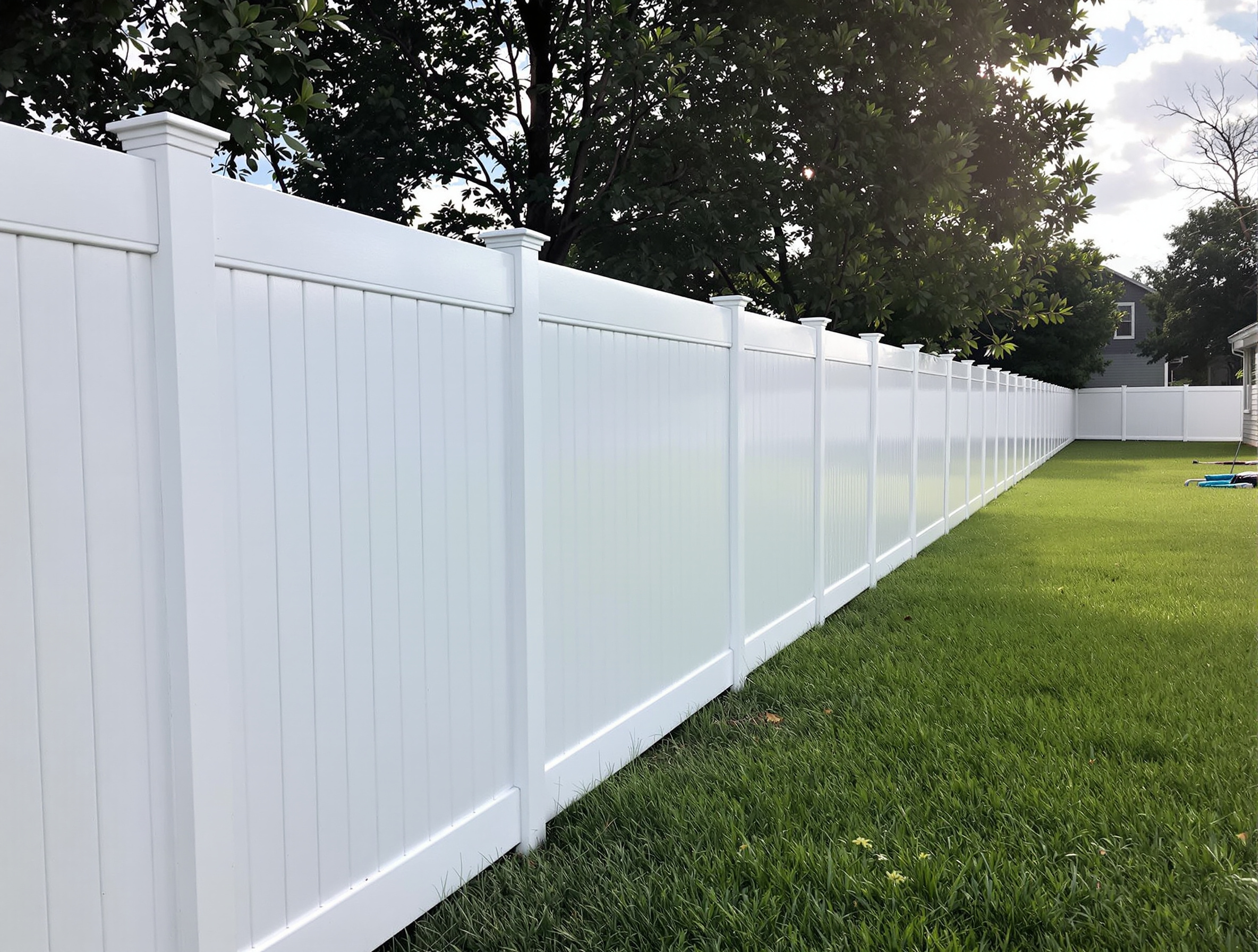
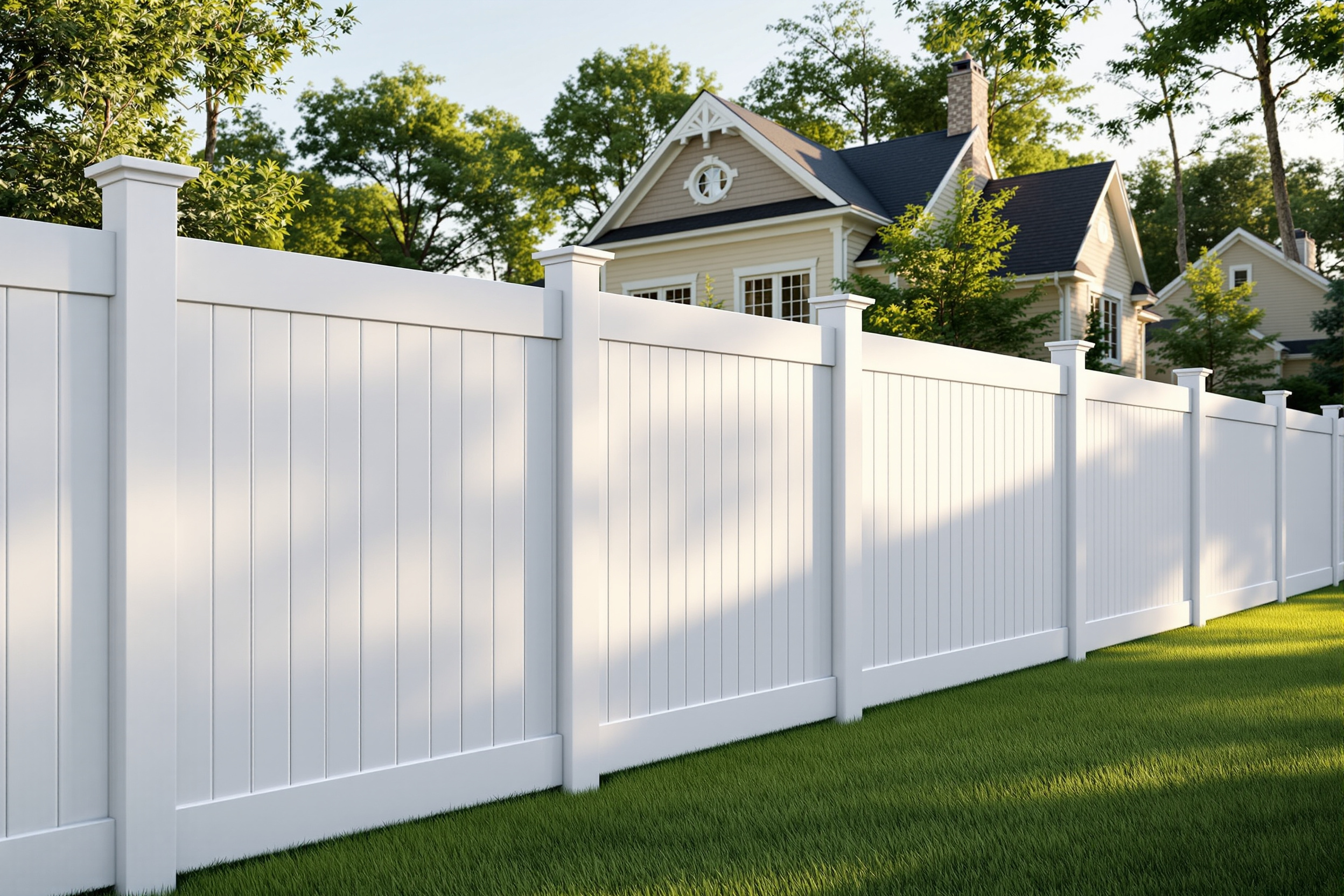
White Privacy — 6 ft vinyl fence by RKC Wood Care Pros in Liberty, MO

White Privacy — 6 ft

The west-Liberty subdivision default

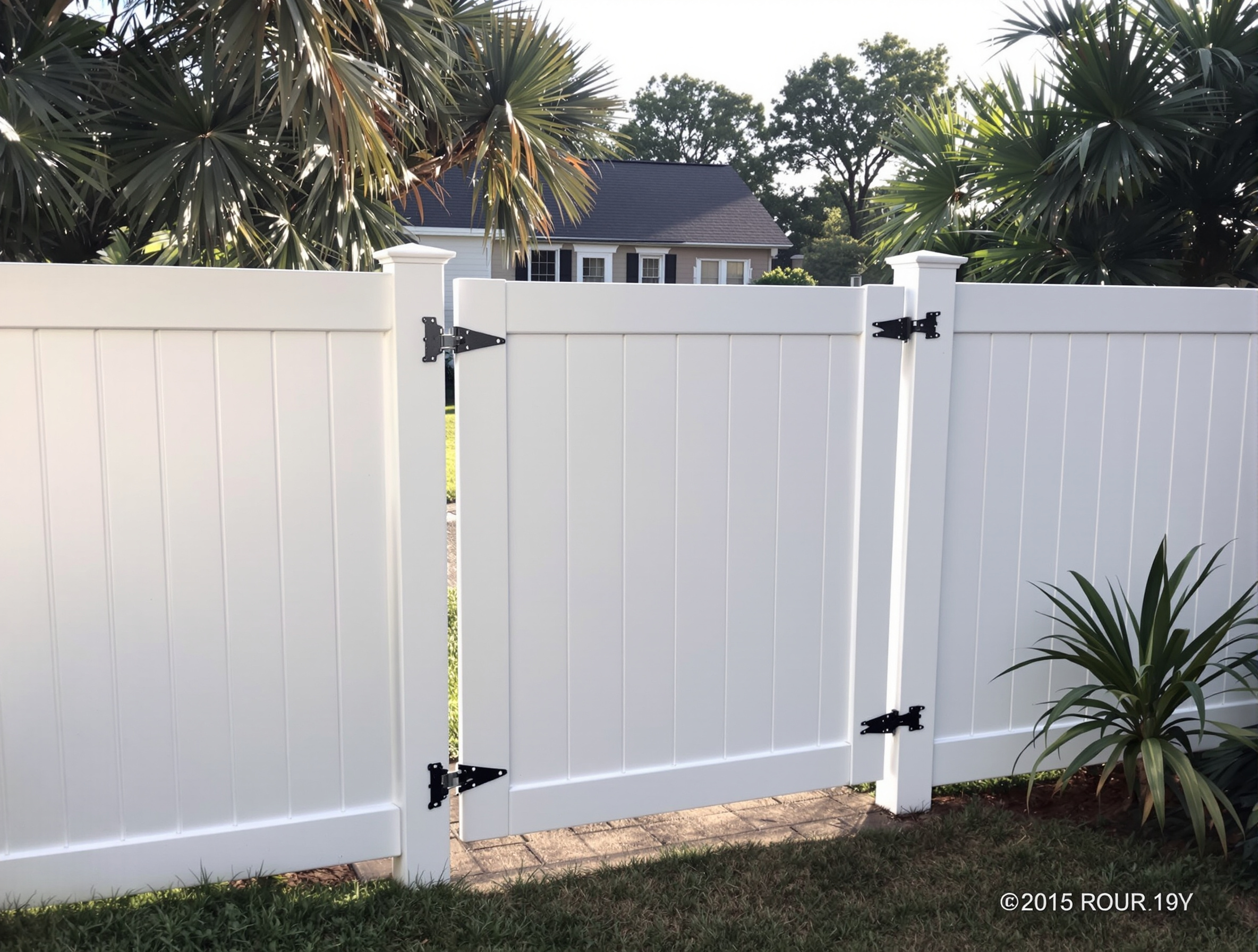
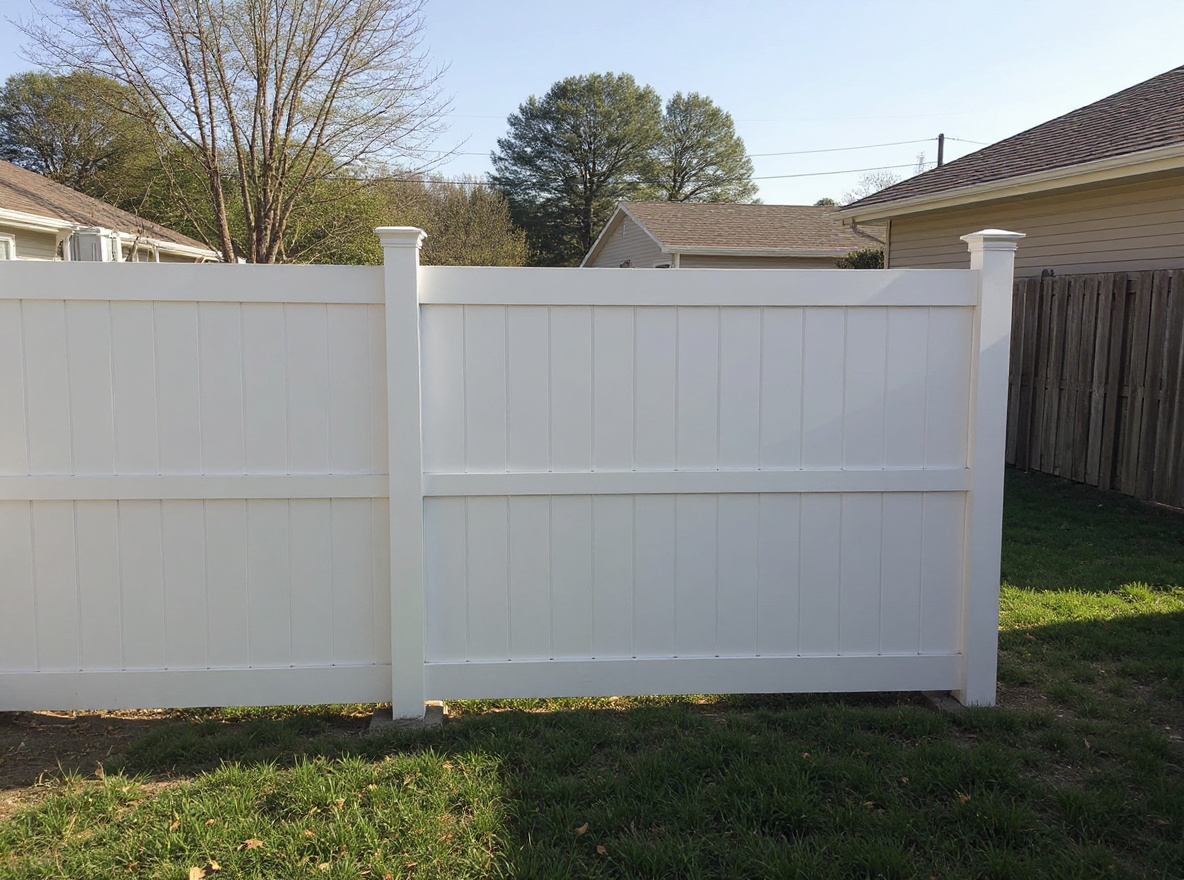
Out in the new developments on the west side — Benson Place, Shoal Creek Valley — the standard order is a solid six-foot privacy run, and vinyl is quietly taking a share of it. Interlocking tongue-and-groove boards in bright white PVC on a steel-set rail, closing in a fresh subdivision backyard the week after the sod goes down. It holds that white clean through Northland summers with no coat ever owed.

  • Price: $40–55/LF installed
  • Lifespan: 30+ years
  • Maintenance: A once-a-year hose-down
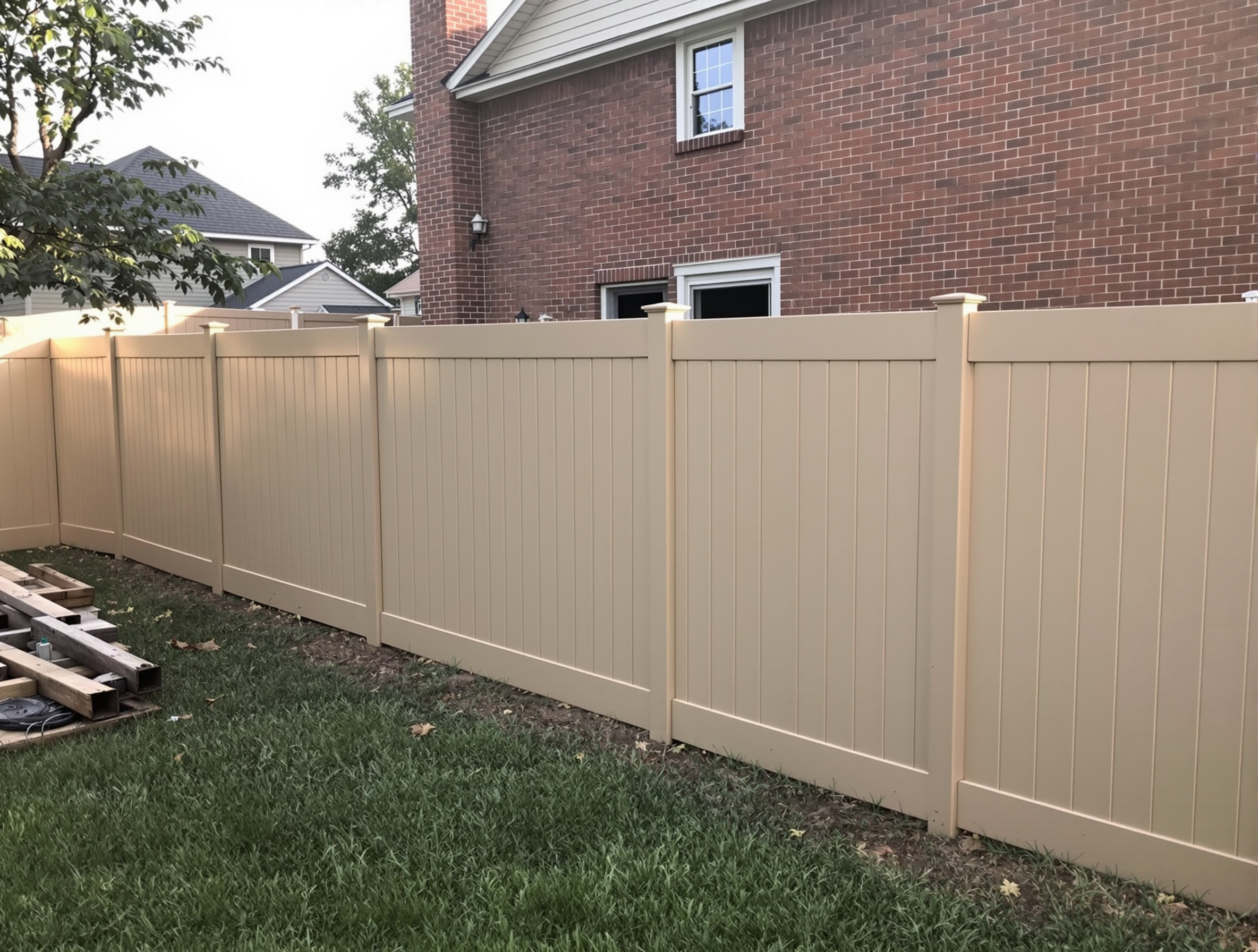
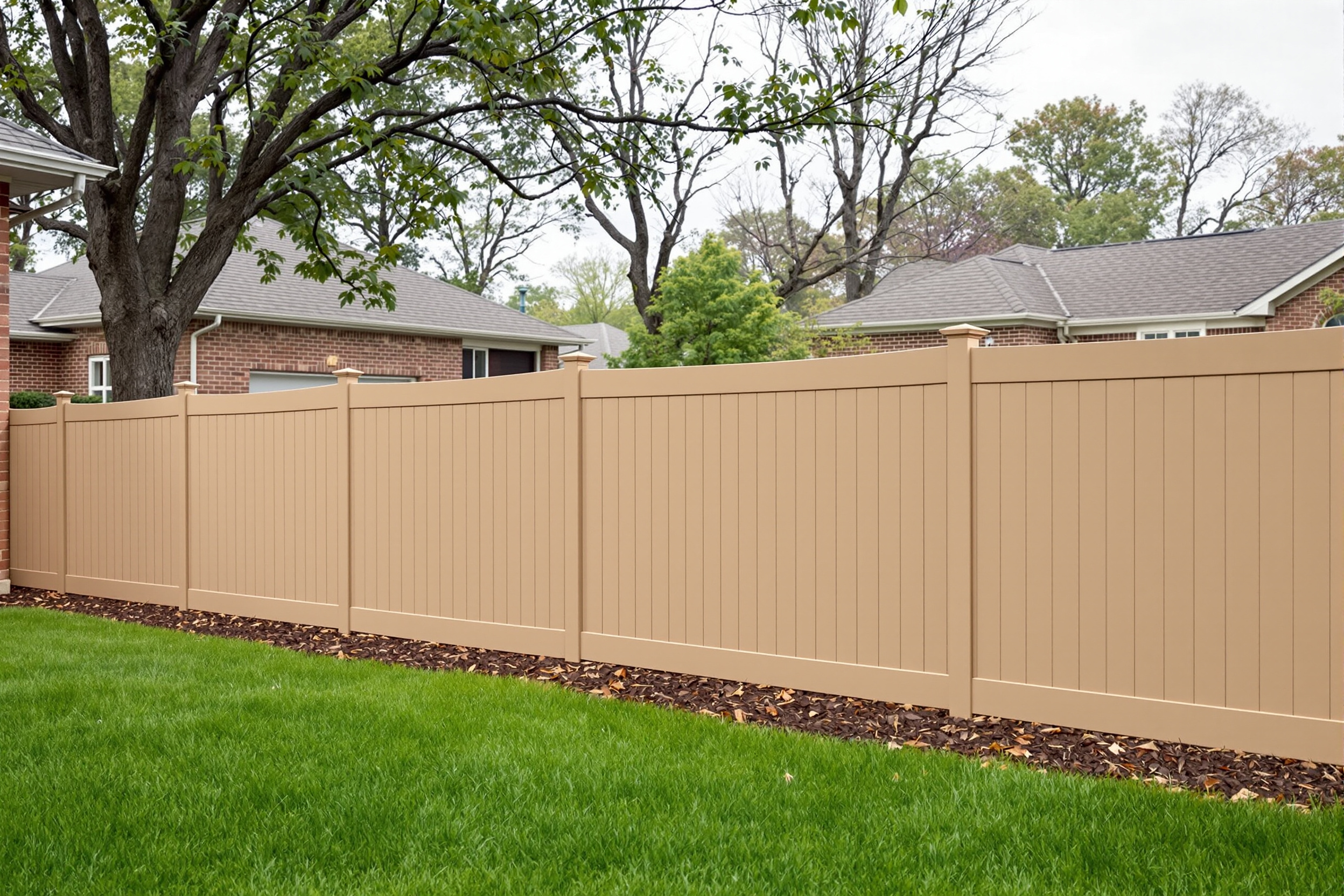
Sand / Woodgrain Privacy — 6 ft vinyl fence by RKC Wood Care Pros in Liberty, MO

Sand / Woodgrain Privacy — 6 ft

Warmth for a cedar-town street

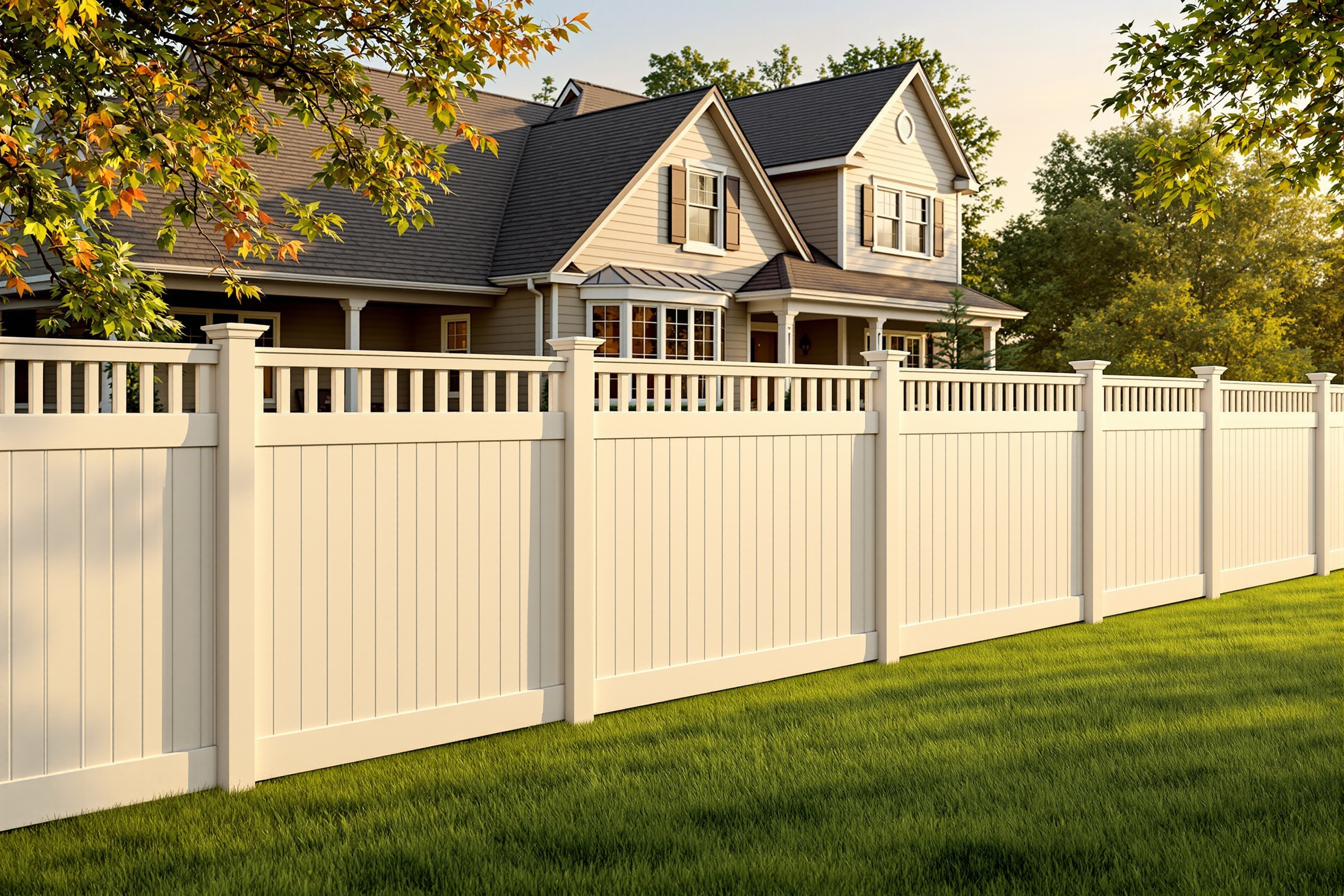
Liberty is cedar country at heart, and a stark-white panel can sit oddly on a street lined with warm wood fences. A sand tone or an embossed woodgrain leans toward the cedar look the Northland is built on — that wood warmth minus the every-couple-years coat. It rides the same steel rail and carries the same lifetime warranty as the white; it just wears a softer face on the street.

  • Price: $42–62/LF installed
  • Lifespan: 30+ years
  • Maintenance: An occasional soapy wash
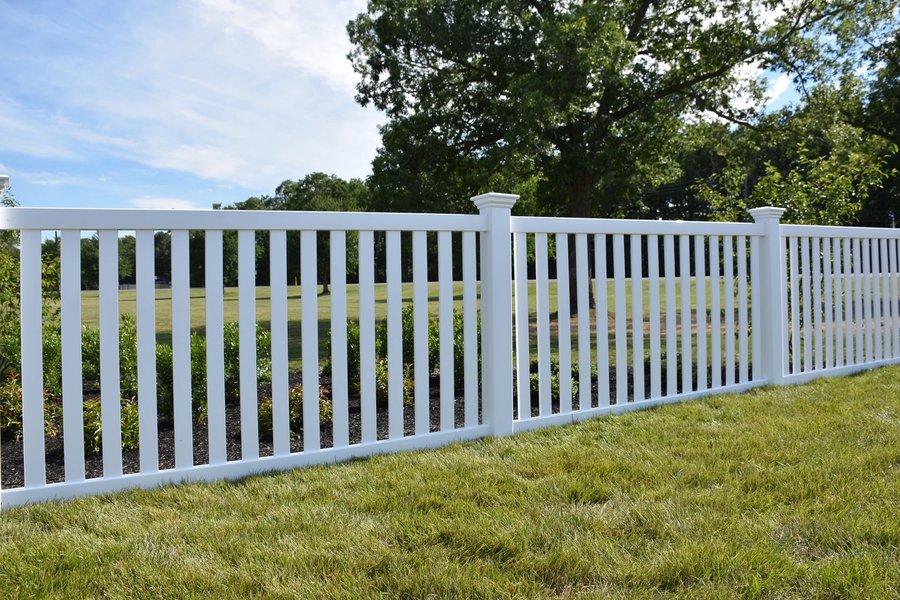
White Picket — 4 ft vinyl fence by RKC Wood Care Pros in Liberty, MO

White Picket — 4 ft

The historic-core William Jewell look

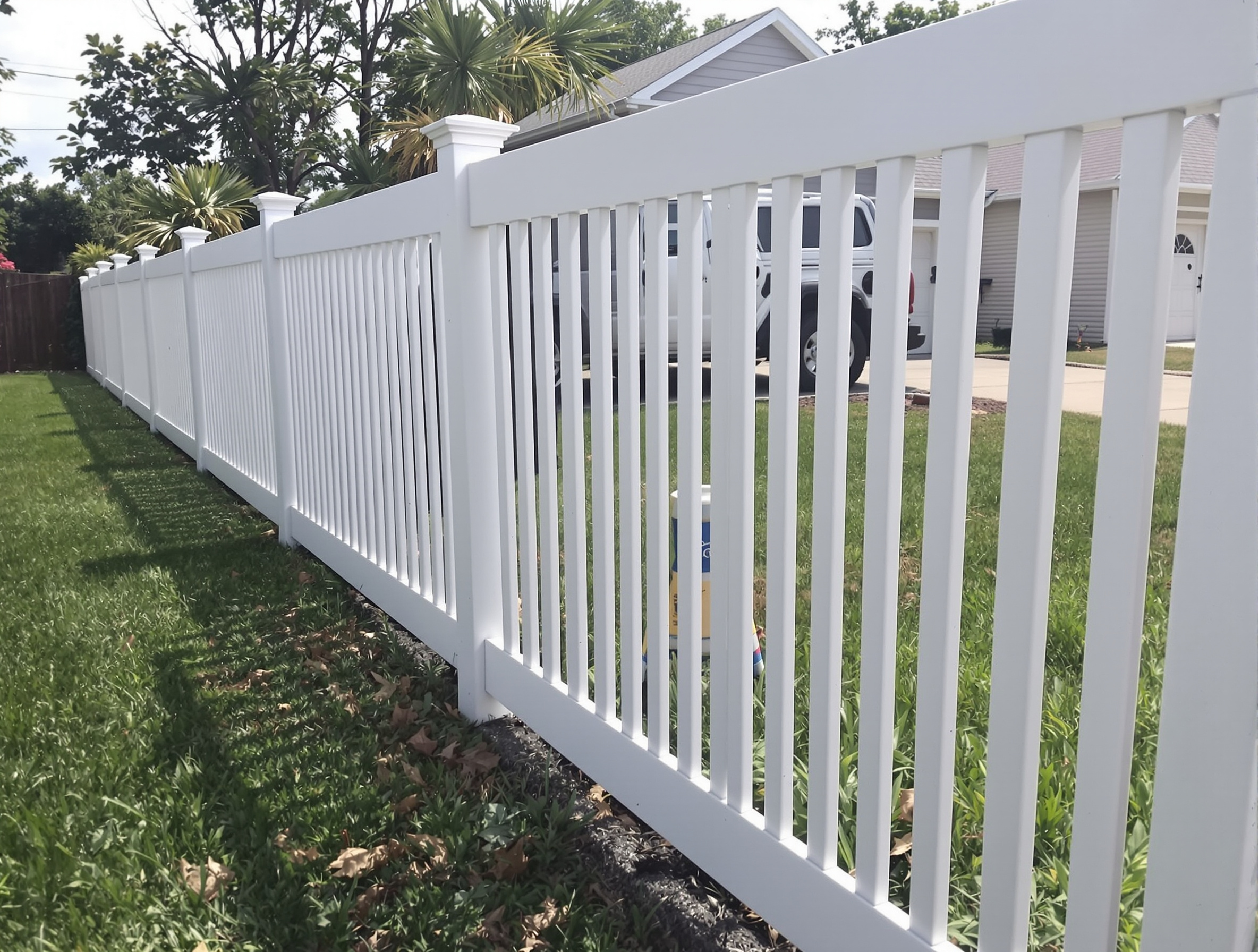
Near the college and around Liberty Square the look runs to white picket, and vinyl carries that classic profile without a paintbrush ever coming out. It outlines a front yard and keeps a dog home without shutting a historic street away, and it stays crisp where a wood picket would be due for scraping every few years. A favorite for the older core, paired with a six-foot privacy run behind the house.

  • Price: $32–46/LF installed
  • Lifespan: 30+ years
  • Maintenance: Barely more than a rinse
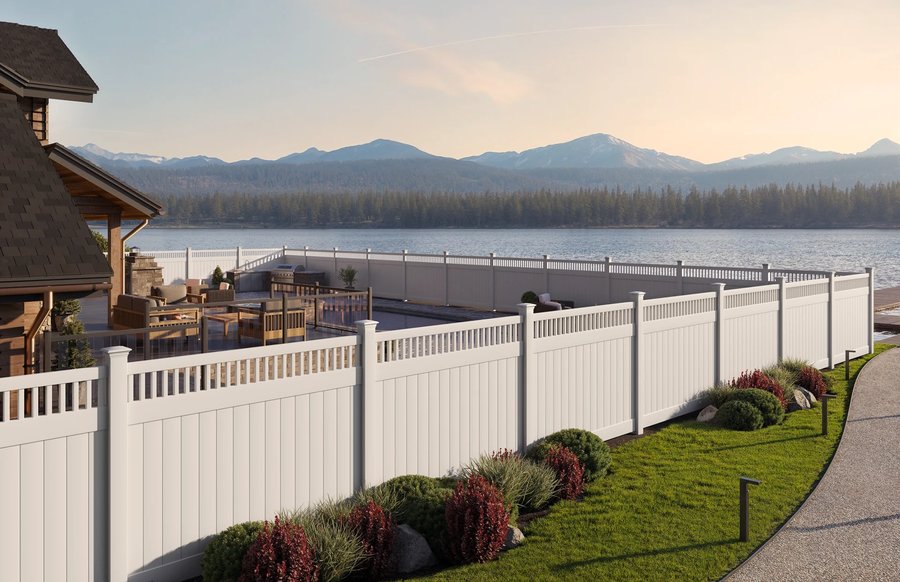
Stepped Semi-Private — 6 ft vinyl fence by RKC Wood Care Pros in Liberty, MO

Stepped Semi-Private — 6 ft

Racked and stepped for a Clay County slope

Clay County rolls, and a privacy run set dead-level across a slope leaves a triangle gap under every panel. On a hillside lot we rack the panels to follow the grade or step them down cleanly, so the line hugs the ground instead of gapping under it — no dog-sized hole at the low corner. The same solid privacy up top, built to sit right on ground that won't stay flat.

  • Price: $44–58/LF installed
  • Lifespan: 30+ years
  • Maintenance: A rinse as needed
White vinyl privacy fence pricing — Liberty, MO — RKC Wood Care Pros

PRICING A LIBERTY VINYL FENCE

What a Liberty Vinyl Fence Runs

Vinyl lands between $32 and $62 a foot in Liberty, set by the profile and the run — with the one local variable, the Clay County rock, read into the estimate rather than sprung on install day. The three below are the builds we bid most around Liberty. A west-side subdivision backyard often runs near 200 feet. Old-fence removal, gates, a steep step-down, and a step up in profile each carry their own line. The whole quote comes to you on paper, itemized, before the crew shows up — no verbal guess, no surprise partway through.

White Privacy — 6 ft

$40–55

per linear foot installed

The most-quoted west-Liberty build — solid subdivision privacy, steel-set posts, rock dig included in the read.

Sand / Woodgrain — 6 ft

$42–62

per linear foot installed

A warm sand or embossed woodgrain to sit among Liberty's cedar streets.

Stepped or Picket

$32–58

per linear foot installed

A racked hillside run for a Clay County slope, or a historic-core white picket — priced to the lot.

An old fence to haul off, a gate or two, a hillside step-down, a step up in profile — each shows on its own line of a Liberty estimate, nothing buried — call (913) 286-1091 or book an on-site walkthrough.

OUR PROCESS

A Liberty Vinyl Install, Start to Finish

Four stages carry a Liberty project from the first call to a finished fence — and the part that decides it is underground, cut through the rock, so that's the part we won't rush. The install days themselves are short — most Liberty backyards run one to three days on site. The planning around the rock and the grade is what keeps a rocky, rolling lot from becoming a problem halfway through.

1

The estimate visit — reading the rock and the grade

Two things get measured on a Liberty lot that don't come up everywhere: how much rock is under the post line, and how the ground rolls. We probe for the Clay County stone, walk the slope to plan where the run gets racked or stepped, confirm the line against your stakes, and mark the utilities. The quote comes back itemized — footage, gates, the profile you chose, and the concrete and steel that go underground.

2

Locate call, profile choice, and a plan for the stone

First the 811 utility locate goes in. Then you settle the color and style — bright white, a warm sand, a woodgrain, or the historic-core picket — and we order the panels. Where the estimate turned up heavy rock, we bring the drill and the heavy auger to the job rather than discover the stone on install day. On a hillside lot the step-and-rack plan is set before the crew arrives.

3

Cutting the footings through the rock and standing the panels

This is where a Liberty lot earns its reputation — hitting rock while digging is the number-one snag here, so the crew comes equipped to cut a full 36-inch hole through Clay County stone rather than stop short at it. Concrete sets around each post; on a slope the panels rack or step to the grade as they go up. Once the footings firm — a day or so, longer in cold or wet — the run goes on. Most Liberty backyards run one to three days on site.

4

The walkthrough and your warranty paperwork

We finish by walking the line with you and swinging each gate to be sure it latches square — worth a close look on a stepped run, where the grade and the gate have to agree. The CertainTeed, Bufftech, or Veka coverage gets filed in your name and the paperwork is yours to keep, with nothing to re-seal on a calendar. If a post or panel shifts in the first year, the same crew that built it comes back and sets it right.

VINYL WE'VE RAISED · KC METRO

Vinyl fence installation by RKC Wood Care Pros, Kansas City metro
Vinyl install · KC metro
Vinyl fence installation by RKC Wood Care Pros, Kansas City metro
Vinyl install · KC metro
Vinyl fence installation by RKC Wood Care Pros, Kansas City metro
Vinyl install · KC metro
Vinyl fence installation by RKC Wood Care Pros, Kansas City metro
Vinyl install · KC metro

REVIEWS

What Kansas City Homeowners Say About RKC

4.9 ★ · 85 Google reviews

Every review is on our Google Business Profile — read them there, unedited.

Read all 85 reviews on Google

LIBERTY VINYL FENCE QUESTIONS

What Liberty Homeowners Ask Before They Book

The questions that come up on a Liberty estimate — sorted by subject, each answer tied to local prices, the Clay County rock, the rolling grade, and the honest place vinyl holds in a cedar town. Don't see yours? Call (913) 286-1091 and ask.

Vinyl fence installation in Liberty, MO by RKC Wood Care Pros

Vinyl Materials & Lifespan

How long does a vinyl fence last in Liberty?
Thirty years is the floor. What buys it is a capped, UV-rated panel, a steel-reinforced rail, and posts driven a full 36 inches — which in Liberty means drilling through Clay County rock to get there rather than stopping short at the stone. CertainTeed, Bufftech, and Veka all cover the panel against fading, cracking, peeling, and chalking, and that coverage carries to the next owner if you sell. Depth in the rock is the make-or-break: seat the post in stone at full depth and the fence stands for decades; leave it shallow and the freeze-thaw levers it loose in a few seasons. And there's no wood at the ground line to rot the way cedar eventually does.
Is vinyl right for Liberty, or is this cedar country?
Cedar is honestly the gold standard here — it's what most of Liberty runs, and on a historic street it's often the right call. Vinyl earns its place in two spots. Out in the new west-side developments like Shoal Creek Valley it's taking a real and growing share, because a busy new-build family wants zero upkeep. And in the older core it's a clean modern upgrade over tired chain link. We install both and we'll tell you straight which suits your block and your house.
How do you fence a Liberty lot that sits on a hill?
Carefully, and with a plan made before install day. The rolling Clay County ground will leave a gap under a fence that's set dead-level across a slope, so we do one of two things: rack the panels so they tilt to follow the grade continuously, or step them down the hill in clean, even drops. Which one depends on how steep the run is and the look you want. Either way the line closes to the ground — no triangle gap at the low corner for a dog or a rabbit to use.
Will a Liberty winter crack a vinyl panel?
Not a well-built one. The brands we hang bake UV inhibitors into the outer cap, so the sun doesn't fade it, and the cracking people picture is really a thin, unbraced panel flexing loose at a post until a freeze finishes it — worse on a hillside run where the rail is already spanning uneven ground. That's why a steel-reinforced rail goes into every run we set. What actually splits in the cold is the hollow, single-wall warehouse panel, and we don't carry it.

Pricing & Warranty

What does a vinyl fence cost in Liberty?
Figure $40–$55 a foot for 6-foot white privacy with the steel rail built in. West-side subdivision lots tend to run larger — a 200-foot run is common out there — which puts many Liberty privacy projects in the $8,000 to $11,000 range. A warm sand or woodgrain runs $42–$62, and a 4-foot historic-core picket lands lower at $32–$46. The one Liberty-specific line to expect is rock: where the Clay County stone is heavy, the extra drilling shows on the estimate rather than as a surprise on install day. Every quote is free, written, and itemized before we set a post.
Is the warranty real, and does it transfer if we sell?
Both — and the transfer matters in a growth market like Liberty's, where houses turn over as the west side expands. CertainTeed, Bufftech, and Veka each back their panels for life against fading, cracking, peeling, and chalking, and each rolls into prorated coverage for the next owner at closing. We register it in your name the day we finish and hand you the paperwork. A fence still under warranty is a small point in your favor when you list. A maker that won't put that in writing doesn't get installed here.
Does stepping a fence down a hill cost more?
A little, sometimes — it depends on the run. Racking panels to a gentle grade is usually just part of doing the job right and doesn't move the number much. A steep slope that needs the panels stepped down in built-up increments takes more posts and more labor, and where that's the case we spell it out on the estimate so you see it up front. What we won't do is set a level fence across a Liberty hill and leave you the gap — that's not cheaper, it's just wrong.

OTHER LIBERTY FENCE OPTIONS

Every Fence Material and Service in Liberty

Vinyl isn't the only option — RKC installs and repairs every type of fence in Liberty: wood, vinyl, chain link, ornamental iron, aluminum, and commercial security, plus gates and in-house staining. Each card here opens a dedicated Liberty page — local pricing, the ground it's built on, and photos from around your city.

Wood Fence

Western Red Cedar privacy and custom historic picket — Liberty's gold-standard board, with the sealing kept in-house.

Explore Wood Fence in Liberty →

Chain Link Fence

Galvanized or vinyl-coated mesh for a back-lot line or a dog run — or the tired old fence we upgrade out of the historic core.

Explore Chain Link Fence in Liberty →

Ornamental Iron

Powder-coated steel for a century-old property near the Square that calls for a period-correct line.

Explore Ornamental Iron in Liberty →

Aluminum Fence

Rust-free ornamental aluminum, common on the west-side developments and around pools and pond frontage.

Explore Aluminum Fence in Liberty →

Privacy Fence (Material-Agnostic)

Privacy the deciding factor for a west-Liberty backyard? Line cedar up against vinyl for your lot here.

Explore Privacy Fence (Material-Agnostic) in Liberty →

HOA-Friendly Fencing

Material, color, and picket width chosen to sit right in a west-Liberty development.

Explore HOA-Friendly Fencing in Liberty →

Fence Repair in Liberty

Heaved-post correction on rocky ground, hillside re-steps, and gate re-hangs across Liberty — cedar and vinyl alike.

Fence Repair in Liberty →

Fence Staining in Liberty

We seal the cedar we install in our own shop — the upkeep Liberty's gold-standard wood needs. Vinyl needs none of it.

Fence Staining in Liberty →

Gate Installation in Liberty

Walk gates and drive gates hung to latch square, even where a stepped hillside run meets the opening.

Gate Installation in Liberty →

Ready when you are

Get a free estimate — we usually respond the same day.

Call (913) 286-1091