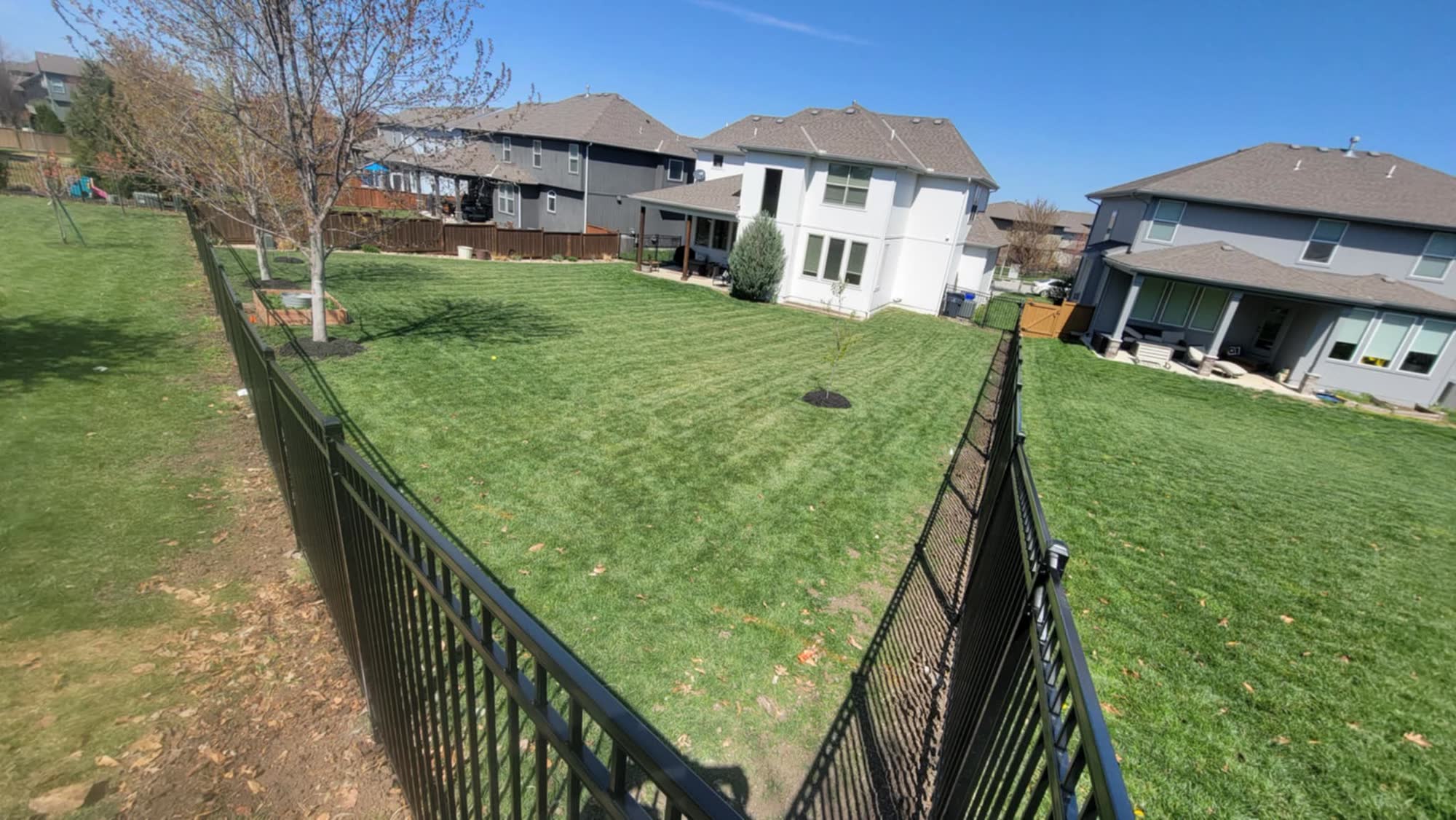
| A new-construction lot in the western developments (Benson Place, Shoal Creek Valley) | Heavy-gauge black aluminum, the low-maintenance half of the local default | The big developments on Liberty's west side run almost entirely to two fences: 6-foot cedar privacy or black aluminum. Aluminum is the low-maintenance half of that choice — it gives the finished black line without the stain-and-repaint cycle the cedar down the street will need in a decade, it never rusts or rots, and on a brand-new lot it's the buy-it-once option. Where the street has settled on cedar-or-aluminum, this is the aluminum answer: heavy-gauge, powder-coated, and set right the first time |
|---|
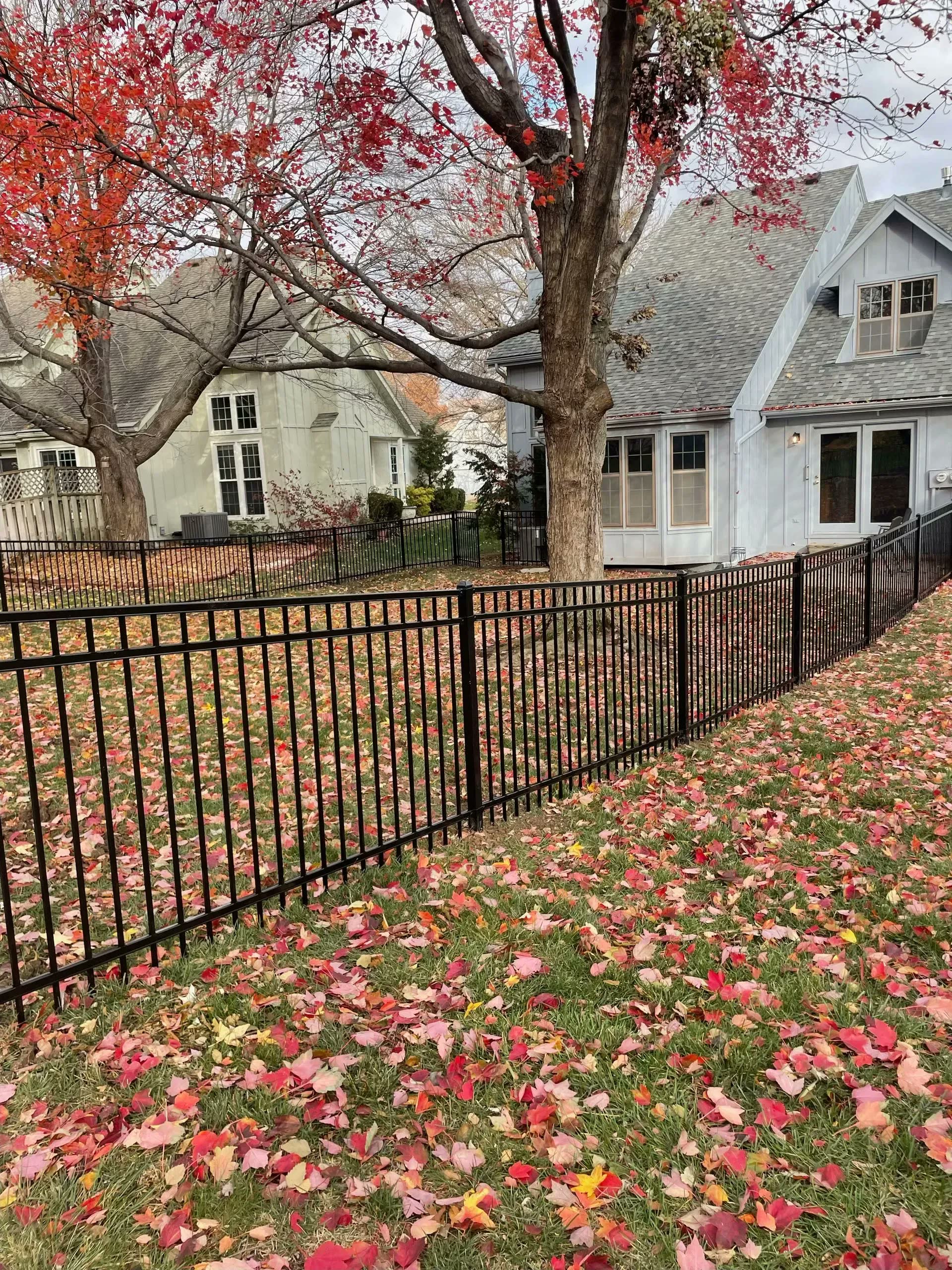
| A lot on a rolling Clay County slope where panels gap at the bottom | Racked (raked) aluminum that follows the grade continuously — no stepping, no gaps | This is the one that separates a good Liberty install from a bad one. The rolling hills in Clay County mean most lots aren't flat, and a standard panel set level on a slope leaves a triangular gap at the bottom — the exact gap a dog slips under or a fence looks unfinished over. Aluminum's advantage is that it racks: the panel rakes to follow the grade so the pickets stay vertical while the rails run parallel to the ground, closing the gap without cutting or stepping every section. On Liberty's hills, racking to the slope is the whole difference |
|---|
| A lot where the auger hits Clay County rock | A footing drilled and keyed into the rock — heavy-duty auger, no shortcut | The 'Clay County Rock' is real, and on a lot of Liberty installs the auger hits it before it reaches depth. A budget crew stops short and sets a shallow post that heaves; we bring the heavy-duty auger and drill into the rock to reach depth. The upside is that once a post is properly keyed into rock, it's anchored better than anything you'll set in soft ground — the rock that fights the dig is the same rock that holds the fence dead-still for decades. The work is in getting through it, and that's exactly what we scope on site |
|---|
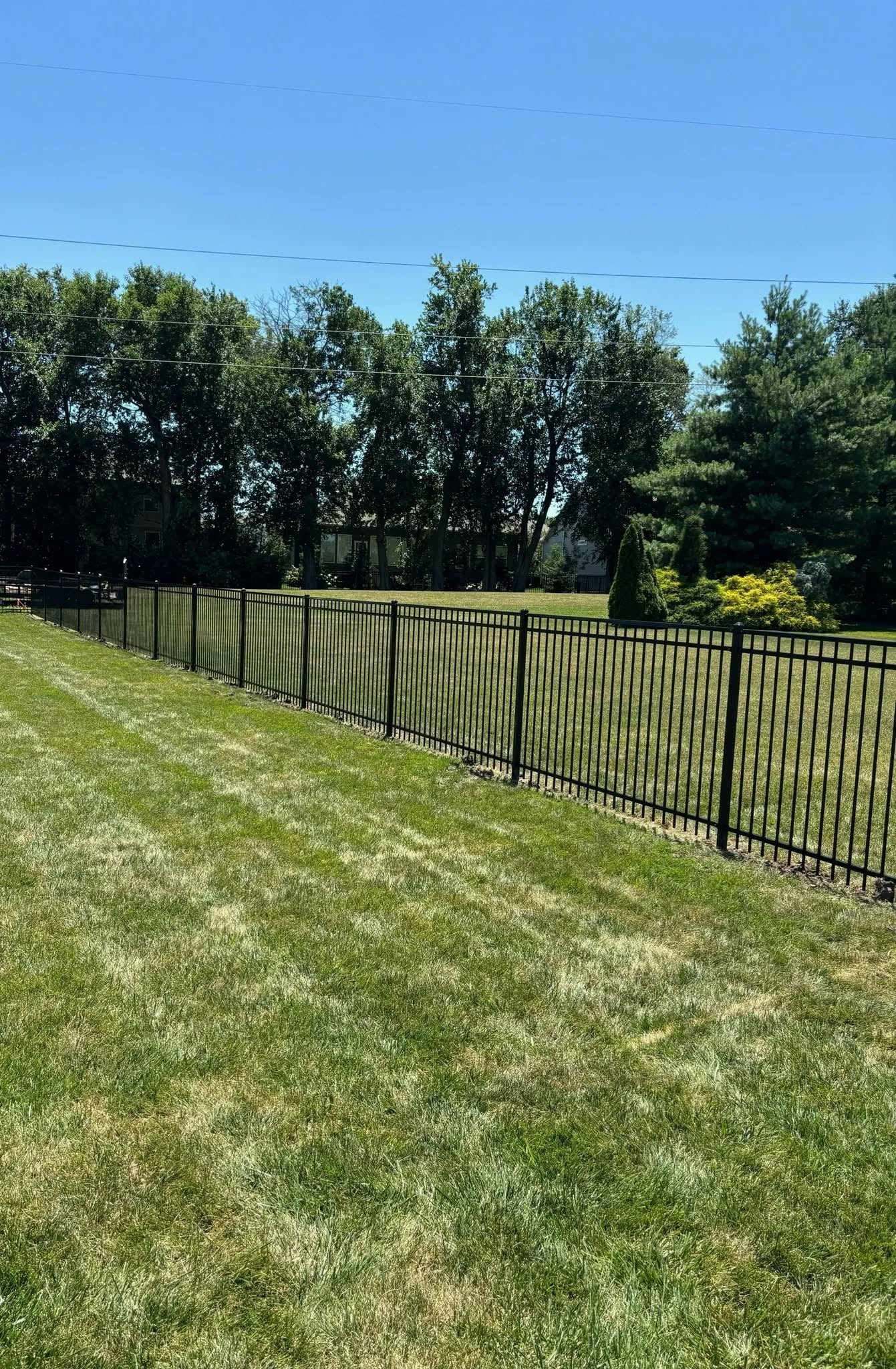
| A big-dog, family yard that wants containment without a solid wall | Open picket spacing closed to the dog, racked tight to the ground on the slope | Liberty runs a lot of family lots with big dogs, and where you'd rather keep the yard open than wall it in, aluminum contains the animal without the blackout. We close the picket spacing so a broad-shouldered breed can't wedge through, and on a sloped lot we rack the run tight to the ground so there's no gap at the low end for a digger to exploit. There's nothing wooden down low to chew loose, and you keep the sightline across the yard a solid cedar screen would take away |
|---|
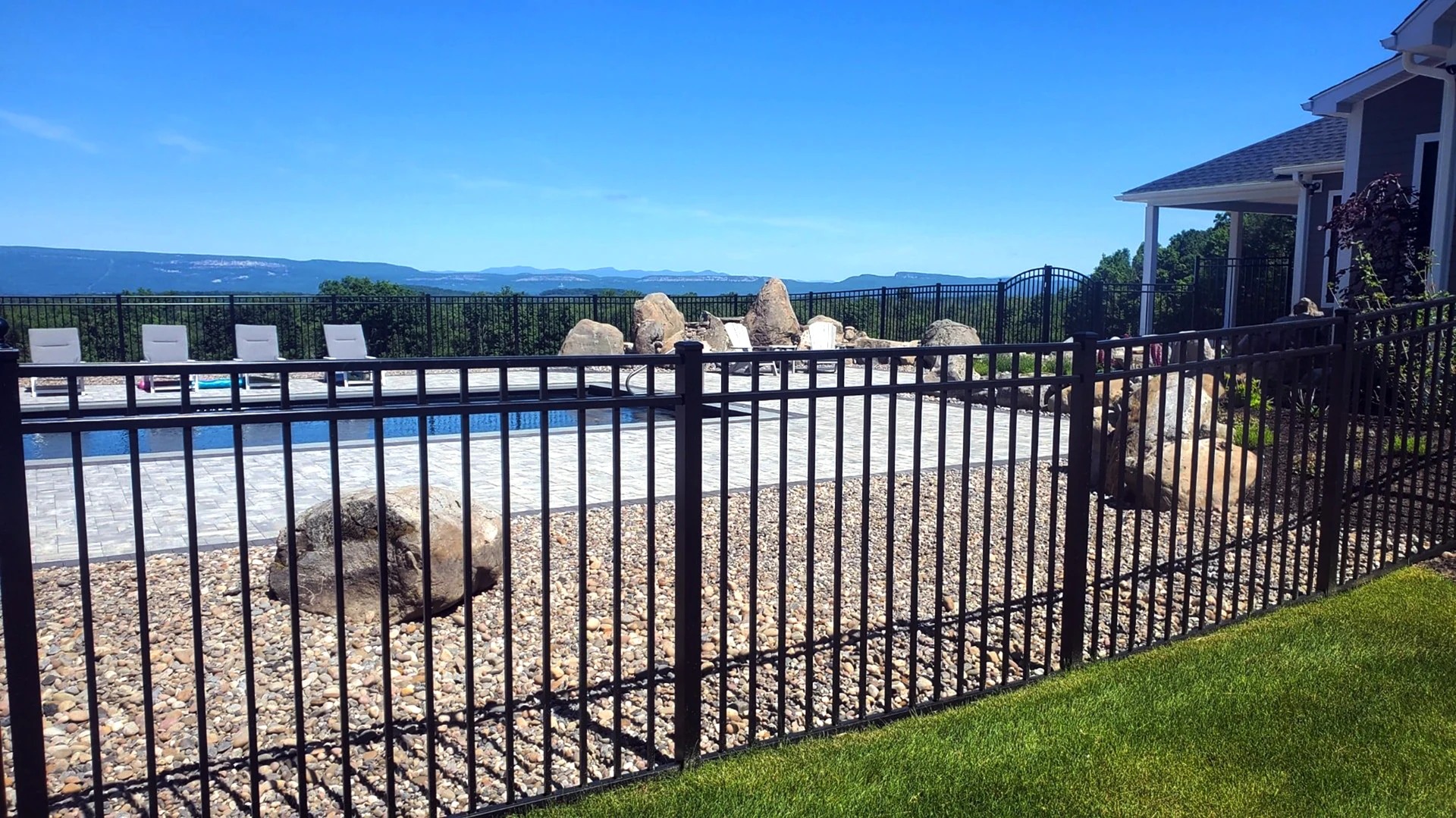
| A backyard pool in Liberty | Open non-climbable picket with a self-latching welded gate | The open aluminum picket is a common pool-side pick in Liberty because it stays climb-resistant and see-through at once — the pool is enclosed without the yard feeling boxed in, and there's no wood to swell or rot in the constant splash. On a sloped pool lot the racking matters here too: we rake the run to the grade so the barrier stays tight to the ground the whole way around. We build the pool-side gate as a welded, self-latching frame and scope the height and spacing on your yard on site |
|---|
| A historic-core property, or a backyard where privacy is the point | Honestly — ornamental steel for the historic match, or cedar for a screen | Two honest steers, because Liberty is really two towns. If your property is in the historic core near the college, the look that belongs there is white picket or genuine welded ornamental steel that matches the era — an aluminum picket can read as too new, so we'd point you to real iron. And if what you want is a private backyard screen, an open aluminum line hides nothing — cedar, stained in-house, is the answer. We save the aluminum for the new-development lots and the open runs where it actually earns its place |
|---|