Skip to content
Commercial Fencing in Liberty, MO — Supplier Yards, Business Parks & Shift-Change Gates

Commercial Fencing in Liberty, MO — Supplier Yards, Business Parks & Shift-Change Gates

Liberty commercial fencing is a Northland manufacturing-and-business-park job — the supplier and vendor yards drawn by the Ford Claycomo plant, the M-291 business-park perimeters, and the gate sized to a manufacturing shift-change surge, all on footings drilled into the Clay County rock. RKC builds galvanized commercial-gauge yard perimeters, coordinated business-park lines, screened enclosures, and controlled shift-change access — phased so your site keeps operating, and licensed and insured in both Kansas and Missouri. Built for every storm.

★★★★★
4.9
from 85 reviews
Licensed
& Insured · KS + MO
400+
fences installed
Licensed & Insured — KS & MO W-9 + COI for Procurement 400+ Fences Installed Since 2021 Phased to Keep You Open

The short answer

In Liberty, commercial fencing is a Northland manufacturing-and-business-park market. The Ford Claycomo plant just south draws supplier and vendor yards that need a secure commercial-gauge perimeter and a gate sized to the shift-change surge. The M-291 corridor carries the business parks, and the historic core is trading dilapidated old chain link for a modern line. What ties them is the ground — the real Clay County rock means the commercial posts get drilled in and anchored — and the discipline of phasing the install so an operating site never has to close.

RKC installs and repairs every type of fence — wood, vinyl, chain link, ornamental iron, aluminum, and commercial security — plus in-house staining. A licensed and insured commercial fence contractor, not a bonded public-works house. Weighing a decorative business-park face? See ornamental iron. For the whole property, see the Liberty fence hub.

The part that decides it

What Kind of Commercial Fence a Liberty Site Needs — Supplier Yard, Business Park, or Historic Core

Liberty commercial work is a Northland manufacturing-and-business-park market: the supplier and vendor yards drawn by the Ford Claycomo plant just south, the business parks along M-291, and the small businesses in the historic core upgrading tired old chain link. Each fences a different problem — a secure working yard with a shift-change surge, a coordinated business-park perimeter, a historic-core rebuild — and all of them get drilled into the real Clay County rock. Find your site below; the system and the reason sit beside it.

Your Liberty siteThe system that fitsWhy it's built this way here
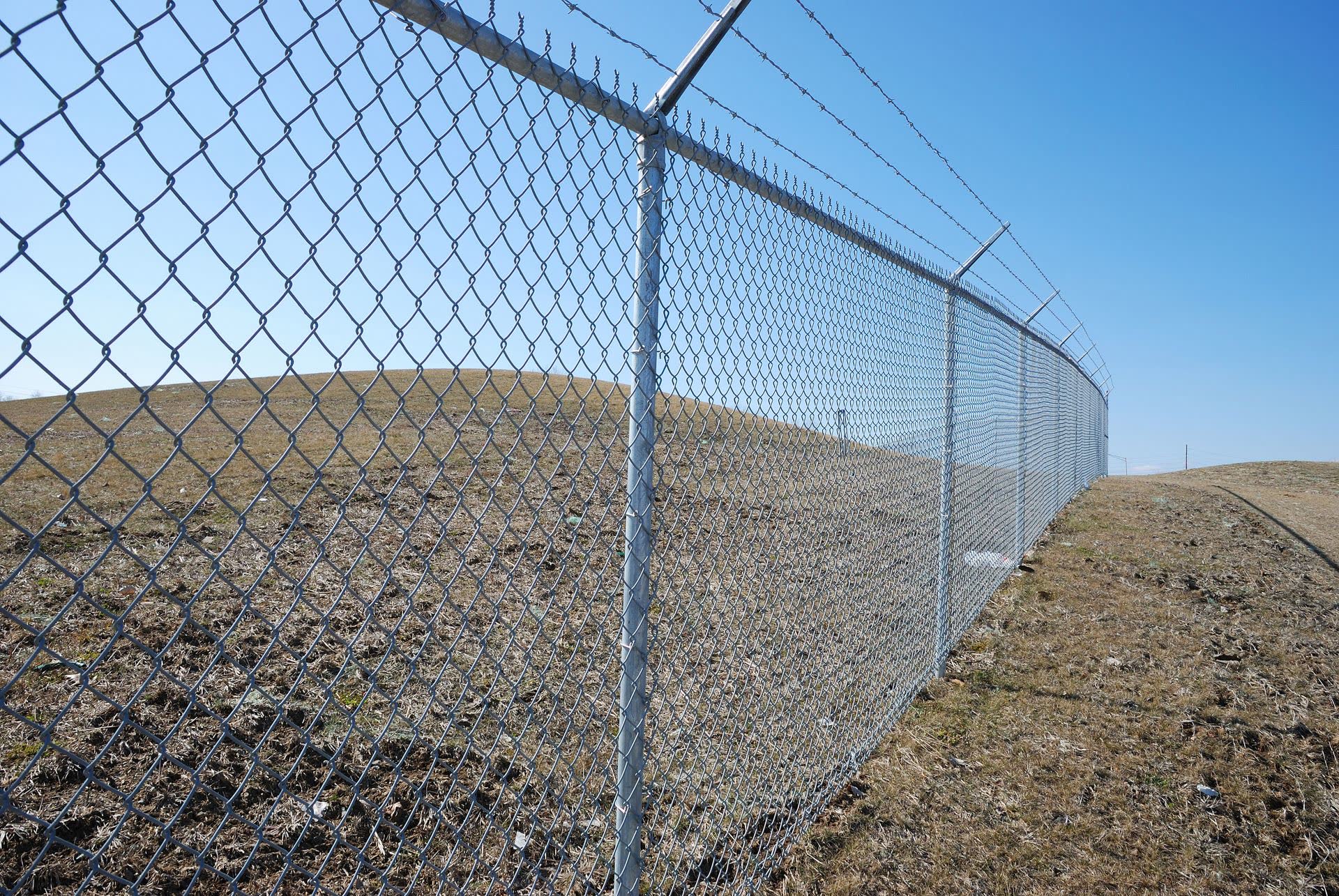
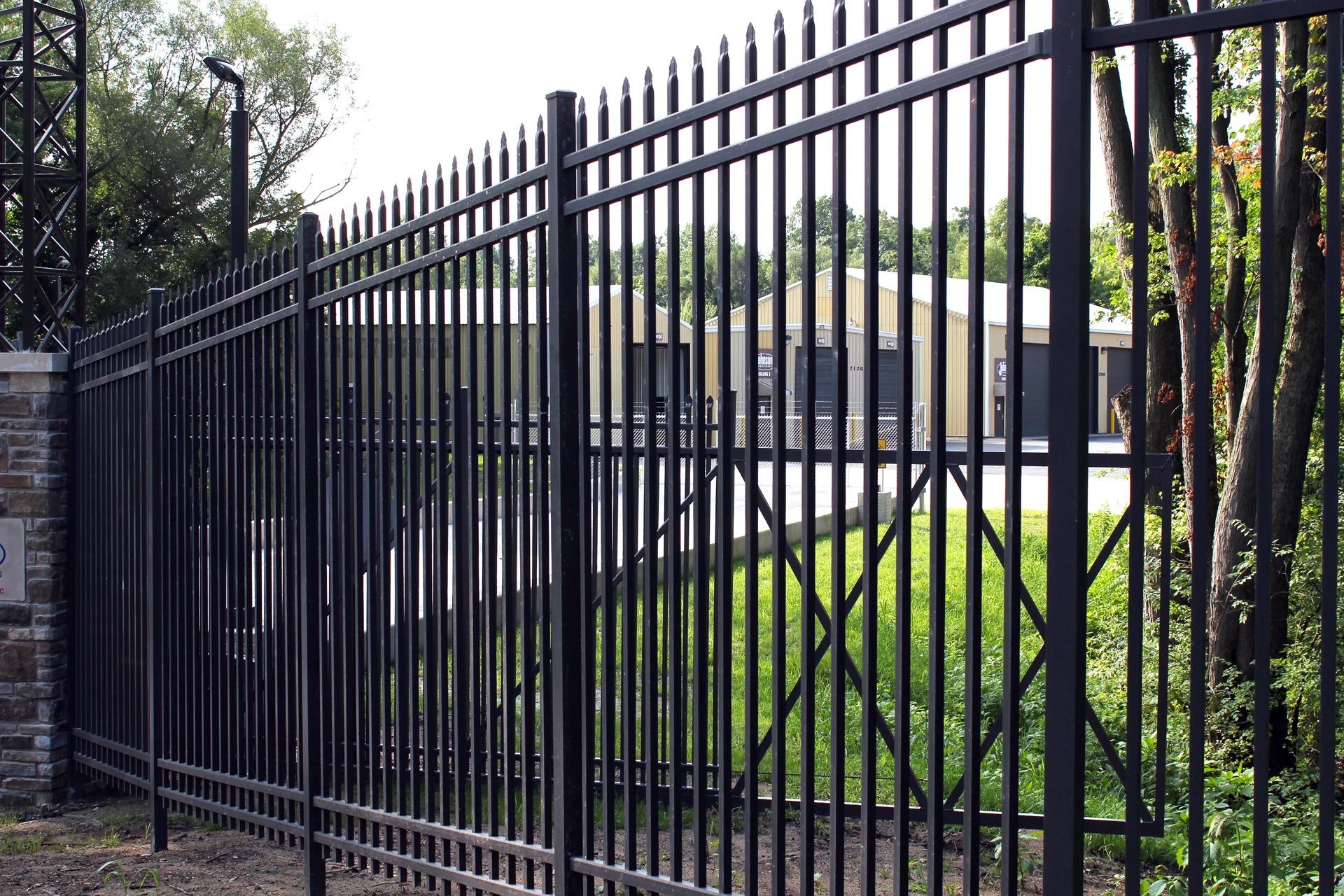
A supplier or vendor yard near the Ford Claycomo plantA galvanized commercial-gauge yard perimeter, anti-theft, with a shift-sized gateThe Ford Claycomo assembly plant just south of Liberty anchors a whole ecosystem of supplier, vendor, and service operations, and those sites fence a working yard — inventory, equipment, staged material that has to be secured against theft after hours. We run a galvanized commercial-gauge perimeter around the yard, tall enough and tight enough to deter a climb, and we size the access gate to the operation's real rhythm rather than an average hour. It's the workhorse perimeter a manufacturing supplier actually needs, built to take the traffic and hold the yard
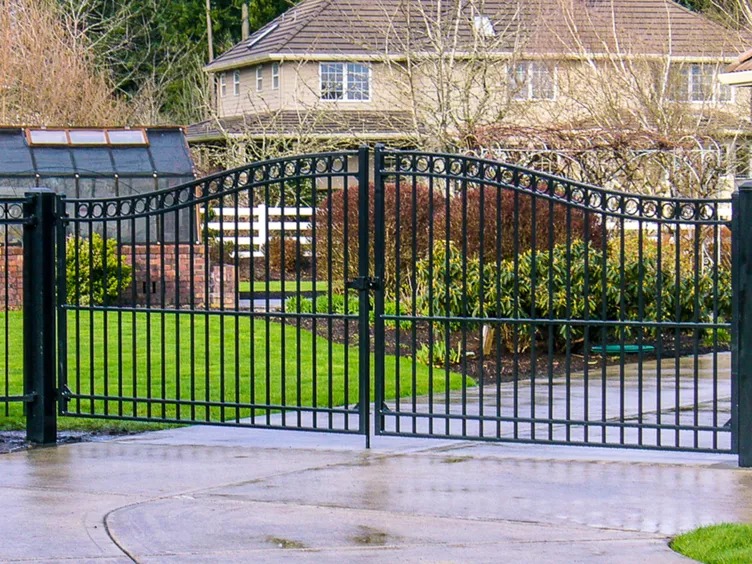
A business-park building along the M-291 corridorA coordinated commercial perimeter with controlled vehicle and pedestrian accessThe business parks strung along M-291 are Liberty's other commercial spine, and a building there wants a perimeter that secures the property and controls where vehicles and people enter without looking like a lockup. We run a clean commercial line — galvanized where it's back-of-house, ornamental or a decorative face where the street sees it — with controlled access points sized to the traffic. On the M-291 corridor the fence has to secure the site and still present a professional face to a busy road, and we build the two into one perimeter
A large employee-parking lot with a shift-change surgeAccess sized and placed for the shift surge, employee flow separated from truck flowA manufacturing or employee-heavy Liberty site is judged on its worst traffic minute — the shift change, when a wave of employee vehicles and supplier trucks moves through at once. We size and place the gates for that surge, not an average hour, and we separate the flows: employees through one controlled point, trucks and docks through another, so a shift change doesn't stack cars onto the road or tangle a delivery in the parking rush. Get the surge right and the ordinary hour takes care of itself
A historic-core small business with dilapidated old chain linkTear out the tired galvanized and rebuild a modern secure or decorative lineIn Liberty's older core, a lot of the commercial work is upgrading — the small businesses there are pulling out dilapidated, rusted-out chain link that's been sagging for decades and replacing it with a modern perimeter. We tear out the tired line, reset the posts properly, and rebuild it as either a clean galvanized security run or a decorative ornamental face that matches the historic setting and lifts the property. It's the commercial version of what the whole core is doing — trading dilapidated old fence for something that secures and presents at once
A screened equipment, generator, or dumpster enclosure on a rock lotA slat-screened durable enclosure, posts drilled into the Clay County rockEvery Liberty commercial site has a working corner to hide — the equipment, the generator, the dumpster corral — and here the footing is part of the job because the Clay County rock is real. We build the enclosure as a slat-screened or solid-panel run heavy enough to take a hit from a truck or a loader, and where the auger reaches rock we drill in and key the posts to it rather than setting them shallow. A screened enclosure on a rock lot is anchored better than most, once you've done the work to get through the rock
A site that assumes a bonded, public-bid contractorHonestly — we're a fencing contractor, not a bonded public-works houseStraight answer, because it saves everyone time: RKC is a licensed and insured commercial fence contractor, not a bonded municipal public-works outfit. If your project needs performance-and-payment bonding, a formal public-bid process, or PE-stamped structural drawings, we're not the right fit and we'll say so up front. What we do carry is licensed-and-insured standing in both Kansas and Missouri, a W-9 and certificate of insurance for your procurement file, honest commercial gauges, and a phased sequence that keeps your site operating. For a supplier yard, an M-291 business park, or a historic-core storefront, that's the whole job

Whichever site is yours, two constants sit under the commercial jobs here: honest commercial-gauge material drilled to real depth — into the Clay County rock where the auger finds it — and a phased sequence that keeps the property operating, the perimeter never left open overnight. Want a decorative business-park face? Weigh ornamental iron. Comparing the full system range? Start at the commercial fencing overview.

A Northland manufacturing market

What Makes Commercial Fencing Different in Liberty

A commercial perimeter isn't a residential fence scaled up — and in Liberty, the signature job is the supplier yard drawn by the plant, with a gate that has to handle a shift-change surge. Two things about the Liberty commercial market decide how the fence is built.

The Claycomo plant anchors a supplier base

The Ford Claycomo assembly plant just south of Liberty anchors an ecosystem of supplier, vendor, and service operations, and those sites fence a working yard — inventory, equipment, staged material that has to be secured after hours behind a galvanized commercial-gauge perimeter. It's the workhorse job that defines a lot of Liberty commercial work: secure the yard, deter the climb, and take the traffic a manufacturing supplier throws at a fence.

The gate is judged on the shift change

An employee-heavy Liberty site lives and dies on its worst traffic minute — the shift change, when a wave of employee vehicles and supplier trucks hits at once. So we size and place the access for that surge, not an average hour, and separate the flows: employees through one point, trucks and docks through another. A gate that handles the shift change handles everything else the site will ever throw at it.

The rock drives the commercial footing

Commercial-gauge posts are heavier and the runs are longer, so depth is critical — and the real Clay County rock means the augers hit it before reaching depth on a lot of Liberty sites. We drill in with a heavy-duty auger and key the posts into the rock rather than setting them shallow. A commercial post anchored into rock is about as immovable as it gets, so the rock that slows the dig is what holds a long, heavy perimeter dead-plumb.

The supplier-site perimeter, done right

Securing a Liberty Supplier Yard Around a Working Shift

A supplier or employer site has to secure the yard, move a shift-change surge, and keep operating through the install — four moves get all three. Here's how the supplier-site perimeter comes together.

1

Secure the working yard to real commercial gauge

A supplier or vendor yard near the Claycomo plant holds inventory, equipment, and staged material that has to survive after hours, so we run a galvanized commercial-gauge perimeter — tall enough and tight enough to deter a climb, heavy enough to take the yard's traffic. It's the anti-theft workhorse the operation actually needs, built to the gauge a manufacturing supplier's yard calls for rather than the lighter residential line a budget bid would try to sell into a commercial job.

2

Size the gate to the shift-change surge

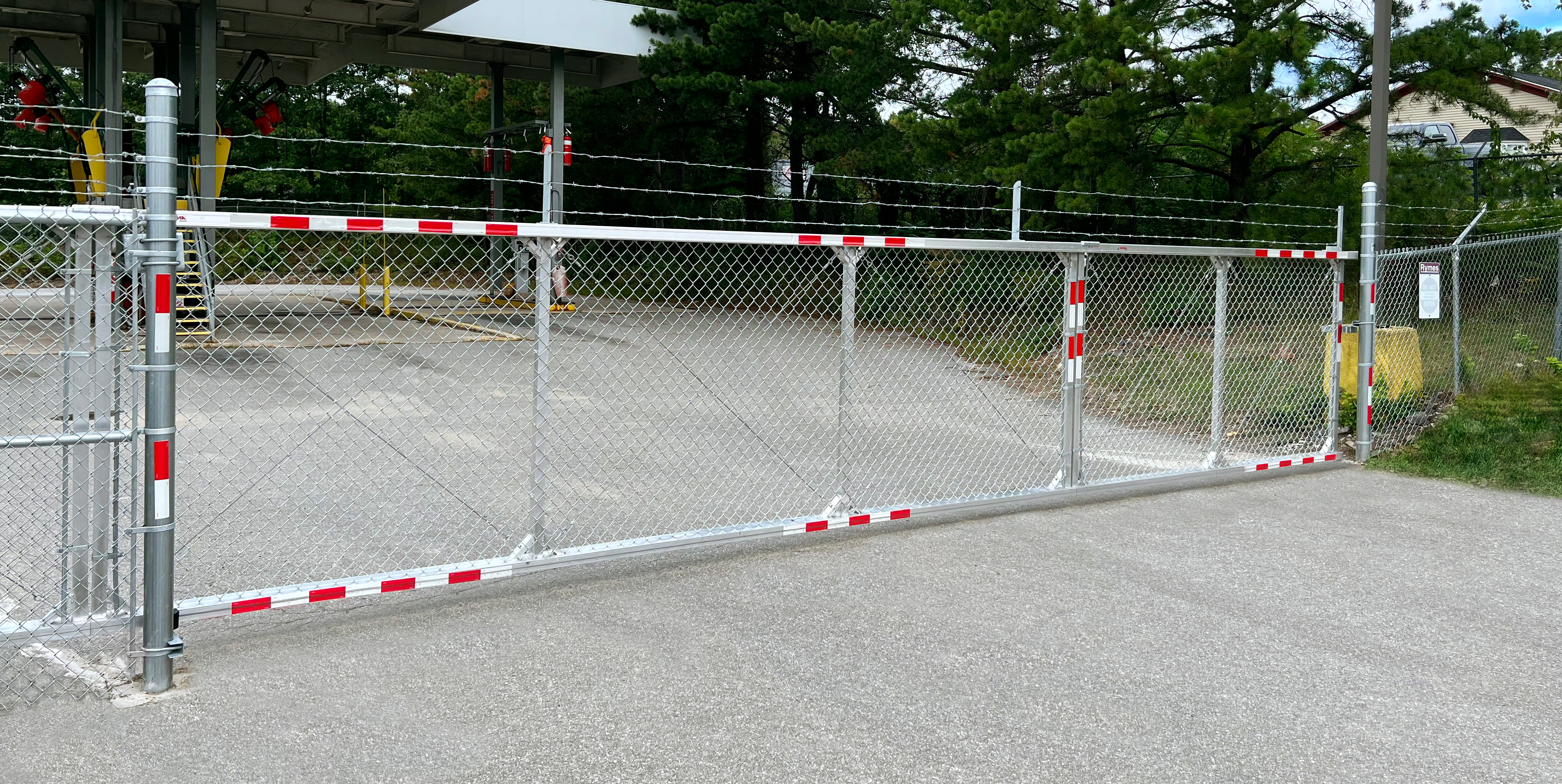
The fence is judged on its worst minute — the shift change, when employee vehicles and supplier trucks arrive at once — so we size and place the access for that peak, not an average hour. A cantilever or slide gate wide enough for the truck traffic, controlled entry sized to the wave of cars, so the surge flows through instead of stacking onto the road. Get the shift change right and the ordinary hour was never going to be the problem.

3

Separate the employee flow from the truck flow

Employees and deliveries don't want the same gate. We split the flows — a controlled employee-and-parking entry on one side, a truck-and-dock access on another — so a shift change of cars doesn't tangle with a supplier delivery, and neither one waits on the other. On a busy supplier site that separation is what keeps the shift change from becoming a daily bottleneck, and it's a planning decision we make at the perimeter, not an afterthought at the gate.

4

Drill into the rock and phase around the operation

The commercial posts get drilled into the Clay County rock for a footing that holds a long, heavy line, and the whole install is sequenced around the shift schedule — posts set and cured, line hung, gates and controlled access last, the perimeter never left open overnight. One owner-run crew plans the phasing around your operation, and the same people who scope the rock and the surge set the last post. The yard stays secured and running the whole way through.

Recent commercial installs

Commercial Fencing We've Built Across Liberty and the Metro

Every photo here is a real RKC commercial install. Cantilever slide gates, custom access, galvanized perimeters, and black-steel industrial lines across Liberty and the metro.

REVIEWS

What Kansas City Homeowners Say About RKC

4.9 ★ · 85 Google reviews

Every review is on our Google Business Profile — read them there, unedited.

Read all 85 reviews on Google

Liberty commercial questions

What Liberty Property Managers Ask About Commercial Fencing

The questions we field most on a Liberty commercial quote. Don't see yours? Get Josh on the line at (913) 286-1091.

What kind of commercial fencing do Liberty businesses actually need?
It splits by where you sit. A lot of Liberty commercial work is driven by the Ford Claycomo plant just south — the supplier, vendor, and service operations around it fence a working yard, securing inventory and equipment behind a galvanized commercial-gauge perimeter with a gate sized to the shift-change traffic. Along the M-291 corridor, the business parks want a coordinated perimeter that secures the site and still presents a professional face to a busy road. And in the historic core, the job is often an upgrade — tearing out dilapidated old chain link and rebuilding a modern secure or decorative line. We scope which of those your site is before quoting a foot of it.
How do you handle the shift-change surge at a manufacturing or supplier site?
By sizing the access to the surge and separating the flows. A manufacturing or employee-heavy Liberty site is judged on its worst traffic minute — the shift change, when a wave of employee vehicles and supplier trucks hits at once. We size and place the gates for that peak rather than an average hour, and we split the flows: employees through one controlled point, trucks and docks through another, so the shift change doesn't stack cars onto the road or tangle a delivery in the parking rush. It's the same logic as sizing a stadium exit for the end of the game — plan for the worst minute and the rest of the day is easy.
Does the Clay County rock affect a commercial fence install?
Yes, and on a commercial job it matters even more than a residential one. Commercial-gauge posts are heavier and the perimeters are longer, so proper depth is critical — and across Liberty the 'Clay County Rock' is real, with the augers hitting it before they reach depth on a lot of sites. A budget crew stops short and sets shallow posts that lean under a heavy commercial line; we bring the heavy-duty auger and drill into the rock to key the posts in. The upside is the same as on a house: a commercial post anchored into rock is about as immovable as it gets. We scope the rock on site because it drives the labor.
Can you keep our Liberty site open while you install?
Yes — phased sequencing is standard on an operating site. We set and cure posts first, hang the line, then handle gates and controlled access last, and the perimeter is never left open overnight during the work. On a supplier yard near the plant we work around the shift schedule and keep the truck access clear; on an M-291 business park we keep the customer and employee entrances open while the back goes in; on a historic-core storefront we keep the sidewalk and the front clear. The site keeps running the whole time — we plan the sequence around your operation, not the other way around.
Do you do bonded, public-bid municipal fencing in Liberty?
No, and we'll tell you that up front rather than waste your time. RKC is a licensed and insured commercial fence contractor, not a bonded public-works house — if your project requires performance-and-payment bonding, a formal public-bid process, or PE-stamped structural engineering, we're not the right contractor for it. What we do bring to a supplier yard, an M-291 business park, or a historic-core storefront is licensed-and-insured standing in both Kansas and Missouri, a W-9 and certificate of insurance for your procurement file, honest commercial-gauge material, and a phased install that keeps your site operating. For most private Liberty commercial perimeters, that's exactly the scope.
How much does a commercial fence cost in Liberty?
There's no honest per-foot number over the phone, because commercial pricing swings on things we have to see: the system (galvanized yard perimeter versus ornamental face versus a screened enclosure), the gauge and height, the gate count and how they're operated for a shift surge, how much Clay County rock the augers have to drill through, and how much of the work has to be phased around an operating site. We walk the site, scope it against what the property actually needs, and leave an itemized written estimate with every line broken out — perimeter, gates, enclosures, rock work, and any phasing. The estimate is free, and it's specific to your site rather than a number off a rate sheet.

Weighing a decorative business-park face? See ornamental iron. Comparing the full commercial system range? Start at the commercial fencing overview.

Ready when you are

Get a free estimate — we usually respond the same day.

Call (913) 286-1091