Skip to content
Chain Link Fence Installation in Liberty, MO — Residential 9-Gauge, Commercial 6-Gauge & Vinyl-Coated

Chain Link Fence Installation in Liberty, MO — Residential 9-Gauge, Commercial 6-Gauge & Vinyl-Coated

Chain link is the honest, affordable line for a Liberty property that needs containment more than a privacy wall — a dog held, a lawn defined, a rusted old run replaced. In Clay County two things set how long it lasts: the rock a foot or two down that stalls an auger, and the rolling Northland grade that leaves daylight under a level run. Our answer is to core the terminals, concrete every post 36 inches down, and stair-step the fabric to the slope so no dog finds a gap at the low corner. Bare galvanized carries the utility runs, black vinyl-coated (slat-ready) suits the yards you actually look at, and 6-gauge commercial handles the M-291 business parks and the Claycomo corridor. 400+ fences installed since 2021.

★★★★★
4.9
from 85 reviews
Licensed
& Insured · KS + MO
400+
fences installed
A+ BBB Rated 400+ Fences Installed Since 2021 Kansas City Fence Contractor Free On-Site Estimates
Browse chain link options ↓

WHY LIBERTY REACHES FOR CHAIN LINK

Dog Runs, Utility Lines & Tired-Old-Fence Swaps from Benson Place to the Square

1

The most fence per dollar in a cedar town

Benson Place and Woodneath Farms default to 6-foot cedar or black aluminum, and each of those runs about twice the per-foot cost of 9-gauge mesh. That math flips the moment the job is containment instead of a showpiece — a dog run, a side yard, a line tucked down the back of the lot. Chain link wraps the entire perimeter for what cedar spends on half of it, and it's still standing 25 years on.
2

The honest fix for a tired old run

Plenty of chain link went up decades ago in the older blocks around Liberty Square and William Jewell, and a lot of it has rusted through, dropped off its posts, or gone slack. The most frequent call we take in central Liberty is tearing that out and re-hanging fresh coated mesh on the same footprint — a line that looks sharp again, holds three more decades, and quietly lifts what the property appraises at.

3

Rock and rolling ground, handled from the start

Two things ruin a Clay County chain-link line: the rock the auger meets on the way down, and the hills that leave daylight beneath the fabric on a level run. We handle both up front — core the rock rather than slide the post off your line, and stair-step the mesh so it hugs the slope. Get those right and the dog stays put while the corners keep their pull.

4

Coated to disappear, bare to keep it cheap

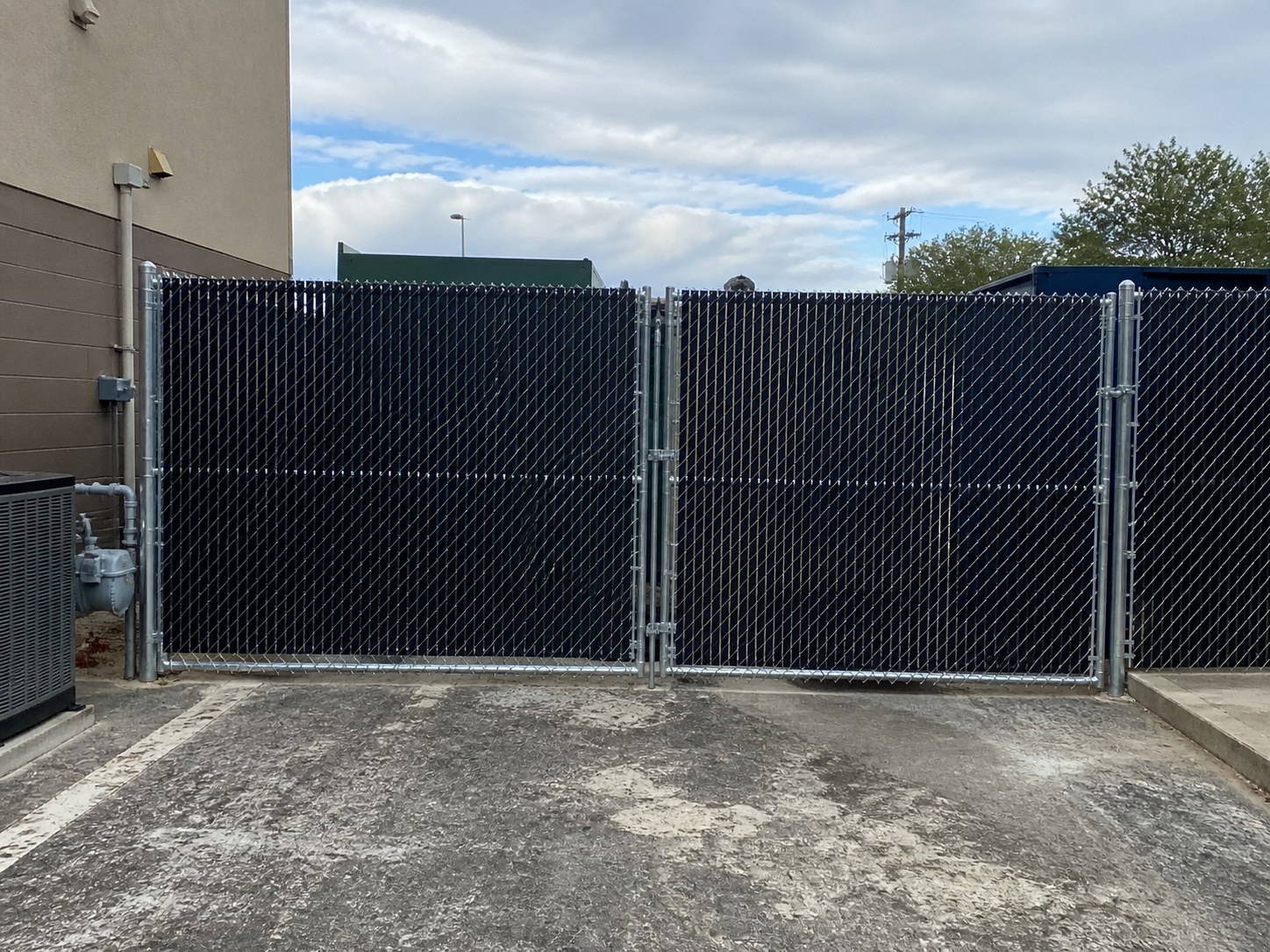
Add roughly 30% and black or brown PVC-coated mesh melts into a hedge or a tree line — the usual pick anywhere the yard actually sees the fence. Skip it and bare galvanized is the least you'll spend on a fence that lasts, ideal for a back utility line or the run behind the garage. One frame, one 9-gauge wire, two entirely different looks.

ROCK AND ROLLING GROUND

What Clay County's Rock and Hills Mean for Your Liberty Chain Link

1

The Clay County rock is the part the auger fights

Liberty's ground is topsoil over hard Clay County rock, and in the western developments that shelf can sit barely a foot or two down. An auger stalls on it, and the mistake is to nudge the post onto softer ground and surrender the line. Instead we drill or core the hole and drop every terminal — the corners, the ends, the gate jambs the stretched fabric leans on hardest — a full 36 inches into concrete no matter what stands in the way. That same depth holds the post plumb through the 80-plus freeze-thaw swings KC logs each winter.

2

Rolling Northland ground gaps the bottom of a level run

Clay County rolls, and the failure we're called out to fix more than any other is a run that opens at the bottom on a grade — panels hung dead level leave a wedge of daylight at the low end, and that's the exact spot a dog ducks through. Stair-stepping the fabric and bottom rail to the slope, then pulling a tension wire taut along the base, keeps the mesh riding the ground rather than floating over it. It takes longer to hang, and it's the whole gap between a fence that contains and one that just looks like it should.

3

Galvanized, coated, or slatted — three ways the same fence reads

Bare galvanized is the cheapest way to hang the mesh — plain silver, all utility, the right answer on a service line or the run behind the garage. Spend $3 to $6 a foot on a black, green, or brown PVC skin and the identical fabric drops back into the planting and buys extra years of clean life. Thread slats through it and you're paced toward privacy on the run the patio faces. One frame carries all three; the run decides how much it reveals.

GALVANIZED, COATED, OR SLATTED

Which Finish Belongs on Your Liberty Run?

Same wire, same footings underneath — what you're actually picking is the skin over the mesh. Galvanized is the budget line, a PVC coat hides and takes slats, and both sit on the same rock-drilled 36-inch posts. Below, each finish set against the Liberty runs it suits.

On a Liberty lotGalvanizedBlack Vinyl-Coated
150 ft at 4 ft, hung$1,900–2,700 or so — bottom dollar for a durable fence$2,400–3,300 with the $3–6 skin; takes slats
How it reads on the lotBare silver, all business — fine behind the garage, on a side yard, or a storage runDrops back into planting; accepts woven slats when you want the sightline gone
How the wet Clay County ground treats it20–30 years; the low band grays and pits first where the ground holds moisture25–35 years; the PVC seals the wire at ground level through freeze-thaw and humid summers
The Liberty runs it's forDog yards, kennels, utility lines, and the business-park perimeters off M-291The visible back line, the run the patio faces, and the historic-block yard where bare mesh would look tired
Pick it whenYou want a tool, not a look — bank the savings for rock-drilling and a stout gateIt's part of the yard's look, or slats are coming later

Bottom line: galvanized where it just has to do a job, coated where the yard looks at it, slats where you want part of the view gone. A genuine security or industrial line is a different animal — price that on the metro commercial fencing page. Every finish goes on one estimate, side by side.

THE CONTAINMENT JOB

Holding a Dog on Rolling Clay County Ground

Most Liberty chain link exists to keep something in — a dog, a run, a yard — and rocky, rolling ground is where that promise is won or lost. Four things settle whether the fence truly holds, and gauge is just where it starts.

Nine-gauge and the right height for the dog, not the garden wire

Anything meant to hold a dog wants 9-gauge — heavy enough for a body that leans, digs, and works the corners — not the wispy 11.5-gauge made for a tomato patch. Then height finishes the job: four feet stops most dogs, five or six stops the jumpers and the climbers. We spec both wire and height to the actual animal in the yard, not a catalog line.

The dig hits rock, and the terminal is where that matters

All of a chain-link fence's load rides the posts, and in Liberty the hardest-working posts — corners and gates — are the ones squared off against Clay County rock. We won't slide a terminal onto easy ground and lose your line; we drill or core the hole and drop the post a full 36 inches in concrete. Deep and plumb is what keeps the fabric tight for decades. Set shallow to duck the rock and it racks loose within a season or two.

Step the bottom to the hill or the dog goes under it

The classic Liberty failure isn't a snapped post — it's a level run laid across a grade, opening a gap at the low end the dog simply ducks through. We stair-step the fabric and bottom rail to the slope, pull the base wire taut, and bury a mesh apron anywhere a committed digger's already made its point. Sealing that low gap is what 'dog-proof' really comes down to on rolling ground.

Coated mesh or slats when the run is one you look at

A containment fence doesn't have to read like a service yard. On a run you see every day — or an older block near the Square where a rusted line is dragging the curb appeal down — black coated mesh looks clean and folds into the plantings, and slats add roughly three-quarters cover on the very same fence. It's the least expensive way to make a working line look intentional, no cedar wall required.

THE CONFIGURATIONS WE HANG

The Chain-Link Builds We Put Up Across Liberty

9-Gauge Galvanized Residential by RKC Wood Care Pros in Liberty, MO

9-Gauge Galvanized Residential

The workhorse run across Liberty

Galvanized 4- or 6-foot fabric on trussed corners — the everyday build for dog runs, side yards, kennels, and the rust-out swap in the central blocks. Every corner gets a terminal, the selvage is knuckle-twisted top and bottom, and a base wire steps along with the grade. No fence lasting this long costs less per foot, which is why it's the material we quote most in town.

  • Price: $12–18/LF installed
  • Lifespan: 20–30 years
  • Maintenance: Occasional tension-wire retightening
Black Vinyl-Coated 9-Gauge by RKC Wood Care Pros in Liberty, MO

Black Vinyl-Coated 9-Gauge

Recedes into a hedge — slat-ready

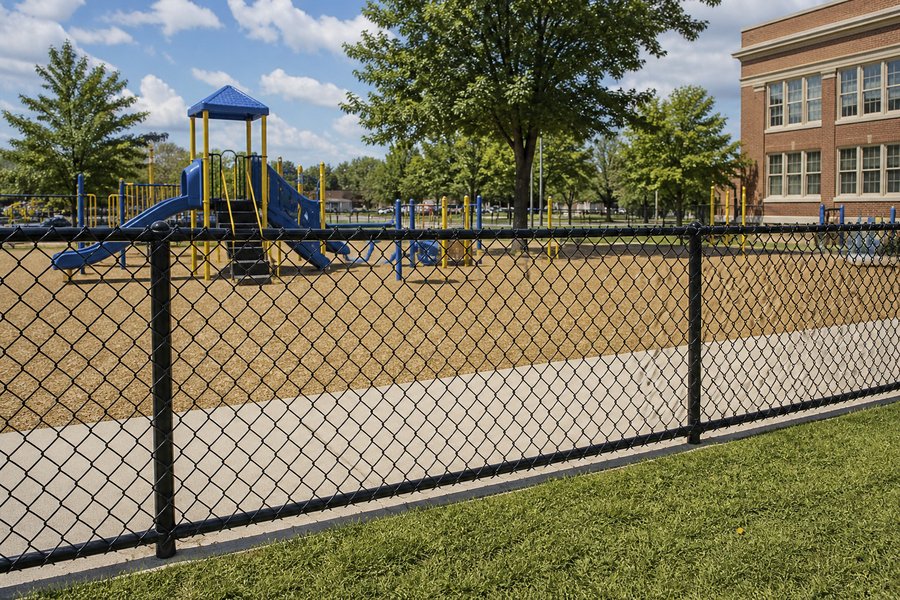
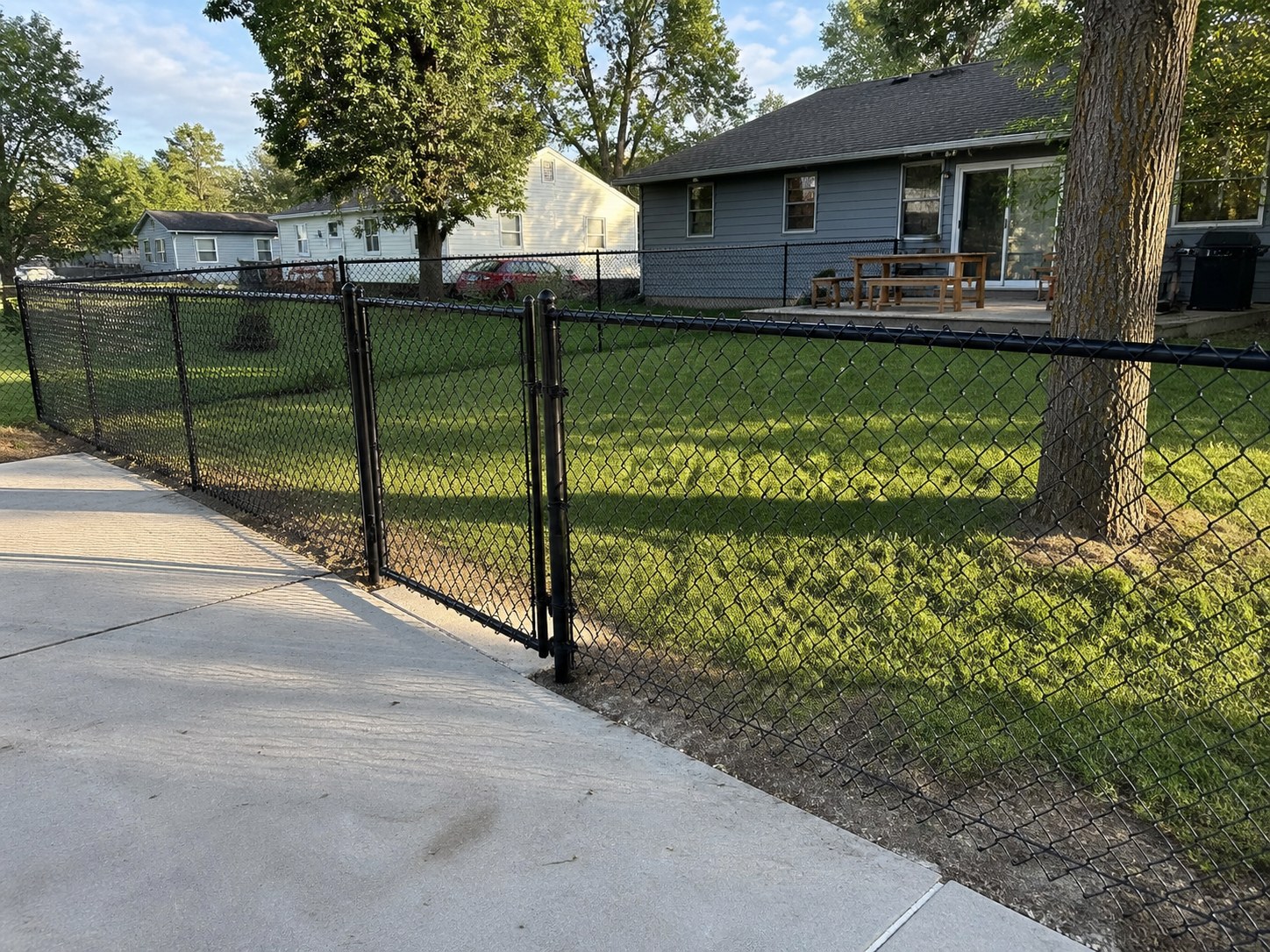
A galvanized 9-gauge core sheathed in black PVC, built to take woven slats the day you want the sightline gone. Rather than reading as a fence, it settles into a shrub row or tree line — and the skin blocks water from the wire right at ground level, where a coated run buys an extra decade over bare steel. Green and brown cost the same.

  • Price: $15–22/LF installed
  • Lifespan: 25–35 years
  • Maintenance: Soap-and-water rinse
6-Gauge Commercial by RKC Wood Care Pros in Liberty, MO

6-Gauge Commercial

The M-291 business parks and the Claycomo corridor

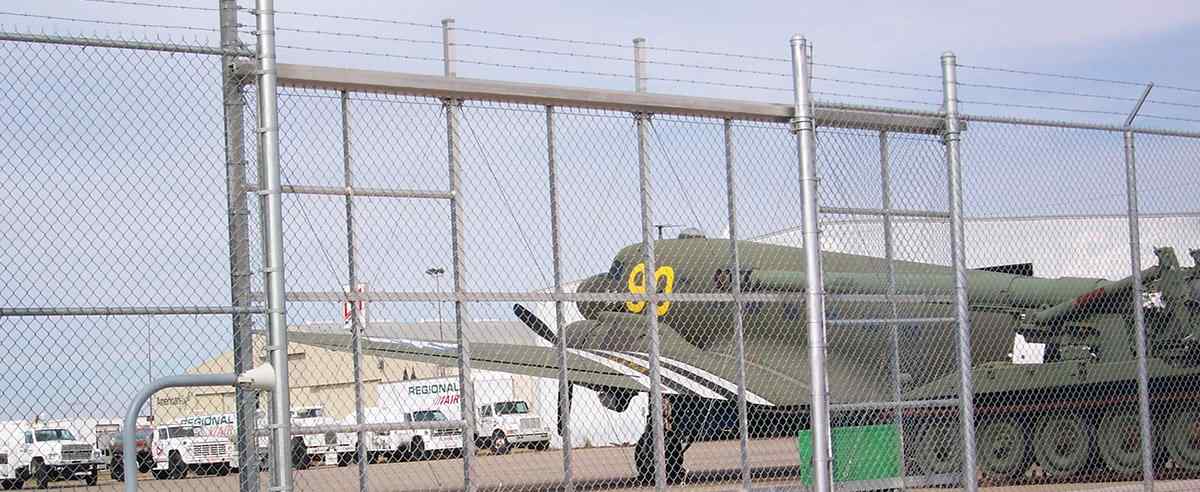
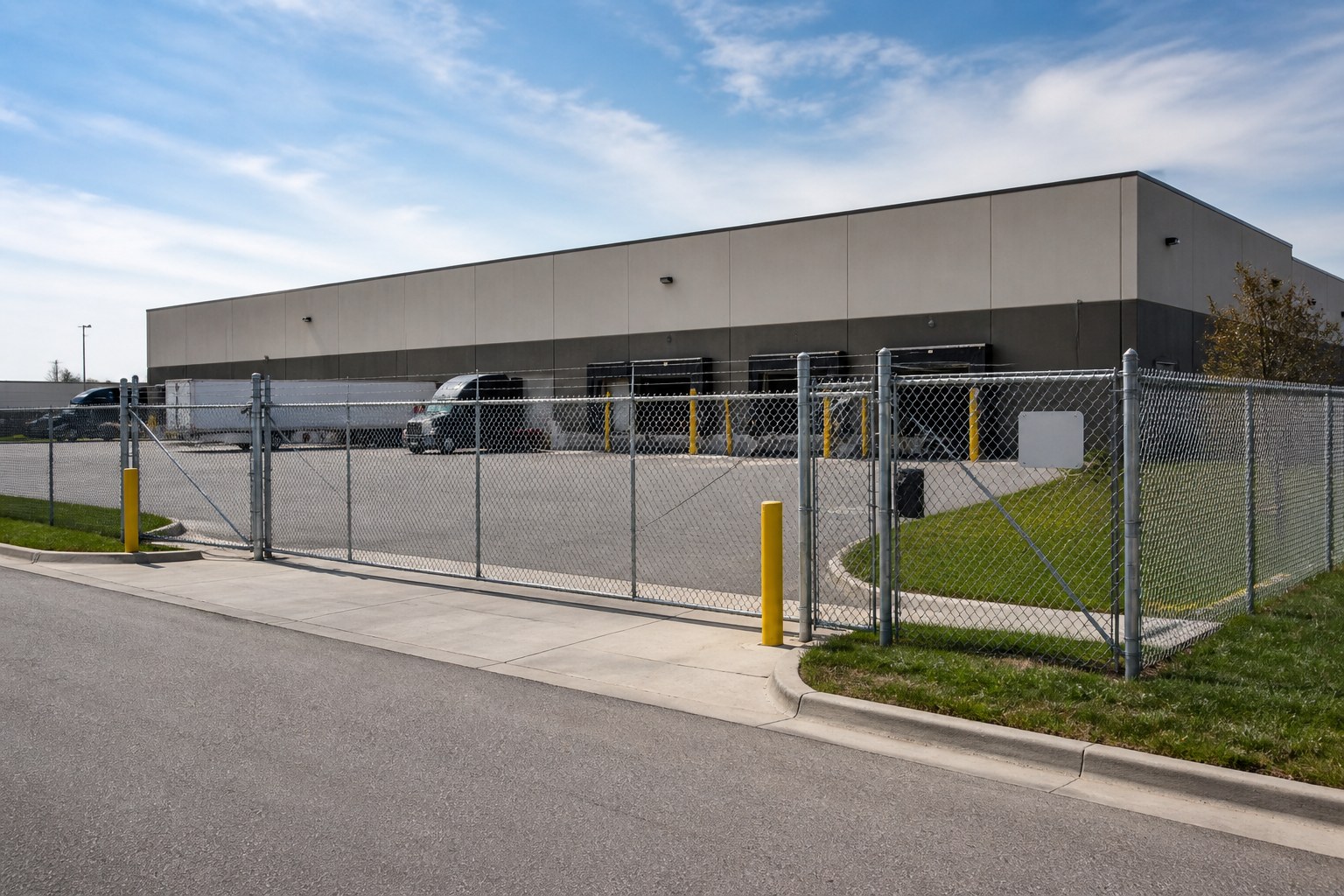
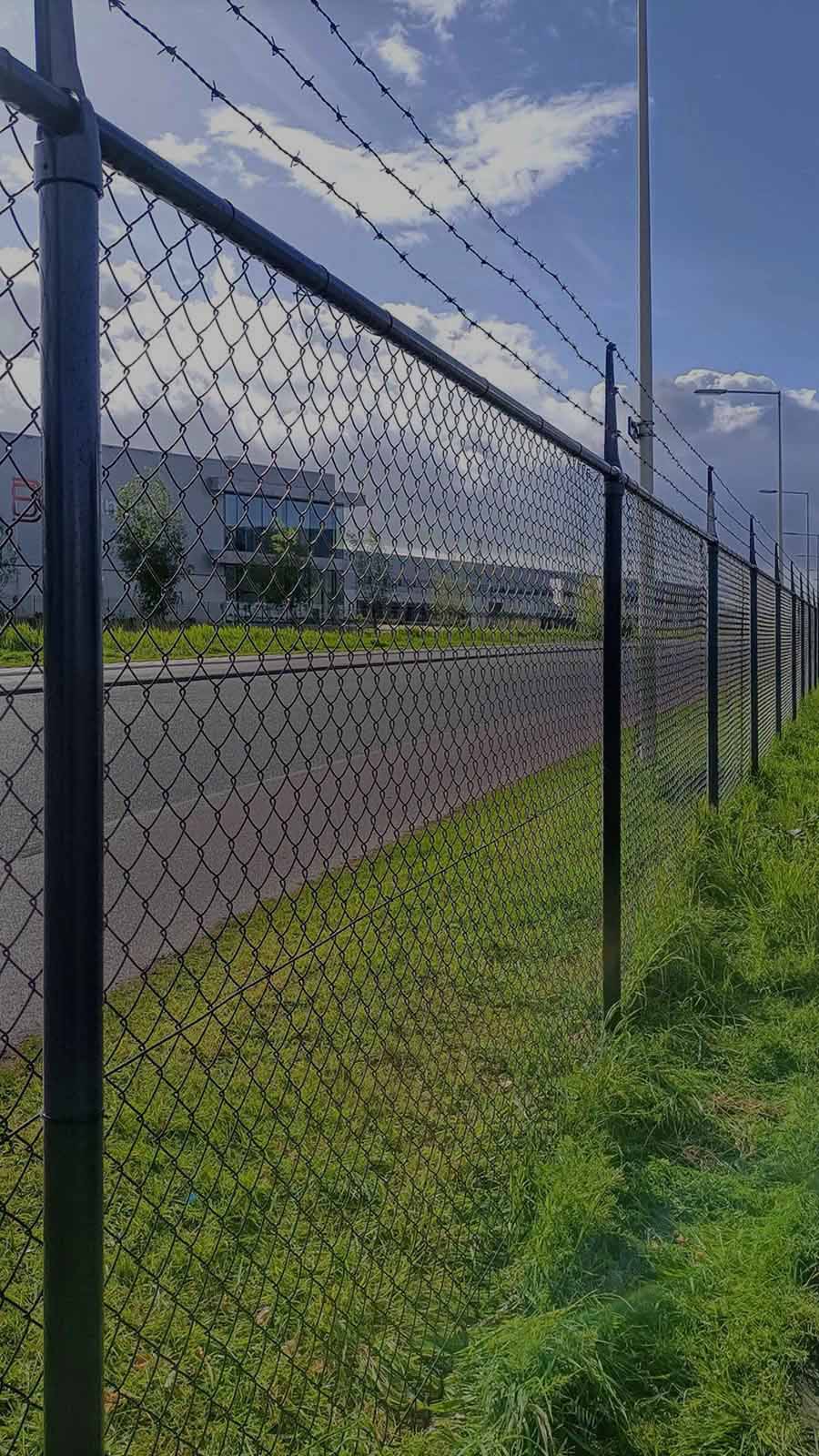
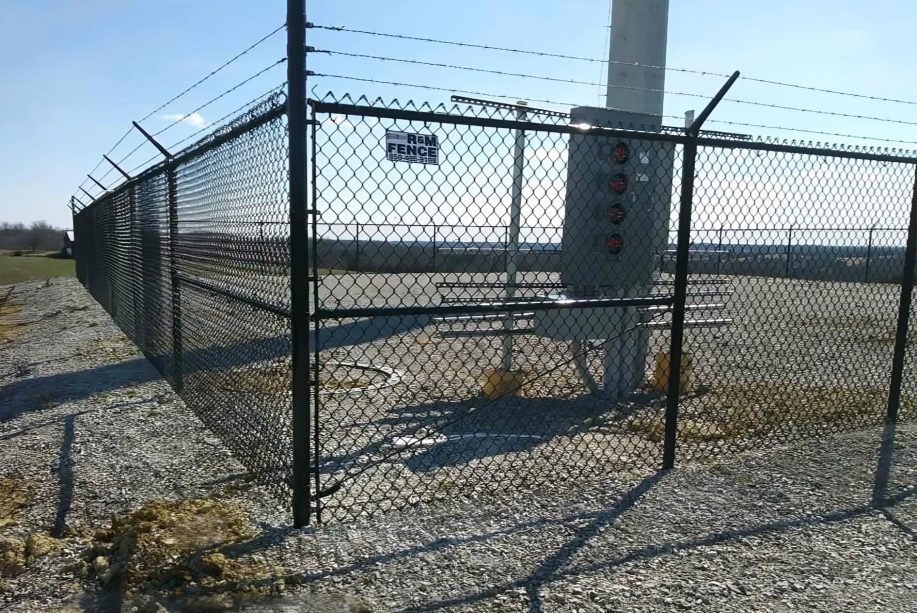
Heavier fabric, oversized posts, and a barbed or razor top where the site calls for it — the build for the M-291 business parks, storage and equipment lots, and job-site perimeters near the Ford plant. We truss-brace it at intervals, wire it top and base, and hang a rolling or cantilever leaf sized for a semi to pull through.

  • Price: $18–28/LF installed
  • Lifespan: 30+ years
  • Maintenance: Annual visual inspection
11.5-Gauge Light-Duty by RKC Wood Care Pros in Liberty, MO

11.5-Gauge Light-Duty

Garden pens and seasonal runs

Thinner wire on shorter, further-apart posts — the fit for a garden ring, a chicken run, or a seasonal pen on an acreage lot out toward Kearney. Push a real dog against it or ask it to secure anything and it'll give; step up to 9- or 6-gauge for that.

  • Price: $10–15/LF installed
  • Lifespan: 10–15 years
  • Maintenance: Retighten annually
9-gauge galvanized chain link fence cost comparison — Liberty, MO — RKC Wood Care Pros

LIBERTY CHAIN LINK FENCE PRICING

What Chain Link Fence Installation Costs in Liberty

4-ft Galvanized, 9-gauge

$12–16

installed, per foot

The everyday residential run and the central-block rust-out swap.

6-ft Coated, black 9-gauge

$18–22

installed, per foot

The step up for a visible yard; ready for slats.

6-ft Commercial, 6-gauge

$22–30

installed, per foot

Business-park and Claycomo-corridor duty; gates rated for wind.

Gates, old-fence removal, rock-drilling a hard lot, and grade or slope step-downs are itemized separately on every Liberty estimate — call (913) 286-1091 or request an on-site walkthrough.

OUR PROCESS

How a Chain Link Fence Install in Liberty Actually Happens

1

The walk-through: line, gauge, and gates priced

We walk the boundary, measure the run, and work out which wire fits — a backyard dog line and an M-291 storage perimeter don't get the same fence. Coating, slats, terminal count, every gate and its swing, and the way the run has to climb a sloped Liberty lot all get written down and itemized before a signature happens.

2

Utility locates, boundary string, and the slope laid out

Nothing gets dug until the free 811 locate clears the yard. We run a string down your property line and drive a stake at each post that carries load — corners, ends, gate jambs. On rolling Clay County ground we plan the top-rail and the bottom step right here, so the finished line rides the grade instead of leaving a gap at the low corner.

3

Rock drilled, posts concreted, fabric stretched

Postholes reach a full 36 inches — and when the Clay County shelf sits shallow we drill or core straight through it rather than chase softer ground. Concrete is crowned at every post to shed water; terminals go oversized and trussed. After a day or two of cure, we pull the fabric taut with come-alongs, tie it off post by post, and string tension wire top and bottom, stepped to the grade.

4

Gates hung, tension set, the line walked with you

Gates are the last thing on — over-built, hung on deep posts, on hardware we can bring back to square. We re-tension the whole run, cycle every latch and swing, set the drop rods on the double-drives, and walk the finished line with you before any invoice. Posts and structural hardware carry our workmanship warranty on every Liberty job.

RECENT LIBERTY INSTALLS

9-gauge galvanized chain link fence with tension wire in Liberty, MO — RKC Wood Care Pros
Chain Link Fence · Liberty
Black vinyl-coated chain link mesh fabric fence in Liberty, MO — RKC Wood Care Pros
Chain Link Fence · Liberty
Residential chain link fence with terminal post bracing in Liberty, MO — RKC Wood Care Pros
Chain Link Fence · Liberty
Galvanized chain link perimeter fence with knuckle-twist selvage in Liberty, MO — RKC Wood Care Pros
Chain Link Fence · Liberty

REVIEWS

What Kansas City Homeowners Say About RKC

4.9 ★ · 85 Google reviews

Every review is on our Google Business Profile — read them there, unedited.

Read all 85 reviews on Google

LIBERTY CHAIN LINK FENCE QUESTIONS

Chain Link Fence Installation Questions Liberty Homeowners Ask Most

Black vinyl-coated chain link fence — Liberty, MO installation FAQ — RKC Wood Care Pros

Gauge & Material

What gauge chain link does a Liberty backyard need?
For a house, 9-gauge — galvanized or coated — is the residential answer: stout enough to shrug off a dog, kids, and weather without bending. The 11.5-gauge is thinner and cheaper, fine on a garden pen but not under an animal that leans on the mesh. The 6-gauge is a commercial wire, overkill for a yard unless you're locking up equipment or running a long line off M-291. We spec the gauge to the load that'll actually hit it.
Does vinyl-coated chain link really outlast galvanized here?
In Liberty's weather — better than 40 inches of rain a year, 80-plus freeze-thaw swings, sticky summers — coated 9-gauge keeps its look 25 to 35 years while bare galvanized runs 20 to 30. Same steel underneath; the PVC simply seals water away from the wire down where the fabric meets the ground, and that low band is the first place an uncoated fence grays and pits. For a yard you look at, black is the pick.
Can you add privacy slats to a chain-link run?
You can. Vinyl or aluminum slats thread up through the diamonds for something like 75 to 90 percent cover plus a bit of wind break, and they go in at install or years later. What they aren't is a solid wall — the color weathers on its own clock and a slat can wiggle loose over time — but as budget privacy they earn their keep. Want a true screen? Put the money into cedar or vinyl instead.

Pricing & Lifespan

What does a chain-link fence cost in Liberty?
Figure $12 to $18 a foot installed for residential 9-gauge galvanized, $15 to $22 for coated 9-gauge, and $18 to $30 for commercial 6-gauge once height and terminals are in. Fence a standard 150-foot Liberty backyard in 6-foot galvanized and you're generally between $1,800 and $2,700 — dollar for durable foot, nothing touches it across a 20-to-30-year life. Drilling a rocky lot, adding slats, or upsizing gates lands on the estimate as its own line. Every quote is free and written out.
Why does my chain link gap at the bottom on a slope?
Because it was hung level across rolling ground instead of stepped to it. Clay County's grades leave a wedge of daylight under a level panel at the low end of a run — the first gap a dog finds. The fix is to stair-step the fabric and bottom rail to the slope and pull the base wire taut, so the mesh tracks the ground. On an existing fence we can usually re-step and re-tension just the low sections rather than replace the whole line.
Chain link or cedar for the same Liberty run?
Per foot, chain link comes in roughly 40 to 50 percent under the cedar everyone in Liberty defaults to. What you give up is the sightline — open mesh shows the whole yard, though slats or a planted hedge claw some of it back. If a solid screen is the real goal, buy the cedar and price it on the Liberty wood page. If it's a dog run, a utility line, or ripping out a rusted old fence, the numbers point at chain link.

OTHER LIBERTY FENCE OPTIONS

Considering Other Materials or Services for Your Liberty Fence?

Ready when you are

Get a free estimate — we usually respond the same day.

Call (913) 286-1091