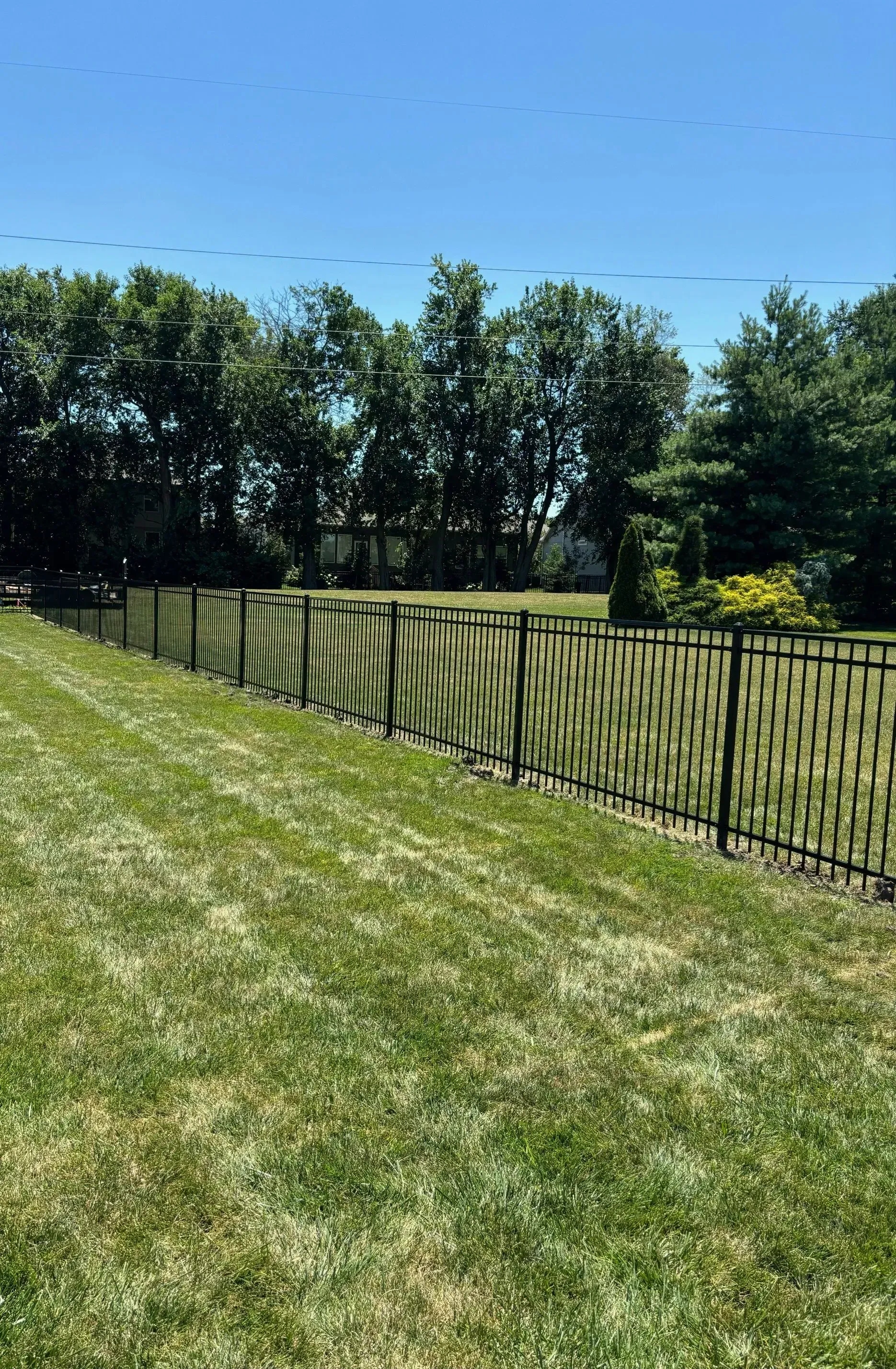
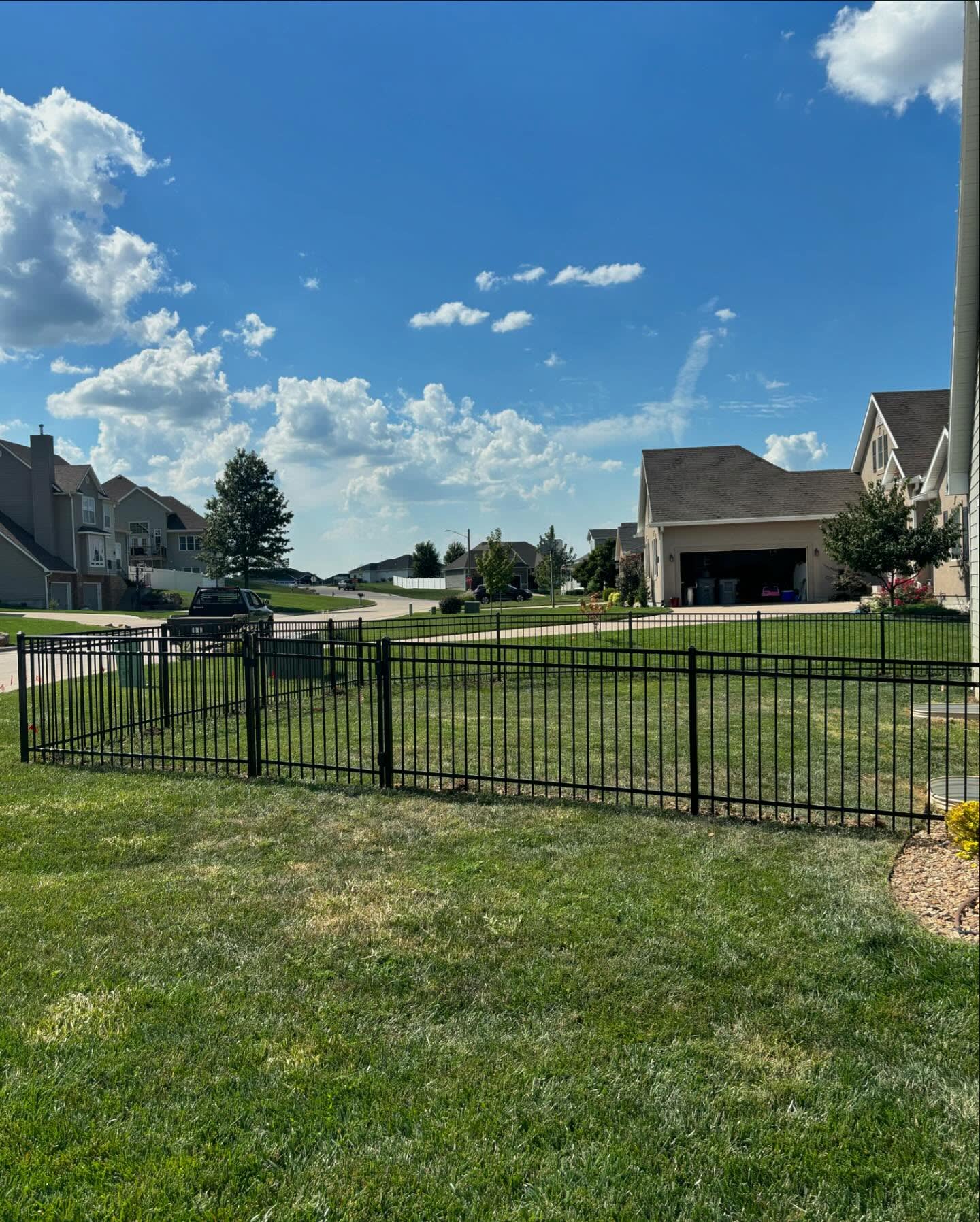
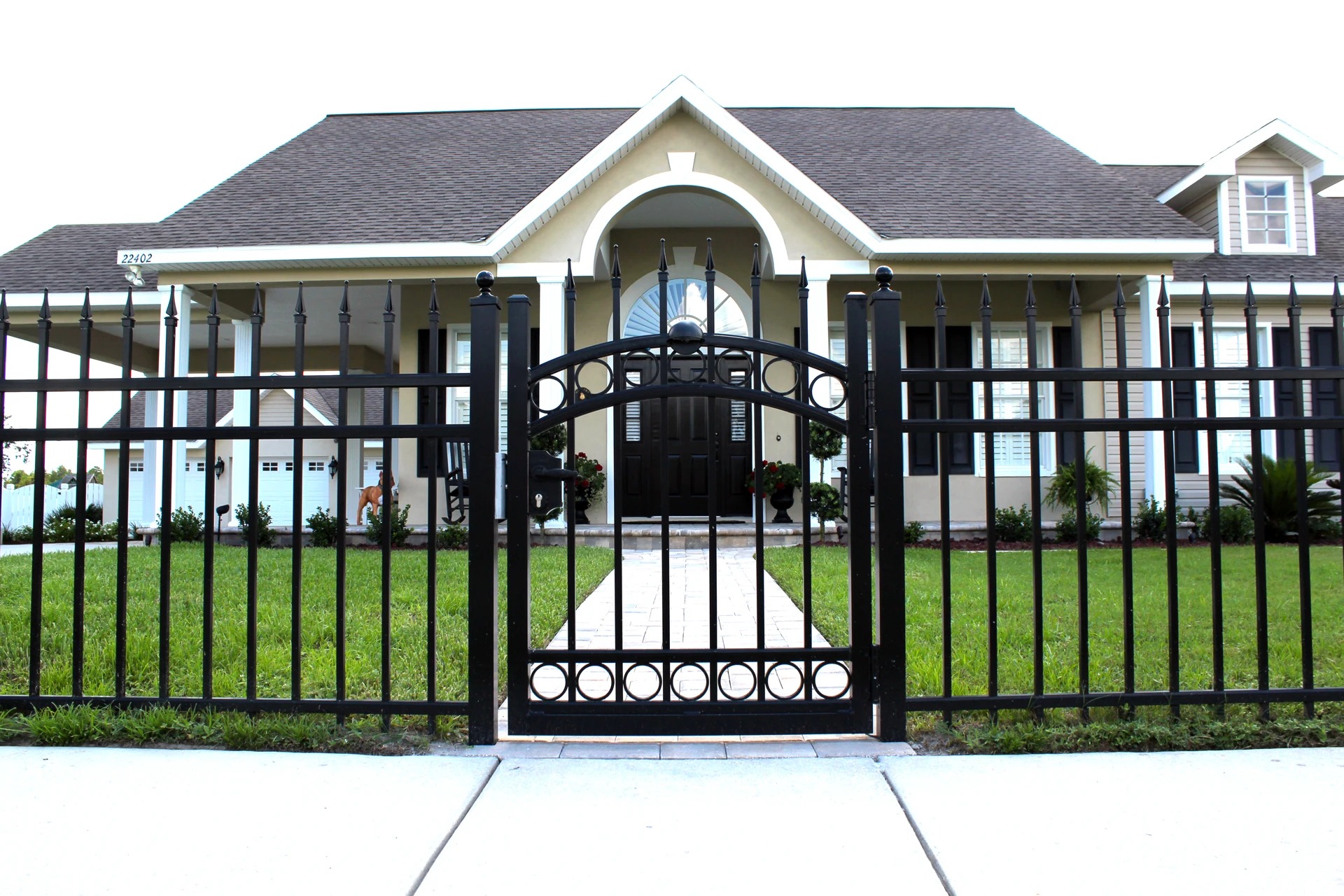
| A century-old property in the historic core near William Jewell | Welded steel in a traditional profile — spear-top, scroll, or classic picket, matte black over E-coat | The historic core near the college runs to white picket and ornamental steel for a reason — the century-old homes there carry an architecture that a modern fence fights. Genuine welded iron in a traditional profile is the fence that belongs: a spear-top, a scrolled panel, or a classic picket that reads as period-correct rather than new. This is the opposite of a contemporary flat line — on a historic Liberty property the traditional silhouette and the real mass of welded steel are exactly what the house is asking for, and the black powder-coat over E-coat holds that face for decades |
|---|
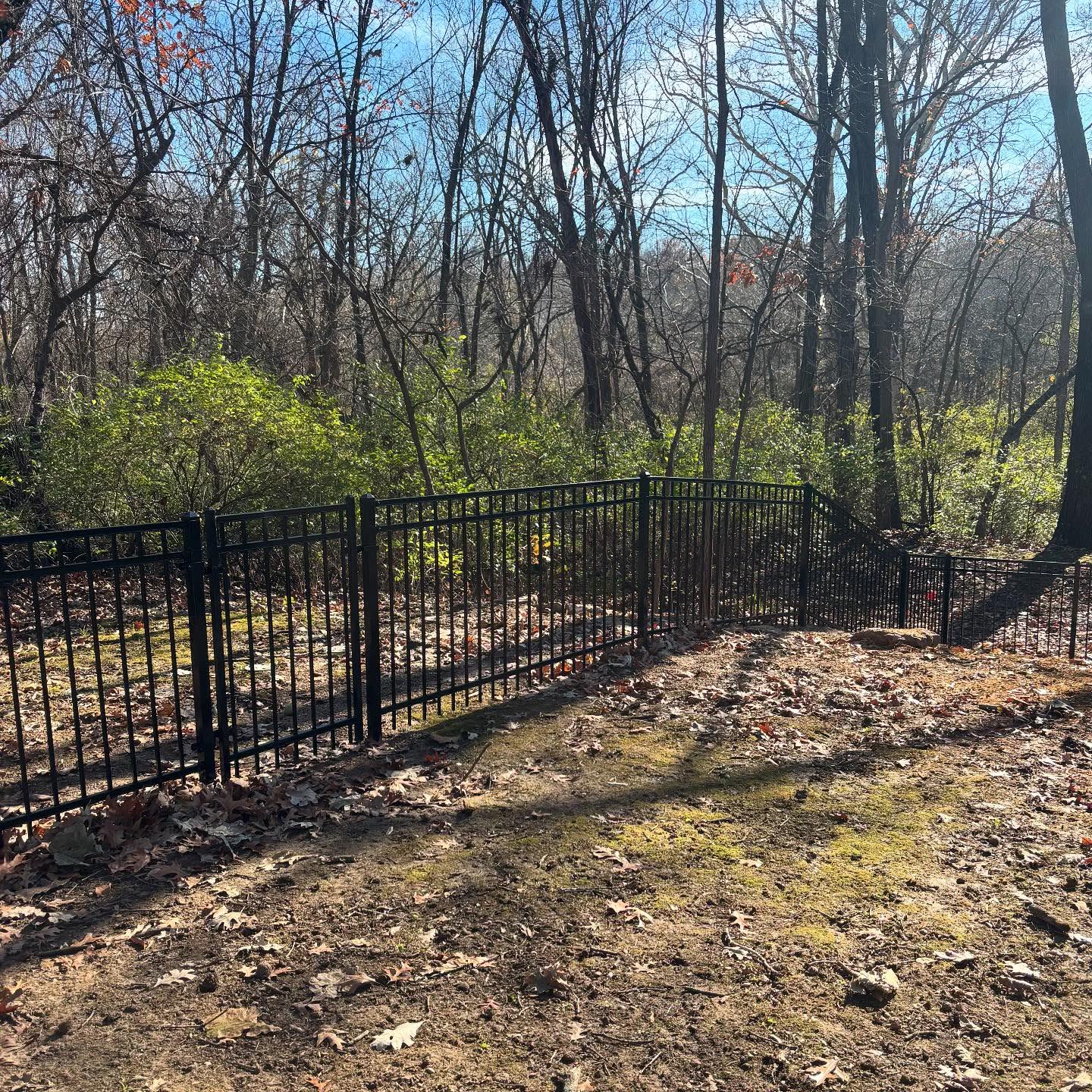
| A formal front line that has to step the rolling Clay County hills | Welded steel panels stepped down the slope in even, level courses | Most Liberty lots have grade, and where a light aluminum picket racks to follow the ground, welded steel does the formal thing: it steps. We drop the rigid panels down the slope in even, level courses so each section reads dead-level and the line descends in clean stair-stepped increments — the look that suits a historic or estate property, where a stepped iron run reads as intentional and formal rather than sloped. On the rolling hills of the historic core, stepping the steel is part of the period look, not a compromise |
|---|
| A lot where the auger hits Clay County rock — and the panel is heavy | A footing drilled into the rock and sized to steel's weight | The 'Clay County Rock' is real across Liberty, and with welded iron it cuts two ways. Steel is heavier per foot than aluminum, so it loads the footing harder — which makes a proper, deep-set post matter even more. The rock is the answer: where the auger reaches it, we drill in with a heavy-duty auger and key the post into the rock, and a heavy steel panel anchored into rock is about as immovable as a fence gets. The rock that makes the dig hard is exactly what carries the weight of the iron for the long haul |
|---|
| A security line on a historic or estate property | Spear- or pressed-top welded run, pickets welded through the rails | A period property often wants real security behind the heritage look, and welded steel is the only material that gives both. Pickets driven through the rails and welded — not screwed into brackets — resist being spread or pried and take a hard hit without folding, while a spear- or pressed-top gives a hard, hand-holdless edge at the top that still reads as ornamental. On an estate lot in Liberty you get the traditional face the house wants and a genuine deterrent in the same run, which a decorative-only fence can't claim |
|---|
| A fence meant to stand for the life of a historic home | E-coat primer driven into every weld and seam, then powder coat over it | A century-old property is a long-horizon investment, and a fence on it should last accordingly — which comes down to what's under the color. E-coat, the electrodeposition primer that bonds into every weld, seam, and hollow cavity before the powder coat, is what keeps the steel from rusting at the joints and the ground line over decades. Bargain 'ornamental iron' skips it and paints straight over the steel — it matches on install day and bleeds rust at the welds within ten years. Every steel run we quote for a Liberty property is E-coat primed first, powder-coated second |
|---|
| A new-west development lot, or a backyard that just wants a screen | Honestly — black aluminum for the new west, or cedar for a screen | Two honest steers, because Liberty is two towns. Out in the new western developments — Benson Place and the like — the street runs to cedar or black aluminum, and there aluminum is the smarter buy: it racks the rolling hills easily, can't rust, and costs less than welded steel, so save the iron for the historic side. And if what you want is a private backyard screen, an open steel picket hides nothing — cedar, stained in-house, is the answer. We build the welded iron where the property and the era actually call for it |
|---|