Skip to content
Vinyl Fence Installation in Spring Hill, KS — No Re-Stain, No August Lean, Built for a Big New-Build Lot

Vinyl Fence Installation in Spring Hill, KS — No Re-Stain, No August Lean, Built for a Big New-Build Lot

Spring Hill is a sea of six-foot cedar, and on these big former-farmland lots cedar carries two costs the street doesn't advertise: a re-stain weekend every couple of summers on a perimeter this long, and posts that lean when the dry-August clay pulls away from them. Vinyl closes both — the standard Johnson County look with nothing to coat and a steel-cored post the drought can't drag. Because wind on the open fields and drought-shrink in the clay are what actually take fences down out here, the work starts underground — every post in concrete around a galvanized steel core, a full 36 inches below the frost line, deep enough that a dry August can't tip it. Above sits capped, co-extruded PVC — white, sand, or woodgrain — from CertainTeed, Veka, and Bufftech, running along a steel-reinforced rail sized to the open-lot wind. One owner-run crew stakes the perimeter, sets it, and answers any warranty call years down the road.

★★★★★
4.9
from 85 reviews
Licensed
& Insured · KS + MO
400+
fences installed
A+ BBB Rating 400+ Fences Installed Since 2021 Owner-Operated Free On-Site Estimates
Browse vinyl options ↓

WHY SPRING HILL HOMEOWNERS CHOOSE VINYL

Dayton Creek to the Rural Edge — Vinyl for a Big Spring Hill Perimeter

The number on the estimate is the smallest part of the story. What lands around your lot is a fence that matches the neighborhood without a stain date, holds plumb when the August clay pulls back, and stands up to the wind an open field actually gets — built for a big new-build perimeter, not stamped off a spec sheet. Spring Hill fences almost everything in cedar because that's the standard JoCo look, and it's an honest one — but on a quarter-acre-plus lot cedar means a lot of feet to coat and a lot of posts to lean. As the Kansas City vinyl fence contractor handling install, repair, and staining under one roof, we build the version you settle once.

1

The standard JoCo look without the standing stain date

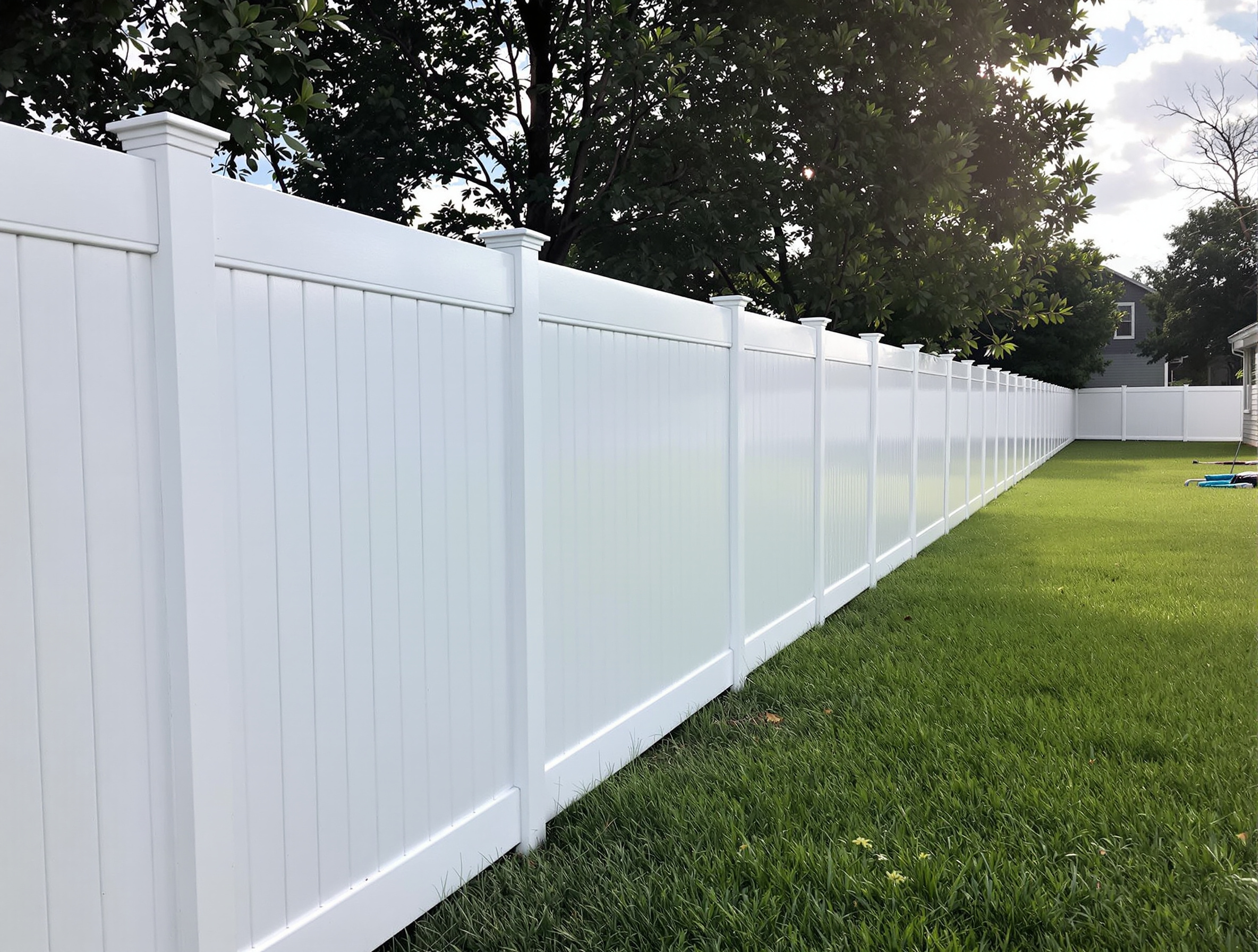
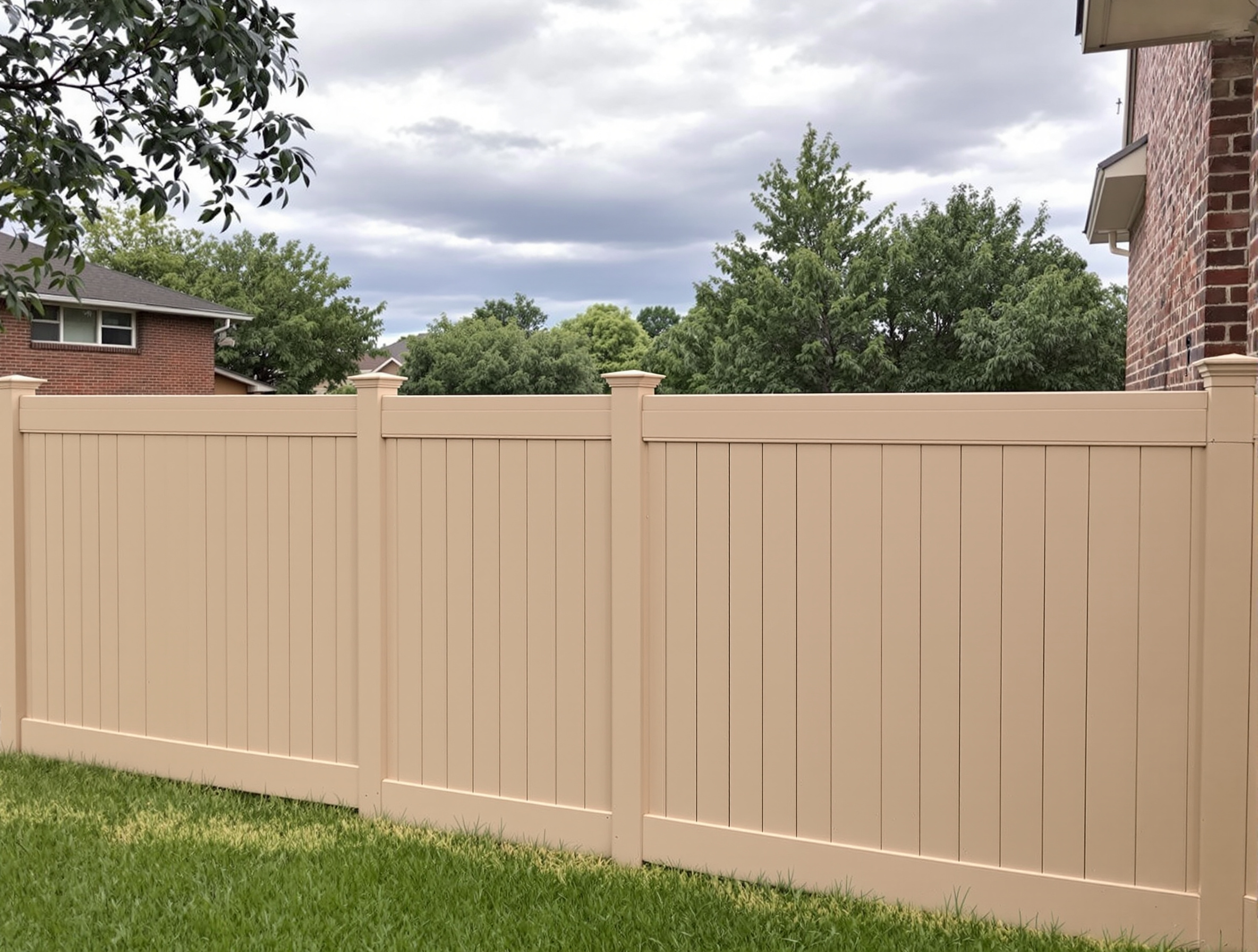
Spring Hill homeowners want the fence to match the street — the clean six-foot privacy wall the whole new subdivision is built in. Vinyl gives you that exact look in white, sand, or woodgrain and then quietly deletes the part nobody enjoys: the re-stain weekend that comes around every couple of years for the cedar next door. On a perimeter this size, that's the difference that adds up fastest.
2

It doesn't lean when the August clay pulls back

The failure Spring Hill sees most isn't a broken board — it's a whole run tipping because the dry-summer clay shrank away from the posts. Vinyl on a steel-cored, concrete-set post takes that off the table: the footing sits still three feet down while the topsoil moves, so the fence you paid to run straight stays straight through the driest August. It's the local problem vinyl is quietly built for.

3

One big perimeter, handled once

A quarter to a bit over a third of an acre is a lot of linear feet, and every foot of a wood fence is something to coat, watch, and eventually reset. Vinyl turns the whole perimeter into a one-time job — a heavier check on install day, then decades of nothing owed across a run long enough that the maintenance you're skipping is a genuine season of work, not an afternoon.

4

Braced for the wind an open lot actually gets

Out on Spring Hill's wide, flat former fields, a long run catches gusts a sheltered suburb never feels, and an unbraced panel is the one that bows and splits. Every vinyl run we set here carries a galvanized steel channel in the rail, sized to the panel height — a spine that holds a hundred-foot line rigid when the wind comes across the open ground with nothing to break it.

LOCAL CONDITIONS · SPRING HILL

Drought, Wind, Big Lots & Two Counties — What Shapes a Spring Hill Fence

A Spring Hill install turns on four local realities: the drought-shrink clay that leans posts every dry August, the open-field wind that works a long run, the big new-build perimeters that change the whole plan, and the two-county lines a fast-growing city sits across. Miss any one and a fence that looked straight in spring is leaning, bowing, or off the line by its second summer. We take each on by name below — a quarter-acre lot on former farmland gets its own plan, never a spec copied off some sheltered in-town yard.

1

Drought-shrink clay that leans posts every dry August

Spring Hill's lots are former farmland — deep, mostly rock-free clay that digs clean but moves hard with the weather. In a wet spring it swells; in a dry August it shrinks and pulls back from anything set in it, and a shallow wood post leans as the clay lets go. It's the number-one fence failure we're called out for in this city. The fix is depth and a proper footing: a post set three feet down in concrete gives the shrinking clay nothing to drag, and a steel-cored vinyl post has no wood to rot even where the ground stays damp between.

2

Wide-open wind across former fields

The old farm ground that Spring Hill is filling in with subdivisions is flat and exposed, and a long privacy run out here stands in the wind like a sail — the same open sky that makes this hail-and-storm country. An unbraced panel bows and eventually cracks at a post under that push. Every run we build carries a galvanized steel channel down the rail, sized to the panel, so a long line on an exposed new-build lot meets the gust with a rigid spine instead of flexing until it fails.

3

Big perimeters on brand-new lots

A Spring Hill lot runs a quarter to nearly half an acre — larger than Olathe or Gardner — so the job is almost always a full perimeter with several gates, not a single back run. That scale changes the plan: more posts to get plumb, longer sightlines that show any wave in the line, and a builder's grade that may still be settling on fresh fill. We stake the whole boundary, set to final grade rather than fresh dirt, and hold the line dead straight the length of the lot.

4

Two counties, one new-build street

Spring Hill has grown so fast that it now spans both Johnson and Miami counties, and which lines govern a given lot isn't always obvious from the street. Before we stake anything we confirm the boundary and the pins for your specific address, so a brand-new perimeter lands exactly where it belongs — a detail that matters more here than in an old platted neighborhood where every line was settled decades ago.

THE LONG-RUN NUMBER, NOT THE STICKER

Vinyl or Cedar Around a Big Spring Hill Lot? Do the Fifteen-Year Math

Cedar is what the whole subdivision is built in, and on install day it's the cheaper privacy wall — that part's true. But around a quarter-acre-plus perimeter, the fence that actually costs less is decided by two things that scale with the size of your lot: how much fence you have to keep coating, and how many posts a dry August can lean. Cedar wants a re-stain every couple of years and a post reset when the drought-shrink wins; vinyl is one heavier check that then goes quiet. The figures below run against a 250-foot perimeter — a realistic Spring Hill lot — with every gate counted into both columns.

Over 15 years6-ft cedarVinyl
Install around a ~250-ft new-build perimeterRoughly $8,000 wraps a 6-foot cedar privacy line — the default the whole subdivision is built in, and a good-looking one on day oneRoughly $12,000, steel-reinforced rail and every gate already inside the number
Coating that much fence for fifteen yearsA perimeter this size is a real job to re-stain every two or three years — figure north of $4,500 in stain and weekends once you add the cycles upNothing at all; a hose on a dry June afternoon is the whole of it
What an August drought does to the baseWhen the clay pulls back in a dry August it drags a wood post with it, and the run starts leaning — the repair Spring Hill calls us for mostA steel-cored post in a deep concrete footing doesn't ride the clay; the panel stays plumb while the ground moves around it
Seasons before it needs real workFifteen to twenty on an open, wind-and-drought-worked lot before the posts lean out and the boards go, and then it's a rebuildThirty-plus, the manufacturer coverage carrying over to whoever owns the house next
Adding it all up at year fifteenWell past $12,000 once the coats and a drought-lean post reset are counted — with a full rebuild sitting right behind thatAbout the original $12,000, nothing owed on the back end and nothing pending
The household each one really fitsThe owner who wants the wood grain and the matching-the-neighbors look, and is fine keeping to the stain calendar an open lot forcesThe family fencing a big perimeter who wants it handled once — no coats, no August lean, no rebuild on the horizon

It really is about time horizon and lot size. If you love the wood grain and might move on, cedar is a fair fence, and the Spring Hill wood page lays out the sealing rhythm an open lot demands. If you're staying and the perimeter is big, vinyl earns the gap back on a run long enough that the coats you're skipping are a real season of work — and it never leans in a dry August. Hand us the lot and we'll price both, totals side by side, no thumb on the scale.

THE SPRING HILL WIND-AND-DROUGHT QUESTION

Will the Open-Plains Wind or the Drought Crack Vinyl? Only the Cheap Kind

Fair thing to ask on a wide-open former-farmland lot, and the answer splits clean: a capped panel braced with steel and set deep in concrete takes the wind and ignores the drought, while the bargain board on a hollow rail is the one that gives. Wind is the real test out here, not the cold — a long run stands exposed with nothing to slow the gust — and the dry-August clay-shrink is what leans a shallow post. The four build decisions below are what keep both off the fences we set.

The spec that matters is the co-extruded cap

Vinyl isn't one grade of thing. The panels worth installing are co-extruded — an outer layer packed with UV and impact additives, fused over the core, and that cap is where the toughness lives. The bargain single-wall stock skips it, and out under the open Spring Hill sky it's the first to chalk pale and turn brittle. Every profile we hang is the capped kind, which is exactly why it takes a plains hailstorm or a hard freeze without webbing over with cracks.

On open farmland, wind is the real test

Spring Hill's old fields are wide and flat, so a long privacy run out here stands in the wind with nothing to slow it — the same exposure that makes this a hail-and-storm town. A hollow, unbraced rail flexes in a strong gust and eventually splits at a post. We drop a galvanized steel channel down the rail on every run, sized to the panel, so a hundred-foot line on an exposed lot pushes back against the wind instead of bowing to it. It's the single most important thing you do to a fence on ground this open.

Drought-shrink can't lean a steel-cored post

The signature Spring Hill failure isn't a crack — it's a lean. In a dry August the deep farmland clay pulls back from the posts and a shallow-set wood post tips with it, taking the run out of plumb. A vinyl post cored in steel and set three feet deep in concrete gives the clay nothing to drag; the footing stays put while the topsoil shrinks and swells around it. The panel above never learns the ground moved.

Cold and heat get room to move at every joint

PVC stretches a little in the July heat and draws back in a January cold snap — real movement on a long run in a place with the temperature swings the open plains get. Torque a run down solid and that motion has nowhere to go until a joint fails. Every connection we set carries the small engineered gap the material needs to breathe with the season, so a Spring Hill perimeter flexes with the weather instead of fighting it.

WHAT WE INSTALL MOST

The Vinyl Spring Hill Homeowners Order Most

Most vinyl orders in Spring Hill settle onto this short list — each paired with a straight price, the service life you can count on, and the almost-nothing upkeep it asks. The right pick tracks your lot — a full privacy perimeter to match the street, a warm tone for a stone-front new build, a ranch rail for the rural-edge acreage, or a picket around the pool — and how it should read against the house. Samples ride out to the estimate, so you choose against your own siding, not a chip in a binder.

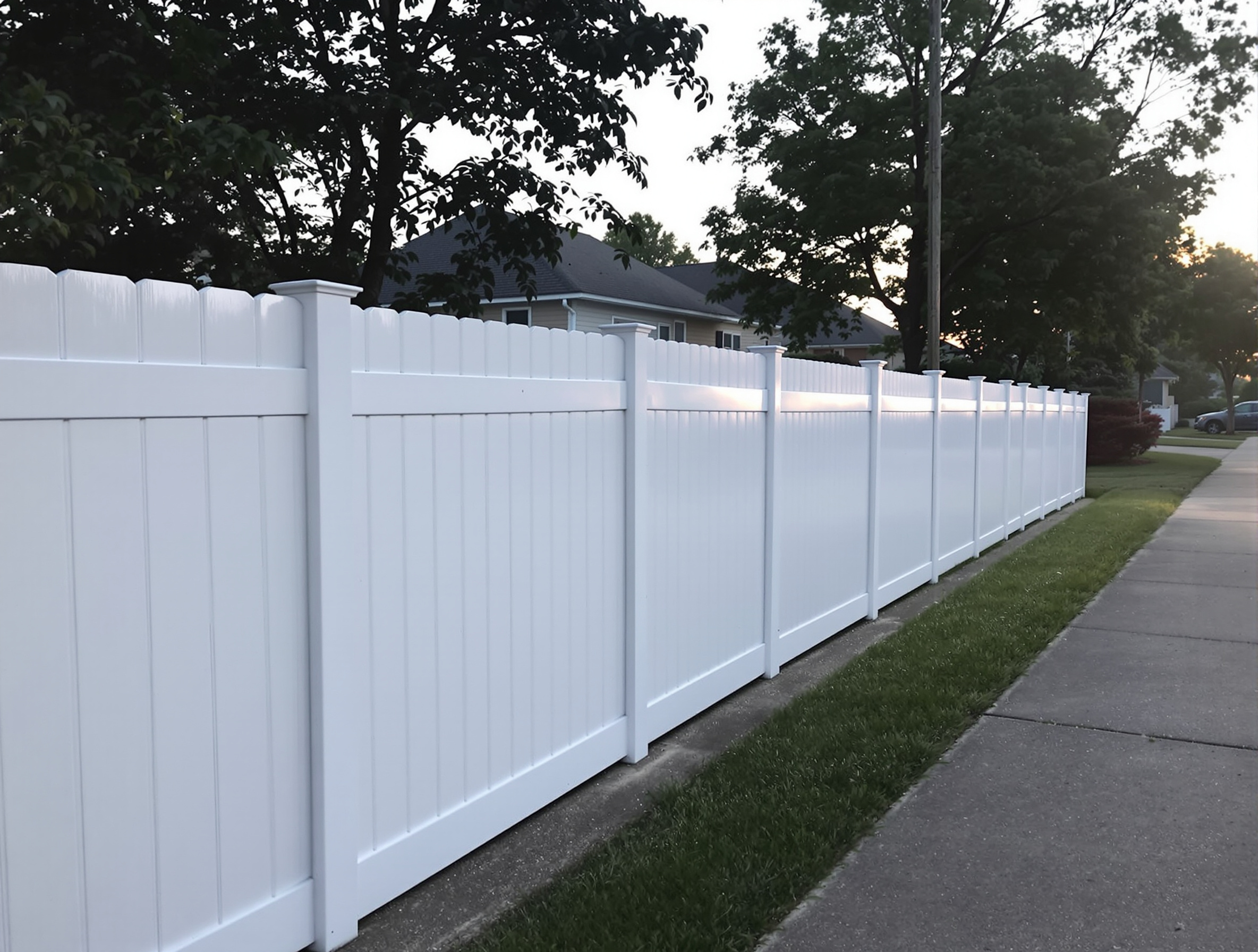
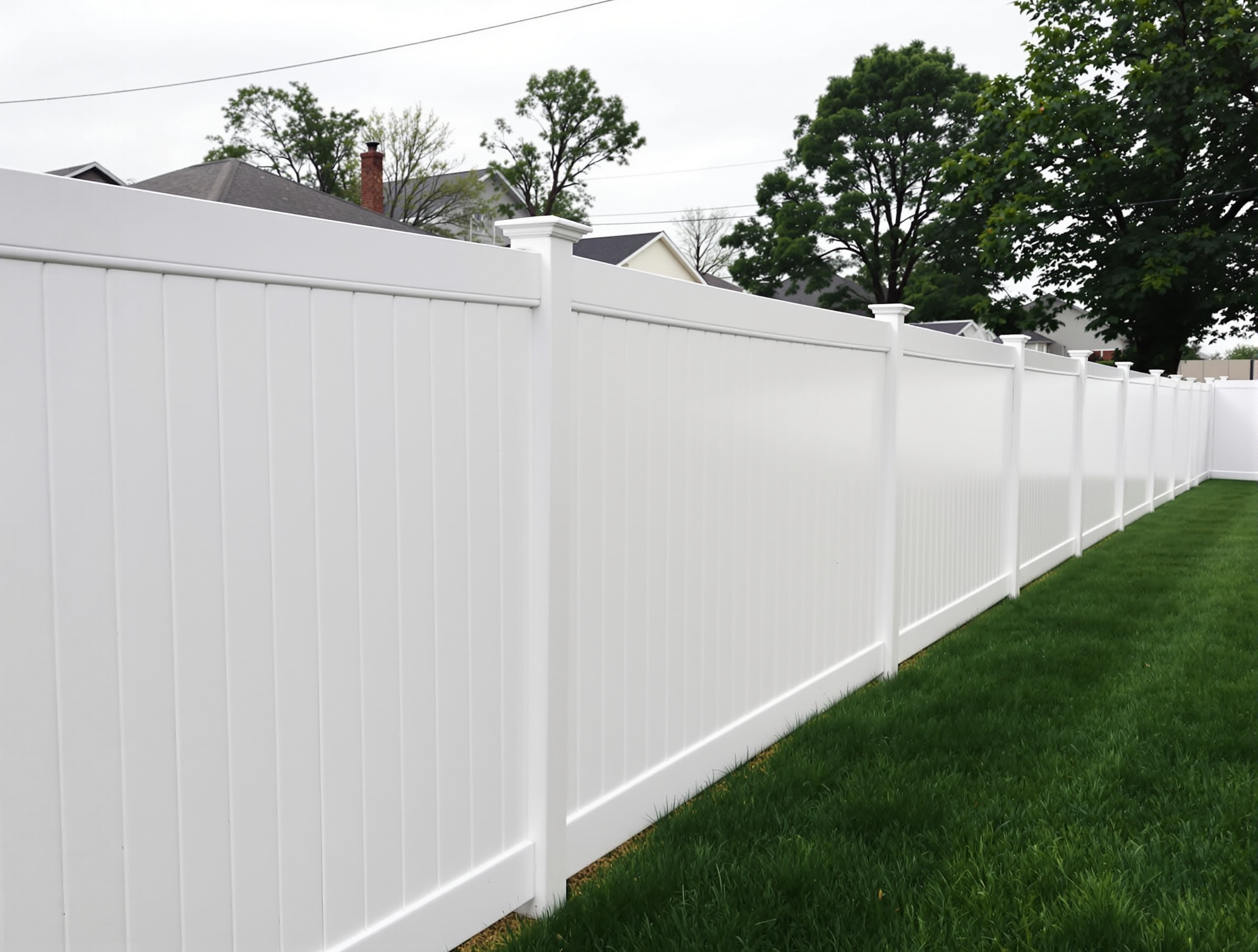
White Privacy — 6 ft vinyl fence by RKC Wood Care Pros in Spring Hill, KS

White Privacy — 6 ft

The new-build perimeter standard

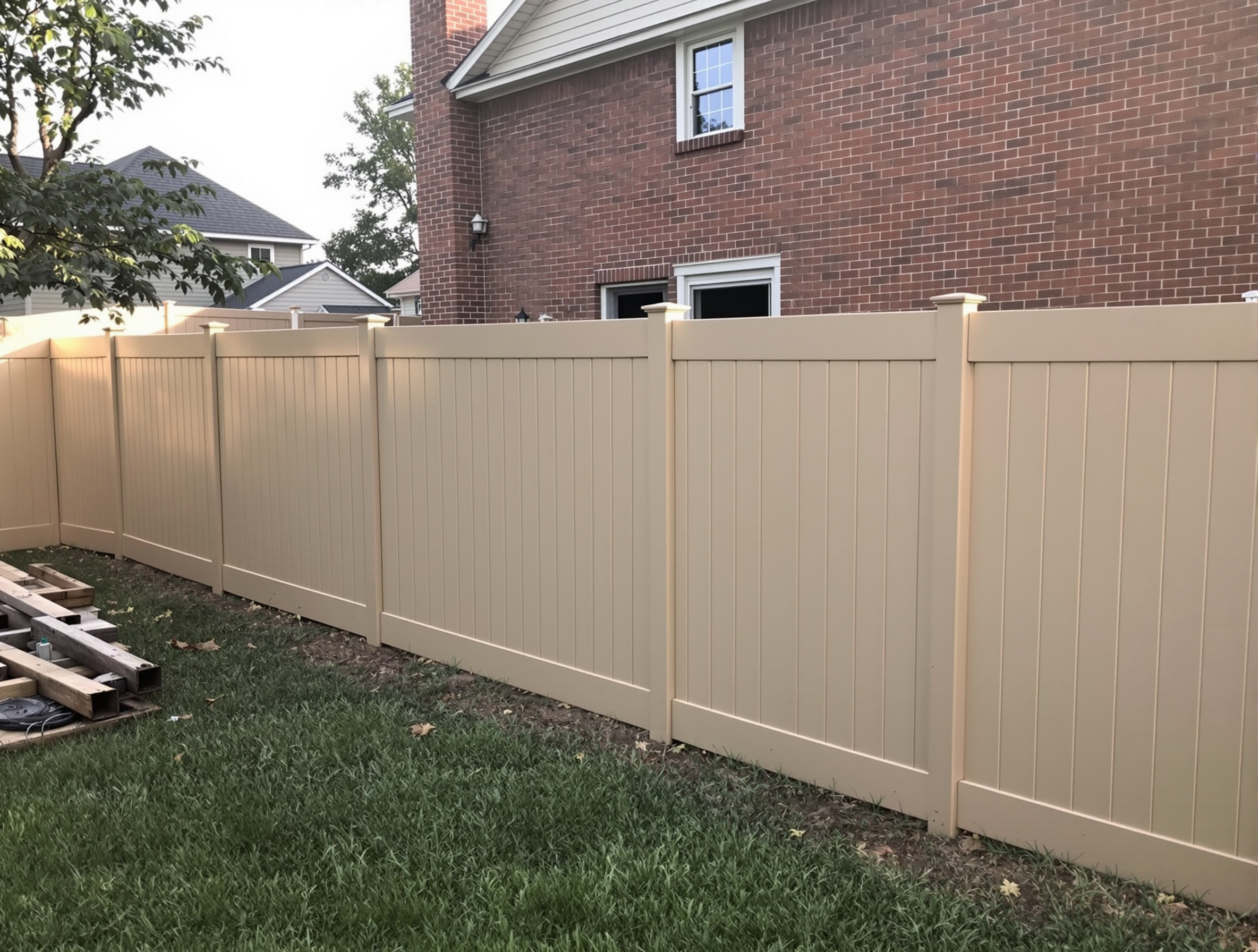
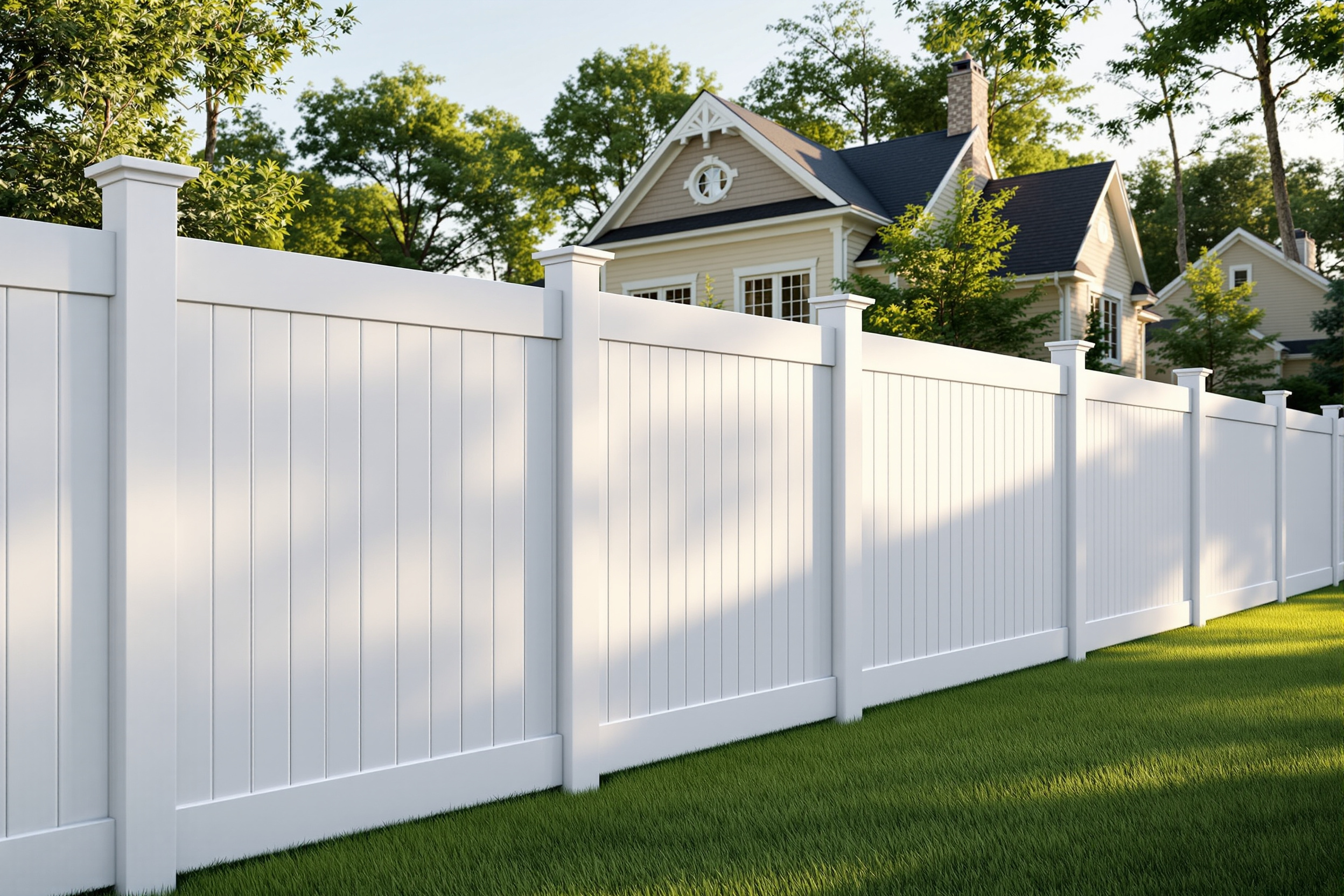
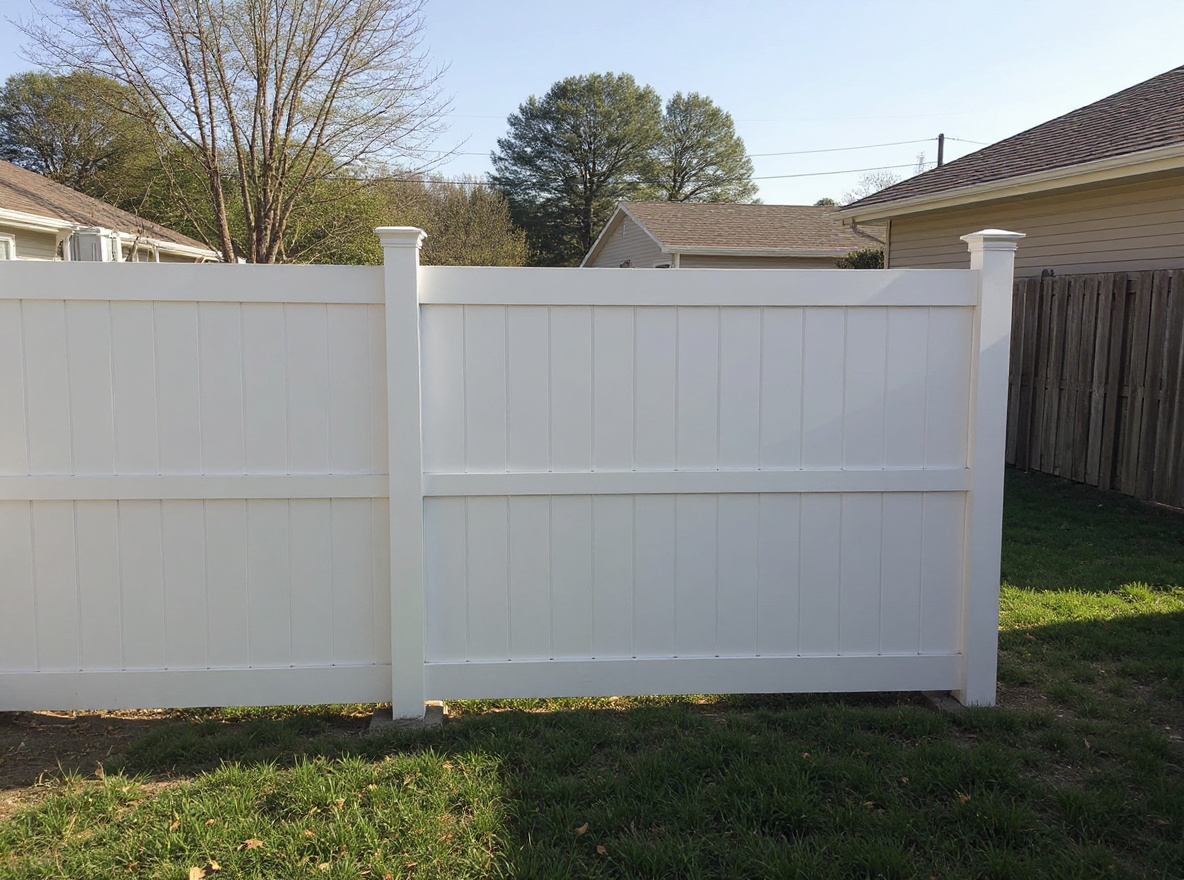
Spring Hill runs on the standard Johnson County backyard — a clean six-foot privacy wall around a fresh subdivision lot — and this is the vinyl version of it. Tongue-in-groove boards in UV-rated PVC over a galvanized steel channel in the rail, the same crisp white line as the cedar next door, minus the coat that cedar needs every couple of summers. On a quarter-acre-plus perimeter that's a lot of fence to never have to stain.

  • Price: $40–55/LF installed
  • Lifespan: 30+ years
  • Maintenance: A rinse once a year
Sand / Woodgrain Privacy — 6 ft vinyl fence by RKC Wood Care Pros in Spring Hill, KS

Sand / Woodgrain Privacy — 6 ft

Warms up a stone-and-siding new build

A lot of the newer Spring Hill homes wear stone accents and earth-toned siding that a bright-white panel fights. A sand tone or an embossed woodgrain face reads warmer against them and closer to the cedar the street already runs, while keeping every bit of the no-upkeep case. Same steel-reinforced rail, same three-decade panel — a color that belongs on a Dayton Creek or Sweetwater lot rather than shouting over it.

  • Price: $42–58/LF installed
  • Lifespan: 30+ years
  • Maintenance: An occasional soapy wash
White Ranch Rail — 3-rail vinyl fence by RKC Wood Care Pros in Spring Hill, KS

White Ranch Rail — 3-rail

For the acreage still going rural-to-suburban

Spring Hill still keeps one boot in the country, and plenty of lots out toward the edges are big enough that a full privacy wall is more than the yard wants. A three-rail vinyl ranch line marks the boundary the way the old farm fences did, holds a big dog with welded-wire backing, and never asks for the scrape-and-repaint a wood rail on open ground always did. It's the honest perimeter for an acre that wants to stay open.

  • Price: $28–42/LF installed
  • Lifespan: 30+ years
  • Maintenance: Next to nothing
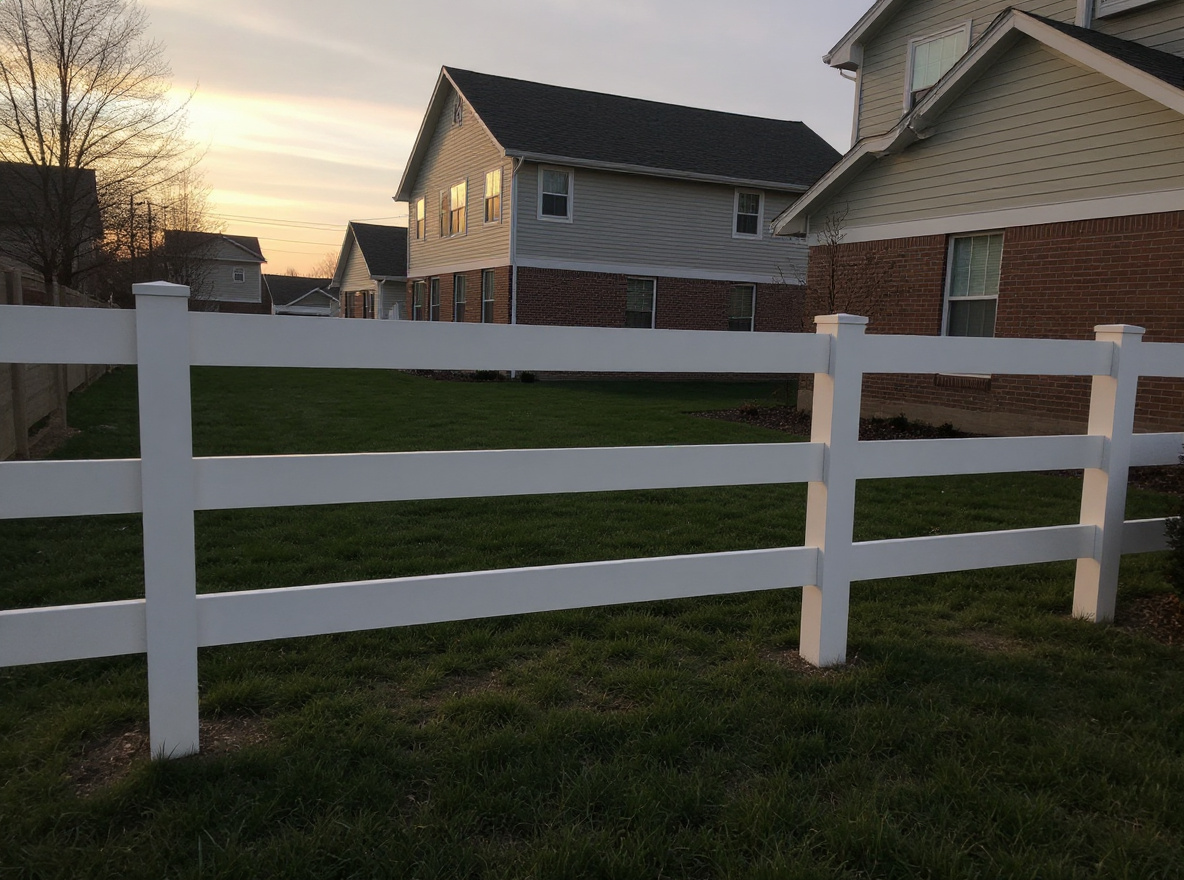
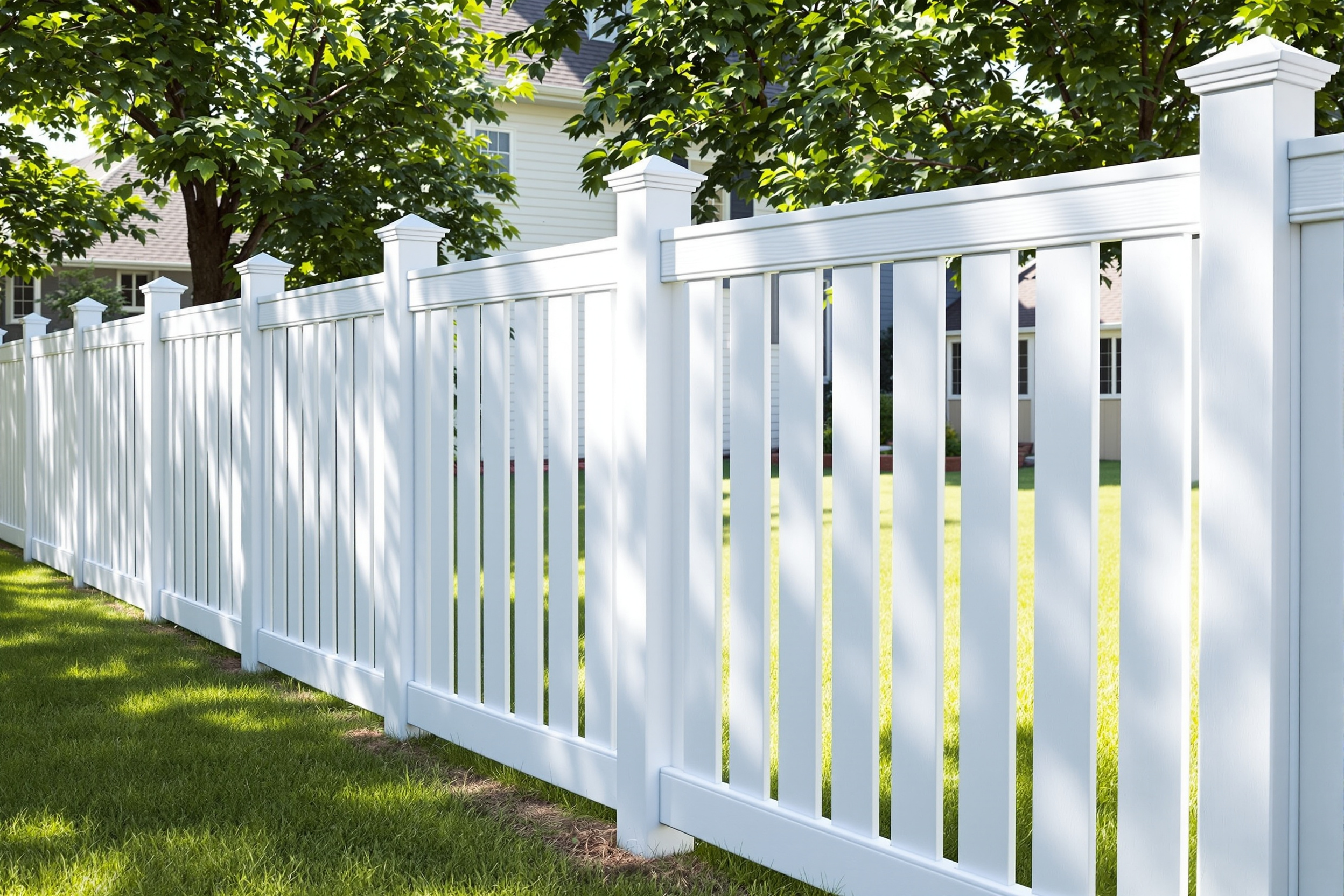
White Picket — 4 ft vinyl fence by RKC Wood Care Pros in Spring Hill, KS

White Picket — 4 ft

A pool surround or garden accent

Where a Spring Hill backyard has a pool, a patio, or a garden that wants defining without a solid wall, a four-foot vinyl picket does it and pens a smaller dog besides. It holds that clean white line through the open-sky sun out here without the yearly repaint a wood picket begs for, and it pairs naturally with a six-foot privacy run along the property line behind it.

  • Price: $30–44/LF installed
  • Lifespan: 30+ years
  • Maintenance: Little more than a rinse
White vinyl privacy fence pricing — Spring Hill, KS — RKC Wood Care Pros

PRICING A SPRING HILL VINYL FENCE

What a Vinyl Fence in Spring Hill Costs, Broken Down

Vinyl runs $28 to $60 a foot in Spring Hill, set by profile and length — and because the lots are big, it's the total footage more than the per-foot number that moves the estimate, with every gate priced on its own line. The three builds below are the ones we bid most across town. A Spring Hill perimeter often runs 250 feet or more, so a full privacy job lands higher than a small in-town lot would. The teardown of any old farm or builder fence, the extra gates, a jump to a woodgrain profile — each rides its own line. The full quote comes on paper, itemized, before any crew shows up.

White Privacy — 6 ft

$40–55

per linear foot installed

The build we bid most for a new-build perimeter — the standard JoCo privacy look on a steel-reinforced rail, gates on their own line.

Sand / Woodgrain — 6 ft

$42–58

per linear foot installed

A warm tone for the stone-and-siding homes going up in Dayton Creek, Sweetwater, and Woodland Ridge.

Ranch Rail or Picket

$28–44

per linear foot installed

A three-rail line for a big rural-edge lot, or a four-foot picket around a pool or garden — priced to the run that's actually there.

Extra gates on a big lot, tearing out an old farm or builder fence, stepping up to a woodgrain profile — each rides its own line on the estimate, nothing buried — reach us at (913) 286-1091 or set up an on-site walk-through.

OUR PROCESS

How We Build a Spring Hill Vinyl Perimeter

A project here moves through four stages, from the first call to a perimeter you can lean on — and the groundwork before the panels is what decides whether a long run holds straight through the wind and the dry summers. The building days go quick even on a big lot — two to four on site for a full perimeter. It's the staking, the two-county boundary check, and the three-foot footings before them that separate a fence that stands for thirty years from one that leans by its second August.

1

Walking the perimeter and reading the graded lot

On a new-build lot the job is usually a full perimeter, not a patch, so we walk the whole boundary with you and lay out the run — footage, corners, and every gate a big yard needs. We read the grade a builder left behind, note where a lot is still settling on fresh fill, check where the open exposure runs hardest, and mark utilities and the property pins. Because Spring Hill straddles two counties, we confirm which lines govern before anything is staked. The estimate comes back itemized: length, gates, the profile you chose, and the concrete and steel headed underground.

2

Locate, color, and staking the full run

The 811 locate goes on the calendar first. You settle the look — the standard white, a warm sand or woodgrain, a ranch rail, a poolside picket — and we order the panels and stake the perimeter so you can see the line before we dig. On a brand-new lot there's rarely an old fence to pull; where there is a builder's temporary line or an old farm fence, it comes out whole before the new posts go in.

3

Footings three feet deep to beat frost and drought

Every post drops a full 36 inches into poured concrete on a belled base — deep enough to clear the Kansas City frost line and, just as important out here, deep enough that an August drought-shrink can't drag it into a lean. Spring Hill's former-farmland clay is deep and mostly rock-free, which digs clean, but it moves hard between wet springs and dry summers, so depth and a proper footing are what keep a long run plumb. Lots are big and flat, so once the concrete cures the line runs true — figure two to four days on site for a full perimeter.

4

The final walk and your warranty on file

We pace the finished perimeter together and swing every gate — and a big lot has a few — to be sure each one seats and latches square. Your CertainTeed, Veka, or Bufftech coverage goes on file under your name with the paperwork in your hand; there's no stain date to circle and no post working loose in the next dry August. If anything shifts inside that first year, the same crew that built it comes back and trues it up.

VINYL WE'VE RAISED · KC METRO

Vinyl fence installation by RKC Wood Care Pros, Kansas City metro
Vinyl install · KC metro
Vinyl fence installation by RKC Wood Care Pros, Kansas City metro
Vinyl install · KC metro
Vinyl fence installation by RKC Wood Care Pros, Kansas City metro
Vinyl install · KC metro
Vinyl fence installation by RKC Wood Care Pros, Kansas City metro
Vinyl install · KC metro

REVIEWS

What Kansas City Homeowners Say About RKC

4.9 ★ · 85 Google reviews

Every review is on our Google Business Profile — read them there, unedited.

Read all 85 reviews on Google

SPRING HILL VINYL FENCE QUESTIONS

What to Ask Before You Fence a Lot in Spring Hill

The questions homeowners raise while we're staking the perimeter and writing the estimate — grouped by topic, every answer tied to real local pricing, the drought-lean we re-plumb most, the open-field wind, and the honest place vinyl holds next to the cedar the whole town builds in. Yours not here? Call (913) 286-1091 and ask it.

Vinyl fence installation in Spring Hill, KS by RKC Wood Care Pros

Vinyl Materials & Lifespan

How long does a vinyl fence last in Spring Hill?
Thirty years and up is the honest number, and out here the post is what earns it. A capped, UV-rated panel on a steel-reinforced rail outlasts nearly everything around it, provided the base is right — and in Spring Hill 'right' means beating the two things that take fences down on open former farmland: the August drought-shrink that leans a shallow post, and the wind that works a long run. We set every post three feet deep in concrete over a steel core, so the clay can pull back all it wants and the line stays plumb. CertainTeed, Veka, and Bufftech warranty the panel against fade, crack, peel, and chalk, and that coverage follows the house to the next owner.
Everyone here builds in cedar — why would I go vinyl?
Cedar is the Spring Hill standard, no argument — it's what the subdivision is built in and it looks right on day one. The catch shows up over the years you own a big lot. That much cedar wants re-staining every two or three years, which is a real weekend on a quarter-acre-plus perimeter, and its posts lean when the dry-August clay lets go. Vinyl gives you the same matching-the-neighbors look with none of that: no coat, no drought-lean, thirty-plus years, warranty in hand. It costs more to install and then costs nothing, and on a perimeter this size a fifteen-year tally usually lands vinyl ahead. If you love the wood grain and don't mind the upkeep, cedar's honest — if you want it settled once, vinyl is the long-run value.
Does the open-plains wind or the drought crack vinyl out here?
Neither one touches a panel built and set right. Wind is the real Spring Hill test — the lots are wide open — so we drop a galvanized steel channel down every rail, sized to the panel, and a braced run stays rigid where a hollow one would bow. The drought-shrink that leans wood posts can't move a steel-cored post set three feet deep in concrete. As for cracking, the panels we install are impact-modified and co-extruded, with the toughness in a thick outer cap — most carry a class-4 impact rating for hail. It's the cheap single-wall stock that gets brittle and splits, and we don't stock it.
We're fencing a big lot for the dogs — what's the right setup?
Common ask out here, since a lot of Spring Hill families are fencing more ground than they had in town. For most it's a six-foot white privacy perimeter — over a dog's sightline and it doubles as the standard neighborhood look. On a bigger rural-edge lot where a solid wall is more than you want, a three-rail vinyl ranch line with welded-wire backing pens the dogs and keeps the open feel the acreage is there for. Both go up across the whole perimeter in a few days, both ride out the wind and the drought on deep-set steel-cored posts, and neither ever needs a coat.

Pricing & Warranty

What does a vinyl fence cost in Spring Hill?
Reckon on $40–$55 a foot for six-foot white privacy with the steel-reinforced rail included. The difference here is the scale: a Spring Hill perimeter often runs 250 feet or more, so a full privacy job commonly lands in the $10,000–$14,000 range rather than the smaller-lot numbers you'd see in town. A warm sand or woodgrain runs $42–$58; a three-rail ranch line or a poolside picket comes in lower, $28–$44. Gates — and a big lot usually needs a few — are itemized on their own lines, never buried. Every quote is free, printed, and broken out before a post goes in the ground.
Is the warranty real, and does it transfer when we sell?
Real on both counts, and the transfer is worth real money in a place where new-build homes change hands. CertainTeed, Veka, and Bufftech each back the panel for life against fade, crack, peel, and chalk, then convert to prorated coverage for the next owner at closing. We file it under your name the day we finish and hand you the paperwork. In a Spring Hill market of newer homes, a perimeter still under warranty is a genuine selling point — and any brand that won't put that coverage in writing doesn't go in your yard.
Is vinyl worth it over just matching the neighbors in cedar?
For a lot of Spring Hill owners it comes down to the size of the lot and how long they're staying. If you're moving in a few years, cedar gets you the matching look for less today. If you're settling into a big perimeter for the long haul, vinyl is usually the cheaper fence across the years you own it — no coats on a run this long, and no drought-lean post to reset every few dry summers. Give us the lot and we'll price both, the cedar standard and the vinyl, side by side, so the call is yours on real numbers.

OTHER SPRING HILL FENCE OPTIONS

Spring Hill Fence and Gate Services

Vinyl isn't the only option — RKC installs and repairs every type of fence in Spring Hill: wood, vinyl, chain link, ornamental iron, aluminum, and commercial security, plus gates and in-house staining. Every card below leads to its own Spring Hill page — the pricing, the ground it's built into, and shots from jobs around town.

Ready when you are

Get a free estimate — we usually respond the same day.

Call (913) 286-1091