Skip to content
Fence Repair in Spring Hill, KS — Drought-Leaned Posts, Long-Run Repairs & Gray Cedar Restored

Fence Repair in Spring Hill, KS — Drought-Leaned Posts, Long-Run Repairs & Gray Cedar Restored

Spring Hill fences are big and young — full-perimeter cedar on quarter-acre and half-acre new-build lots carved out of old farmland — and they fail in ways that match. A dry August shrinks the deep clay away from a shallow post and it leans; a couple of bays out of a long run go while the rest stands fine; and a lot of that cedar has gone gray because the first seal never got done. We fix the run, not just the fence. We reset the leaned posts 36 inches deep in poured concrete below the shrink zone and the frost line, re-true the long perimeter bay by bay, and restore weathered cedar in-house instead of writing it off. Storm damage documented for your insurer. 4.9 stars from 85 Google reviews, 400+ fences across the metro since 2021. Built for Every Storm, and repaired the same way.

★★★★★
4.9
from 85 reviews
Licensed
& Insured · KS + MO
400+
fences installed
A+ BBB Rated 400+ Fences Since 2021 48-Hour Storm Response Post-by-Post Diagnostic
Jump to the repairs we handle ↓

WHAT A REAL SPRING HILL REPAIR CHANGES

The Difference Between a Patched Bay and a Whole Run Brought Back to Line

Standing one leaned post back up on a 250-foot run and calling it done ignores why it leaned; resetting below the shrink zone and truing the run keeps the whole line straight. On a long frontier fence the repair is about the run, not a single bay. This is what changes when the fix answers why the clay let go and brings the whole perimeter back to line.

1

The drought-leaned post stops moving with the weather

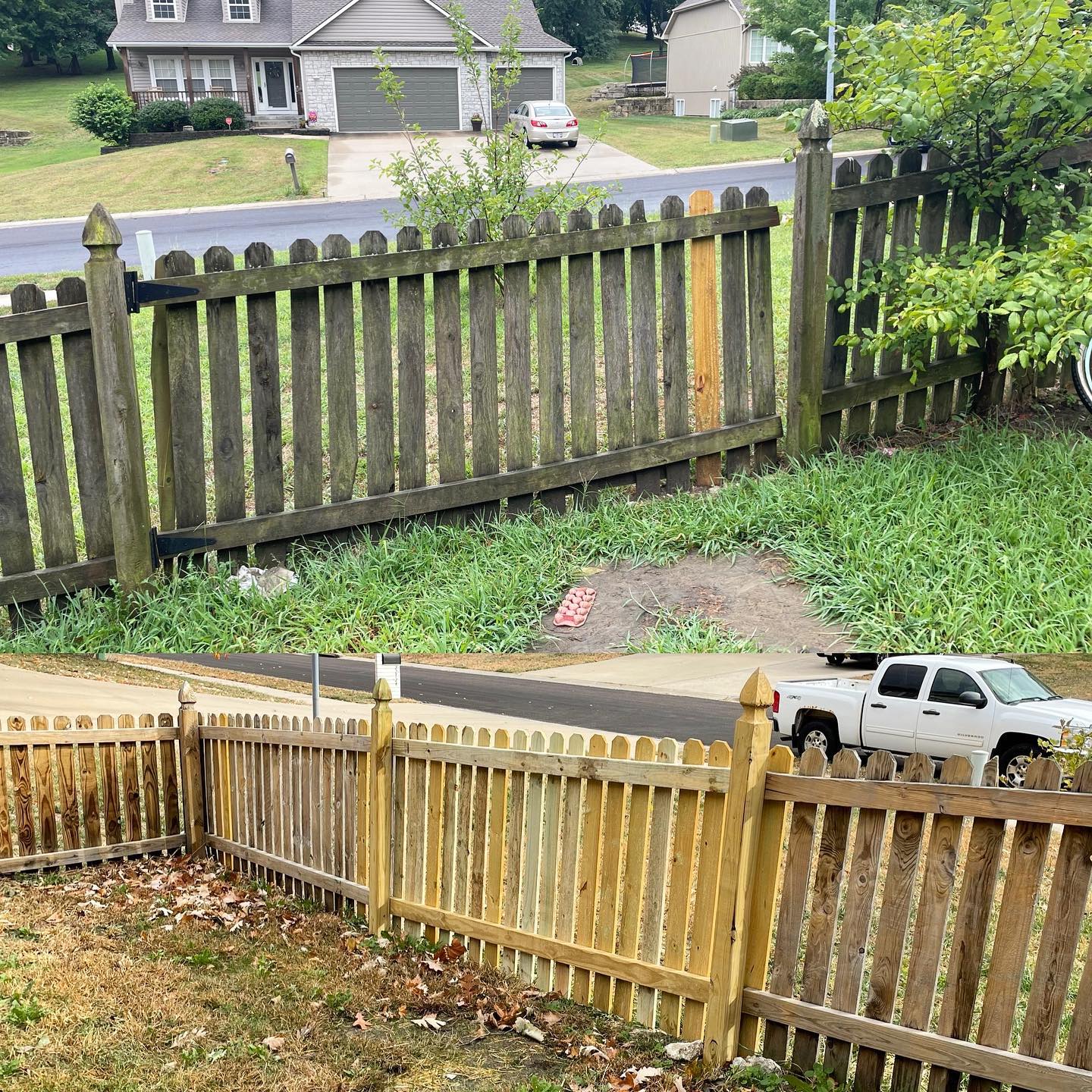
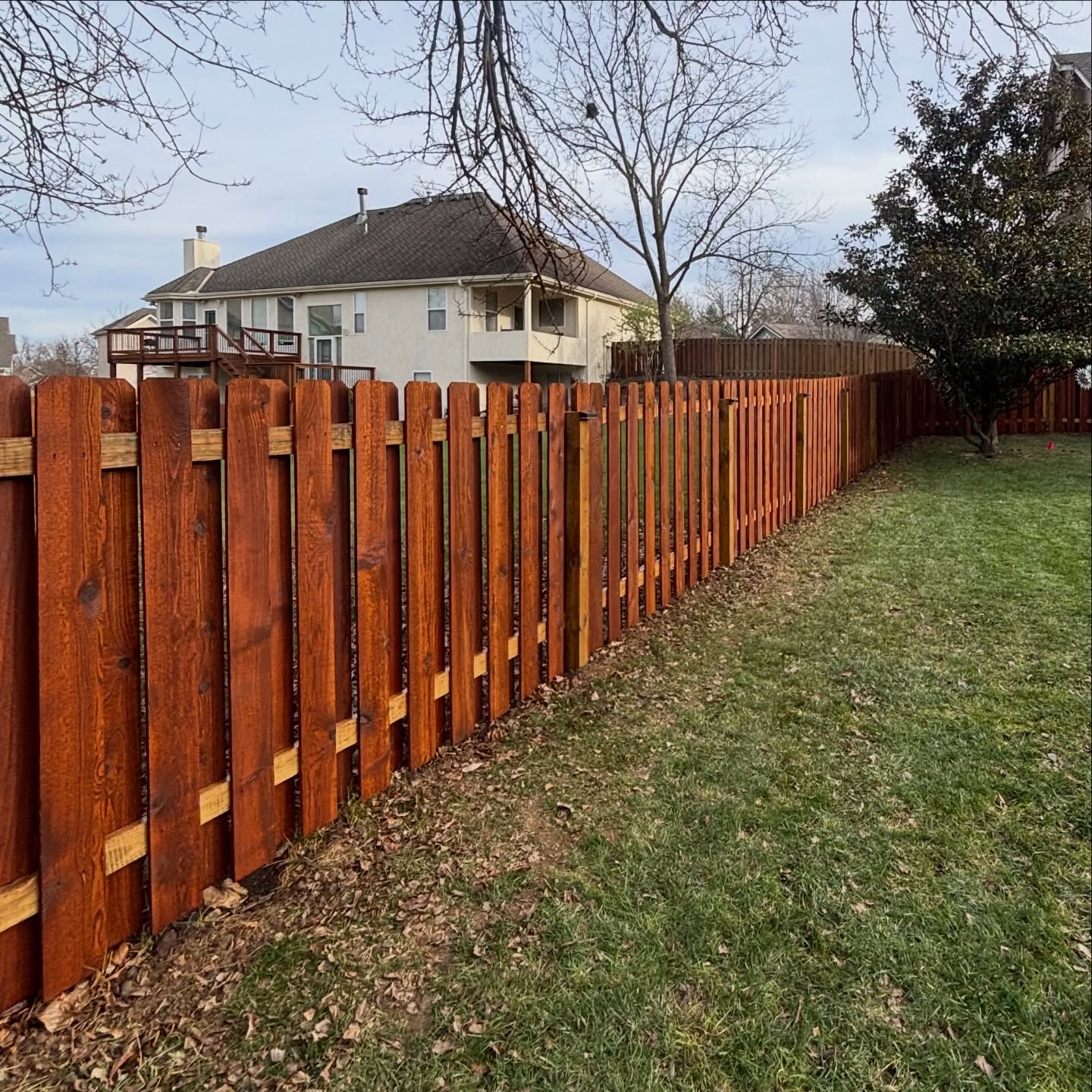
Spring Hill sits on deep, rock-free farmland clay that shrinks hard in a dry August and pulls away from a shallow post until it leans, then swells back when the rain returns. A post set short rides that cycle every year. We pull it and reset it 36 inches deep in poured concrete, below the zone where the clay shrinks and swells. The post stops leaning because it is finally anchored beneath the layer that moves.
2

The long run comes back straight, bay by bay

A quarter- or half-acre perimeter has a lot of bays, and when a few lean the whole line looks crooked from the patio. We do not just prop the worst post — we sight the full run, reset the failed posts to depth, and re-true each bay so the perimeter reads as one straight line again. On a long fence that is the difference between a visible patch and a repair you cannot find.

3

The gray cedar gets restored, not replaced

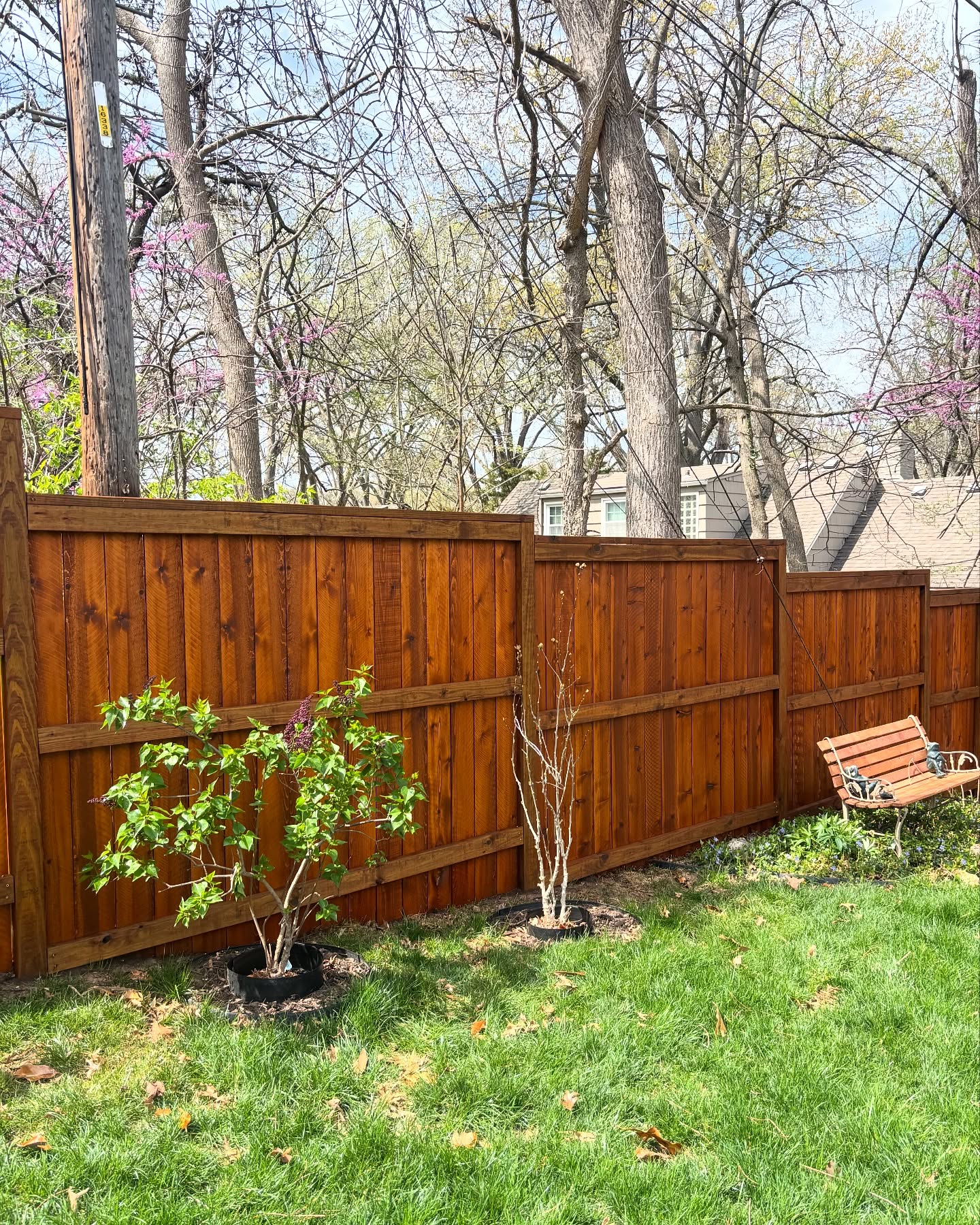
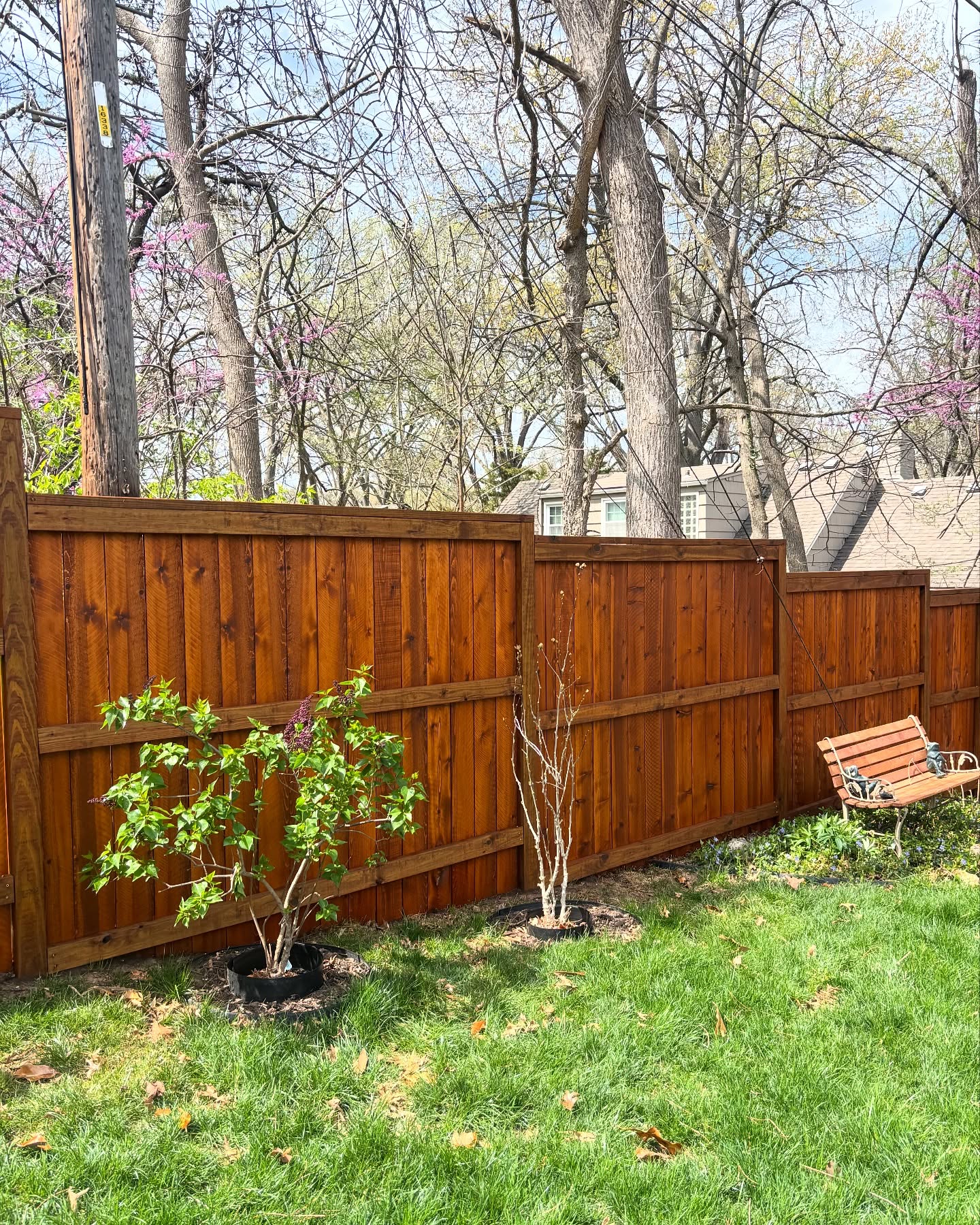
A lot of Spring Hill cedar went up and never got its first seal, so it has weathered to gray and the owner assumes it is done. Usually it is not — sound gray cedar cleans up and takes a stain beautifully. We wash it, let it dry, and put on the coat it should have had, in-house. You keep the fence and get the finish, for a fraction of a rebuild.

4

A true count of repair versus rebuild, on paper

On a long run the walk's best gift is the count: how many bays truly need work versus how many just look rough. When a handful of posts leaned and the cedar is sound under the gray, a focused reset and a restain saves the whole perimeter. When most of the run is going, we say so. We hand you that before a price is written, and we will not sell a rebuild a repair would settle.

WHY SPRING HILL FENCES FAIL

Shrinking Farmland Clay, Long Perimeters, and Cedar That Never Got Sealed

Repair is diagnosis in reverse — what failed, why it failed on a big open lot, and how to keep the next dry season from doing it again. A Spring Hill fence fails for reasons tied to the soil and the scale of the lot, not usually age. Three local conditions drive most of what we repair here, and each one asks something specific of a lasting fix.

1

Deep clay that shrinks away from shallow posts

Spring Hill's former-farmland ground is deep, rock-free clay, and in a dry August it shrinks hard — pulling away from a post and leaving a shallow one room to lean. When the rain returns the clay swells back, so a short post rides that shrink-and-swell cycle every single year. This is not frost heave and it is not a wet-pocket settling; it is drought shrink. The only fix that beats it is depth: 36 inches, below the layer that moves with the weather.

2

Long perimeters where a few bad bays read as a crooked fence

The lots here are bigger than the inner suburbs — quarter-acre to half-acre — so the fences are long, often a full perimeter. That means a handful of leaned posts out of many can make the whole line look crooked from the house, and it means a repair has to think about the run, not a single bay. We sight and re-true the full perimeter so the fix is invisible, not a straight patch next to a wavy line.

3

Young cedar that skipped its first seal

A lot of Spring Hill's cedar is under fifteen years old and went up in the new-construction rush, and in the rush the first seal often never happened. Left bare, cedar weathers to gray fast, and owners assume a gray fence is a spent fence. It usually is not — the wood is sound and just needs the coat it never got. Reading that correctly turns an assumed rebuild into a wash, a dry-out and a stain.

The Spring Hill neighborhoods we repair most run from Brookwood Farms and Sweetwater to Woodland Ridge, Dayton Creek and Wolf Creek, on the big new-build lots off 199th and US-169. Same 36-inch reset depth on every drought-leaned post, and note the city spans Johnson and Miami counties, so we confirm which county rules apply on the edges. When a repair tips into a rebuild, the Spring Hill fence installation hub lays out every material and neighborhood.

REPAIR OR REPLACE

How to Tell Whether Your Spring Hill Fence Needs a Fix or a Rebuild

On a long young run the call turns on how many bays actually failed and whether the cedar is sound under the weathering. This is the read the walk hands you on paper, taken post by post down the whole perimeter. Use it as a rough guide before you call — then we confirm it on the fence itself, not from the patio.

What you're seeingUsually a repairUsually a replacement
A few posts leaned after a dry summer, most of the run solid Yes — reset the leaned posts to 36 inches, re-true the bays No
Cedar gone gray but sound, never sealed Yes — wash, dry and restain in-house, no replacement No
Under roughly a third of a long perimeter's posts moving Yes — a targeted reset beats a full teardown No
More than half the posts leaning across the run Rarely worth it Yes — a full run resets every footing below the shrink zone
Pickets sound, a handful of posts short-set and leaning Yes — the depth is the problem, not the wood No
Whole run gray, cupped and cracking, wood spent Only if the wood is still sound under it Often — the cedar itself has aged out

Reading the Four Ways a Spring Hill Fence Gives Out

Drought-shrink clay lean

The tell: A post leans after a dry stretch with no rot in the wood — the soil has visibly pulled back from the base, and the lean gets worse in August and eases when the rain returns. Most common on shallow-set posts.

The fix: Pull the post and reset it 36 inches deep in poured concrete below the shrink-and-swell zone, then re-true the bay; depth beneath the moving layer is what stops the seasonal lean.

A wavy line across a long perimeter

The tell: Several bays out of a long run have leaned different amounts, so the whole perimeter reads crooked from the house even though many posts are fine — the failures are scattered, not concentrated.

The fix: Sight the full run, reset the failed posts to depth, and re-true each affected bay so the perimeter comes back to one straight line rather than a patched section.

Unsealed cedar gone gray

The tell: The cedar has weathered to a silver-gray and looks tired, but the boards are still firm and sound — it simply never got its first seal after install and has bleached in the sun.

The fix: Wash the run, let it dry to the right moisture, and apply the semi-transparent coat it should have had, in-house, so the fence is protected and its color restored.

Board and kick-board fatigue

The tell: Here and there a picket is loose or split and the kick board at the base is soft, while the posts hold plumb — on a long run this is the cheapest failure to catch and the easiest to miss among the good bays.

The fix: Re-fasten or replace the failed boards and kick board along the run and re-secure the rails; the posts stay put and the section carries on for years.

REPAIRS WE HANDLE

Diagnostic, Post Resets, Long-Run Truing & Cedar Restoration in Spring Hill

The right scope depends on how many bays failed and whether the cedar is sound under the gray — which is why every job opens with the walk, not the quote. Here are the four scopes we run across Spring Hill, what each fits, and real numbers. We quote no repair work blind; on a long perimeter especially, the walk is what keeps the figure honest.

Perimeter Diagnostic Walk in Spring Hill, KS by RKC Wood Care Pros

Perimeter Diagnostic Walk — $95–150

Where every Spring Hill job starts

Josh takes the whole perimeter with you — and on a half-acre lot that is a real hike — hand-testing each post for plumb and depth and checking whether the cedar is sound under the gray, with every bay graded one to five. You leave with a photographed report and a count of exactly how many bays need work before a repair figure exists, and the fee comes off the work once you hire us. Most owners find fewer bays failing than the crooked line suggests.

  • Price: $95–150 (credited to the repair)
  • Typical use: Any Spring Hill perimeter that is leaning, weathered or storm-struck
Drought-Leaned Post Reset in Spring Hill, KS by RKC Wood Care Pros

Drought-Leaned Post Reset — $150–350 / post

The core Spring Hill repair

The most common fix here. We pull the leaned post completely, widen the hole to a bell-bottom footing, add gravel at the base, and set a fresh post 36 inches deep in poured concrete — below the shrink-and-swell zone the dry-August clay works. The original pickets and rails re-attach and the bay comes back to line. The reset holds because the post is finally anchored beneath the layer that moves with the weather.

  • Price: $150–350 per post reset
  • Typical use: Posts leaned by drought-shrink clay on the big new-build lots
Long-Run Truing & Board Repair in Spring Hill, KS by RKC Wood Care Pros

Long-Run Truing & Board Repair — $300–1,200 / run

For a wavy perimeter

When several bays across a long run have leaned different amounts, we sight the full perimeter, reset the failed posts, re-true each affected bay, and swap any broken boards or soft kick boards along the way. The point is to bring the whole line back straight — a long fence with one propped post next to a wavy stretch still looks crooked. We fix the run, not the bay.

  • Price: $300–1,200 per run section
  • Typical use: A full or partial perimeter that has gone wavy across many bays
Cedar Restoration & Gate Correction in Spring Hill, KS by RKC Wood Care Pros

Cedar Restoration & Gate Correction — $1.50–3.50 / sq ft · $200–500 gate

In-house finish, done right

Cedar that grayed because the first seal never happened gets washed, dried and coated in a semi-transparent finish in-house, so the run is protected and its color brought back. A sagging gate on a long perimeter is the hinge post drifting — down it goes to 36 inches, with heavier hardware and the latch trued. Restaining is priced by the square foot; a gate correction is a single day with a free settling check.

  • Price: $1.50–3.50 per sq ft (restain) · $200–500 (gate)
  • Typical use: Weathered unsealed cedar and sagging gates on long runs
Fence repair cost estimate — Spring Hill, KS — RKC Wood Care Pros

SPRING HILL REPAIR PRICING

What Fence Repair Actually Costs in Spring Hill

A Spring Hill price rides on scope, how many bays of a long run need work, and whether a restain or a claim is part of it. Nothing is priced from the patio, and the walk fee folds into the work once you commit. Most Spring Hill jobs settle into one of the three bands here.

Perimeter Diagnostic

$95–150

credited to the repair

Each post checked for plumb and depth along the whole run, the cedar read for soundness, bays graded one to five, a photo report with a bay count. Comes off any Spring Hill repair we then perform.

Post & Run Work

$150–1,200

per post or run

Drought-leaned posts reset 36 inches below the shrink zone, plus long runs re-trued bay by bay — new-install depth on a big perimeter.

Restain & Gates

$1.50–3.50 / sq ft

restain · $200–500 gate

In-house cedar restoration by the square foot, gate correction $200–500, storm section $800–1,800. Claim paperwork bundled on storm work.

When more than forty percent of a long run's posts have leaned, building fresh often beats resetting each one. That rebuild pricing sits on the Spring Hill wood and Spring Hill vinyl pages. Either way the estimate is free and line-itemed — ring (913) 286-1091 or set up the walk.

HOW IT GOES

From the Phone Call to the Final Walk in Spring Hill

Four steps, and most Spring Hill jobs run a week to three end to end — quicker once a storm sets the insurance clock going. Repairs outrun fresh installs, though a long perimeter takes a little more time on site: post work is a day or two, a full-run truing or restain two to three. The wait, when there is one, is the adjuster, not the crew.

1

The perimeter walk and a bay count

It starts with Josh walking the whole perimeter with you — a real walk on a half-acre lot — testing each post for plumb and depth and checking whether the cedar is still sound under the gray. Every bay earns a one-to-five grade, and you leave with a photographed report and an exact count of how many bays need work before there is a price. The $95 to $150 fee credits back once you hire us; take the report and go, and it covers the trip.

2

The scope, and which county you're in

Then an itemized estimate in writing. Because Spring Hill straddles Johnson and Miami counties, we confirm which set of rules governs an edge lot. If a storm did the damage, the claim file goes together too — dated photos with storm loss set apart from wear, in the form local adjusters expect. Start day carries no surprises.

3

The work

Drought-leaned posts come out and go back 36 inches into poured concrete below the shrink zone, long runs are re-trued bay by bay, weathered cedar is washed and restained in-house, and gates re-hang on posts that hold. Storm sections rebuild to match. Post work runs a day or two; a full-run truing or a restain, two to three.

4

The closing walk and a month-out check

You pay after we walk it together — each post proven plumb, the whole run sighted for a straight line, each gate latching first try, everything photographed. New footings take a small first-month set, so a thirty-day return trues any drift for free. Spring Hill owners seldom need it, but the trip comes with the job.

RECENT SPRING HILL REPAIR WORK

Cedar Restoration · Spring Hill — Spring Hill, KS — RKC Wood Care Pros
Cedar Restoration · Spring Hill
Long-Run Truing · Dayton Creek — Spring Hill, KS — RKC Wood Care Pros
Long-Run Truing · Dayton Creek
Gate Correction · Spring Hill — Spring Hill, KS — RKC Wood Care Pros
Gate Correction · Spring Hill
Diagnostic Walk · Brookwood Farms — Spring Hill, KS — RKC Wood Care Pros
Diagnostic Walk · Brookwood Farms

REVIEWS

What Kansas City Homeowners Say About RKC

4.9 ★ · 85 Google reviews

Every review is on our Google Business Profile — read them there, unedited.

Read all 85 reviews on Google

SPRING HILL REPAIR QUESTIONS

What Spring Hill Homeowners Ask on the Diagnostic Walk

They gather into three: what is really giving out and why, how storms and claims work, and what it costs. These are what Spring Hill owners raise on the walk, answered against drought-shrink clay, long runs and real prices. If yours isn't here, Call (913) 286-1091 and ask.

Fence repair in Spring Hill, KS by RKC Wood Care Pros

Why It's Failing

My fence leans worse in August — why does it move with the weather in Spring Hill?
Because Spring Hill sits on deep, rock-free farmland clay that shrinks hard in a dry summer and pulls away from a shallow post, letting it lean, then swells back when the rain returns. A post set short rides that shrink-and-swell cycle every year, which is why the lean comes and goes. It is not frost heave and it is not a wet-pocket settling — it is drought shrink, and the only fix that beats it is depth: 36 inches, below the layer that moves.
A few posts leaned but my fence is huge — do I have to redo the whole thing?
Almost never. On a long perimeter a handful of leaned posts can make the entire line look crooked from the house, but the fix is to reset those posts to depth and re-true the affected bays, not tear down the run. We sight the whole perimeter so the repair brings the line back straight rather than leaving a propped post next to a wavy stretch. Our diagnostic gives you an exact count of how many bays actually need work.
My cedar has gone gray — is the fence shot?
Usually not. A lot of Spring Hill cedar went up in the building rush and never got its first seal, so it weathered to gray fast — but the wood underneath is often perfectly sound. We wash the run, let it dry, and apply the semi-transparent coat it should have had, in-house. You keep the fence and get the finish for a fraction of a rebuild. Gray is a sign the seal was skipped, not always that the wood is spent.

Storms & Insurance

Will my insurance cover storm damage to my Spring Hill fence?
Most policies here fold wind, hail and fallen-tree fence damage into the other-structures line, often near a tenth of the home's insured value — and on a big perimeter that adds up. They cover the storm and not the aging beside it, so the bid has to keep the two apart, which ours does with dated photos and a broken-out scope. Clean paperwork clears; a one-line guess gets trimmed or refused.
How fast can RKC reach storm damage in Spring Hill?
We commit to 48 hours for getting on site. Same-day is doable when the calendar has room and a storm has not swamped every crew in the metro, but 48 hours is the standing promise. On that first run we close off any open stretch a dog or a child could slip through, grab the photos the claim needs, and book the repair into the next slot — usually two to three weeks, sooner once the adjuster signs off.
What do I need to file a Spring Hill fence claim?
Dated photos of each failure, a written itemized bid from a licensed contractor, and the storm's date with an approximate wind speed — we hand you all three. If the adjuster asks what the fence looked like beforehand, our habit of marking old wear apart from fresh storm damage covers it, and that clarity is what moves Spring Hill approvals along.

Repair Pricing

What does a fence repair cost in Spring Hill?
By the piece: the diagnostic is $95 to $150 and credits back, a drought-leaned post reset $150 to $350 a post, a long-run truing $300 to $1,200 a run section, an in-house restain $1.50 to $3.50 a square foot, and a gate correction $200 to $500. When it becomes a full rebuild, that pricing lives on the Spring Hill wood and Spring Hill vinyl pages. Every Spring Hill figure is free, written and line-itemed.
Why doesn't a repair always beat a rebuild on a long fence?
Past roughly half of a long run's posts leaning, pulling and resetting each one — plus re-truing every bay and re-hanging panels — climbs toward the cost of a fresh run that drops every post below the shrink zone at once. That crossover is what the walk locates. On a big perimeter the count is everything, which is why we cover the whole line and hand you the exact number before pricing a thing.
Do I get the diagnostic fee back?
It comes off any repair we do, so hiring us means you never pay it twice. Walk away and the fee has covered the drive out, the post-by-post plumb-and-depth check along the whole perimeter, the cedar soundness read, the photo report and the time on your line. We skip the free-quote routine because an honest read on a big lot takes real time and every call after it rests on getting it right.

OTHER SPRING HILL FENCE SERVICES

More of What We Do in Spring Hill

RKC installs and repairs every type of fence — wood, vinyl, chain link, ornamental iron, aluminum and commercial security — plus custom gates and in-house staining. When the repair turns into a rebuild, when a gate needs building rather than resetting, or when a fresh stain is the right finish after the fix, here is where to go next in Spring Hill.

Ready when you are

Get a free estimate — we usually respond the same day.

Call (913) 286-1091