Skip to content
Gate Installation in Spring Hill, KS — Walk, Drive, Double & Sliding Gates for Big Former-Farmland Lots

Gate Installation in Spring Hill, KS — Walk, Drive, Double & Sliding Gates for Big Former-Farmland Lots

Across Spring Hill's newer subdivisions — Dayton Creek, Brookwood Farms, Sweetwater — a gate hangs on deep, rock-free former-farmland clay that shrinks and cracks away from the post every August, then swells back with the fall rains. Every gate we build here — walk, single-drive, double-drive, sliding — is set 36 inches deep in belled concrete and welded square to ride that clay year without sagging.

★★★★★
4.9
from 85 reviews
Licensed
& Insured · KS + MO
400+
fences installed
A+ BBB Rated 400+ Fences Installed Since 2021 Welded Gate Frames · Galvanized Hardware Free On-Site Estimates
See gate styles in our catalog ↓

WHY SPRING HILL HOMEOWNERS ADD A GATE

The Gate Is the One Part of the Fence You Touch Every Day

A gate that opens clean, latches on the first try, and holds plumb for years starts with the right footing for this clay and the right hardware for the load. Spring Hill is still half country town, half new suburb — big lots, long cedar runs, and a gate that's a real entrance rather than an afterthought. What homeowners notice isn't "the latch works." It's the drive gate that swings shut behind the truck, the walk gate the dog can't beat, the double-drive that finally fits the boat. The gate is the instrument; everything you feel every day is downstream of how it's built.

1

An entry built to the acreage, not to a doorway

Spring Hill lots run bigger than Olathe or Gardner — often a quarter to nearly half an acre of former farmland — so a gate here is a real driveway or ranch entry on a long cedar run, not a token side door. We build it to the property: the leaf sized to the actual opening, the post set for the actual clay, the line reading as one continuous fence you happen to be able to drive through.
2

A walk gate the dog can't figure out

Self-latching hardware and proper hinge tension mean the walk gate closes behind you on its own. The dog stays in the yard, you stop walking back to check the latch. On the wide-open backyards people fence out here for exactly that reason, it's the difference between a gate that's solved and one you're always managing.

3

A double-drive wide enough for the boat

Fourteen to twenty feet of clear opening for the boat, the camper, the contractor delivery, or whatever shows up next year — common on the bigger lots in Sweetwater and Dayton Creek. Two leaves meet at a center drop rod, both hinge posts go 36 inches deep, both leaves carry a diagonal brace. Built to the property, not trimmed to a standard doorway.

4

A gate that doesn't sag when the August clay lets go

Most gate failures here trace back to one thing: a shallow post that the drought-crack clay pulled loose in a dry August, then heaved sideways when the rains returned. A welded frame, a diagonal brace, and a belled 36-inch footing set below that shrinking layer keep the latch lined up through the clay year — at year five, and at year ten.

LOCAL CONDITIONS FOR GATES

What Spring Hill's Former-Farmland Clay Does to Your Gate

A gate is the single highest-stress piece of any fence — it carries its own weight all day and cycles open-and-shut thousands of times a year. Put that on Spring Hill's deep, rock-free clay — the kind that pulls away from a post in the August drought and swells back in the fall — plus 80+ freeze-thaw cycles a winter, and three decisions separate a gate that still swings square at year ten from one sagging by year two.

1

Footing depth against drought-crack clay — 36 inches, belled and crowned

Spring Hill sits on deep, rock-free former-farmland clay that does something most metro soil doesn't: it shrinks and cracks away from the post in the August drought, then swells back when the fall rains return. That yearly shrink-swell cycle — stacked on 80+ freeze-thaw cycles every winter — walks a shallow post loose within a season or two. Every gate post we set here goes 36 inches deep in wet-poured concrete with a belled base, sitting below the layer of clay that dries out and pulls back, and crowned above grade so water sheds instead of pooling. Dry-set or shallow posts are faster on install day and leaning by the first dry August.

2

Welded steel frames — never bolted

A bolted gate frame gives at every joint under load, works its way out of square within a couple of seasons, and once it racks the latch stops meeting the catch and the gate starts dragging. We build every Spring Hill gate on a welded steel square-tube frame — powder-coated for an ornamental leaf, or left raw and clad in cedar for a wood gate. A welded frame holds its geometry for the life of the gate. A bolted one is what we get called out to replace.

3

Hinges rated above the gate weight, hot-dip galvanized

The hinge is where a heavy gate fails first. We size every hinge to the actual weight of the leaf plus a 50% margin — strap hinges rated past 100 lbs on walk gates, J-bolt strap or ball-bearing pivots rated past 400 lbs on drive gates. Every one is hot-dip galvanized, stainless, or powder-coated, because zinc-plated big-box hardware rusts through in a couple of Kansas summers. Rated hardware holds a gate plumb through fifteen-plus years of daily swing; undersized hardware strips out and sags by the second year.

Spring Hill neighborhoods we've built gates and fences across include Dayton Creek, Brookwood Farms, Sweetwater, Woodland Ridge, and Wolf Creek, plus infill and acreage lots across the rest of the city. Same 36-inch belled footings, same welded frames on every one.

THE SPRING HILL CLAY YEAR

Why a Gate Loosens Here — and How We Build Against Each Season

Almost every sagging gate we're called out to on this side of Johnson County comes back to one thing: the ground moved and the post came with it. Spring Hill's former-farmland clay runs through a full cycle every year, and each season stresses a gate post a different way. Here's what the clay does across the calendar, and the specific way we set the footing so it doesn't win.

Season on a Spring Hill lot What the clay does to the post How we set the footing against it
Late summer — the August drought The clay shrinks and cracks away from the post face The hinge post is set 36 inches deep with a belled base, so the load-bearing footing sits below the layer of clay that dries out and pulls back — it can't lose its grip when the topsoil splits open in a dry spell.
Fall — the rains come back The clay swells and re-grips unevenly, tipping a loose post Every footing is crowned above grade so water sheds off the post instead of ponding at the base — a post that started plumb re-seats plumb as the ground rebounds, rather than getting shouldered sideways.
Deep winter — 80+ freeze-thaw cycles Frost lifts anything set above the frost line The concrete goes below the Kansas City frost line, so the same footing that beats the drought also rides the freeze-thaw without walking up out of the ground.
Spring — saturated, flat former-farmland lots Water stands in the low spots where the gate corner lands We set the footing to the high side of any low spot and collar the base in drainage gravel, so the post never cures — or later sits — in standing water.
Any breezy day on a new subdivision lot No mature windbreak yet — a wide leaf on a long run takes the full gust Wide openings go to a double-drive so no single leaf wind-sails; each leaf carries a welded diagonal cross-brace and the hinge post is upsized to match the span.
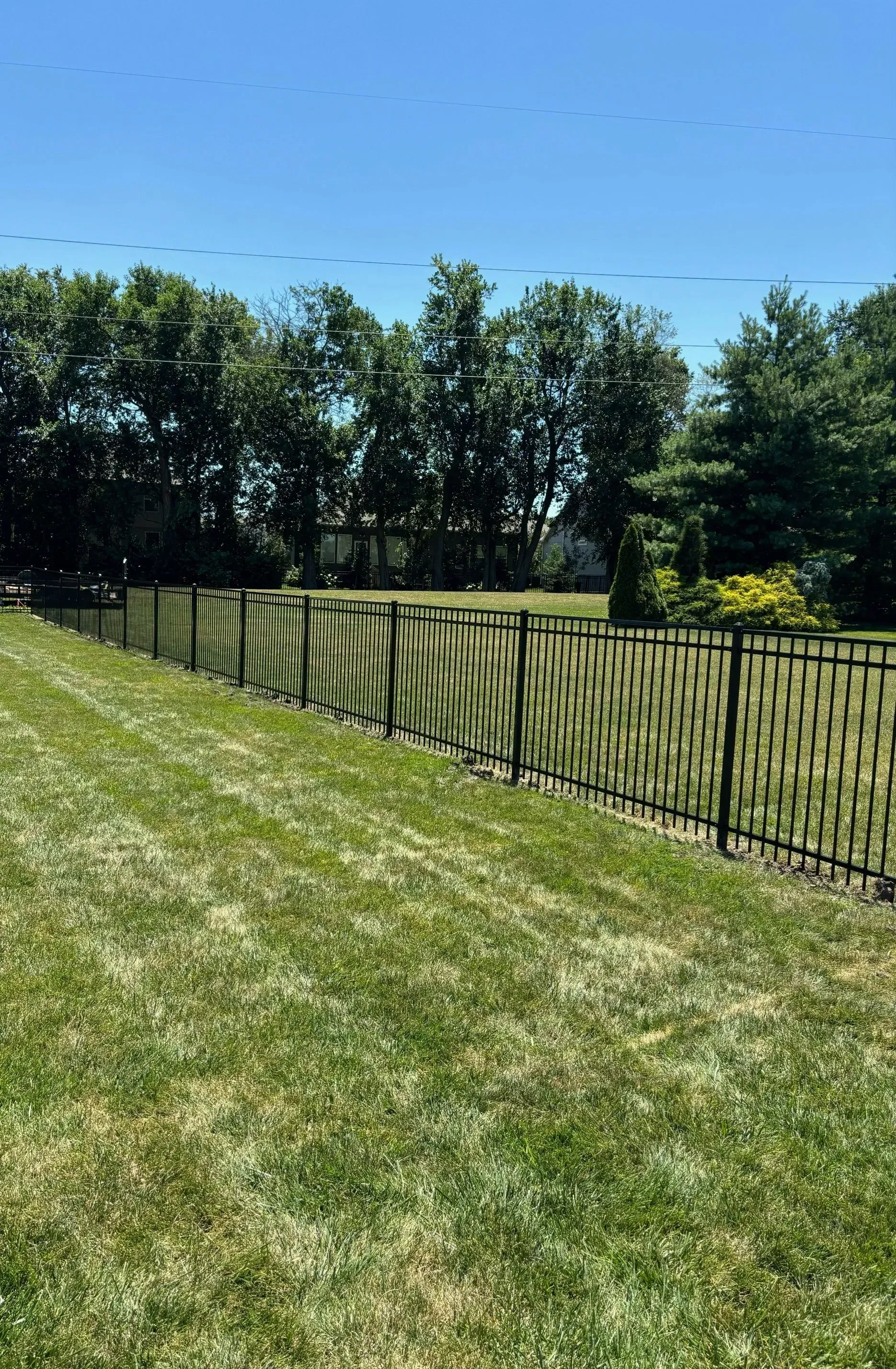
A lot backing the golf course or a pond You want the open view kept, not walled off A welded, powder-coated ornamental steel gate cut to match the run, on the same 36-inch shrink-swell-rated footing — the see-through gate holds plumb exactly like a privacy gate would.

None of this is guesswork on install day. On the estimate visit Josh reads the run first — where the ground dips, where the drive rises, which way the clay tends to crack — and the footing plan follows from the lot, not from a spec sheet. It's the difference between a gate that lines up after its first full clay year and one that's already dragging by the next dry August.

GATE TYPES

Walk, Drive, Double & Sliding — Every Gate for a Spring Hill Lot

The right gate depends on how you use the property — and what the driveway and the lot actually allow. Here are the four gate types we install across Spring Hill, what each one fits, and real pricing. Materials — cedar dog-ear and privacy panels, or black ornamental iron on the view lots backing the golf course — swap within each category; the frame and footing engineering stays the same.

Walk Gate — welded frame and galvanized hardware, built by RKC Wood Care Pros

Walk Gate — 3–4 ft wide

The gate most Spring Hill yards use every day

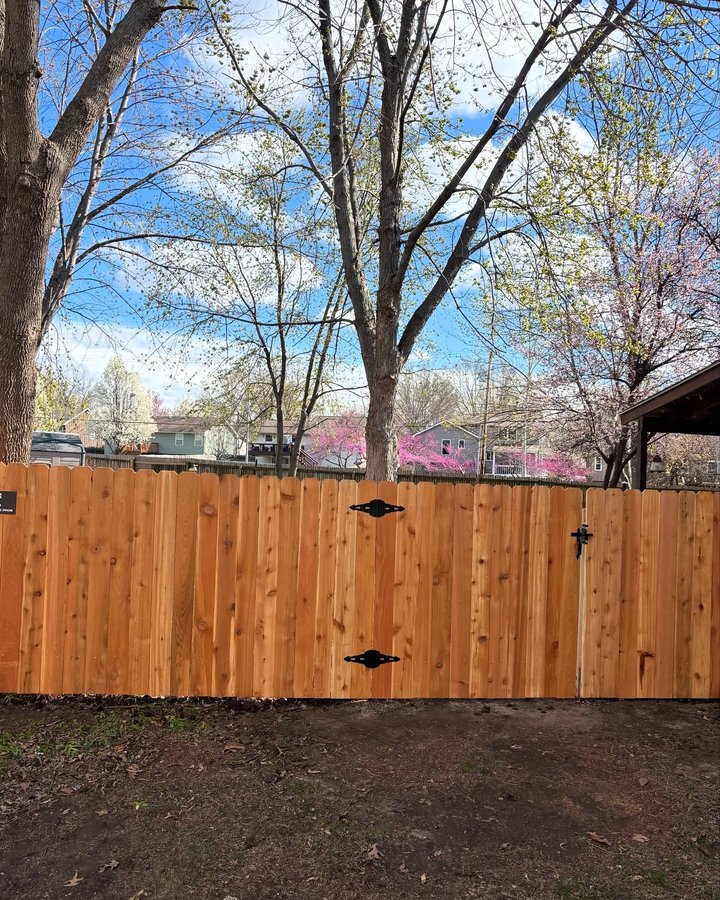
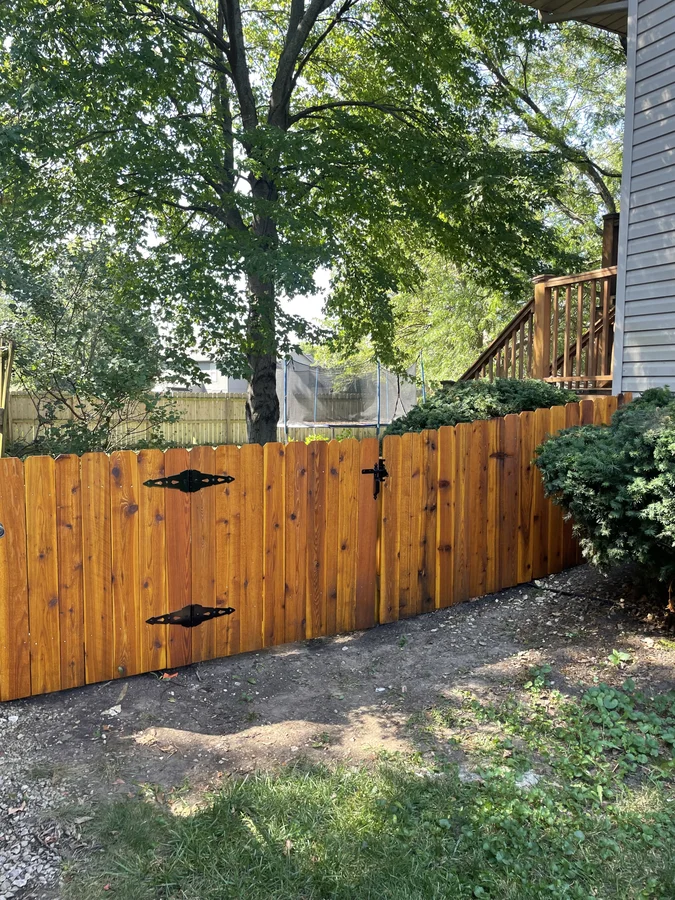
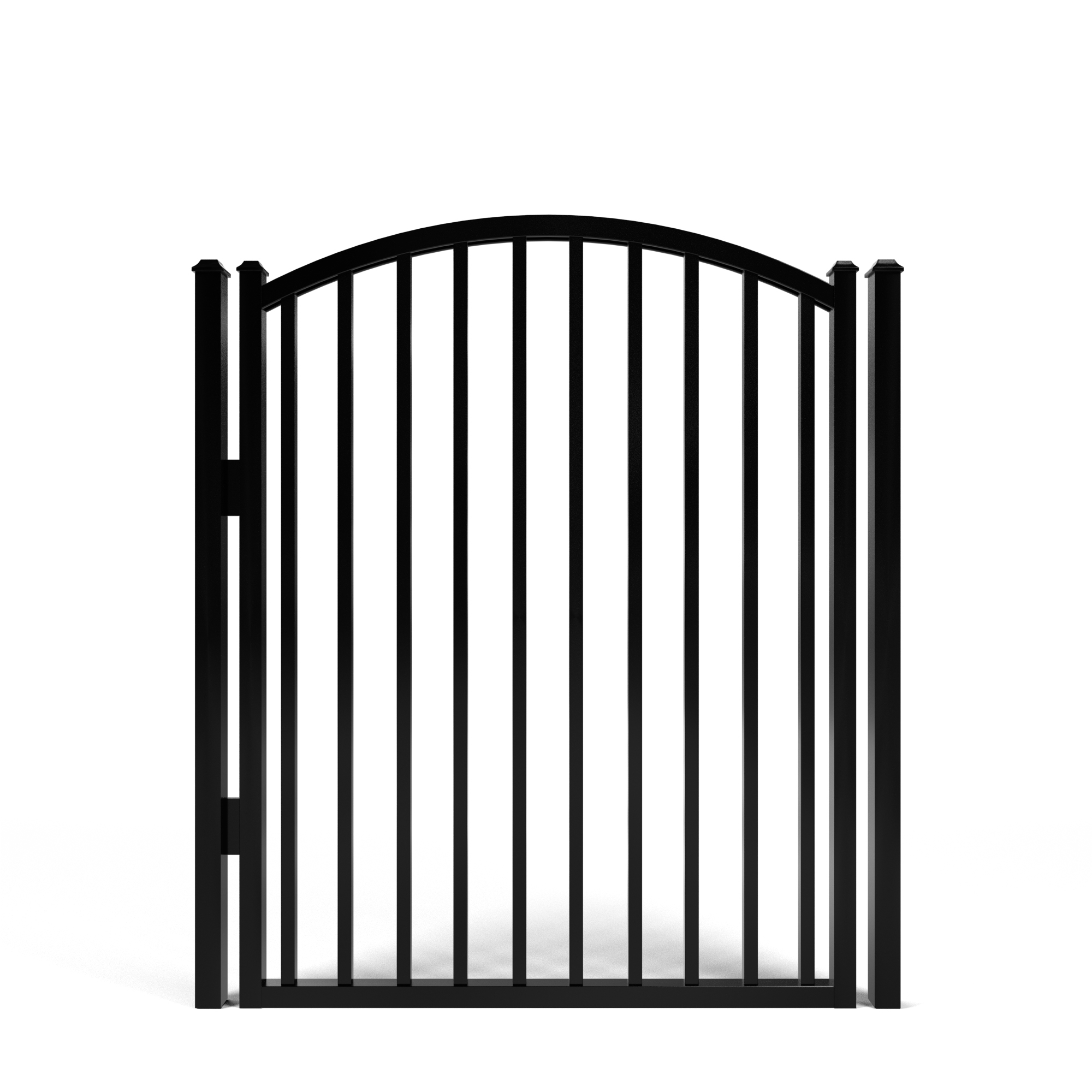
A pedestrian gate tied into the cedar privacy run that wraps most Spring Hill backyards — sized for a wheelbarrow, a trash cart, or a kid on your hip. Welded square-tube frame, heavy strap hinges, gravity or drop-rod latch, and self-closing hardware when a dog or a pool sits behind it. Clad in cedar to disappear into the board line, so it reads as one continuous fence with a door in it.

  • Price: $300–600 (wood) · $450–850 (iron)
  • Typical use: Side-yard entry, backyard walk-through, pool enclosure
Single-Drive Gate — welded frame and galvanized hardware, built by RKC Wood Care Pros

Single-Drive Gate — 10–14 ft wide

Standard Spring Hill driveway width

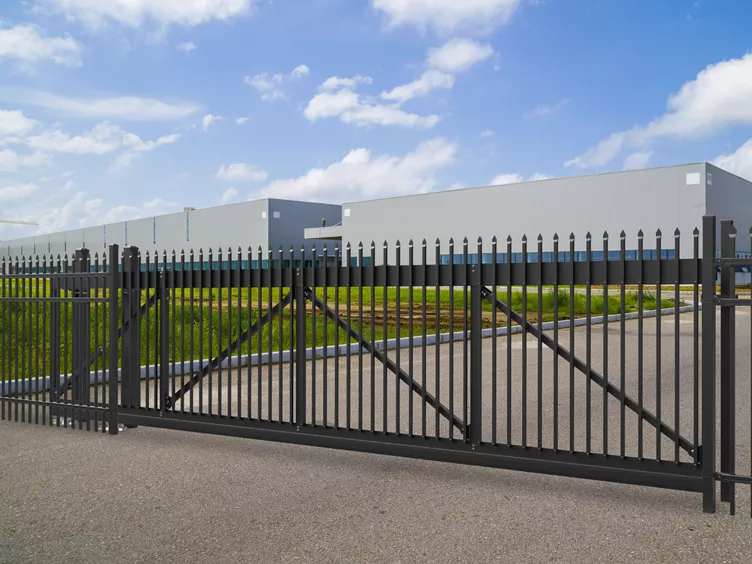
A single-leaf swing gate for a standard Spring Hill driveway. Welded steel frame, a diagonal cross-brace running from the bottom hinge corner up to the latch corner, and heavy J-bolt or ball-bearing hinges rated well above the leaf's weight. The hinge post goes 36 inches deep in wet-poured concrete — deep enough to sit below the layer of former-farmland clay that shrinks and pulls back in the August drought.

  • Price: $650–1,200 (wood) · $900–1,800 (iron)
  • Typical use: Standard residential driveway, single-vehicle entry, cedar or iron
Double-Drive Gate — welded frame and galvanized hardware, built by RKC Wood Care Pros

Double-Drive Gate — 14–20 ft wide

For the boat, the RV, and the bigger lot

Two leaves swinging from opposite posts and meeting at a center drop rod. Splitting a wide opening in two halves the lever arm on each hinge — which matters on the quarter-to-half-acre lots common in Spring Hill, where a single 16-foot leaf would wind-sail hard on a subdivision with no mature trees to break the gust. Both hinge posts set 36 inches deep, both leaves cross-braced.

  • Price: +30–50% over single-drive
  • Typical use: Wider driveways, boat/RV access, acreage entries on Sweetwater and Dayton Creek lots
Sliding Gate — welded frame and galvanized hardware, built by RKC Wood Care Pros

Sliding Gate — 10–20 ft travel

For driveways without room to swing

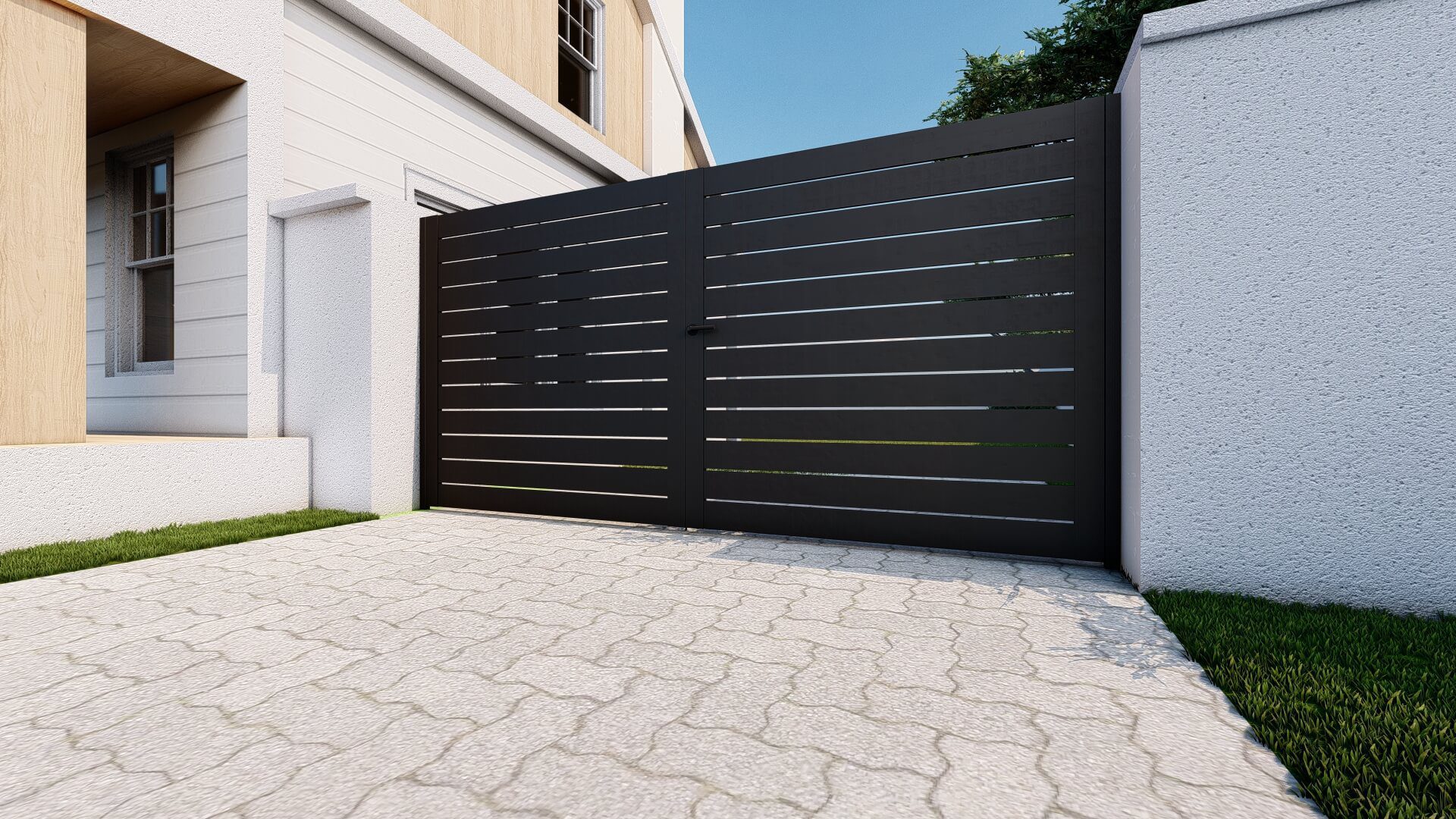
When a driveway approach rises toward the house, the lot pinches at the fence line, or a retaining wall sits in the swing path, a sliding gate rides a V-track or cantilevers on rollers to the side instead — zero swing clearance required. A good answer on the sloped edges of Spring Hill's newer developments, where a swing gate would catch on rising pavement or a graded shoulder.

  • Price: +$400–900 over swing-gate pricing
  • Typical use: Sloped approaches, pinched lots, retaining-wall fence lines
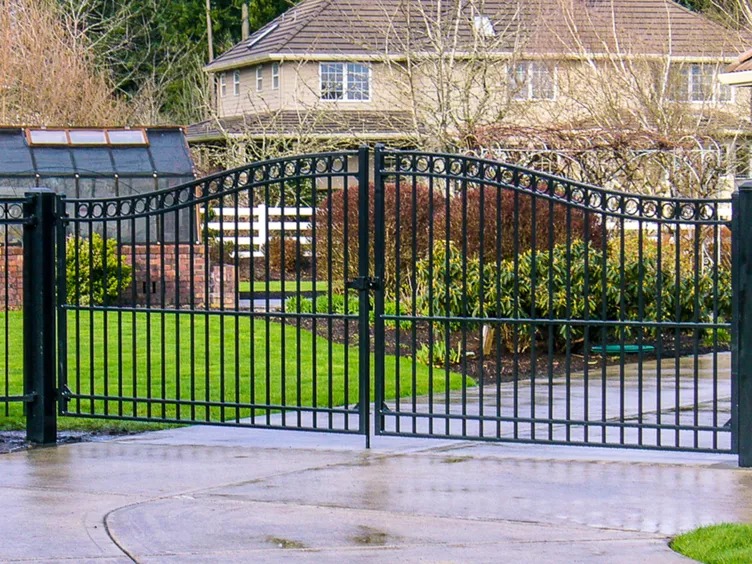
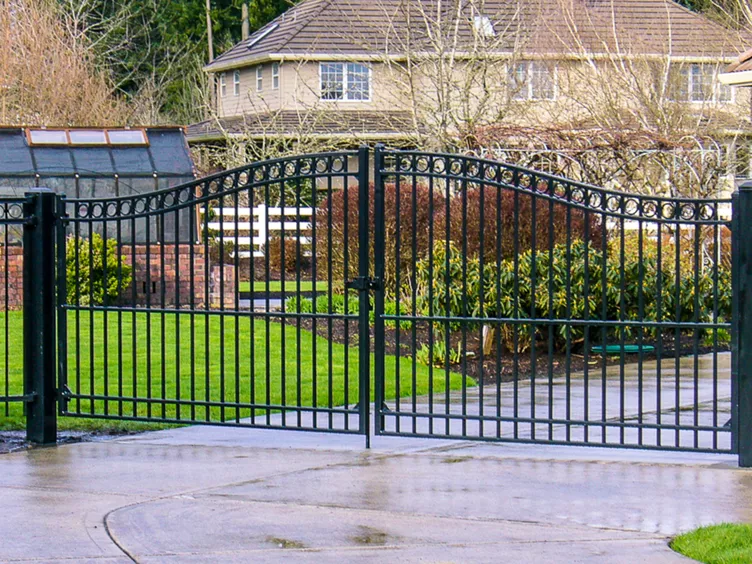
Black ornamental iron fence and gate on an open-view lot in Spring Hill, KS — RKC Wood Care Pros

SPRING HILL GATE PRICING

What Gate Installation Costs in Spring Hill

Gate pricing here comes down to type, material, and size — and on Spring Hill's bigger lots, size shows up more often than anywhere else in the county. Every quote includes a welded steel frame, heavy-duty galvanized hardware, and a 36-inch belled hinge post in wet-poured concrete. Below are the three configurations we quote most often for Spring Hill properties.

Wood Walk Gate

$300–600

installed

Cedar or pressure-treated pine. Welded frame, strap hinges, gravity or drop-rod latch, self-close where a dog or pool needs it.

Single-Drive Driveway Gate

$650–1,800

installed

Wood $650–1,200 · Iron $900–1,800. Welded frame, diagonal cross-brace, ball-bearing hinges, 36-inch belled footing.

Double-Drive / Custom Gates

+30–50%

over single-drive

The usual answer on Spring Hill's bigger lots. Custom widths, matched finials, and specialty hardware quoted on site.

Every Spring Hill gate estimate is free, written, and itemized — down to the hinge brand, the post depth, and the frame material. Custom widths, matched finials, and specialty hardware are read and quoted on your lot. Call (913) 286-1091 or request an on-site walkthrough.

OUR PROCESS

How a Gate Install in Spring Hill Actually Happens

Four steps from the phone call to the first swing. Most Spring Hill gate projects run 1 to 4 weeks start to finish. The install day itself is short — walk gates are often same-day, drive gates one to two days. The real clock is custom fabrication and giving a fresh footing time to fully set in this clay before the gate hangs on it. Here's what each step looks like on a Spring Hill lot.

1

On-site measurement and specification

Josh walks your Spring Hill property, measures the actual opening — rarely what the homeowner remembers it being — and confirms gate type, swing direction, and clearance. We go through the hardware together: strap versus ball-bearing hinges, latch style, drop rods for a double-drive. You get a written, itemized estimate the same week that names the hinge brand, the post depth, and the frame material. No verbal quotes, nothing figured out on install day.

2

Plan the gate to the run and to the clay

Most Spring Hill gates hang on a long cedar perimeter around a big, flat lot, so before we dig we read the whole run — where the ground dips and holds water, where the drive rises, which side the drought-crack clay tends to open on. That decides where the hinge post lands, whether the leaf swings or slides, and how the footing is set so the gate still lines up after a full clay year. It's the step that separates a gate that latches at year five from one that drags by the next August.

3

Install — posts first, welded frame second, hardware on site

Hinge posts go in on day one, 36 inches deep in wet-poured concrete, belled at the base and left to cure overnight. The welded frame and panels go up on day two once the footings are set. Hinges are mounted and adjusted on site — not pre-set at the shop — so the gate swings square against the real ground slope and latches cleanly to the real catch. Most Spring Hill walk gates finish in a single day; drive gates typically take two.

4

Walkthrough, a hardware guide, and a 30-day check

Before final payment we swing the gate open and closed ten times and watch every hinge under load. Any drag, any scrape, any latch miss gets adjusted on the spot. Because fresh concrete footings settle a little in the first month — and Spring Hill's clay moves more than most — we come back at 30 days for a free adjustment pass, and we show you the quarter-turn hinge tweak you can do yourself if it ever needs it. Most homeowners never do, but you'll know how.

RECENT SPRING HILL FENCE & GATE WORK

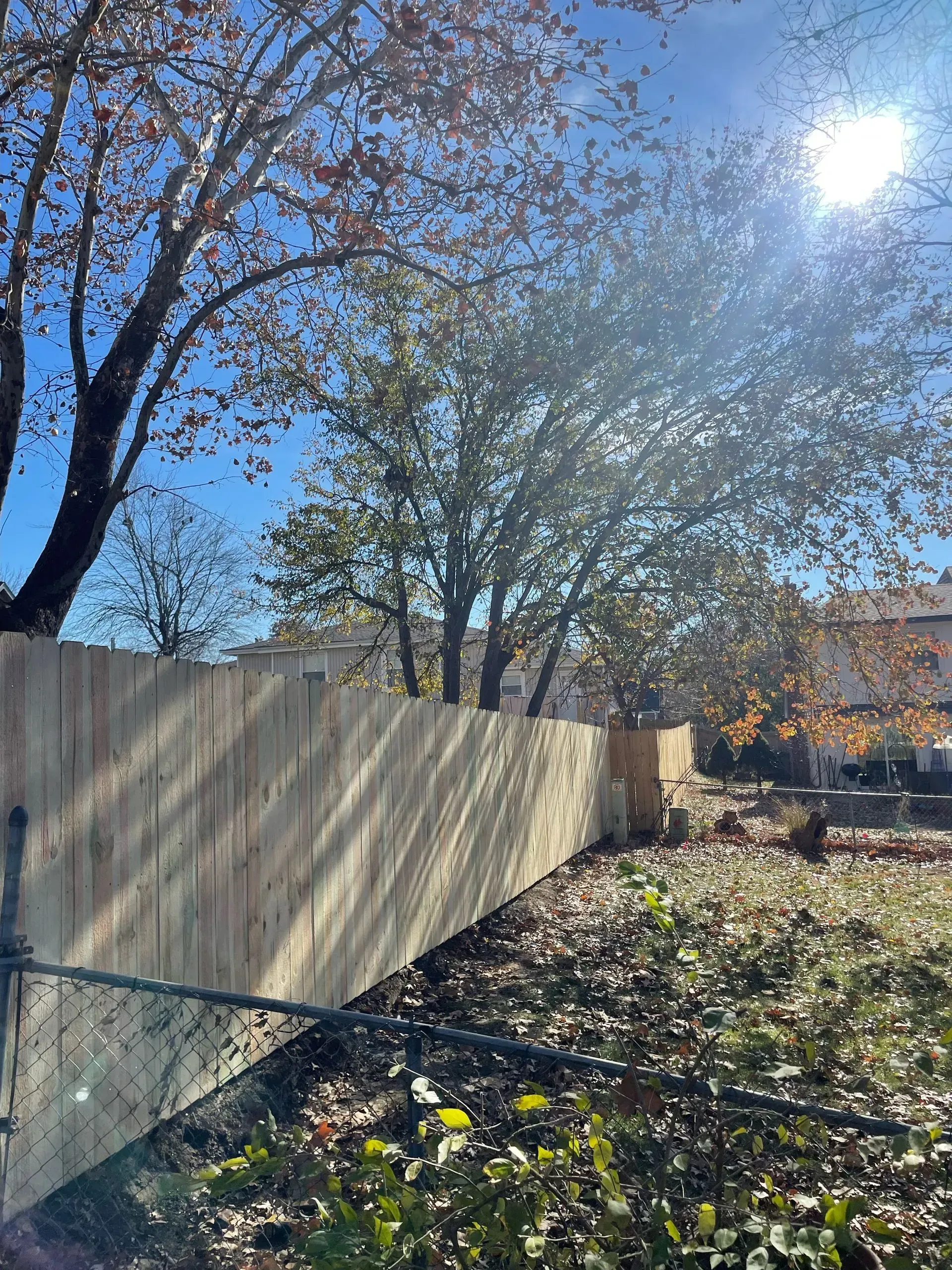
Cedar privacy fence and matching gate installed in Spring Hill, KS by RKC Wood Care Pros
Cedar Fence & Gate · Spring Hill
Black ornamental iron fence on an open-view lot in Spring Hill, KS by RKC Wood Care Pros
Ornamental Iron, Open-View Lot · Spring Hill
Board-on-board cedar privacy run installed in Spring Hill, KS by RKC Wood Care Pros
Board-on-Board Cedar Run · Spring Hill
Dog-ear cedar perimeter fence on a residential lot in Spring Hill, KS by RKC Wood Care Pros
Dog-Ear Cedar Perimeter · Spring Hill

REVIEWS

What Kansas City Homeowners Say About RKC

4.9 ★ · 85 Google reviews

Every review is on our Google Business Profile — read them there, unedited.

Read all 85 reviews on Google

SPRING HILL GATE QUESTIONS

Gate Questions Spring Hill Homeowners Ask Most

Gate installation in Spring Hill comes down to type and sizing, how the clay treats a post, and hardware spec. Below are the questions Spring Hill homeowners actually ask on the estimate visit — grouped by topic, each answer specific to the soil and the lots out here. If your question isn't here, call (913) 286-1091 and ask.

Custom driveway gate project by RKC Wood Care Pros in the Kansas City metro

Gate Types & Sizing

What's the right gate width for a driveway in Spring Hill?
Most Spring Hill driveways run 10 to 14 feet between the pillars or fence line, and 12 feet is the most common single-drive width. A single welded, cross-braced leaf handles that span cleanly. Past 14 feet we almost always move to a double-drive — two leaves meeting in the middle — because a single 16-foot leaf carries too much lever arm on the hinges and wind-sails hard on a subdivision lot with no mature trees to break the gust. Walk gates land separately at 3.5 to 4 feet, wide enough for a mower or wheelbarrow.
When does it make sense to go double-drive instead of single?
Two reasons drive it in Spring Hill, and both come with the bigger lots out here. The first is clearance — a boat, an RV, a trailer, or a truck-and-mower that a 12-foot single-drive won't pass. The second is wind: splitting a wide opening into two leaves halves the load on each hinge, which matters a lot on an exposed lot with no windbreak yet. If your opening is over 14 feet or you park anything wide, a double-drive is usually the right call. Under that, a single-drive is simpler and cheaper.
How long does a wood driveway gate last in Spring Hill?
A cedar single-drive gate with a welded steel frame, ball-bearing hinges, and a 36-inch belled hinge post runs 15 to 20 years here. The cedar itself goes 15 to 25 years on a two-year stain schedule; the steel frame lasts the life of the gate; the hinges last 15-plus years when they're rated above the leaf weight. The failure points are almost always a shallow post that the drought-crack clay loosens, or undersized big-box hinges that strip under daily swing. Neither is how we build.
What's the difference between a swing gate and a sliding gate?
A swing gate pivots on hinges at one post (single-drive) or two (double-drive) and needs room to arc open — simpler hardware and lower cost. A sliding gate rides a V-track or cantilevers on rollers to the side and needs zero swing clearance, which is the answer when the approach rises, the lot pinches, or a retaining wall sits in the swing path. Sliding hardware adds $400 to $900 over an equivalent swing gate. On most Spring Hill driveways swing is the default; slide is what the geometry forces.

Spring Hill Soil & Site

Why do gate posts loosen in Spring Hill when other yards seem fine?
It's the soil. Spring Hill's former-farmland ground is deep, rock-free clay that shrinks and cracks away from a post during the August drought, then swells back and re-grips unevenly when the fall rains come. A shallow or dry-set post rides that shrink-swell cycle loose, and a gate — which loads its hinge post thousands of times a year — shows it first, sagging at the latch. The fix is depth and shape: a 36-inch footing with a belled base that grabs below the shrinking layer, crowned so water sheds instead of ponding. That's why we build every gate post that way here.
Can I add a gate to my existing Spring Hill fence, or do the posts need replacing?
It comes down to how the current hinge post is set. If it goes 36 inches into wet-poured concrete — rare on older installs, standard on RKC-built fences — we can often hang a new gate off it. If it's shallow, surface-mounted, or already showing any lean, it comes out and a new 36-inch belled post goes in, because a gate is only as straight as the post it hangs from and this clay finds a weak post fast. We check post depth and plumb on the estimate visit before we quote the gate.
How long does a gate install take in Spring Hill?
Walk gates run about a day on site, 1 to 2 weeks from estimate approval once concrete cure and hardware lead time are counted. Single-drive gates run 1 to 2 days on site with 2 to 3 weeks of lead time for custom fabrication. Double-drive gates run 2 days on site with 3 to 4 weeks of lead. Sliding hardware adds roughly a week to any of those. The install day itself is short; the real clock is fabrication and giving the footing time to fully set before the gate hangs on it.

Pricing & Hardware

Why are welded gate frames worth more than bolted ones?
A welded frame costs more in shop time — every corner is cut, fit, tacked, and fully welded with a finish pass — but it holds square for the life of the gate. Bolted frames flex at every joint, rack out of square within a couple of seasons, and then the latch stops meeting the catch and the gate drags. Welding adds roughly 15 to 25% to the frame cost and saves you a sag call down the road. Every gate RKC builds in Spring Hill is welded at every corner. Bolted gates are what we replace.
What drives the price of a gate on a Spring Hill lot?
Four things, mostly. Size — a walk gate is a fraction of a double-drive. Material — cedar runs less than powder-coated ornamental iron. Whether it swings or slides — sliding hardware adds $400 to $900. And the run itself: the bigger Spring Hill lots often mean a longer approach, a wider opening, or a footing set against a low, wet spot, all of which we read on site. Every estimate is written and itemized so you can see exactly what each choice adds — no lump-sum guessing.
What's the warranty on gate hardware?
The hinges, latches, drop rods, and cane bolts we install carry the manufacturer's warranty — typically 10 years on ball-bearing hinges and 5 to 10 years on strap hinges and latches. The welded frame is covered by our own workmanship warranty: if it racks out of square, sags at the latch corner, or a weld fails under normal use, we come back and make it right. And every install includes the free 30-day adjustment pass — once the footings have fully settled in this clay, we return, realign the latch, tighten any hinge drift, and reset self-close timing if you have it.

OTHER SPRING HILL FENCE SERVICES

More Fence Services Available in Spring Hill

Every service below stays in Spring Hill — dedicated pages with local pricing, soil considerations, and recent project photos specific to your city. Whether you're adding a gate to a new fence, repairing an older run, or staining the cedar before the summer heat, here's where to go next.

Ready when you are

Get a free estimate — we usually respond the same day.

Call (913) 286-1091