Skip to content
Fence Staining & Sealing in Spring Hill, KS — What a Coat Actually Prevents

Fence Staining & Sealing in Spring Hill, KS — What a Coat Actually Prevents

On a blank-canvas Spring Hill street, whole rows of identical cedar go up at once — and a few years on, some are still rich and flat while others are gray, checked, and cupping. The difference is prevention: whether the fence got its coats on time. RKC Wood Care Pros treats staining as preventive maintenance, not cosmetics: a penetrating coat stops the drought-crack checking, the cupping, the UV graying, the tannin streaks, and the end-grain splitting before they start. Both faces sealed, deeper pigment on the sun sides, every coat logged and on schedule. 4.9 stars from 85 Google reviews. Call (913) 286-1091 for a free walk and quote.

★★★★★
4.9
from 85 reviews
Licensed
& Insured · KS + MO
400+
fences installed
A+ BBB Rated Kansas City Fence Contractor Staining as Preventive Maintenance 2-Year Cedar Cycle, Logged & Scheduled
View stain options in our catalog ↓

WHY SPRING HILL HOMEOWNERS STAIN WITH RKC

Staining as Prevention

On a Spring Hill street, identical cedar fences go up together and then diverge — some stay rich and flat, others go gray, checked, and cupping in a few years. The difference is almost always whether the fence got its coats on time. That's why staining here isn't cosmetics; it's preventive maintenance for the wood. A penetrating coat stops the specific failures the drought-crack sun causes before they start — checking, cupping, graying, streaking, splitting. Both faces sealed, deeper pigment on the sun sides, every coat logged so the protection stays on schedule.

1

It stops the checking before it starts

Spring Hill's drought-crack summers dry a bare board hard and fast, and the surface splits into fine cracks. A penetrating finish slows those moisture swings so the wood gains and loses water evenly and doesn't check as badly. Get a coat on before the first brutal summer and you head off the cracking that ages a new fence early.
2

Both faces, so boards don't cup

A board cups when one face dries faster than the other. Sealing both faces evens the drying rate and keeps the board flat — which is why we always coat front and back, especially on the wide board-on-board and shadowbox stock common here. A fence coated on only the visible side is prone to curling away from the rails.

3

Pigment blocks the graying

The full prairie sun on an open new lot bleaches bare cedar to silver in a season. Pigment blocks that UV, so the wood holds its color instead of graying. We carry deeper pigment onto the west and south faces that take the worst sun, so the whole fence resists the bleach evenly and reaches its next coat at one tone.

4

Sealed tops don't split

Board tops and post caps wick water into exposed end grain, which swells and splits in the freeze-thaw. We seal the tops and end grain deliberately — the part that drinks the most — so it doesn't crack open. It's a small detail that prevents one of the failures a fence coated in a hurry usually misses.

SPRING HILL LOCAL CONDITIONS

Why Staining in Spring Hill Is Preventive Maintenance

Three local factors shape stain work in Spring Hill: a blank-canvas town where prevention visibly separates the good fences from the failed ones, the drought-crack summers that check and cup bare wood, and the open new lots that take full sun and wind. This is a new-subdivision market where staining is maintenance, not decoration. Same crew, same standard: read what needs preventing, seal both faces and the end grain, weight the sun faces, and log the schedule that keeps the failures from ever starting.

1

A blank-canvas town where prevention shows

Spring Hill is a new-subdivision, blank-canvas market — whole streets of near-identical 6-foot cedar go up together as the developments fill. A few years on, those identical fences diverge sharply: some still read rich and flat, others are gray, checked, and cupping. The single biggest reason for the difference is prevention — whether the fence got its coats on time. That reframes staining here: it's not cosmetics, it's preventive maintenance that stops specific wood failures before they start. The fence you'd spot as the good one on an older Spring Hill street is almost always the one that stayed on a coat schedule.

2

Drought-crack summers are hard on bare wood

Spring Hill's heavy clay is known for its dry-summer swings — it shrinks hard in the August drought, which is what pulls it away from posts and leans them. That same brutal, dry heat works on the boards themselves: a bare cedar board dries fast and unevenly, shrinks, and checks into fine surface cracks, and if one face dries faster than the other it cups. A penetrating finish is the defense — it slows those moisture swings so the wood gains and loses water evenly, which is most of what prevents the checking and cupping the drought-crack summers cause. Sealing is how you keep the board stable through the swing.

3

Open new lots take full sun and wind

The new subdivisions sit on open, wide-prairie ground with no mature trees to break the sun or the wind, so a Spring Hill fence takes full exposure from its first summer. That accelerates every failure a coat is meant to prevent — the UV graying, the end-grain splitting, the tannin streaking — and favors the shorter end of the re-coat cycle. We answer it with deeper pigment on the west and south faces that catch the worst sun, deliberate sealing of the tops and end grain that split in the freeze-thaw, and a schedule that renews the protection before the exposure has time to do its damage.

The Spring Hill fences we've coated and brought back run across the blank-canvas subdivisions filling in on both sides of the Johnson–Miami county line — near-identical new cedar going up street by street, board-on-board and shadowbox runs on the open lots, and fences a couple summers past their first coat, gray and checked in the drought-crack sun. Each one gets its condition read against the failures the heat causes, both faces and the end grain sealed, deeper pigment on the sun sides, and the posts checked where the drought clay can lean them. A fence another company built earns the identical preventive treatment — a coat has only ever cared whether it went on in time.

WHAT A COAT PREVENTS

The Failure-Prevention Matrix — Six Failures a Coat Stops

Staining a Spring Hill fence isn't cosmetics — it's preventive maintenance that heads off specific wood failures the drought-crack sun and open-lot exposure would otherwise cause. Here are the six failures a coat prevents: what each one is, what causes it on a bare board, how the right finish stops it, and the tell-tale sign you'll see if a coat was skipped. The through-line — nearly every one traces back to a bare board taking the full drought-crack summer without protection.

The failure What causes it How the coat prevents it The tell if you skip it
Surface checking and cracking Spring Hill's drought-crack summers dry a bare board hard and fast; the wood shrinks, and the surface splits into fine cracks A penetrating finish slows the moisture swings, so the board loses and gains water evenly and doesn't check as badly Fine lengthwise cracks across the boards on a bare, unsealed fence — the classic sign a coat was skipped
Board cupping and warping When one face dries faster than the other — sun on the front, damp on the back — the board curls Sealing both faces evens the drying rate, so each board stays flat instead of cupping away from the rails Boards bowing or curling at the edges, worst on wide board-on-board and shadowbox stock
Graying and UV bleach The full prairie sun on an open new-subdivision lot breaks down the surface fibers and bleaches cedar to silver in a season Pigment blocks the UV; the more pigment, the more block, so the wood holds its color instead of going gray A silver-gray face, worst on the west and south sides that take the most sun
Tannin and nail-bleed streaks Bare cedar leaches tannins and rusty streaks bleed from fasteners, staining the wood in dark runs A finish seals the surface and the fastener area so the streaks don't form, and a brighten clears any that have Dark vertical streaks below nails and screws, or blotchy tannin darkening on bare boards
End-grain splitting Board tops and post caps wick water into exposed end grain, which swells and splits in the freeze-thaw We seal the tops and end grain deliberately, the part that drinks the most, so it doesn't split open Cracks opening at the tops of pickets and posts, where water sat and froze
Mildew and green film Shaded or damp faces grow mildew and algae on bare wood, which feeds rot over time A water-shedding coat over a mildew-kill lets the wood dry between wettings instead of staying green Green or black film on the shaded faces, usually the north side and the bottom boards

The line that runs down the matrix: almost every one of these failures traces back to a bare board taking the drought-crack summer without a coat — and a coat on time prevents it, where a coat too late can only halt it. Want us to read what your fence needs preventing? A free staining walk does exactly that, or start with a new Spring Hill wood fence from the same crew that will lay that first preventive coat on time.

STAIN SERVICES

Preventive Coats & Restoration — Every Spring Hill Scenario

The scope your Spring Hill fence lands in comes straight out of the read — a preventive first coat on new subdivision cedar, a re-stain that keeps the cycle going, a both-faces coat on wide board-on-board stock, or a brighten-and-restore on a run where prevention was skipped. Below are the four we run across Spring Hill, what each one suits, and honest per-foot numbers. Colors are yours to choose; what stays fixed is that every step of the coat maps to a failure it prevents — both faces for cupping, pigment for graying, sealed end grain for splitting, all by our own crew.

New-Cedar Preventive First Coat by RKC Wood Care Pros in Spring Hill, KS

New-Cedar Preventive First Coat

The Spring Hill priority · seal it before the first hard summer

Spring Hill is a blank-canvas town — whole streets of new cedar go up at once. Which of those identical fences still looks good in three years, and which is checked and gray, comes down mostly to whether the first coat went on in time. Staining a new fence isn't cosmetic here; it's preventive maintenance. Fresh cedar needs about a month to cure, then a penetrating first coat before the first brutal drought-crack summer, so the board loses and gains moisture evenly instead of splitting and cupping. We time it to the cure, seal both faces and the end grain, and log it. On our own installs it's often folded into the price.

  • Price: $3–6 / LF · typically $450–900 per 150 LF
  • Typical use: Fresh cedar across the new subdivisions, the preventive opening coat after any RKC install
Cedar Re-Stain by RKC Wood Care Pros in Spring Hill, KS

Cedar Re-Stain

The 2-year prevention cycle

The re-stain is where prevention actually happens over the years. A Spring Hill cedar fence wants a coat about every two years, and staying on that cycle is what keeps the drought-crack checking, the UV graying, and the cupping from ever taking hold — you're renewing the protection before the failures start, not fixing them after. On the day it's a soft wash to lift oxidation, a meter check for the dry window, then the matched color driven into both faces with deeper pigment on the sun sides. We log your product and color and put the next date on the invoice, so the prevention stays on schedule.

  • Price: $4–8 / LF · typically $600–1,200 per 150 LF
  • Typical use: Cedar dog-ear, board-on-board, and shadowbox runs on their preventive cycle
Board-on-Board & Shadowbox Coat by RKC Wood Care Pros in Spring Hill, KS

Board-on-Board & Shadowbox Coat

Wide-board styles · sealed both faces to stop cupping

Board-on-board and shadowbox fences are common in Spring Hill's new subdivisions, and their wider boards are the most prone to cupping when one face dries faster than the other. So on these styles the both-faces coat isn't optional — sealing front and back evens the drying rate and keeps the boards flat instead of curling away from the rails. We spray from both sides with a back-brush behind, reach the alternating edges and the gaps, and seal the tops. It takes more time than a flat run, which is why it costs a little more, but on wide-board stock it's what prevents the warp.

  • Price: $5–9 / LF · typically $750–1,350 per 150 LF
  • Typical use: Board-on-board and shadowbox runs, wide-board stock, both-faces preventive coverage
Gray & Checked Restoration by RKC Wood Care Pros in Spring Hill, KS

Gray & Checked Restoration

Undoing a skipped-prevention run

When a new fence went a couple summers without a coat, the drought-crack sun does its work — graying, surface checking, tannin streaks. That's a run where prevention was skipped, but it's rarely too late: the gray and the streaks are a thin skin over sound wood. We strip any failed finish, brighten the run to one tone with an oxalic treatment that clears the tannin and nail-bleed, wash and hard-dry, then lay a penetrating coat that stops the failures from here on. We probe the posts first, since the drought-crack clay can lean a shallow-set one — no return on staining a run that's about to move.

  • Price: $6–12 / LF · typically $900–1,800 per 150 LF
  • Typical use: Gray, checked, or streaked cedar that missed its coats, homes just changed hands, neglected runs
Preventive cedar fence stain pricing — Spring Hill, KS — RKC Wood Care Pros

SPRING HILL STAIN PRICING

What Fence Staining Costs in Spring Hill

What a Spring Hill job costs rides on the wood and the prep — a routine preventive re-coat on sound cedar is one number, a run that skipped its coats and needs stripping, brightening, and a post check runs more. The value math favors prevention: staying on the cycle keeps you out of the restoration bracket. Each quote folds in the condition read, the wash, the brighten where needed, the metered dry window, the matched penetrating family sealed on both faces and the end grain, the spray-and-back-brush pass by our own two-person crew, and a written next date. The three setups we price most often for Spring Hill homes are below.

Cedar Re-Stain

$4–8 / LF

wash + penetrating stain

The 2-year prevention coat — soft wash, meter check, matched color into both faces with deeper pigment on the sun sides, next date in writing. Most 150 LF Spring Hill cedar runs land at $600–1,200.

New / Board-on-Board Coat

$3–9 / LF

cure-timed or both-faces coat

A new-cedar first coat runs $3–6 a foot; a both-faces board-on-board or shadowbox coat runs $5–9. The style and the coverage set the number. A 150 LF run generally lands at $450–1,350.

Gray / Checked Restoration

$6–12 / LF

strip · brighten · stain

Failed finish stripped, tannin and gray brightened to one tone, washes, a drought-clay post check, then a penetrating coat that stops the failures. A checked, weathered 150 LF run is usually $900–1,800.

A restoration number comes only after an on-site look at which failures have set in and whether the drought clay has leaned any posts — that check is what stops you paying restoration rates on a fence that only wanted a routine preventive coat. Every Spring Hill estimate is free, written, and itemized — call (913) 286-1091 or set up a walk. While the crew's on site they can flag any Spring Hill fence repair — a drought-clay-leaned post — that should be handled before a coat protects the run — one trip, same hands.

OUR STAIN PROCESS

How a Spring Hill Stain Job Comes Together

Four steps from the phone call to the final walk. Most Spring Hill stain jobs span 2 to 4 days — and reading what needs preventing, done first, is what the whole coat is built around. The coat itself is usually a single day on site for a standard run. The rest of the clock is the condition read, the wash-brighten cycle, and the metered dry window the open lots complicate. Here's what each step looks like on a Spring Hill fence.

1

Walk it and read what needs preventing

Step one on a Spring Hill fence is reading its condition against the failures the drought-crack sun causes: is the board starting to check, is it cupping, is it graying, are tannin streaks forming. Josh or a lead measures the footage, identifies the cedar, takes a moisture reading, checks the exposure on the open lot, and probes the posts the drought clay tends to lean. On a new fence the read is about timing — getting ahead of the first hard summer. On an older one it's about which failures have already started and which a coat can still prevent. The estimate's free, itemized, and sampled on a hidden board.

2

Wash, brighten, and meter the dry window

Before a preventive coat goes on, the wood has to be clean and dry. A run due on schedule gets a soft wash to lift oxidation and any mildew; a weathered run takes an oxalic brightener that clears the gray and the tannin and nail-bleed streaks back to one tone; any failed film gets stripped. Then the meter goes on the wood, because Spring Hill's open lots and dry wind can leave a board reading dry on the surface while the core still holds water. We wait for a true dry reading through the board, so the finish keys in and does its preventive job instead of beading off and failing early — which would defeat the whole point.

3

Seal both faces and the end grain

Surface clean and dry, we lay the penetrating finish the way prevention requires: sprayed and back-brushed into both faces, because sealing front and back evenly is what stops the cupping, and with deliberate attention to the tops and end grain that split in the freeze-thaw. On the open lots we carry deeper pigment onto the west and south faces that take the worst sun, so the run resists graying evenly and reaches its next coat at one tone. Every part of the application maps to a failure it prevents — both faces for cupping, pigment for graying, sealed end grain for splitting. That's what a preventive coat is.

4

Walk it together, then log the schedule

Last is your eyes alongside ours — a full pass catching any board, top, or edge that reads thin or skipped, touched in before we sign off. Then the finish lands on your file: the date, the wood, the product, the exact color, the footage, and when the next coat is due — about two years, the shorter end favored on the open lots. That schedule is the heart of prevention: it's what renews the protection before the drought-crack checking, the graying, and the cupping start, rather than after. The reminder comes from us, so on a street of identical fences yours stays the one that never gave the failures a chance.

RECENT SPRING HILL STAIN JOBS

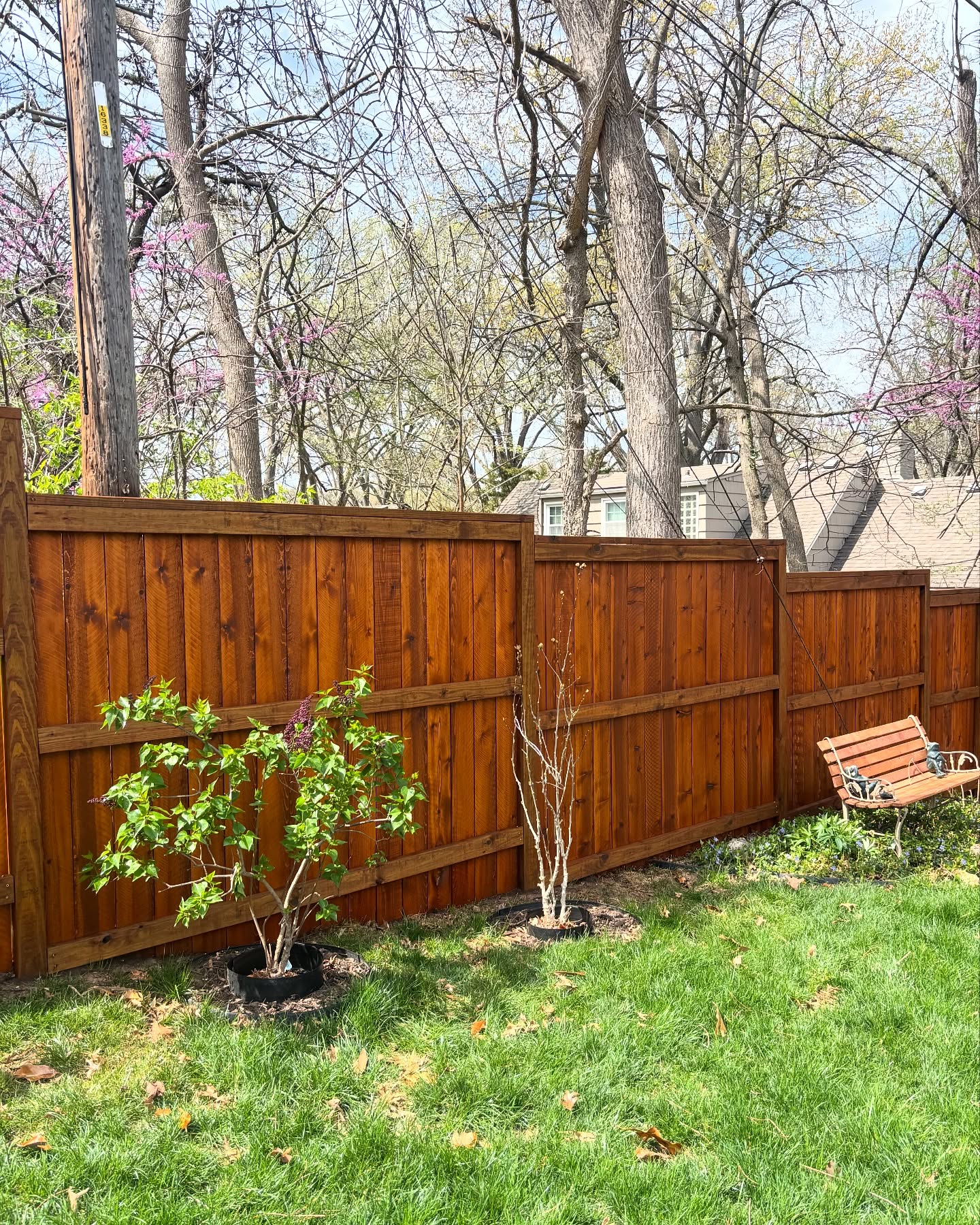
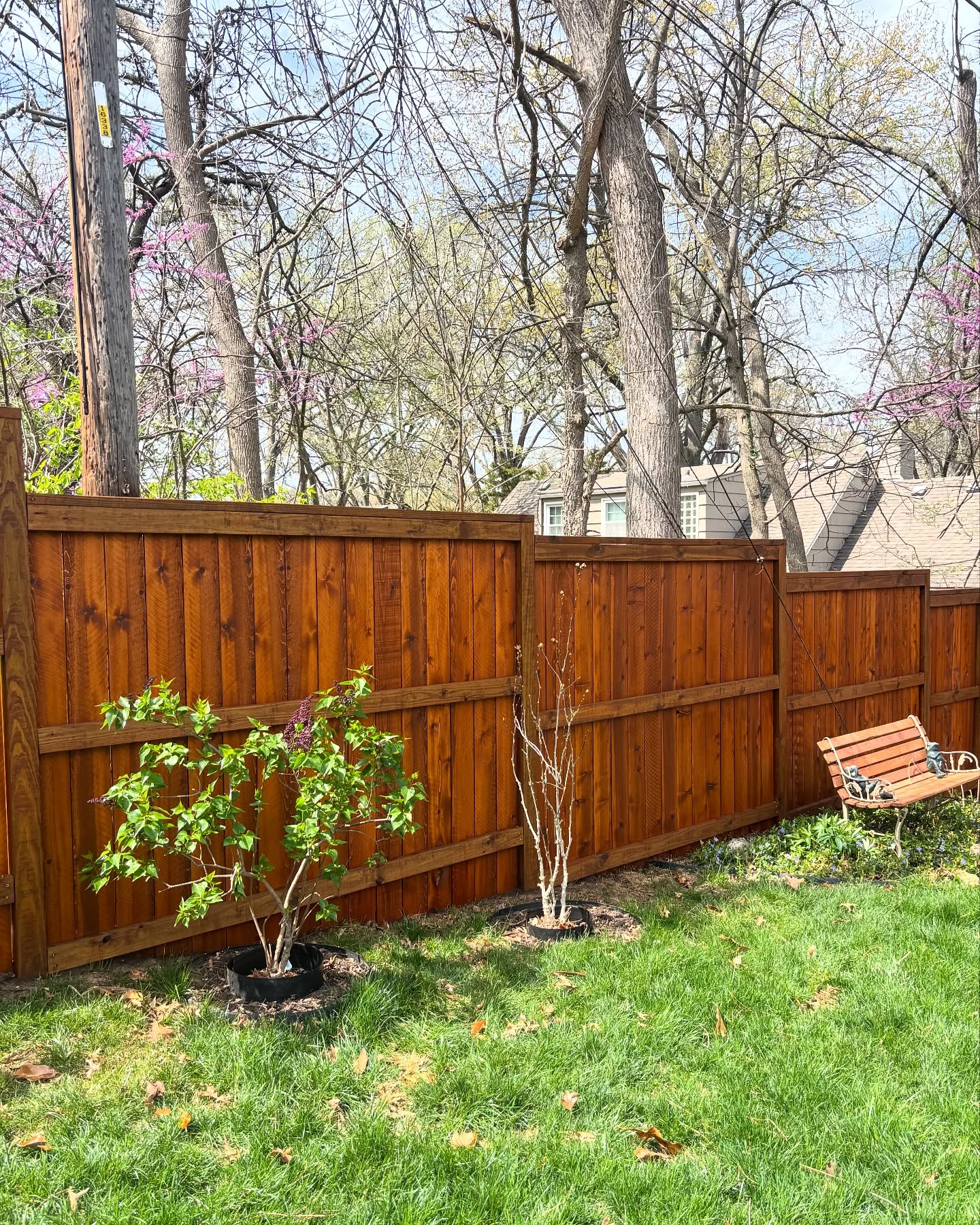
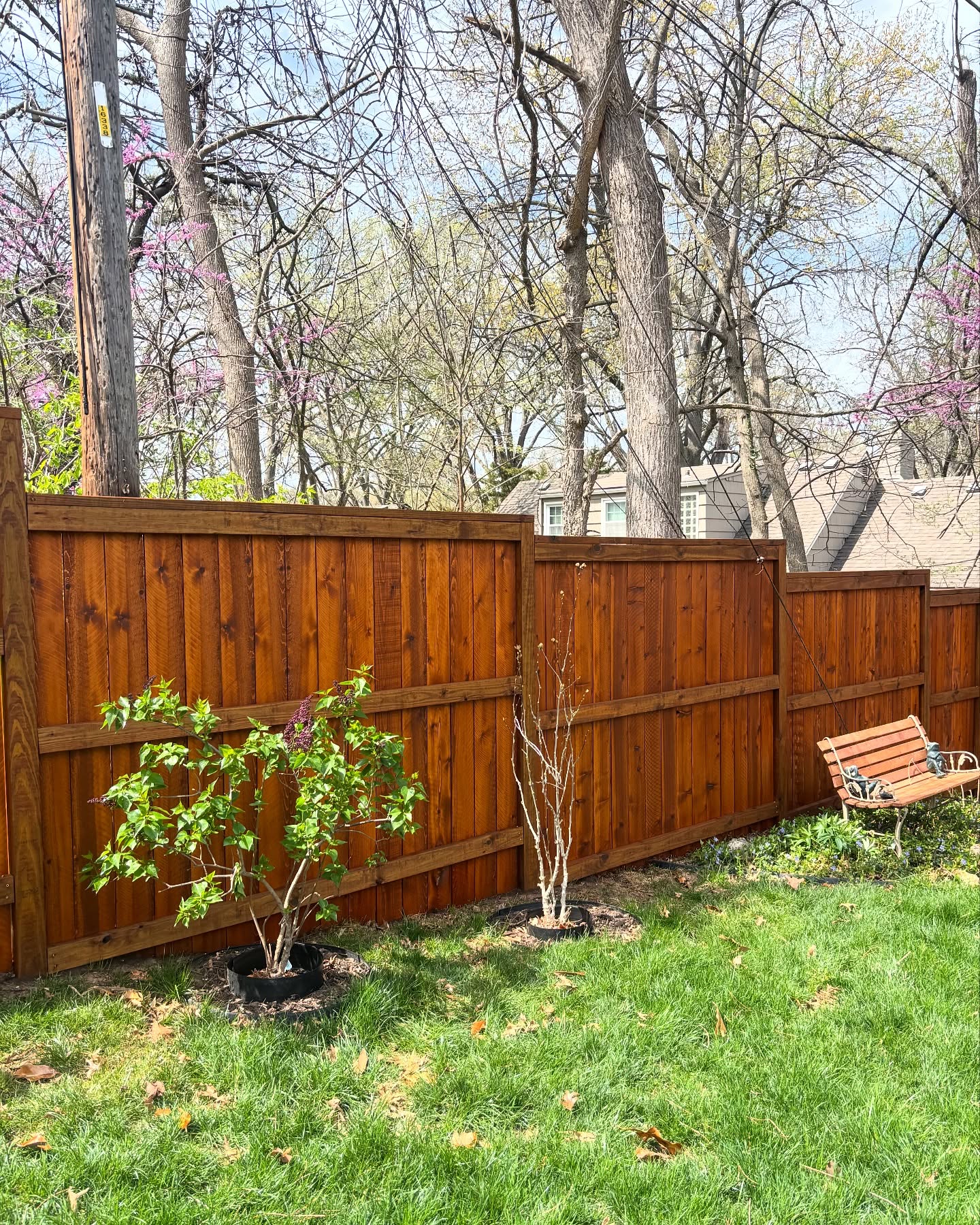
Dark walnut preventive re-stain on a cedar fence in Spring Hill, KS by RKC Wood Care Pros
Preventive Re-Stain · Spring Hill
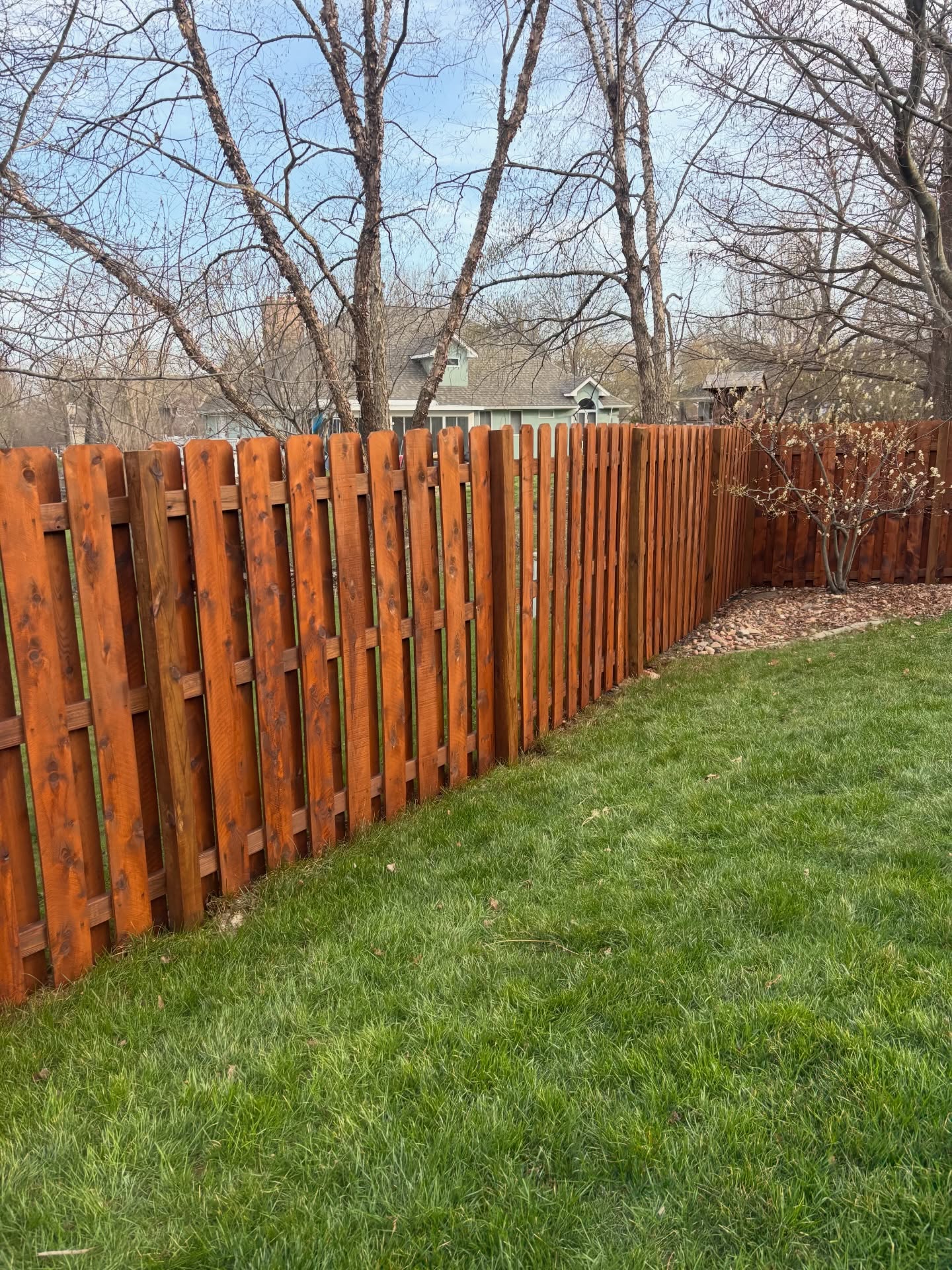
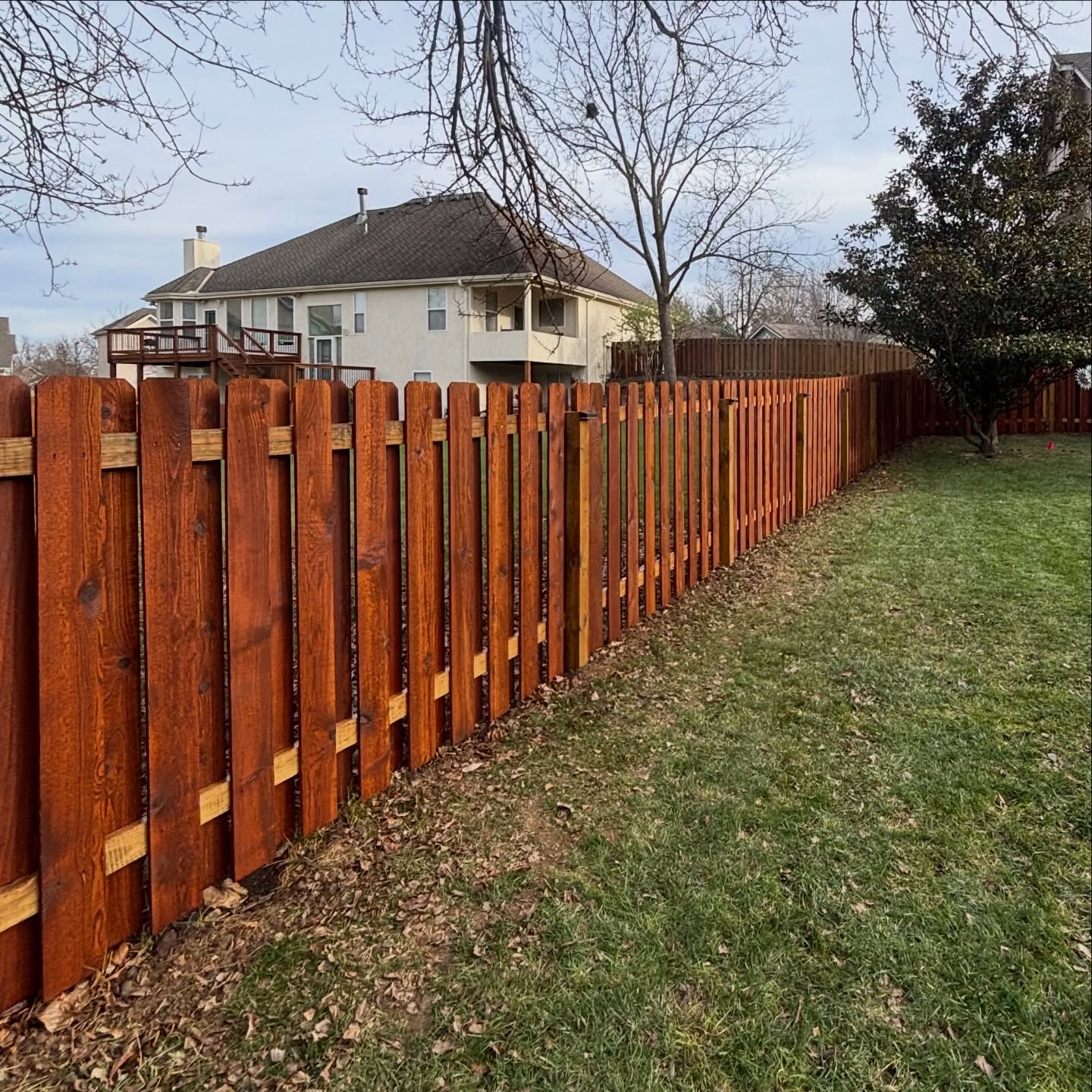
Honey stain on a new cedar picket fence in Spring Hill, KS
New-Cedar Coat · Spring Hill
Fence staining in progress in Spring Hill, KS
Coat In Progress · Spring Hill
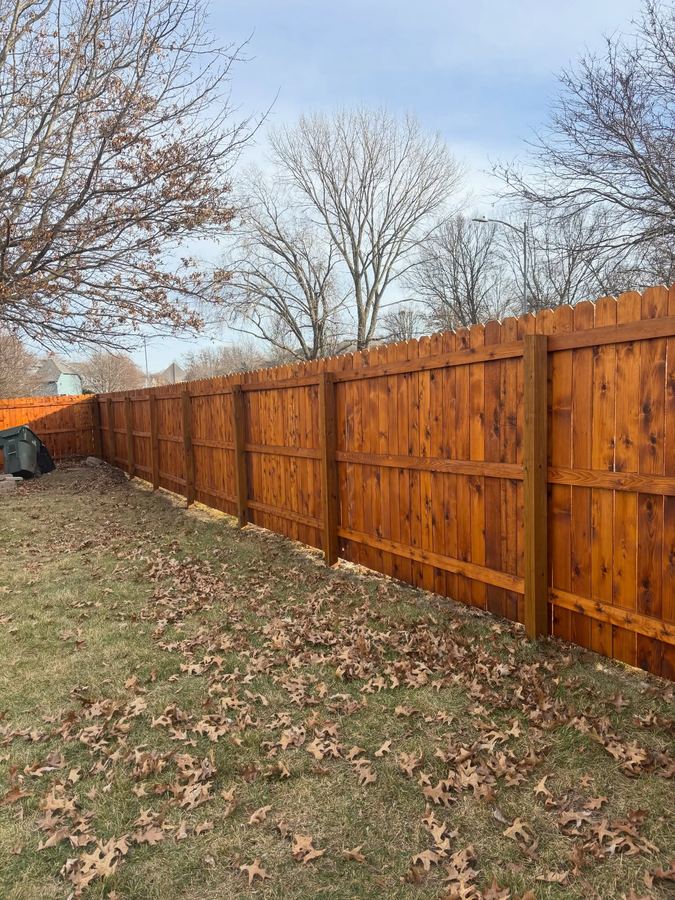
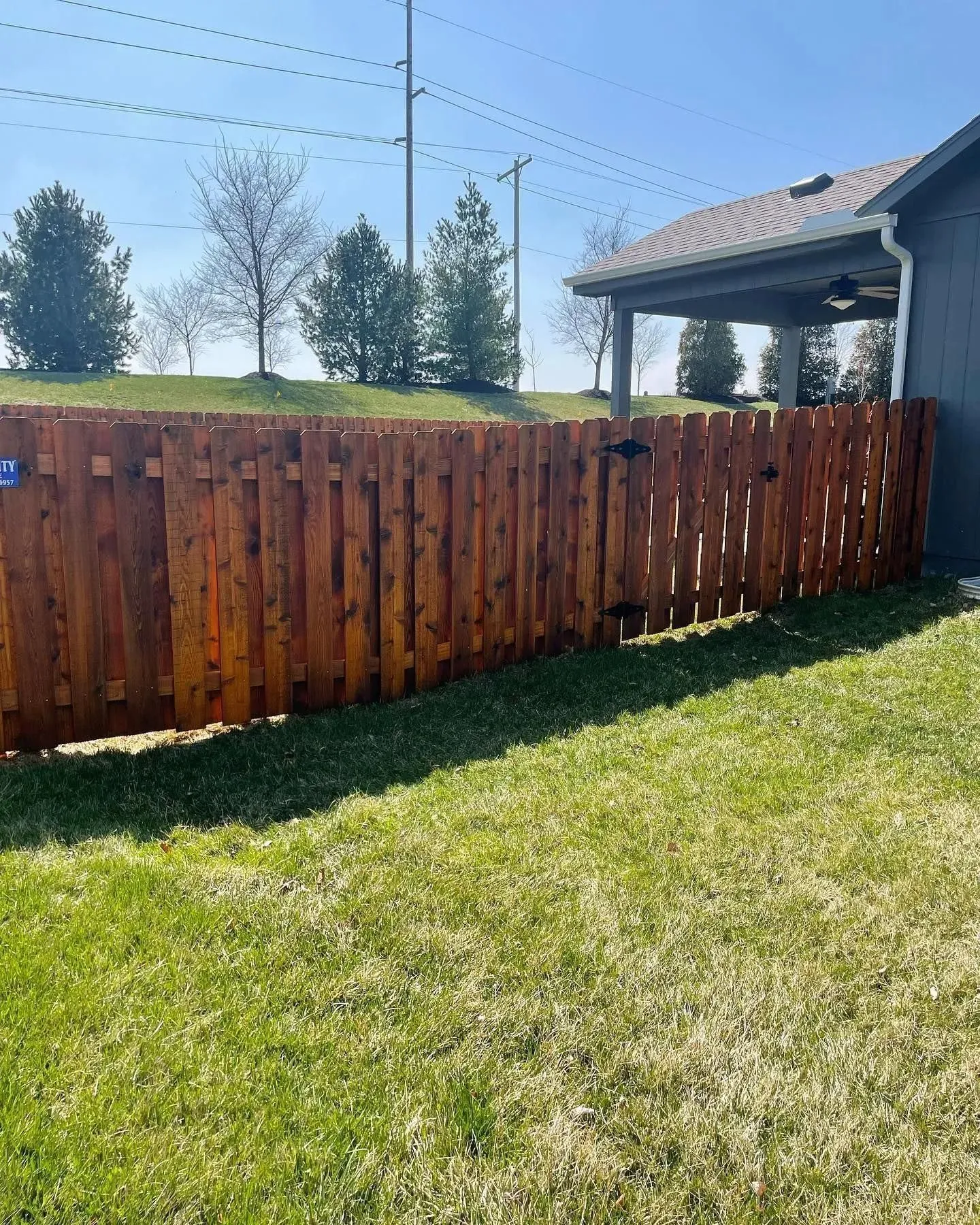
Freshly stained cedar fence on an open Spring Hill, KS lot
Sealed & Protected · Spring Hill

REVIEWS

What Kansas City Homeowners Say About RKC

4.9 ★ · 85 Google reviews

Every review is on our Google Business Profile — read them there, unedited.

Read all 85 reviews on Google

SPRING HILL STAIN QUESTIONS

Stain Questions Spring Hill Homeowners Ask Most

Three questions decide most Spring Hill stain jobs: what a coat actually prevents, when to seal new cedar to protect it, and whether a fence that already went gray and checked can be brought back. These are the ones Spring Hill homeowners raise at the estimate — sorted by topic, each answer tied to the failure-prevention matrix, the new-cedar timing, and the preventive schedule. Don't see yours? Call (913) 286-1091 and ask.

Spring Hill, KS fence staining by RKC Wood Care Pros

What Staining Prevents

What does staining actually prevent on a Spring Hill fence?
Several specific failures, all driven by the drought-crack sun and the open-lot exposure here. A penetrating coat prevents surface checking and cracking by slowing the moisture swings that dry a bare board hard; it prevents cupping by sealing both faces so they dry at the same rate; it prevents graying by blocking the UV with pigment; it prevents tannin and nail-bleed streaks by sealing the surface; and it prevents end-grain splitting by sealing the tops and caps. The failure-prevention matrix above pairs each failure with what causes it and how the coat stops it. In short, staining isn't cosmetics in Spring Hill — it's preventive maintenance for the wood.
My new fence is starting to crack on the surface — is that normal?
It's common on a bare Spring Hill fence, and it's exactly what a coat is meant to prevent. Those fine lengthwise cracks are surface checking: the drought-crack summer dries the board hard and fast, the wood shrinks, and the surface splits. A penetrating finish slows those moisture swings so the board gains and loses water more evenly and doesn't check as badly. If your new fence is already checking, it went into its first hard summer bare — the fix is to get a coat on now to stop it worsening. The wood is still sound; sealing it is what keeps the checking from deepening into real cracks.
Why are my fence boards cupping and curling?
Cupping happens when one face of a board dries faster than the other — usually sun on the front, damp or shade on the back — so the board curls away from the rails. It's most common on wide board-on-board and shadowbox stock, which Spring Hill has a lot of. The prevention is sealing both faces so they dry at the same rate; a fence coated on only the visible side is prone to cupping because the back keeps taking on and losing moisture unevenly. That's why we always coat both faces on these styles. If boards are already cupping, we can't fully un-curl them, but sealing both faces stops it getting worse and holds the rest of the run flat.

New Cedar & Timing

I just had a new cedar fence built — when should I stain it to protect it?
Give new cedar about 30 days to cure first, so a penetrating finish keys into the grain instead of beading off. Then get the first coat on before the first brutal drought-crack summer — that timing is the single biggest thing separating the Spring Hill fences that still look good in three years from the ones that are checked and gray. Staining a new fence here is preventive, not cosmetic: the first coat is what keeps the August heat from checking and cupping the boards before they've even settled in. We time it to the cure, seal both faces and the end grain, and log it. On our own installs the first coat is often folded into the price.
The whole street's fence went up at once — why do some look worse than others already?
Because prevention isn't uniform even when the fences are. On a blank-canvas Spring Hill street, identical cedar goes up together, but a few years on some are still rich and flat while others are gray, checked, and cupping — and the biggest reason is whether each got its coats on time. The ones that stayed on a 2-year schedule renewed their protection before the drought-crack sun could do its damage; the ones left bare took the full exposure. It's the clearest illustration of why staining here is maintenance, not decoration. If yours is one of the ones showing wear, a brighten-and-coat brings it back and puts it on the schedule that keeps it there.

Schedule & Restoration

How often does a Spring Hill fence need re-staining to stay ahead of the damage?
About every two years for cedar, and on the open new-subdivision lots we favor the shorter end because the full sun and drought-crack heat weather a finish faster than a sheltered yard would. The point of staying on that cycle is prevention: you're renewing the protection before the checking, graying, and cupping start, not fixing them after. A fence left to go three or four years bare drops into restoration territory — strip, brighten, more labor — which costs more than a routine re-coat. We log your next date and remind you before it's due, so the fence stays in the cheaper, preventive lane instead of the restoration one.
My fence already went gray and started checking — is it too late?
Almost never too late. On Spring Hill cedar the gray and the surface checking are usually a thin weathered skin over sound wood, not structural failure. We strip any failed finish, brighten the run to one tone with an oxalic treatment that also clears tannin and nail-bleed streaks, wash and hard-dry it, then lay a penetrating coat that stops the failures from progressing. We can't fully close checks that have already opened or un-cup a badly curled board, but we can halt both and restore the color. The one thing we check first is the posts — the drought-crack clay can lean a shallow-set one, and there's no return on coating a run that's about to move.

OTHER SPRING HILL FENCE SERVICES

More Fence Services Available in Spring Hill

Each link below keeps you in Spring Hill — its own page, with pricing, conditions, and recent job photos tied to this city rather than the metro at large. Weighing a fresh install, a repair, a gate, or one specific material alongside the staining? Here's where each of those picks up.

Ready when you are

Get a free estimate — we usually respond the same day.

Call (913) 286-1091