Skip to content
Gate Installation in Peculiar, MO — A Finish-Ready Gate for Your Brand-New Fence

Gate Installation in Peculiar, MO — A Finish-Ready Gate for Your Brand-New Fence

Peculiar is Ray-Pec's newest frontier — first fences going up as soon as the sod is laid, on raw lots with green cedar and no tree line yet. RKC Wood Care Pros installs walk, single-drive, double-drive, and cantilever slide gates across Peculiar — matched cedar gates built to stain with the fence in one in-house pass, welded steel frames, and hinge posts augered past the builder backfill and set 36 inches deep in poured concrete. We're A+ BBB rated with 4.9 stars from 85 Google reviews, and Josh handles every estimate visit personally. Call (913) 286-1091 for a free on-site walkthrough.

★★★★★
4.9
from 85 reviews
Licensed
& Insured · KS + MO
400+
fences installed
A+ BBB Rated 400+ Fences Installed Since 2021 Welded Gate Frames · Galvanized Hardware Free On-Site Estimates
See gate styles in our catalog ↓

WHY PECULIAR FAMILIES INSTALL NEW GATES

What a New Gate Actually Changes on a New Lot

Peculiar is a first-fence town — young families fencing a brand-new backyard the week the sod goes down — and on a raw lot the gate is where the whole install either reads finished or reads unfinished. The reason most Peculiar owners call us about a gate isn't "we need a latch." It's the new fence looking done instead of builder-grade, the walk gate the new puppy can't figure out, and the whole line — gate and fence — going down in one matched stain instead of two different colors. The gate is the instrument; what you notice is everything downstream of it.

1

A gate that finishes with the fence, not a year later

In a new Peculiar subdivision the cedar goes up green and waits a season to dry before its first stain — and most gates get forgotten in that gap and end up a different color than the run they hang in. We build the gate from the same green cedar and, when the wood's ready, the same crew stains the gate and the fence together in one in-house pass. One tone, one line, no seam where the gate meets the fence.
2

A first fence that reads as done, not just up

The gate is where a brand-new fence either looks finished or looks like a builder-grade afterthought. Pickets that line up flush with the run, a welded frame that hangs true, hardware that isn't an eyesore — that's the difference between a fence that's merely installed and a yard that looks handled. On a new build where everything else is still a punch list, the gate is a place it's worth getting right the first time.

3

A walk gate the new puppy can't beat

Fencing the yard as soon as the sod is laid is usually about the dog, and the walk gate is where a fence lets the dog back out. Ours closes itself on a spring hinge, latches high where a nose can't work it loose, and rides tight to the fresh ground with no crawl gap. On a first fence for a young family, that's the detail that turns 'we put up a fence' into 'the yard is actually secure.'

4

Still plumb after the new lot finishes settling

A new Peculiar lot moves for its first couple of winters — the backfill packs, the ground settles, the wind leans on a fence that has no tree line to hide behind yet. We beat all of it under the surface: the hinge post set past the fill into native ground, a welded frame that can't rack as the cedar dries, and galvanized hardware rated well over the load. The latch still meets its catch in year five, after the lot has finally found its level.

BUILDING ON RAW GROUND

What a Brand-New Peculiar Lot Means for Your Gate

A gate is the single highest-stress component of any fence — and on a new build it has to hold while the ground under it is still settling and the wood on it is still drying. A fresh Peculiar lot is disturbed builder fill, green cedar, and an open prairie with no windbreak yet. Three build decisions separate a gate that still swings square once the lot has finished settling from one that tips and drops at year two. Here's how we handle each on every gate we set across Peculiar.

1

The hinge post goes past the builder's fill into native ground

Here's the fact that governs a gate on a brand-new Peculiar lot: the dirt around a new house is disturbed backfill, loosened when the foundation went in and still packing down for a couple of winters after the sod is laid. A gate post set only into that fill sinks and tips as the ground settles, and once the post moves the latch stops lining up. So we auger through the loose fill into the undisturbed native clay beneath it and pour the hinge footing a full 36 inches there, below the frost line — the gate holds plumb because it's standing on ground that isn't going anywhere.

2

A welded frame that keeps its square while the new yard settles

A new build moves for a while — the ground settles, the green cedar dries and shrinks, the whole line finds its final position over the first year. A bolted gate frame has play in every joint and racks loose through exactly that kind of movement, and then the leaf drops at the latch corner. We weld every corner of a square-tube frame — clad in cedar for a wood gate, powder-coated where it's aluminum — so the leaf keeps its shape while everything around it is still finding its footing.

3

Braced windward, because the trees haven't grown in yet

A mature Peculiar street has a tree line to slow the wind; a new subdivision doesn't, and won't for ten or fifteen years. Until then the fence is the first thing on the lot to break the southern gusts, and the gate is the biggest sail on it. So the hardware carries a 50-percent margin over what the leaf actually weighs — a walk gate rides strap hinges good past 100 pounds, a drive gate turns on ball-bearing pivots good past 400, and every piece is hot-dip galvanized or stainless, because the zinc-plated stuff off a big-box shelf gives out in two or three muggy Missouri summers. The post on the gusty side runs fatter and buried deepest. It's sized for the exposure the bare lot has today, not the sheltered one the neighborhood grows into.

Peculiar new-build streets we've set gates across include Peculiar Estates, Fox Haven, Prairie Ridge, Schug Farms, and The Village, plus infill lots near Raisbeck Park. Same post-past-the-fill footing, same 36 inches, same welded frames on every one.

START WITH THE LOT

What Your Raw New-Build Lot Has Going On Decides the Gate

On a fresh Peculiar lot the gate is spec'd around three things a mature yard doesn't have: green cedar, unsettled fill, and no windbreak — so we build to what your lot actually has going on right now. Find the row that sounds like your property. The left column is what's true of your new lot; the middle is the gate it calls for; the right is how we build and finish it so it holds up while the whole lot is still finding its level.

What your new lot has going on The gate it takes How we build and finish it here
A green cedar privacy run that just went up, still unstained A matched cedar gate, hung to stain with the fence In a new Peculiar subdivision the cedar goes up raw and stays that way for a season while the wood dries out enough to take a finish — so we build the gate leaf from the same green cedar as the run. It weathers to the same tone, and when the fence is ready for its first coat, the gate takes it in the same in-house pass, one color across the whole line. A gate stained a year off from its fence is the tell of two different crews.
Loose builder backfill ringing a brand-new house A hinge post augered past the fill into native ground The dirt within a few feet of a new foundation is disturbed backfill that hasn't settled and won't for a couple of winters. Drop a gate post into that and it sinks and tips as the ground packs down. We auger through the loose fill into the undisturbed native clay below and pour the footing a full 36 inches there, widened where the fill runs deep — so the gate holds its line while the rest of the new lot is still settling.
An open prairie lot with no trees for a windbreak yet A windward-braced gate, deepened on the exposed side On a new build the fence you're installing is the first windbreak the lot has ever had, and the gate is the moving hole in it. Peculiar sits at the edge of the metro and takes the southern wind with nothing to break it until the subdivision's trees mature. So the windward hinge post goes over-deep, the leaf carries a diagonal brace and a hold-back, and the hinges are rated well over the load — built for full wind on day one, not once the saplings grow up.
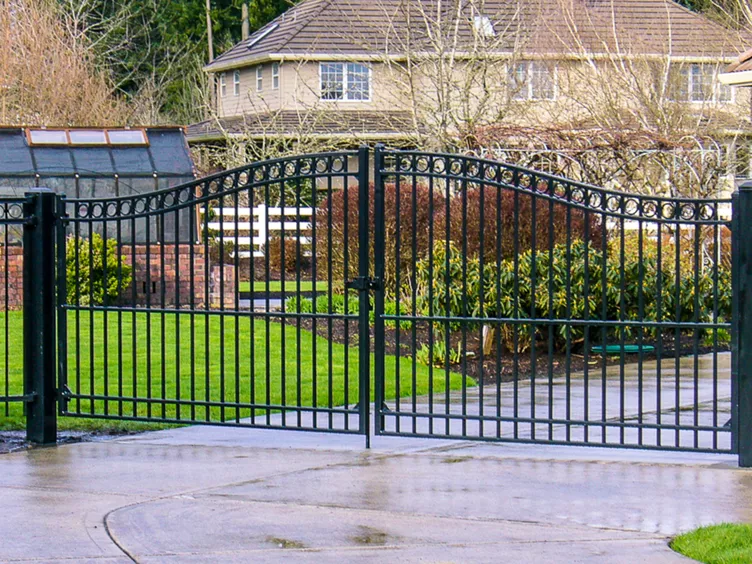
A prairie-view corner lot in Fox Haven An open black aluminum or ornamental gate The lots that back onto the open view run black ornamental or aluminum to keep the sightline instead of walling it off — and there's nothing to stain, which suits an owner who's done with new-build punch lists. We fabricate the leaf to the fence's picket spacing, powder-coated over a welded frame, and set it on the same 36-inch footing as a wood gate. The view stays; the gate just frames it.
A 'clean look' vinyl yard in a newer development A vinyl-clad gate on a welded steel core Vinyl is growing fast in the new Peculiar subdivisions for the crisp look with no stain schedule ever — but vinyl on its own sags the day you hang a gate off it. We build the leaf on a welded steel or aluminum-insert core and clad it in the matching vinyl, so it stays square through the wind and the years with zero upkeep. The look the subdivision wants, on bones that actually hold a gate.
A wide new driveway, or room for a boat or camper A double-drive split or a cantilever slide Anything past 14 feet splits into two leaves on a center drop rod, or rolls as a cantilever where the new drive grades uphill. On these 0.20-to-0.35-acre lots the double-drive is the common call for boat, camper, or a second-vehicle pad. Both hinge posts set past the fill to 36 inches, both leaves braced, the windward side deepened — so a wide green-cedar span doesn't sag before it's even had its first stain.

None of this is a catalog you pick from blind. When Josh comes out he reads how green the ground and the cedar still are, how you plan to finish the run, and which side the open wind hits — and the gate is built to those answers. Drop the 'Peculiar' name-story or Raisbeck Park and he'll peg you for a local before the tape's even out.

GATE TYPES

Walk, Drive, Double & Cantilever — Every Gate for Your Peculiar Property

The right gate depends on how you use a brand-new yard — securing it for the dog, framing the prairie view, or clearing the boat — and how the new fence gets finished. Here are the four gate types we install across Peculiar, what each one fits, and real pricing for each. Cedar is the dominant new-build look and stains with the run; black aluminum suits the modern and prairie-view lots with nothing to finish; vinyl matches the newer subdivisions. The welded frame, the 36-inch post set past the fill, and the overbuilt hardware stay the same under all of them.

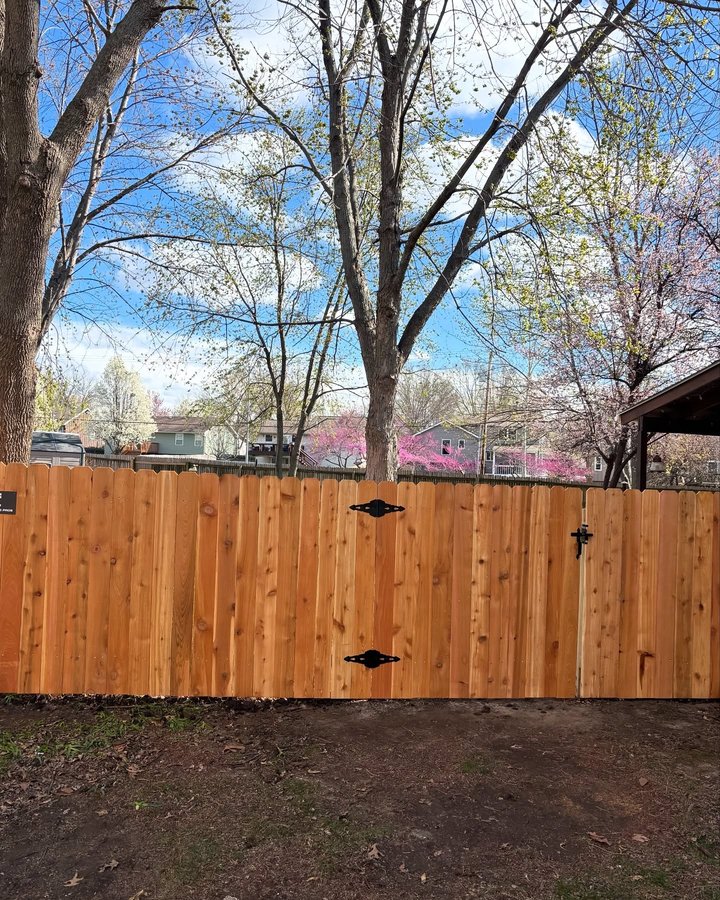
Cedar privacy walk gate install in Peculiar, MO by RKC Wood Care Pros

Walk Gate — 3–4 ft wide

The first gate a new Peculiar yard needs

The side-yard gate a fresh-fenced backyard uses from day one — the mower, the trash bin, the new puppy learning the sod is the whole world now. We build it in the same green cedar as the run so it weathers and stains as one line, hang it on a welded square-tube frame, and add a self-closing latch on any yard with a dog or a pool behind it. It's the small gate that decides whether the brand-new fence actually contains anything.

  • Price: $300–600 (cedar) · $450–850 (aluminum)
  • Typical use: Side-yard entry, first-fence dog containment, pool enclosure gate
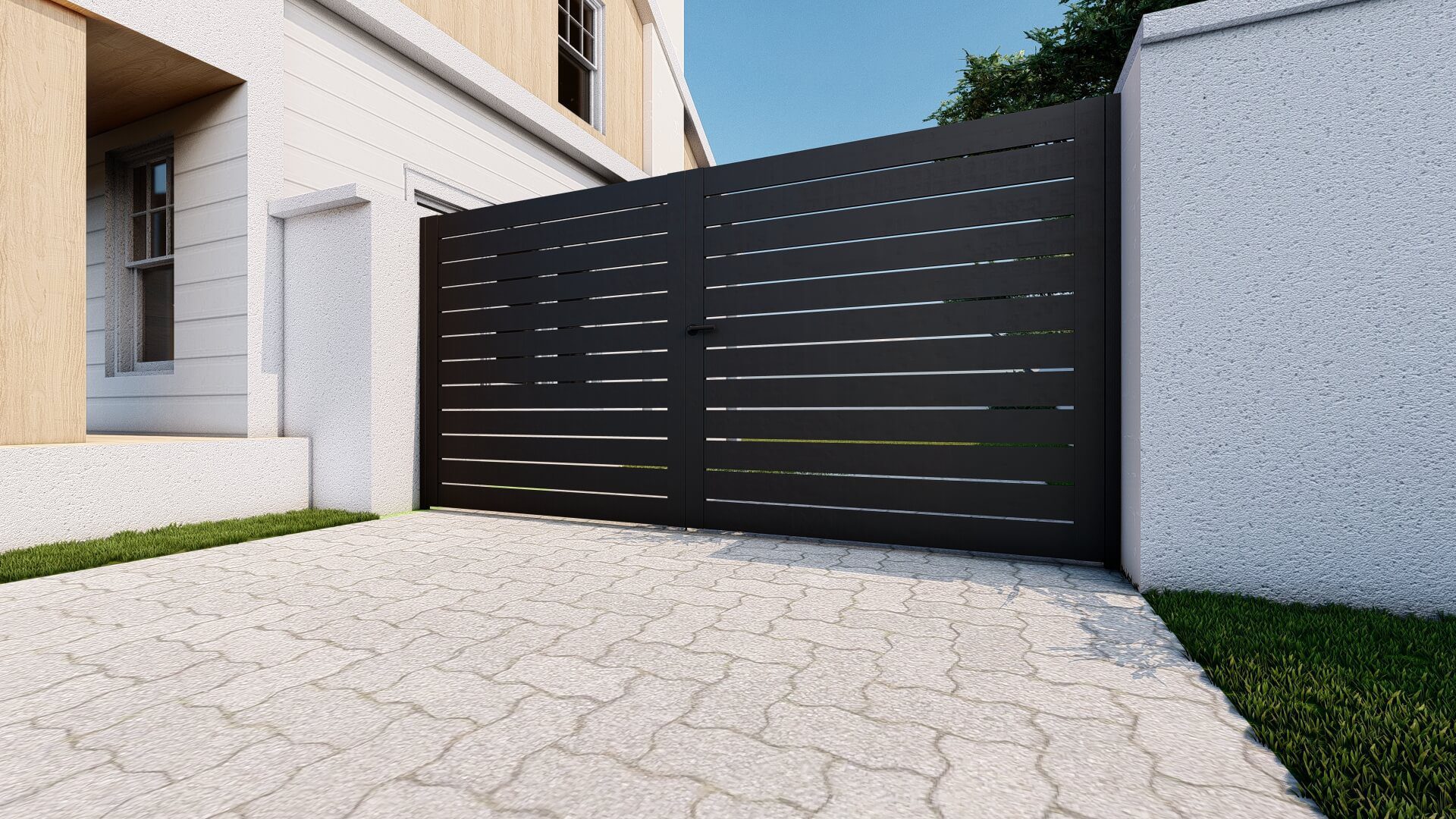
Modern horizontal-slat single-drive gate install in Peculiar, MO by RKC Wood Care Pros

Single-Drive Gate — 10–14 ft wide

Standard new-construction driveway width

The everyday drive gate for a 10-to-14-foot opening on a new Peculiar build. Its bones are a welded steel frame with a diagonal running corner to corner, hinge to latch, and ball-bearing pivots rated over the leaf. Face it in cedar to carry a privacy run, or in black horizontal aluminum where the build wants a modern line and no stain down the road. The hinge post is driven past the loose fill into ground that won't shift, so neither the daily use nor the open wind loosens it while the lot beds down.

  • Price: $650–1,200 (cedar) · $900–1,800 (aluminum)
  • Typical use: Standard new-subdivision drive, single-vehicle entry, cedar or black aluminum
Double-drive gate with braced posts and center drop rod by RKC Wood Care Pros

Double-Drive Gate — 14–20 ft wide

For the boat, the trailer, the wide new lot

A matched pair of leaves meeting at a center drop rod, each swinging off its own post. Halving the span halves the lever arm on either hinge — and that pays off twice on a fresh Peculiar lot, where a single broad leaf is too much sail for one hinge on wind-open ground, and green cedar carries its most weight before it's dried. We sink the windward footing deeper, run a diagonal through both leaves, and set a drop rod that won't lift in a gust. It's the usual call on the wider drives in Peculiar Estates and Schug Farms.

  • Price: +30–50% over single-drive
  • Typical use: Wider drives, boat/RV/trailer access, wide-open new-construction lots
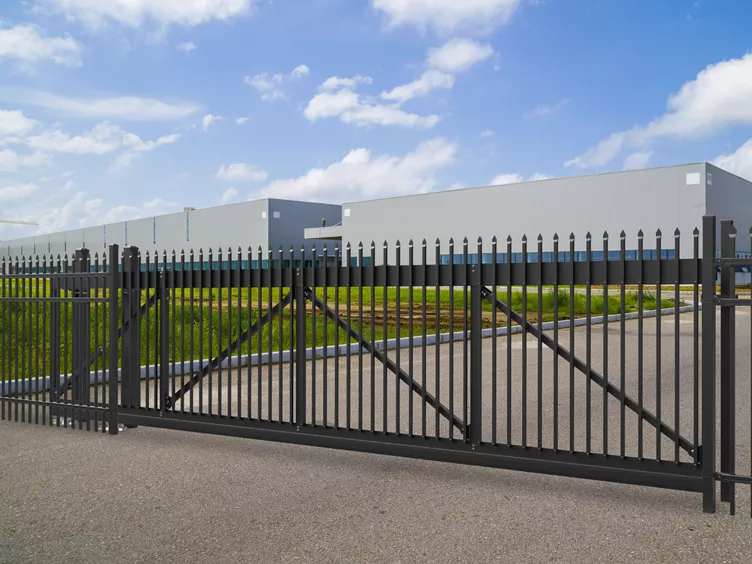
Cantilever slide gate with rollers and no ground track by RKC Wood Care Pros

Sliding / Cantilever Gate — 10–20 ft travel

For a graded lot or a tight new drive

Where a new driveway grades uphill toward the house, runs close to the lot line, or a swing leaf would turn broadside to the prairie wind mid-arc, a cantilever rolls to the side instead — up off the ground on rollers, no track to pack with the grit that blows across a lot without a windbreak. Zero swing clearance. On the newer Peculiar builds with a rising drive or a tight side yard, it answers a geometry problem a swing gate can't.

  • Price: +$400–900 over swing-gate pricing
  • Typical use: Graded new drives, tight side yards, wind-exposed openings
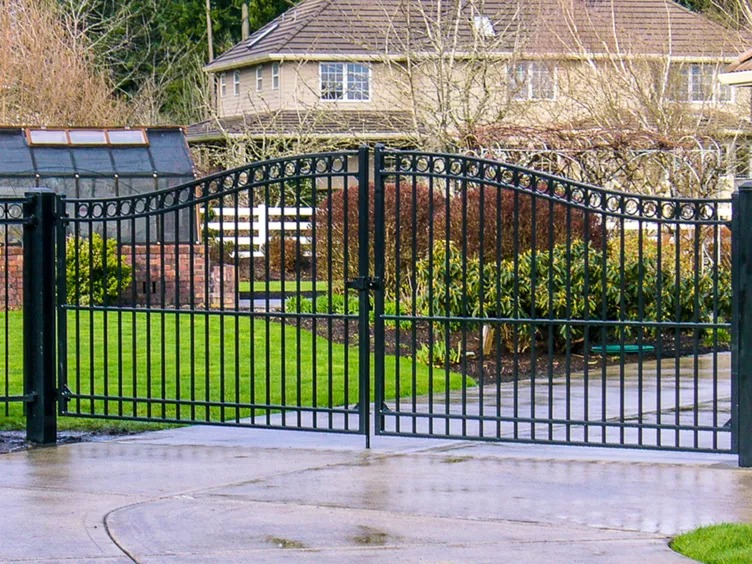
Black ornamental gate on a sunny prairie-view Peculiar, MO lot by RKC Wood Care Pros

PECULIAR GATE PRICING

What Gate Installation Costs in Peculiar

Gate pricing in Peculiar depends on gate type, material, and size — cedar, vinyl, and aluminum are three different finishes. Every quote includes welded steel frame construction, galvanized heavy-duty hardware, and a hinge post augered past the builder fill and set 36 inches deep in wet-poured concrete. Below are the three configurations we quote most often for Peculiar properties.

Wood Walk Gate

$300–600

installed

Cedar or pressure-treated pine, matched to your new run. Welded frame, galvanized strap hinges, gravity or drop-rod latch. Stains with the fence in one in-house pass.

Single-Drive Driveway Gate

$650–1,800

installed

Cedar $650–1,200 · Aluminum $900–1,800. Welded frame, diagonal cross-brace, ball-bearing hinges, hinge post set past the fill to 36 inches.

Double-Drive / Cantilever

+30–50%

over single-drive

Wide openings for the boat, camper, or second pad. Braced leaves, center drop rod, upsized windward footing, and any cantilever slide hardware quoted on site.

Wide double-drive widths, cantilever slide hardware, and the upsized windward footing an open lot needs are quoted on site once we've measured the opening. For the full gate-type scope across the metro, see the Kansas City gate installation hub. Every Peculiar gate estimate is free, written, and itemized — call (913) 286-1091 or request an on-site walkthrough.

OUR PROCESS

How a Gate Install in Peculiar Actually Happens

Four steps from the phone call to the first swing — and, on a new cedar run, a fifth when the wood's finally ready to stain. Install days themselves are short — walk gates are often same-day, drive gates one to two days. The longer stretches are fabrication lead time on the welded leaf and, on raw cedar, the season the wood needs to dry before its first coat. Here's what each step actually looks like on a gate install in Peculiar.

1

On-site measurement and gate spec

Josh walks your Peculiar lot, measures the actual opening (rarely the round number the builder quoted), and confirms gate type, swing direction, and clearance — and reads how fresh the ground is around the new foundation and which way the lot faces the open wind. We review the hardware tier — strap vs. ball-bearing hinges, latch style, self-close for a dog or a pool — and write up the estimate the same week. Every quote lists the hinge brand, post depth, and frame material. No verbal numbers, no hardware decided on install day.

2

Match the gate to the new fence and its finish

Before we build, we lock in three things: how the gate ties into your run — green cedar, vinyl, or black aluminum — how the yard actually gets used on a brand-new lot, and how the whole line will be finished. On a raw cedar run that means building the gate to weather and stain with the fence in one in-house pass, so it never reads as an add-on. On vinyl or aluminum it means matching the panel and skipping the stain entirely. The finish plan is set before a post goes in the ground.

3

Install — posts past the fill, welded frame second

Day one is footings: we bore down through the soft builder backfill until the auger bites native ground, then pour the hinge posts a full 36 inches into wet concrete and leave them to set up overnight. Day two the welded leaf and panels go on once those footings have taken. We fit and tune the hinges and latch right there on the lot — never bench-set back at the shop — so the gate hangs true to the ground you've actually got and the latch meets its catch on the first try. A walk gate is usually a one-day job here; a drive gate runs two.

4

Walkthrough, a 30-day check, and the first stain when it's ready

Nothing gets signed off until we've cycled the gate a good ten times and watched how each hinge carries the load — a scrape, a drag, a latch that misses, all of it corrected before we leave. Fresh concrete moves a hair in its first weeks, so a free tune-up visit is baked in at the 30-day mark. And once the raw cedar has finally cured enough to drink a stain — figure a season on a new build — the crew that raised the fence comes back and finishes the gate and the run in the same pass, one tone across the whole line rather than a mismatched patch.

RECENT PECULIAR GATE & FENCE INSTALLS

Modern black horizontal-slat drive gate install in Peculiar, MO by RKC Wood Care Pros
Modern Horizontal Drive Gate · Peculiar
Cedar privacy walk gate install in Peculiar, MO by RKC Wood Care Pros
Cedar Privacy Walk Gate · Peculiar
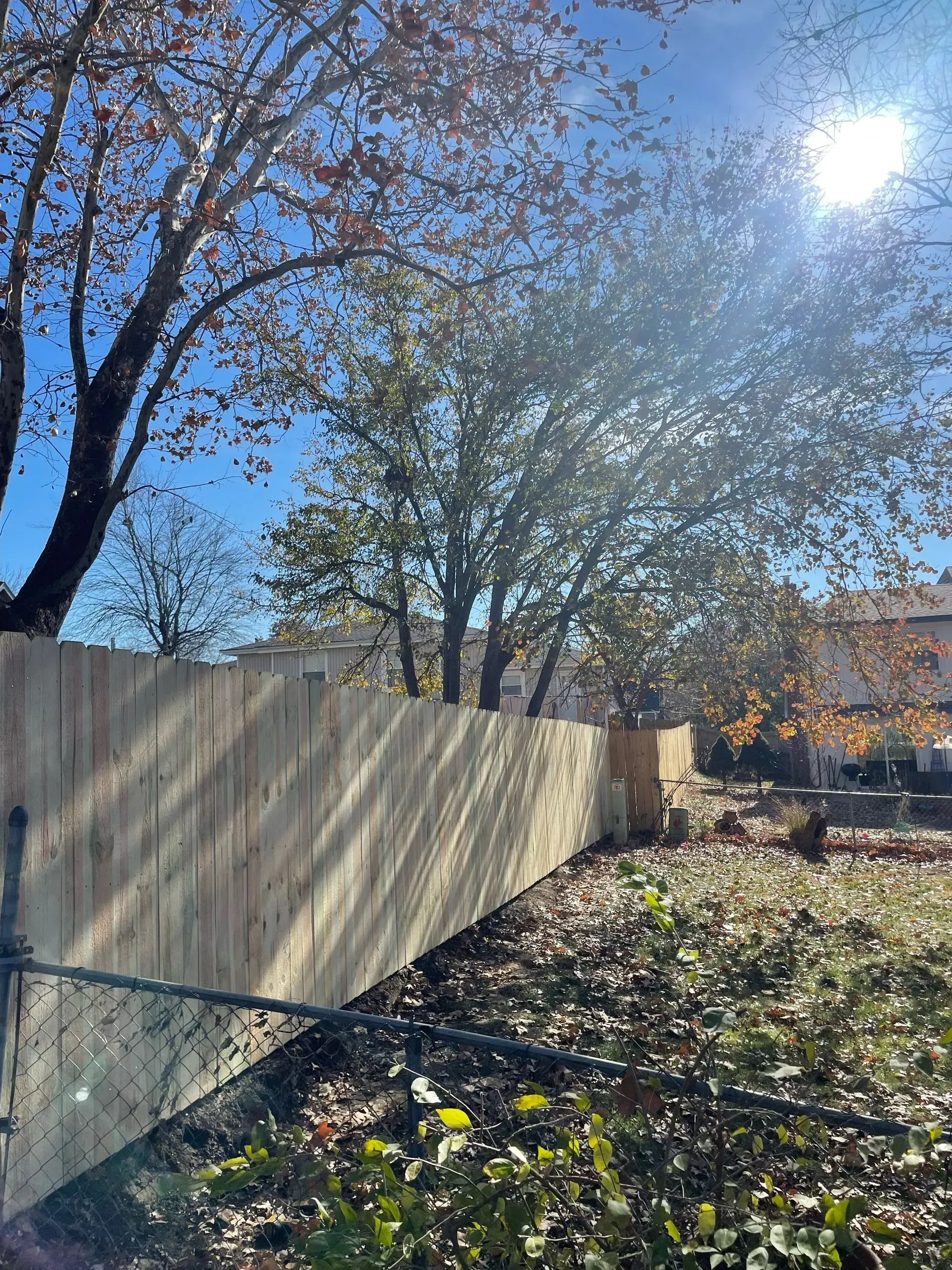
New dog-ear cedar privacy fence run in Peculiar, MO by RKC Wood Care Pros
New Dog-Ear Cedar Run · Peculiar
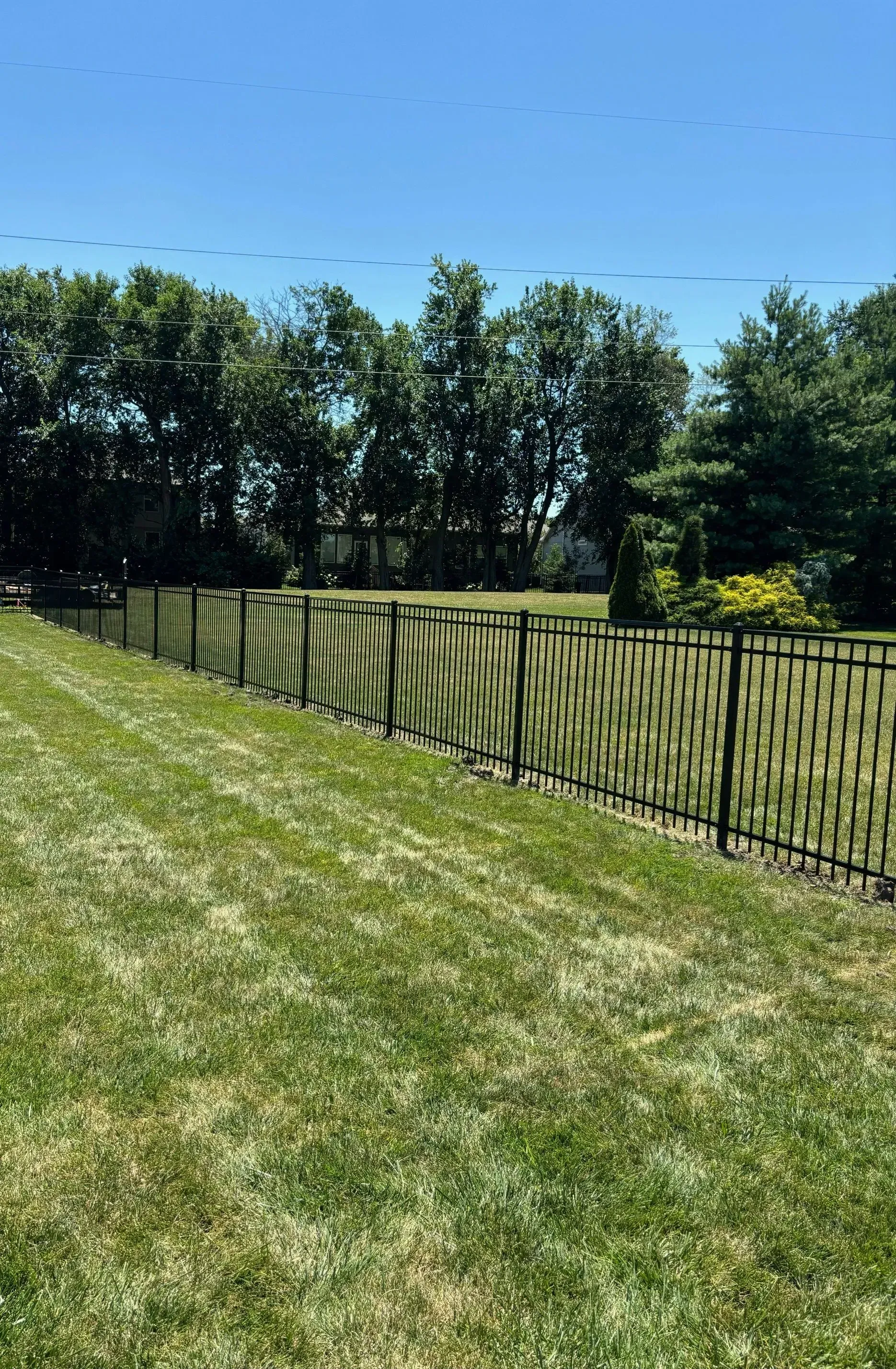
Black ornamental fence on a prairie-view lot in Peculiar, MO by RKC Wood Care Pros
Prairie-View Ornamental · Peculiar

REVIEWS

What Kansas City Homeowners Say About RKC

4.9 ★ · 85 Google reviews

Every review is on our Google Business Profile — read them there, unedited.

Read all 85 reviews on Google

PECULIAR GATE QUESTIONS

Gate Questions Peculiar Homeowners Ask Most

Gate installation in Peculiar comes down to type and sizing, building on a raw new-build lot, and hardware spec. Below are the questions Peculiar homeowners actually ask during the estimate — grouped by topic, each answer specific to fencing a brand-new lot, staining green cedar, and how a gate is built to last here. If your question isn't here, call (913) 286-1091 and ask.

Custom gate install project in Peculiar, MO by RKC Wood Care Pros

Gate Types & Sizing

What's the right gate width for a new-construction driveway in Peculiar?
A typical Peculiar driveway measures 10 to 14 feet across, and 12 is the number we see most for a single leaf — a welded, cross-braced swing gate carries that span without complaint. Once you're past 14 feet we split it into a double-drive, a pair of 7-to-10-foot leaves closing on a center rod, and out here there are two reasons to: one 16-foot slab loads a single hinge with too long a lever arm, and a broad leaf is a lot of sail on a lot that has no tree line to shelter it. Walk gates come in at 3.5 to 4 feet — room for the mower, still light enough for one pair of strap hinges.
Should I add the gate now with the new fence, or later?
Now, with the fence. A gate spec'd and hung as part of the original install ties into the run cleanly — the hinge post is set to the same depth and line as the fence posts, the leaf is built from the same lot of cedar so it weathers to match, and it stains with the fence in one pass. Added later, it means a separate mobilization, a post dug next to a settled line, and a leaf that's often a season off in color from the run. On a brand-new fence, the gate is part of the fence, not an afterthought.
My new cedar is raw and unstained — when does the gate get stained?
The same time the fence does. Fresh cedar needs to dry out — usually a season, sometimes a bit more — before it will take a penetrating stain properly, which is why so many new Peculiar fences sit silver-gray for their first months. We build the gate from the same green cedar so it dries on the same clock, and when the run is ready, the same in-house crew back-brushes the gate and the fence together in one semi-transparent coat. That's how the gate ends up the same color as the line it hangs in, instead of a mismatched patch.
Swing gate or a cantilever slide for a Peculiar driveway?
Most new Peculiar drives are flat, and on flat ground a swing gate is cheaper and simpler, so that's where we start. A cantilever earns its premium in two spots: a drive that climbs toward the house, where a swinging leaf would scrape the rising concrete, or a lot open enough that the leaf turns side-on to the wind halfway through its arc. The cantilever slides clear on rollers instead — never in the wind's path, and riding above the ground so the grit that blows across an unsheltered lot can't silt up a bottom track. Budget $400 to $900 over the equivalent swing.

Peculiar New-Build Specifics

Will a gate actually hold on a brand-new lot that's still settling?
It will if the post is set right, and that's the whole trick out here. The dirt within a few feet of a new Peculiar foundation is disturbed builder backfill that keeps packing down for a couple of winters — a gate post dropped into just that fill sinks and tips as the ground settles. We auger through the loose fill into the undisturbed native clay beneath it and pour the hinge footing a full 36 inches there. The gate ends up standing on ground that isn't moving, so it holds its line while the rest of the new lot finishes settling.
Why do new fences and gates lean so fast in Peculiar?
Wind, and the lack of anything to break it. Peculiar sits at the edge of the metro and takes the southern gusts head-on, and a brand-new subdivision has no mature tree line to slow them — the fence you just installed is the first windbreak the lot has ever had, and the gate is the biggest moving sail on it. Shallow posts lean inside a year under that load. We stop it by upsizing and over-deepening the windward hinge post, bracing the leaf on the diagonal, and fitting a hold-back — so the gate is built for the wind the open lot actually gets today, not the sheltered one it'll be in fifteen years.
How long does gate installation take in Peculiar?
Walk gates run 1 day on site and 1 to 2 weeks from estimate approval, including concrete cure and hardware lead time. Single-drive gates run 1 to 2 days on site and 2 to 3 weeks of lead time for the welded leaf. Double-drive gates run 2 days on site and 3 to 4 weeks. A cantilever slide adds about a week for the hardware. Spring is the busy stretch here as the building season ramps up and new owners want the yard secured the week the sod goes down, so lead times run a touch longer then.

Pricing & Hardware

Why are welded gate frames worth more than bolted?
The extra cost is all in the shop: a welded frame gets every corner cut, clamped, tacked, and run out with a finishing bead, and what that labor buys is a leaf that never loses its square — exactly what a new lot tests, since the ground beds down and the green cedar shrinks across that first year. A bolted frame has slop in every joint, works itself loose through that same settling, and drops at the latch. Figure welding runs 15 to 25% more on the frame and heads off a sag call you'd otherwise pay for later. We weld every corner, every gate — no exceptions in Peculiar.
Cedar, vinyl, or aluminum for a new Peculiar gate?
It comes down to the finish you want to keep up. Cedar is the dominant look on new Peculiar builds — warm, matches the privacy run, and it takes a stain, so plan on a coat every couple of seasons. Vinyl is growing fast for the crisp look with no stain schedule ever, but hung as a gate it needs a welded steel or aluminum-insert spine underneath or it bows — so we build the core and clad it. Black aluminum reads modern and suits the prairie-view lots that want their sightline kept and nothing to maintain. Pick any of the three and what's under the skin doesn't change: the welded corners, the post driven past the fill to 36 inches, and hardware sized well over the leaf.
What's the warranty on gate hardware?
The moving parts — hinges, latches, drop rods, cane bolts — ride their manufacturer's coverage, which usually runs 10 years on the ball-bearing hinges and 5 to 10 on strap hinges and latches. The frame itself is on our own workmanship warranty: rack out of square, drop at the latch corner, or pop a weld under normal use and we're back to make it right. On top of that, every install carries the free 30-day return trip once the fresh footings have settled — we true up the latch, take out any hinge drift, and re-set the self-close spring if your gate runs one.

OTHER PECULIAR FENCE SERVICES

More Fence Services Available in Peculiar

RKC installs and repairs every type of fence — wood, vinyl, chain link, ornamental iron, aluminum, and commercial security — plus custom gates and in-house staining. Every service below stays in Peculiar, with local pricing and recent project photos specific to your city. If you're fencing a new lot, matching a gate to a fresh run, or waiting to stain green cedar, here's where to go next.

Ready when you are

Get a free estimate — we usually respond the same day.

Call (913) 286-1091