Skip to content
Fence Staining & Sealing in Peculiar, MO — How Often a Coat Really Lasts

Fence Staining & Sealing in Peculiar, MO — How Often a Coat Really Lasts

On Peculiar's open, treeless exurban lots the big staining question isn't which color — it's how often. Full prairie sun and constant wind run every finish's re-coat interval shorter than the textbook figure: a clear sealer's done in a year, a semi-transparent favors two. RKC Wood Care Pros sets the cadence honestly to the exposed lot, weights deeper pigment onto the sun-and-wind faces to stretch it, and logs your next date so the fence gets re-coated while it's still holding color — never after the sun has taken it to gray. A finish that fades instead of peeling, on a schedule that fits your lot. 4.9 stars from 85 Google reviews. Call (913) 286-1091 for a free walk and quote.

★★★★★
4.9
from 85 reviews
Licensed
& Insured · KS + MO
400+
fences installed
A+ BBB Rated Kansas City Fence Contractor Cadence Set to the Exposed Lot Next Date Logged & Reminded
View stain options in our catalog ↓

WHY PECULIAR HOMEOWNERS STAIN WITH RKC

A Cadence Set to the Open Lot

On Peculiar's treeless exurban lots the staining question that matters most is how often. Full prairie sun and constant wind run every finish's re-coat interval shorter than the textbook number — so the schedule, not just the color, is what we get right. We set the cadence honestly to your exposed lot, weight deeper pigment onto the sun-and-wind faces to stretch it, and log the next date so the fence is re-coated while it's still holding color. A penetrating finish that fades instead of peeling, on a schedule you can actually keep.

1

The interval runs shorter out here

A semi-transparent that could last three years in a shaded suburb favors two on an open Peculiar lot; a clear sealer that might go 18 months is done in about a year. With no trees to break the sun, the fence takes full UV all day, so we quote the exposed-lot cadence — the real number for your lot, not a generic one.
2

Deeper pigment stretches it

The main lever on a re-coat interval is pigment: more of it blocks more UV and holds color longer against the sun-and-wind combination. We carry extra pigment onto the west and south faces that take the worst of the treeless exposure, so the whole run reaches its next coat at one tone instead of the windward side graying ahead and pulling the schedule forward.

3

A longer-cadence option if you want it

If you'd rather re-coat less often, a semi-solid holds three years or more where a semi-transparent runs two — a longer cadence in exchange for a little less grain showing. On a lot where the sun sets the schedule, a lot of owners take that trade. We lay out what interval each finish buys so you pick the one you want to live with.

4

We track the date, not you

On an open lot the cadence is short and easy to lose track of — which is how fences drift to gray. So we log your exact next date to the exposed-lot schedule and reach out before it's due. You get the fence re-coated while it's still holding color and never have to remember the interval yourself. The finish stays ahead of the prairie sun instead of chasing it.

PECULIAR LOCAL CONDITIONS

Why Staining in Peculiar Comes Down to Cadence

Three local factors shape stain work in Peculiar: the treeless lots that run every re-coat interval shorter, the constant prairie wind that speeds the clock further, and a value market where the cadence is part of choosing the material itself. This is open, exurban country where a fence takes full exposure with no shade. Same crew, same standard: read the exposure, set the honest cadence, weight pigment onto the sun faces to stretch it, and log the next date so the schedule holds.

1

Treeless lots run every interval shorter

Peculiar is exurban, open-prairie country — big lots with few mature trees to break the sun. That exposure is the single thing that sets the re-coat cadence here, and it runs every interval shorter than the textbook figure. A clear sealer that might last 18 months in a shaded yard is done in about a year on an open Peculiar lot; a semi-transparent that could go three years in the suburbs favors two out here. So when we tell you a re-coat interval, it's the exposed-lot number, not a generic one — because a fence with no shade takes the full UV all day, every day, and the schedule has to reflect that or the coat gives out before you expect it.

2

Constant prairie wind speeds the clock

The sun isn't the whole story. The constant wind that sweeps across Peculiar's open ground dries and weathers the surface of a fence faster than still air would, which shortens the re-coat cadence further and favors the low end of every interval. It also drives the case for deeper pigment: more pigment blocks more UV and holds longer against the wind-and-sun combination, which is one of the two real levers you have on stretching the schedule. The other is simply staying on it. A fence coated on time, with pigment weighted to the exposed faces, reaches its next coat evenly; one left to run long grays on the windward side first.

3

Cadence is part of the material decision

Peculiar is a practical, value market where cedar and composite both turn up, and the re-coat cadence is part of choosing between them. Cedar is a schedule you keep — a coat every couple of years on these exposed lots, which is manageable and keeps a warm wood look. Composite is the opposite trade: never a re-coat, but never a re-color either, and a higher cost up front. Neither is wrong; they're different cadences. We lay out the honest interval for each finish and material on an open lot, so you can pick the schedule you actually want to live with rather than being surprised by how often a bare or lightly-coated cedar fence needs attention out here.

The Peculiar fences we've coated and brought back run across the open, exurban lots and the newer subdivisions carved from the prairie that give the town its wide-sky, treeless character — cedar dog-ear, shadowbox, and privacy runs taking the full sun and wind, and silvered fences that overran their interval. Each one gets its exposure read and its cadence set up front, the coat sprayed and back-brushed with deeper pigment on the windward faces, the next date logged, and the posts checked where the open-lot wind can lean them. A fence another company built earns the identical treatment — an even coat and an honest schedule have only ever cared how exposed the lot is.

HOW OFTEN TO RE-COAT

The Re-Coat Interval Table — Exposed Lot vs Sheltered

On a treeless Peculiar lot the biggest staining variable isn't the color — it's how often each finish needs re-coating. The exposure runs every interval shorter than the textbook figure. Here's the cadence table we work from: each finish, its re-coat interval on an exposed Peculiar lot versus a sheltered suburban one, the visible tell that it's due, and what happens if you wait too long. The through-line — the open-prairie sun and wind shorten every schedule, and deeper pigment plus staying on it are the two levers that stretch it back.

Finish Interval on an exposed lot On a sheltered lot The tell it's due If you wait too long
Clear sealer or light toner About 1 year 18 months or so The whole run reads dull and starts silvering, worst on the west face It grays fast, so a missed year usually means a brighten before the next coat
Semi-transparent About 2 years, favor the shorter end A full 2–3 years Color noticeably lighter on the sun sides, water no longer beading on the boards Push it much past two years on an open lot and the sun side is graying while the rest holds
Semi-solid About 3 years 3–4 years The color has flattened and thinned but the surface is still sound The heavier pigment buys time, so a slight overrun is more forgiving than a sheer finish
Solid / opaque 4–5 years 5 years or more The film starts to wear thin or check at the edges rather than fade If it ever traps moisture it can peel, so we watch the edges rather than the color
Composite (no wood) Never — it doesn't take stain Never A wash when it looks dull, not a coat The trade-off for never re-coating is you can't re-color it either
The exposure rule Every interval runs shorter on a treeless lot Shade and windbreaks stretch them all Peculiar's open lots always land on the shorter end of each range Deeper pigment and staying on schedule are the two levers that stretch the cadence

The line that runs down the table: on a treeless lot every finish's re-coat interval runs shorter, so the honest cadence — not a generic figure — is what keeps the fence ahead of the prairie sun. Want us to set the schedule for your lot? A free staining walk reads the exposure and gives you the real interval, or start with a new Peculiar wood fence from the same crew that will lay that first coat and set the cadence.

STAIN SERVICES

Coats on a Cadence — Every Peculiar Scenario

The scope your Peculiar fence lands in comes straight out of the exposure read — a re-stain on the ~2-year exposed-lot cadence, a longer-holding semi-solid for fewer re-coats, a cure-timed first coat that starts the clock, or a brighten-and-restore on a run that went too long. Below are the four we run across Peculiar, what each one suits, and honest per-foot numbers. Colors are yours to choose; what stays fixed is that we set an honest cadence for your lot and put the next date on the invoice — a penetrating coat sprayed and back-brushed, all by our own crew.

Cedar Re-Stain by RKC Wood Care Pros in Peculiar, MO

Cedar Re-Stain

The exposed-lot 2-year cadence

On Peculiar's open, treeless lots a cedar fence wants a re-coat about every two years — and out here we lean to the shorter end, because full sun and constant prairie wind weather a finish faster than a shaded suburban yard. Staying on that cadence is what keeps the fence reading like cedar instead of drifting to silver on the sun sides. On the day it's a soft wash to lift oxidation, a meter check for the dry window, then the matched color driven into both faces with deeper pigment on the west and south runs to stretch the interval. We log your product and color and put the next date on the invoice.

  • Price: $4–8 / LF · typically $600–1,200 per 150 LF
  • Typical use: Cedar dog-ear, board-on-board, and shadowbox runs on their exposed-lot cadence
New-Cedar First Coat by RKC Wood Care Pros in Peculiar, MO

New-Cedar First Coat

Starts the clock · timed to the cure

The first coat is what starts a fence's re-coat clock, so on an exposed Peculiar lot it matters more than most. Fresh cedar needs about a month to cure before a penetrating finish keys into the grain instead of beading off; get it on then and the fence heads into its first hard, treeless summer already protected, which sets a longer, cleaner cadence from the start. Leave a new fence bare through that first open-lot summer and it grays before it's had a proper first coat, which throws the whole schedule off. We time it to the cure, seal both faces, and log the next date. Often folded into the install.

  • Price: $3–6 / LF · typically $450–900 per 150 LF
  • Typical use: Fresh cedar on new exurban lots, the opening coat after any RKC install, sets the cadence
Longer-Cadence Semi-Solid Coat by RKC Wood Care Pros in Peculiar, MO

Longer-Cadence Semi-Solid Coat

Fewer re-coats · heavier pigment for the open sun

For owners who'd rather re-coat less often on an exposed lot, a semi-solid is the move. Its heavier pigment blocks more of the open-prairie sun, so it holds three years or more where a semi-transparent runs two — a longer cadence in exchange for a little less grain showing through. On a treeless Peculiar lot where the sun sets the schedule, that trade is often worth it. We lay it the same way — sprayed and back-brushed into both faces — with the extra pigment weighted onto the west and south sides that take the worst exposure, and log the longer next date so you're not guessing when it's due.

  • Price: $5–9 / LF · typically $750–1,350 per 150 LF
  • Typical use: Sun-hammered open lots, owners who want the fewest re-coats, longer-cadence finishes
Gray-Fence Restoration by RKC Wood Care Pros in Peculiar, MO

Gray-Fence Restoration

For the run that went too long between coats

On an exposed lot a fence that missed its re-coat window grays fast — the open sun and wind do it quicker here than in a sheltered yard. That gray is usually a thin skin over sound wood, so it's rarely too late. We strip any failed finish, brighten the run to one tone with an oxalic treatment, wash and hard-dry, then lay a fresh coat and put you back on a cadence that fits the exposure. Because the treeless-lot wind can lean a shallow-set post, we probe the posts first — there's no return on coating a run whose footing has shifted in the open ground.

  • Price: $6–12 / LF · typically $900–1,800 per 150 LF
  • Typical use: Silvered cedar that overran its interval, homes just changed hands, fences never re-coated
Cedar fence stain pricing and re-coat cadence — Peculiar, MO — RKC Wood Care Pros

PECULIAR STAIN PRICING

What Fence Staining Costs in Peculiar

What a Peculiar job costs rides on the finish and the prep — a routine re-stain on its cadence is one number, a longer-holding semi-solid or a run that overran its interval and needs stripping runs more. The value in staying on schedule is skipping the restoration bracket. Each quote folds in the exposure read, the wash, the brighten where needed, the metered dry window, the matched penetrating family with deeper pigment on the sun-and-wind faces, the spray-and-back-brush pass by our own two-person crew, and a written next date on the exposed-lot cadence. The three setups we price most often for Peculiar homes are below.

Cedar Re-Stain

$4–8 / LF

wash + penetrating stain

The ~2-year exposed-lot coat — soft wash, meter check, matched color into both faces with deeper pigment on the sun sides, next date in writing. Most 150 LF Peculiar cedar runs land at $600–1,200.

Longer-Cadence Semi-Solid

$5–9 / LF

heavier-pigment 3-year coat

The fewer-re-coats option — more pigment, more sun block, three years or more between coats on an open lot. A 150 LF Peculiar run generally lands at $750–1,350.

Gray-Fence Restoration

$6–12 / LF

strip · brighten · stain

Failed finish stripped, the run brightened to one tone, washes, an open-lot post check, then a coat that puts you back on a cadence. A run that overran its interval is usually $900–1,800.

A restoration number comes only after an on-site look at how far the finish has run past its interval and whether the open-lot wind has leaned any posts — that check is what stops you paying restoration rates on a fence that only wanted a routine on-cadence coat. Every Peculiar estimate is free, written, and itemized — call (913) 286-1091 or set up a walk. While the crew's on site they can flag any Peculiar fence repair — a wind-leaned post — that should be handled before a coat protects the run — one trip, same hands.

OUR STAIN PROCESS

How a Peculiar Stain Job Comes Together

Four steps from the phone call to the final walk. Most Peculiar stain jobs span 2 to 4 days — and reading the exposure to set the cadence, done first, is what the whole schedule rides on. The coat itself is usually a single day on site for a standard run. The rest of the clock is the exposure read, the wash-brighten cycle, and the metered dry window the open lots and wind complicate. Here's what each step looks like on a Peculiar fence.

1

Walk it, read the exposure, set the cadence

Step one on a Peculiar fence is reading how exposed the lot is, because that sets the re-coat cadence more than anything else. Josh or a lead measures the footage, identifies the wood, takes a moisture reading, notes how open the lot is to the sun and wind, and on older fences probes the posts the wind can lean. Then we talk cadence honestly — how often your finish will need re-coating on a treeless lot, and whether a longer-holding semi-solid fits how often you want to think about it. The estimate's free and itemized, sampled on a hidden board, and it comes with a straight answer on the schedule you're signing up for.

2

Wash, brighten, and meter the dry window

Before a coat goes on, the wood has to be clean and dry. A run due on schedule gets a soft wash to lift oxidation and any mildew; a run that overran its interval and silvered takes an oxalic brightener back to one tone; any failed film gets stripped. Then the meter goes on the wood, because Peculiar's open lots and constant wind can leave a board reading dry on the surface while the core still holds water — coat it then and the finish fails early, which throws off the cadence you're trying to set. We wait for a true dry reading through the board so the coat keys in and holds its full interval.

3

Lay the coat, weight the sun side to stretch it

Surface clean and dry, we lay the matched finish sprayed and back-brushed into both faces so it penetrates rather than sits on top. The move that stretches the cadence on an exposed lot is pigment: we carry more onto the west and south faces that take the worst of the treeless sun and wind, since deeper pigment blocks more UV and holds color longer, so the whole run reaches its next coat at one tone instead of the windward side graying ahead. If you've chosen a semi-solid for a longer interval, that heavier pigment is exactly what buys the extra year. Every choice here maps to how long the coat will last.

4

Walk it together, then log the next date

Last is your eyes alongside ours — a full pass catching any board that reads thin or skipped, touched in before we sign off. Then the finish lands on your file: the date, the wood, the product, the exact color, the footage, and the next re-coat date — set to the exposed-lot cadence for whatever finish you chose, two years for a semi-transparent, three-plus for a semi-solid. That date is the whole point on an open lot, because the cadence is short and easy to lose track of. The reminder comes from us before it's due, so the fence gets re-coated while it's still holding color rather than after the prairie sun has taken it to gray.

RECENT PECULIAR STAIN JOBS

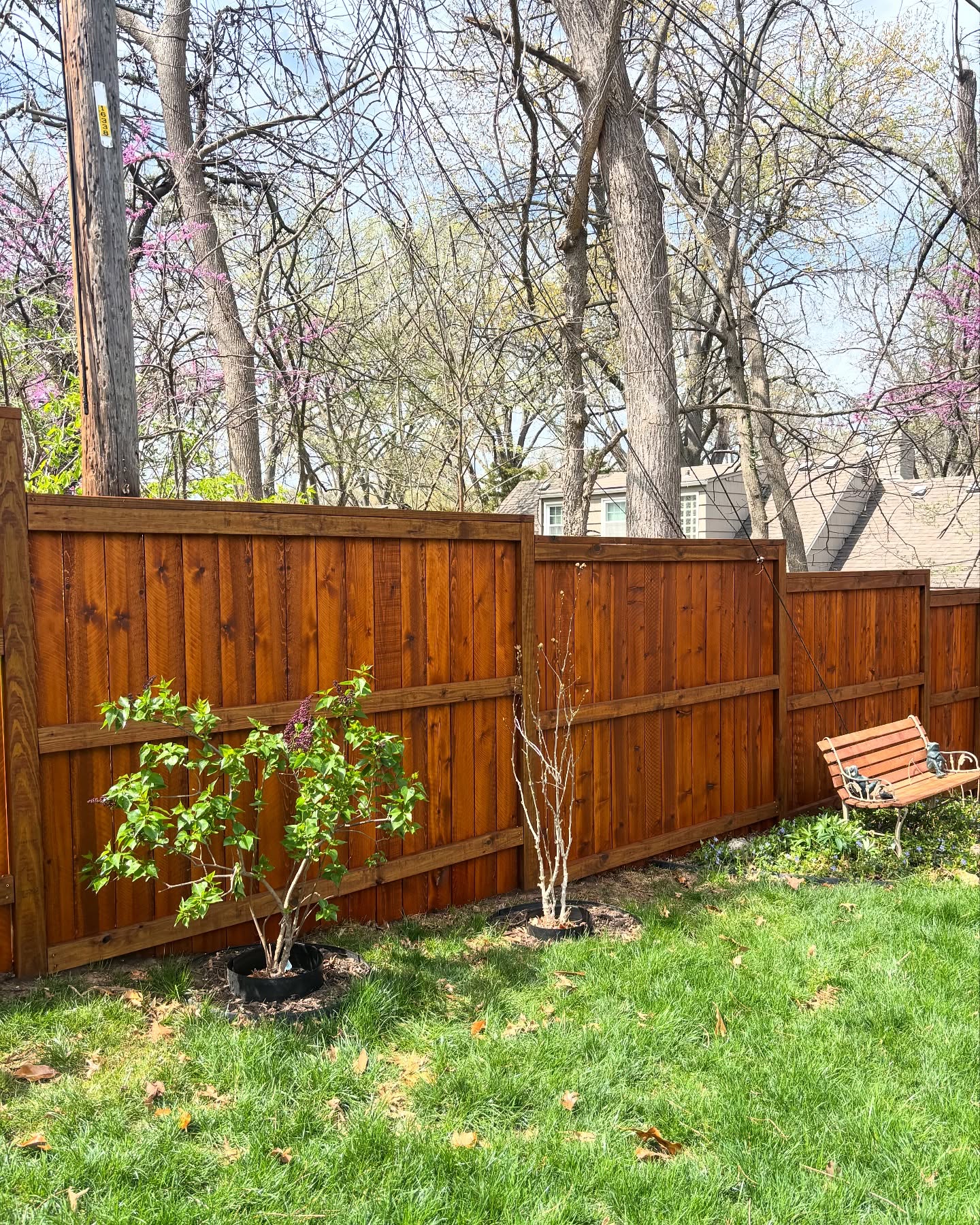
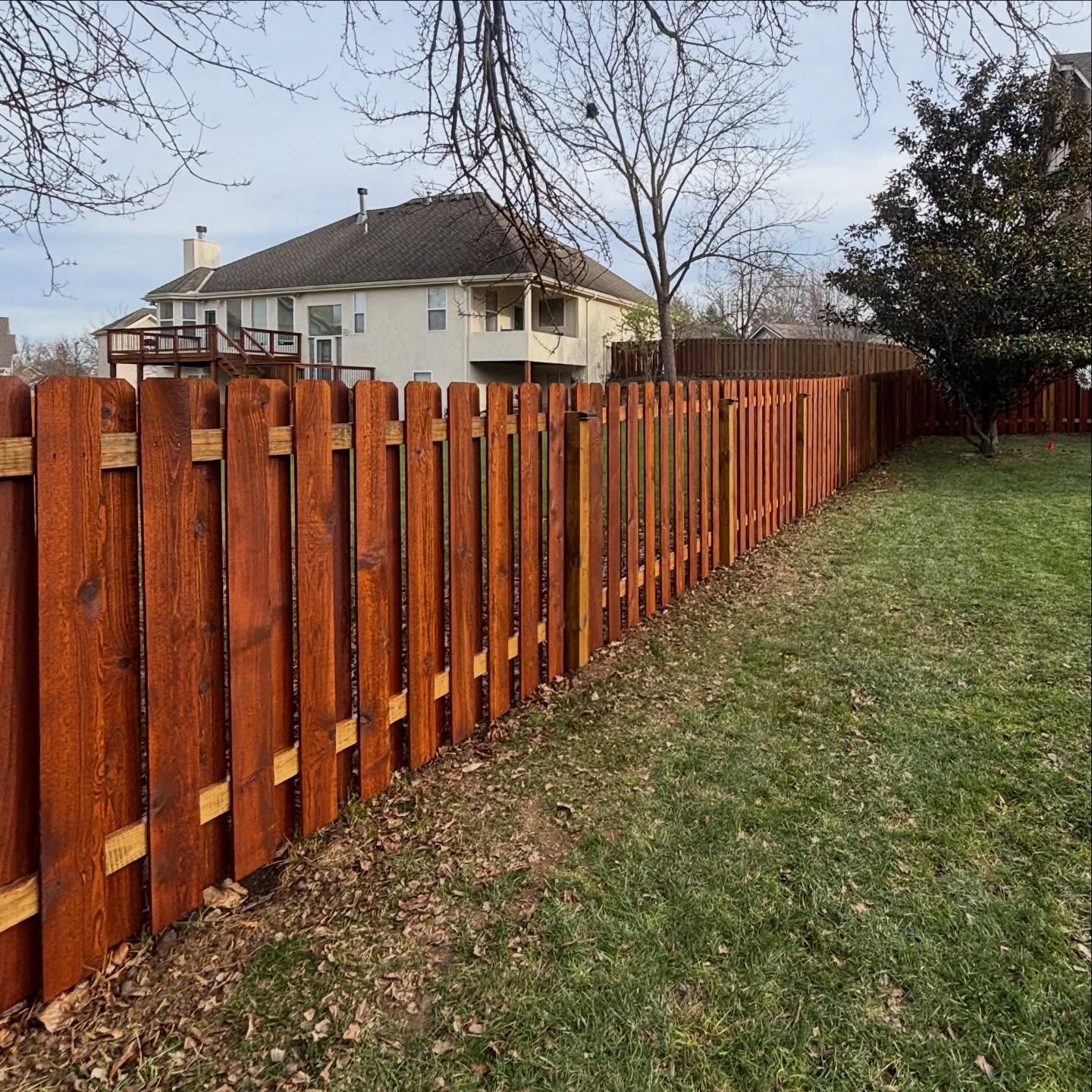
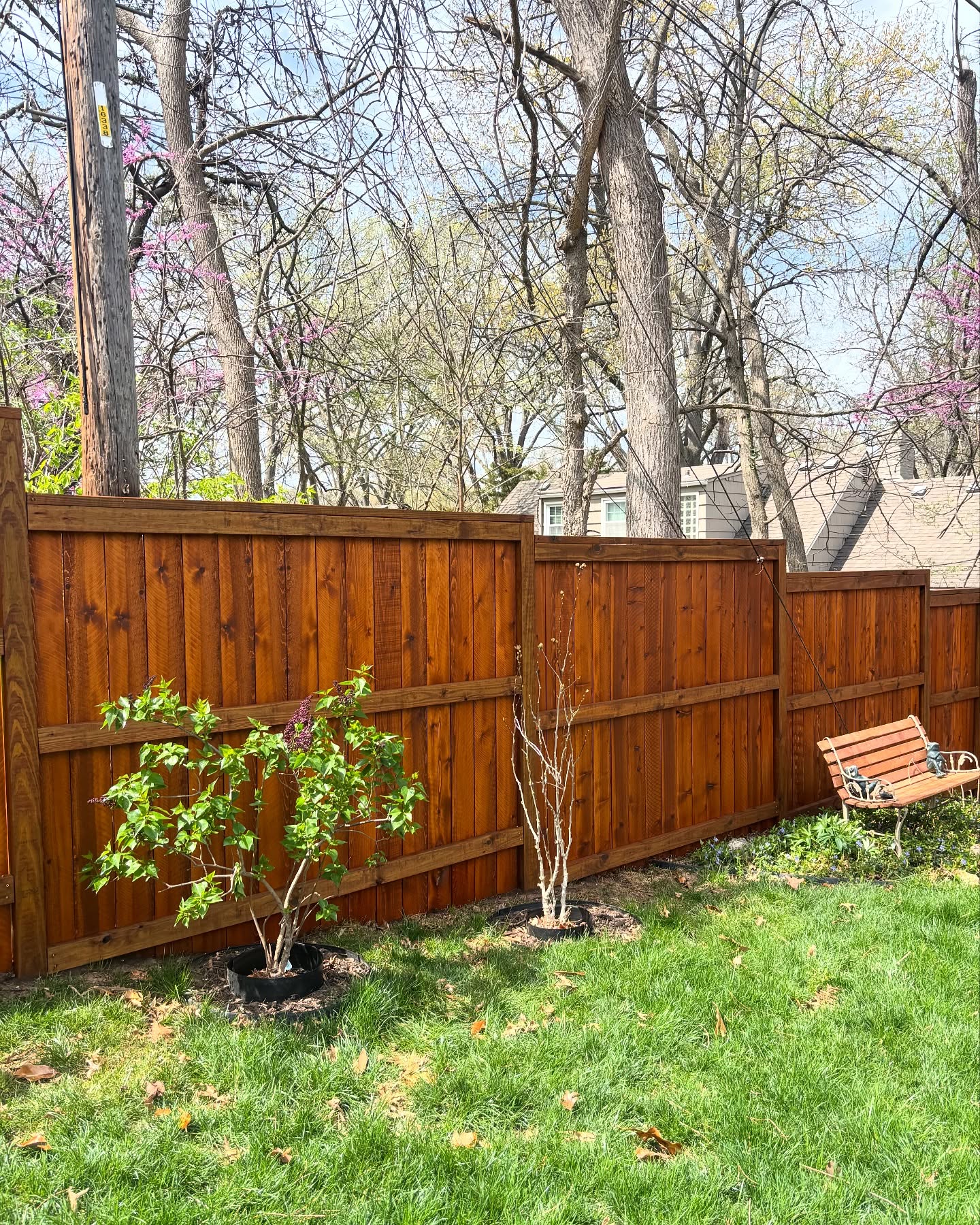
Walnut stain finish on a cedar fence on an open Peculiar, MO lot by RKC Wood Care Pros
Cedar Re-Stain · Peculiar
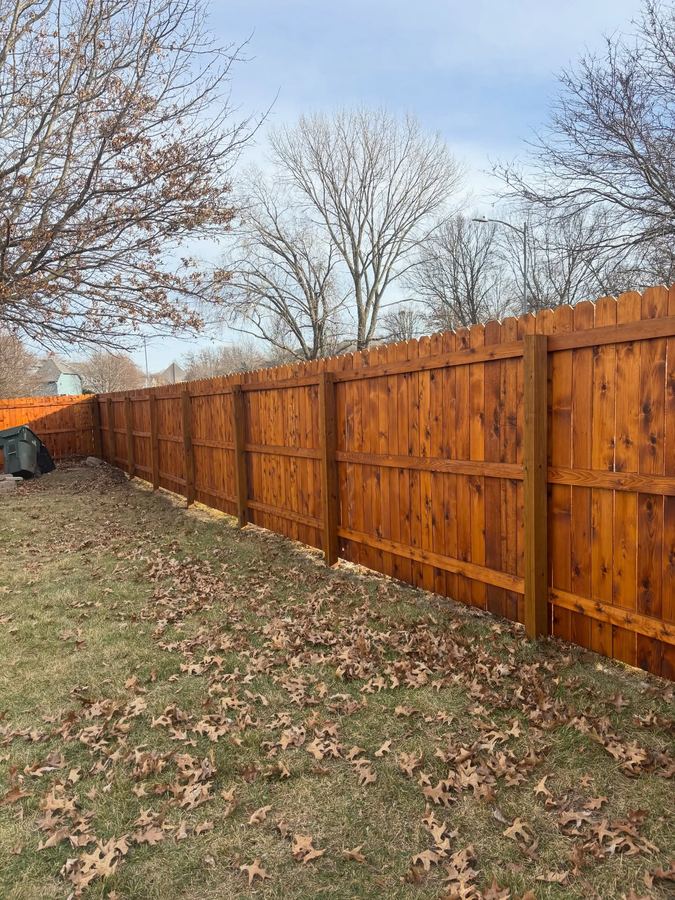
Golden finish on a spaced-picket cedar fence in Peculiar, MO
Picket Coat · Peculiar
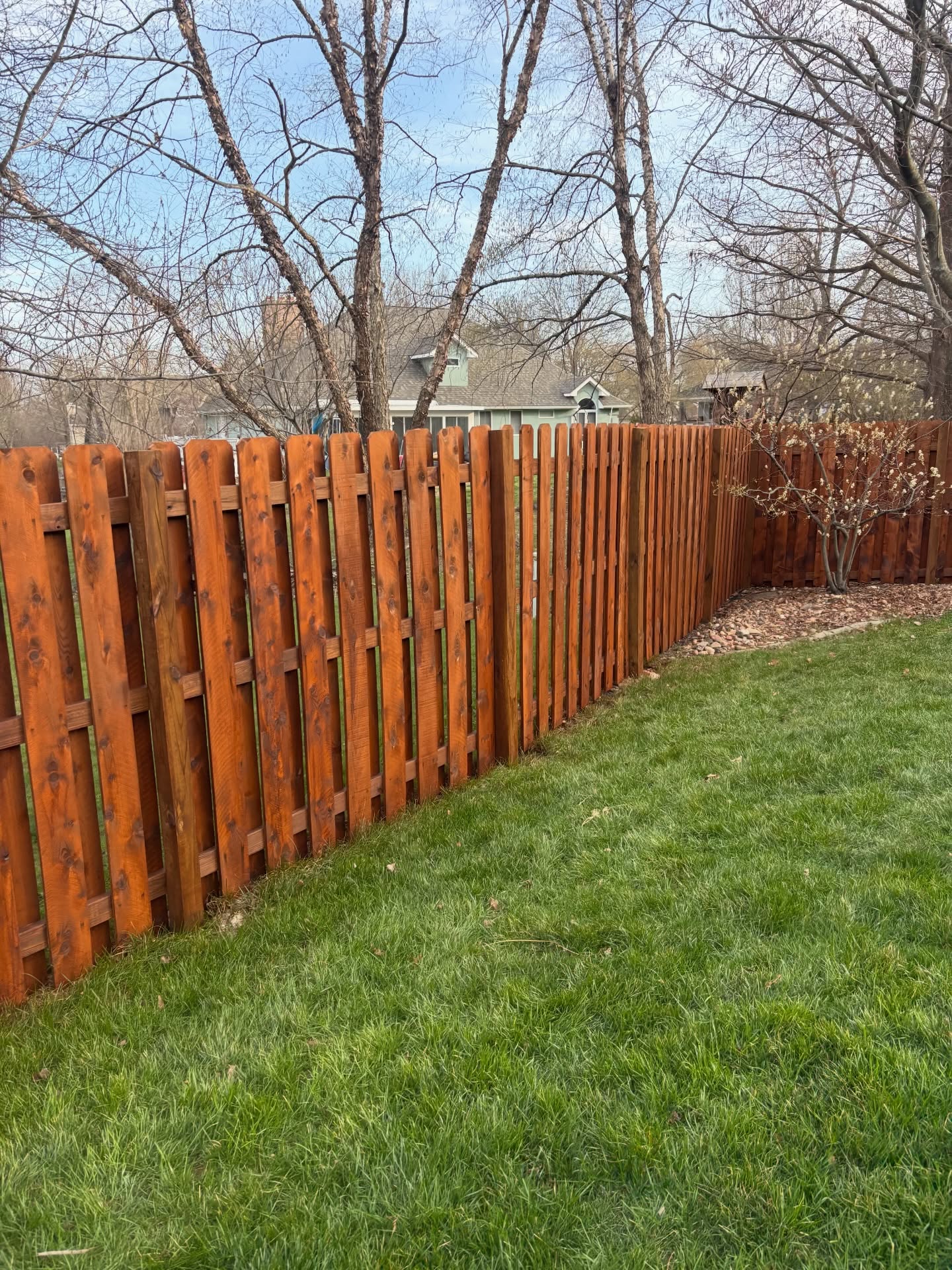
Completed fence stain project on an exposed Peculiar, MO lot
On-Cadence Coat · Peculiar
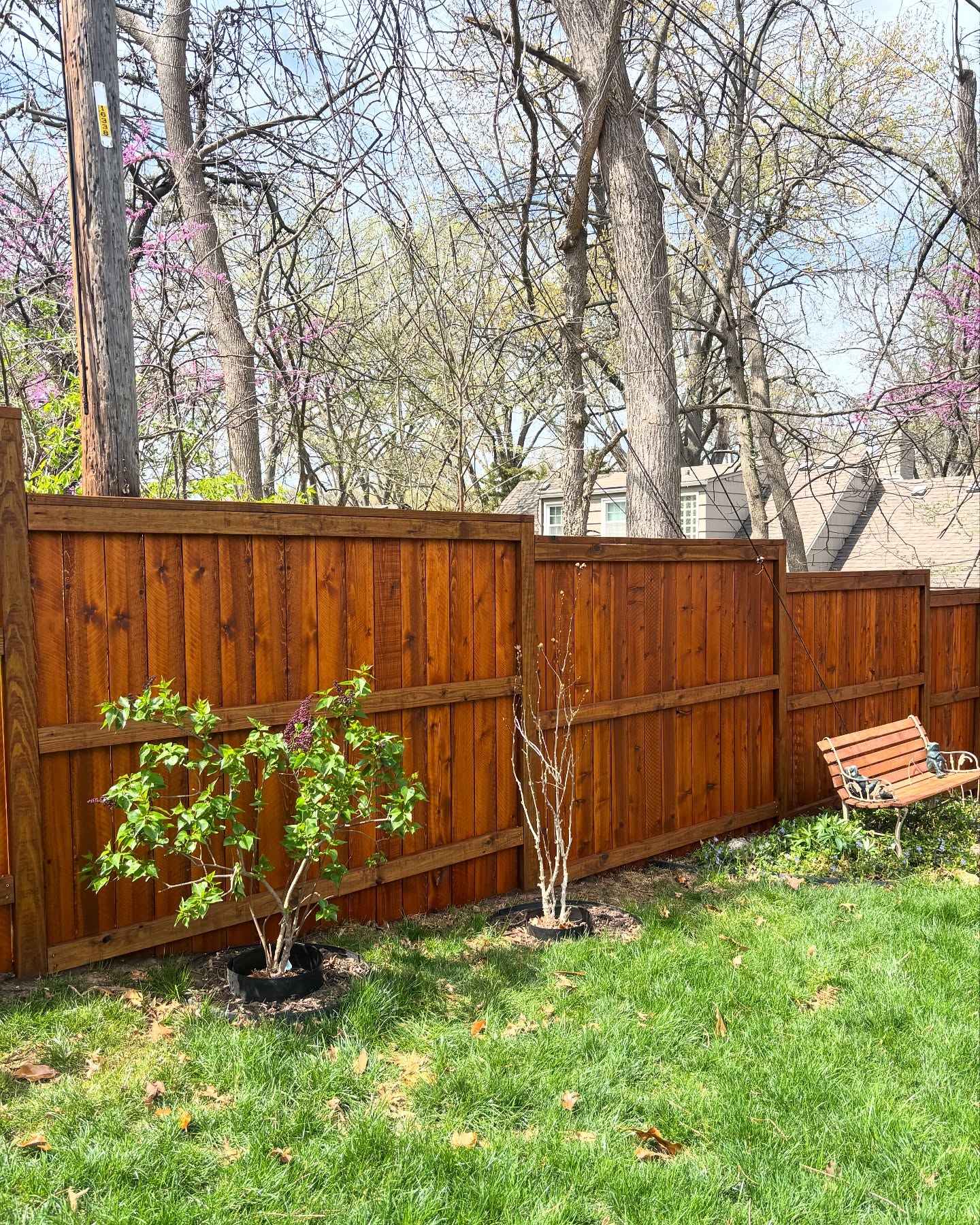
Freshly stained cedar fence holding color on a treeless Peculiar, MO lot
Open-Lot Run · Peculiar

REVIEWS

What Kansas City Homeowners Say About RKC

4.9 ★ · 85 Google reviews

Every review is on our Google Business Profile — read them there, unedited.

Read all 85 reviews on Google

PECULIAR STAIN QUESTIONS

Stain Questions Peculiar Homeowners Ask Most

Three questions decide most Peculiar stain jobs: how often to re-coat on an exposed lot, what the sun and wind and material choice do to that cadence, and how to time new or gray cedar. These are the ones Peculiar homeowners raise at the estimate — sorted by topic, each answer tied to the re-coat interval table, the open-lot exposure, and the honest schedule. Don't see yours? Call (913) 286-1091 and ask.

Peculiar, MO fence staining by RKC Wood Care Pros

How Often to Re-Coat

How often does a fence need re-staining on an open Peculiar lot?
Sooner than the textbook figures, because the exposure sets the cadence. On a treeless Peculiar lot a semi-transparent cedar coat runs about every two years and favors the shorter end; a clear sealer or light toner is closer to a year; a semi-solid holds three or so; a solid four to five. Each of those is shorter than it would be in a shaded suburban yard, because a fence with no windbreak or tree cover takes the full sun and wind all day. The re-coat interval table above lays out each finish's cadence on an exposed lot versus a sheltered one. Whatever finish you're on, we log the next date to the exposed-lot cadence and remind you before it's due.
Is there a finish that lets me re-coat less often out here?
Yes — a semi-solid. Its heavier pigment blocks more of the open-prairie sun, so it holds about three years or more where a semi-transparent runs two on an exposed lot. The trade is that a bit less wood grain shows through the heavier pigment. On a treeless Peculiar lot where the sun sets the schedule, a lot of owners take that trade to cut down how often they re-coat. If you want to go longer still, a solid opaque stretches to four or five years, though it can peel if it ever traps moisture, so we watch its edges rather than its color. We'll walk you through the cadence each finish buys so you can pick the schedule you want.
How do I know when my fence is actually due for a coat?
Watch the sun sides and the water. The first tell is color — the west and south faces will read noticeably lighter than the shaded sides as the finish thins, since those take the worst of the treeless exposure. The second is water: on a fence that's still protected, water beads and runs off the boards; when it stops beading and soaks in instead, the finish is spent and it's due. On a solid finish, watch the edges for thinning or checking rather than the color. Each finish in the table above has its own tell. That said, you don't have to track it yourself — we log your next date to the exposed-lot cadence and reach out before the fence gets there.

Sun, Wind & Material

My lot has no trees and the wind never stops — does that really shorten the schedule?
It does, noticeably. Two things drive a re-coat cadence: UV from the sun and weathering from the wind, and a treeless Peculiar lot maxes out both. With no tree cover, the fence takes full UV all day, and the constant open-prairie wind dries and weathers the surface faster than still air, so every finish's interval runs shorter than it would in a sheltered yard. The two levers that push back are deeper pigment — more UV block, longer hold — and simply staying on schedule so the coat is renewed before the exposure spends it. We weight pigment onto the windward sun faces and set your re-coat date to the exposed-lot cadence, which is how we keep the open lot from grinding through coats faster than you'd like.
Would composite mean I never have to re-coat again?
It would — that's composite's whole trade, and it's a fair one to weigh on an exposed lot where cedar's cadence is short. Composite never needs staining; a wash when it looks dull is all it asks. The catch is the flip side: you also can't ever re-color it, it costs more up front, and you give up the warm wood look. Cedar is the opposite — a coat every couple of years out here, but a fence you can refresh, re-tone, and restore for decades. Neither is wrong; they're just different cadences and different looks. We'll give you the honest re-coat interval for cedar on your specific lot so you can decide whether that schedule or composite's no-schedule suits you better.

New Cedar & Restoration

I just had a new cedar fence built — when's the first coat, and what's the schedule after?
Give new cedar about 30 days to cure first, so a penetrating finish keys into the grain instead of beading off. Getting that first coat on before the fence's first hard, treeless summer matters on an open Peculiar lot — it sets a longer, cleaner cadence from the start, where a fence left bare through that first summer grays early and throws the whole schedule off. After the first coat, the cadence on an exposed lot is roughly every two years for a semi-transparent, longer for a semi-solid. We time the first coat to the cure, log the next date, and remind you when it's due. On our own installs the first coat is often folded into the price.
My fence went a few years without a coat and it's gray — did I miss the window?
Almost never for good. On an exposed lot a fence grays fast when it overruns its re-coat interval, but that gray is usually a thin weathered skin over sound wood, not a spent fence. We strip any failed finish, brighten the run back to one tone with an oxalic treatment, wash and hard-dry it, then lay a fresh coat and put you back on a cadence that fits the exposure so it doesn't get there again. The one thing we check first is the posts — the open-lot wind can lean a shallow-set one, and there's no return on coating a run whose footing has shifted. Where the wood and posts are sound, the restored fence is right back on schedule.

OTHER PECULIAR FENCE SERVICES

More Fence Services Available in Peculiar

Each link below keeps you in Peculiar — its own page, with pricing, conditions, and recent job photos tied to this city rather than the metro at large. Weighing a fresh install, a repair, a gate, or one specific material alongside the staining? Here's where each of those picks up.

Ready when you are

Get a free estimate — we usually respond the same day.

Call (913) 286-1091