Skip to content
Gate Installation in Grain Valley, MO — Solid Against the Noise, Braced Against the Wind

Gate Installation in Grain Valley, MO — Solid Against the Noise, Braced Against the Wind

RKC Wood Care Pros builds gates across Grain Valley from one local crew — walk gates, single-drive, double-drive, and sliding gates, built for a first-fence family town on the windy edge of the metro. A lot of gates here go up tall and solid on purpose — to knock down Valley Speedway and I-70 noise the way the privacy run beside them does. But that same solid leaf is the biggest sail in a prairie wind that leans shallow-set gates within three years, so we build for both at once: a welded frame braced to the windward corner, a hinge post a true 36 inches deep and bell-bottomed where the gust loads it, and hardware sized over the leaf. 4.9 stars from 85 Google reviews. Tell us the opening and we'll walk it the same week.

★★★★★
4.9
from 85 reviews
Licensed
& Insured · KS + MO
400+
fences installed
A+ BBB Rated 400+ Fences Installed Since 2021 Welded Gate Frames · Galvanized Hardware Free On-Site Estimates
See gate styles in our catalog ↓

WHY GRAIN VALLEY BUILDS GATES SOLID AND DEEP

A Gate That Blocks the Noise and Beats the Wind

In a first-fence town on the metro's windy edge, the two things that decide a Grain Valley gate are how well it blocks sound and how well it stands up to the gust. A lot of these gates go up tall and solid to knock down Speedway and highway noise — and that same solid leaf is the worst sail in a prairie wind. So the four things worth caring about here aren't flashy: mass to block the noise, a windward footing and brace so the sail can't lean, a first-fence walk gate the dog can't beat, and a double-drive wide enough for the boat. Get those right and the gate stays quiet and plumb.

1

A solid gate that actually knocks the noise down

If your lot backs Valley Speedway or catches the I-70 drone, a tall, gap-free cedar gate does the same job as the privacy run beside it — mass and no gaps to block the sound. We build the leaf full-height and tight so it dampens instead of whistling, and match it to the fence so the whole line reads as one barrier, not a fence with a hole cut for the gate.
2

A gate that stands up to the edge-of-metro wind

Grain Valley takes the full prairie gust, and the local gate failure is a shallow-set leaf leaning inside three years. We build against exactly that: a welded frame braced to the windward corner, a hinge post a true 36 inches deep and bell-bottomed on the side the wind loads, and hardware sized over the leaf. The taller and more solid the gate, the harder we set it.

3

A first-fence walk gate the dog can't beat

For a first-time homeowner fencing a new yard for a new dog, the walk gate is the whole point. Self-latching hardware and proper hinge tension close it behind you every time, so the dog stays in and you stop walking back to check. Built into the cedar run, not bolted beside it — the detail most walk gates we get called to fix never had.

4

A double-drive wide enough for the boat and the trailer

Fourteen to twenty feet of clear opening for the boat, the camper, or whatever the growing family hauls home next. Two leaves meet at a center drop rod, both posts go 36 inches into concrete, both leaves carry a diagonal brace. Splitting the span also tames a wide solid leaf in the wind — two shorter sails instead of one long lever.

WHERE NOISE MEETS WIND

Why a Solid Gate on the Metro's Edge Is Built Differently

The gate people want here — tall, solid, quiet — is exactly the gate the wind wants to lean, and that tension drives every build decision. Grain Valley sits on the open edge of the metro, and the local gate failure is blunt: a shallow-set leaf leans within three years, worse on the new, still-treeless subdivision lots. Add a full-height solid panel built to block Speedway and highway noise — a sail by design — and three decisions separate a gate that still stands quiet and plumb at year ten from one that drifts by year two. Built for Every Storm comes down to these three on every RKC gate in Grain Valley.

1

The solid noise-barrier leaf is also the biggest wind sail

The reason a lot of Grain Valley gates get built tall and solid is sound — a full-height, gap-free cedar leaf that knocks down Valley Speedway and I-70 noise the way the privacy run beside it does. But that same solid panel is the worst thing you can hang in a prairie wind: it catches every gust like a sail. So the acoustic gate and the wind problem are the same gate, and we build for both at once — mass to block the noise, and a brace, footing, and hardware sized so the sail can't lean.

2

A windward footing dug for the metro's edge, not the middle

Grain Valley sits on the open edge of the metro and takes the full run of the prairie wind, and commonFenceProblems here is blunt about it: shallow-set gates lean within the first three years. The new subdivisions make it worse — flat former farmland with no mature trees yet to break the gust. Every hinge post goes a true 36 inches into wet-poured concrete over the standard KC clay base, deepened and bell-bottomed on the windward side, so the post that takes the sail's leverage is the one set hardest against it.

3

Welded frame and rated hardware — the parts wind finds first

Wind doesn't break a gate all at once; it works the weak joint loose over a couple of seasons until the latch stops lining up and the leaf drags. So every frame is welded square-tube at every corner, not bolted — a bolted frame racks first. Hinges are spec'd over the leaf weight with a real safety margin and come hot-dip galvanized or powder-coated against KC humidity. On a tall solid leaf the diagonal brace runs to the windward corner where the load lands. It's the unglamorous hardware that decides whether the gate is still plumb at year ten.

Grain Valley lots we've installed gates across run from Rosewood, Greystone, and Woodbury to the newer streets in Creekside and out toward the rural edge past the Sni-A-Bar corridor. Same windward footing, same welded frame, same solid leaf on every one.

START WITH THE JOB

What Your Grain Valley Gate Has to Do — and How We Build It to Do It

The fastest way to spec a Grain Valley gate is to say what it's for — blocking noise, containing the dog, standing up to a treeless-lot wind, fitting the boat — because the job decides the leaf and the footing before the material does. Find the row that sounds like your property. The left column is the job; the middle is the leaf that fits it; the right is how we build it so it holds up on the metro's windy edge. The same driveway gate gets built two different ways depending on whether it's a quiet noise barrier or a wide-open ranch entry.

What the gate is for The leaf that fits How we build it to last
A tall solid privacy gate near Valley Speedway or I-70 Full-height, gap-free board-on-board leaf Here the gate is a noise barrier first — mass and no gaps to knock the sound down. Because that solid panel is also a sail, we brace it to the windward corner, deepen the hinge footing, and on a wide opening split it into a double-drive so one big leaf isn't a single long lever the gust can lean.
A standard 6-foot cedar dog-ear walk gate (first fence, new dog) Matched cedar walk gate, self-close pet latch The everyday leaf on a first-time homeowner's lot. It carries the same dog-ear boards as the run, self-closes so the dog can't tail you out, and latches on the first push. Nothing exotic — just built into the fence instead of bolted beside it, and set to keep latching for years.
A new, still-treeless subdivision lot on the open edge of town Any leaf, on a windward-deepened footing Flat former farmland with no mature trees yet means the gate takes the full prairie gust from day one. Whatever leaf goes on top, the hinge post is dug a true 36 inches and bell-bottomed on the windward side — because out here the wind, not the clay, is what leans a shallow gate inside three years.
A wide double-drive for a boat, camper, or utility trailer Split double-drive at a center drop rod Growing families on 0.20-to-0.30-acre lots earn the wide opening for a boat or trailer. A single 16-foot leaf is a long lever and a big sail, so we split it into two braced leaves off bell-bottom posts meeting at a center drop rod that pins solid when it's shut.
A no-stain vinyl gate in a newer western planned subdivision Aluminum-reinforced vinyl leaf, welded steel core The families who don't want a stain schedule go vinyl, and a vinyl gate lives or dies on its core. We run a welded steel or aluminum frame inside the vinyl leaf, size the hinges over the real weight, and still brace and deep-set it for the same wind the cedar gates take.
A wide farm-style entry on the rural eastern or northern edge Simple wide swing or slide ranch gate Out past the subdivisions the lots open up and the look goes plainer — a wide swing or a cantilever slide across a gravel or long drive. Less concern about matching a subdivision style, so the build is all about the span and the wind: cross-braced, deep-footed, and easy to open with an arm full of feed or groceries.

This isn't a menu you order from cold. On the estimate visit Josh stands in the opening, reads how exposed the lot is and what the gate has to block, and the brace and footing follow from that. Put the money in the post and the hardware, and a Grain Valley gate goes into its first windy season braced instead of already drifting.

GATE TYPES

Walk, Drive, Double & Sliding — Every Gate for Your Grain Valley Property

The right gate follows from what it's for and what the lot allows — noise to block, a dog to contain, a boat to fit, a gust to beat. Here are the four gate types we build across Grain Valley, what each one fits, and real pricing. The material swaps within each — cedar dog-ear on a privacy run, vinyl for the no-stain families, black aluminum on a front entry — but the welded frame, the windward footing, and the 36-inch post stay the same underneath.

Walk Gate install by RKC Wood Care Pros in Grain Valley, MO

Walk Gate — 3–4 ft wide

The first-fence dog gate on a family lot

This is the leaf that gets used a hundred times a week — the dog leans on it, the kids ride it, the mower rolls through it. Instead of hanging a store-bought panel next to your fence, we grow it out of the run itself: the same dog-ear or shadowbox boards over a welded square-tube skeleton, hinges sized past the leaf's weight, and enough self-close tension that it shuts behind a wandering toddler or a bolting Labrador on its own. Because it's the one your family lives with, it's the one we fuss over until it latches first try, every try.

  • Price: $300–600 (wood) · $450–850 (aluminum)
  • Typical use: Side-yard entry, backyard dog containment, first-fence access
Single-Drive Gate install by RKC Wood Care Pros in Grain Valley, MO

Single-Drive Gate — 10–14 ft wide

The standard Grain Valley driveway leaf

A single leaf across a normal driveway, engineered to still hang true ten years on — no small thing where a carelessly-set gate gives up to the prairie wind inside three. It rides a welded steel frame with a brace angling from the low hinge to the high latch and ball-bearing hinges chosen with weight to spare. The part that actually decides its lifespan out here is underground: a genuine 36-inch post in wet concrete, dug extra deep on the windward face where the gusts do their prying.

  • Price: $650–1,200 (wood) · $900–1,800 (aluminum)
  • Typical use: Single-vehicle drive, cedar or black-aluminum finish, wind-exposed lot
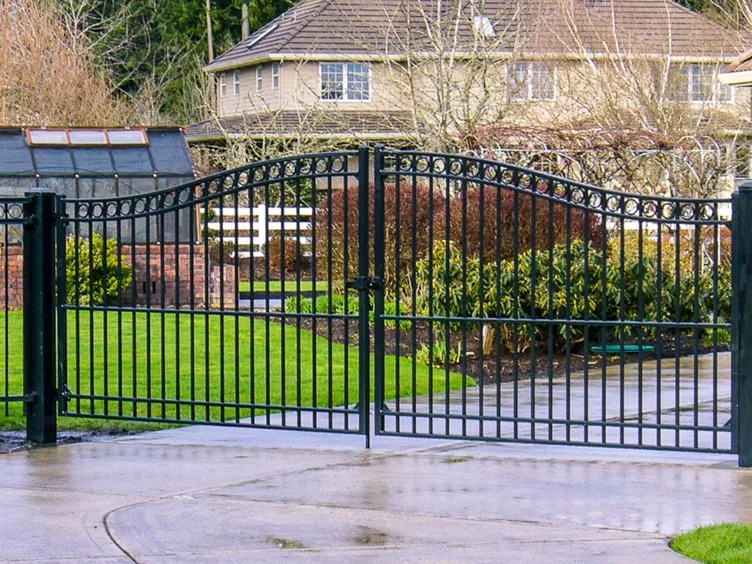
Double-Drive Gate install by RKC Wood Care Pros in Grain Valley, MO

Double-Drive Gate — 14–20 ft wide

Boats, trailers, and tall privacy runs

Two leaves off opposite posts closing on a center drop rod. It's the standard call two ways in Grain Valley: for the boat or camper a growing family parks on a 0.25-acre lot, and for a tall solid privacy run near Valley Speedway or I-70, where splitting a wide, gap-free noise-barrier leaf keeps a single big sail from becoming one long lever the wind can work loose. Both posts bell-bottomed at 36 inches, both leaves braced hard.

  • Price: +30–50% over single-drive
  • Typical use: Boat/RV clearance, wide drives, tall privacy sound-barrier runs
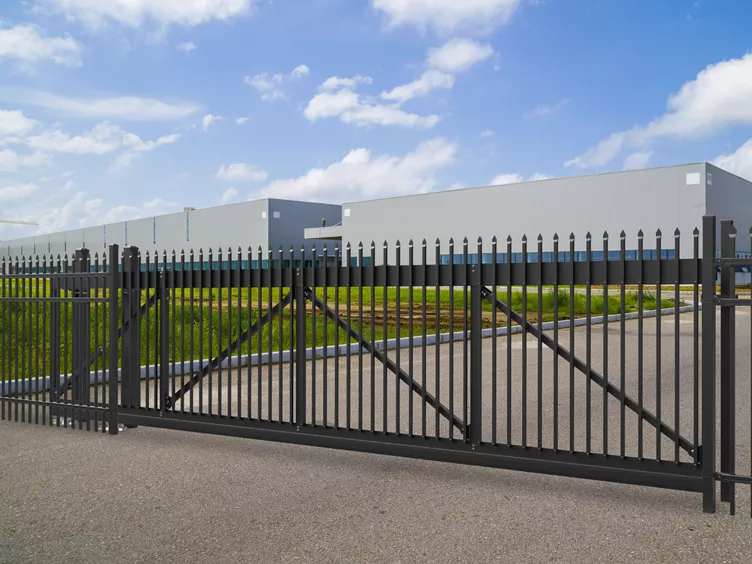
Cantilever slide gate on a steel track, built by RKC Wood Care Pros

Sliding Gate — 10–20 ft travel

For drives with no room to swing

When a fence line runs tight to the drive edge on a compact subdivision lot, or an approach climbs, a swing leaf catches halfway open. A slide gate cantilevers on rollers or rides a track sideways with zero arc into the drive. It also holds up well as a wide solid leaf in the wind — nothing stands open mid-cycle to catch a gust — which suits the exposed, still-treeless new streets on Grain Valley's growing edges.

  • Price: +$400–900 over swing-gate pricing
  • Typical use: Tight lots, rising drives, wide wind-exposed openings
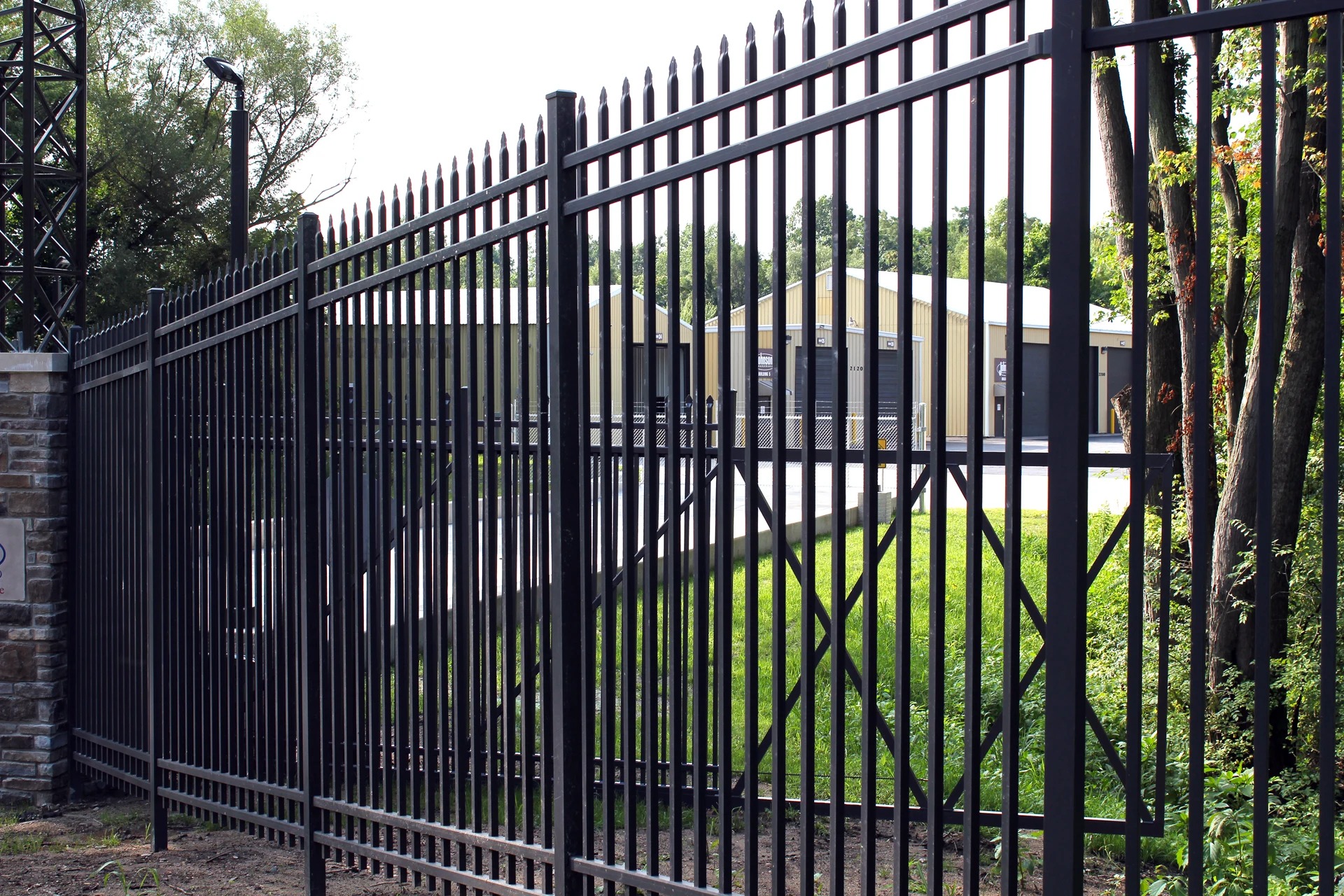
Black ornamental steel fence and gate on a Grain Valley, MO property by RKC Wood Care Pros

GRAIN VALLEY GATE PRICING

What Gate Installation Costs in Grain Valley

Gate pricing in Grain Valley comes down to type, material, size, and how much the noise and the wind ask of the build. Every quote includes a welded steel frame, galvanized heavy-duty hardware, and a hinge post set a true 36 inches in wet-poured concrete — deepened on the windward side where the leaf takes the gust. Below are the three configurations we quote most often for Grain Valley properties.

Wood Walk Gate

$300–600

installed

Cedar or pressure-treated pine. Welded frame, strap hinges, gravity or drop-rod latch.

Single-Drive Driveway Gate

$650–1,800

installed

Wood $650–1,200 · Iron $900–1,800. Welded frame, diagonal cross-brace, ball-bearing hinges.

Double-Drive / Custom Gates

+30–50%

over single-drive

Wide boat/trailer openings and tall solid privacy runs split at a center drop rod, custom widths, and specialty hardware quoted on site.

Building gates elsewhere in the metro? The Kansas City gate installation hub lays out the full gate-type scope and pricing. Every Grain Valley gate estimate is free, written, and itemized — call (913) 286-1091 or request an on-site walkthrough.

OUR PROCESS

How a Gate Install in Grain Valley Actually Happens

Four steps from the phone call to the first swing. Most Grain Valley gate projects run 1 to 3 weeks start to finish. Install days themselves are short — walk gates are often same-day, drive gates one to two. The longer stretch is fabrication and concrete cure, plus the spec work up front that matches the gate to the fence and braces it for the wind. Here's what each step looks like on a gate install in Grain Valley.

1

On-site measurement and specification

Josh comes out, tapes the actual opening — which almost never matches the figure in your head — and takes stock of how much wind the lot is going to throw at the leaf, since on this edge of the metro that's what sets the bracing and the footing. Gate style, which way it swings, and the finish get nailed down on that visit, and a written estimate follows the same week with the hinge, the post depth, and the frame material all spelled out. Nothing quoted by mouth, nothing improvised the day the crew shows up.

2

Spec the gate to the fence, the noise, and the wind

Before anything's built we lock in what the gate has to do here: match the 6-foot cedar dog-ear or shadowbox run it ties into, close the gap on a tall solid leaf where Speedway or highway noise is the point, and brace and deep-foot it for the prairie gust the lot actually takes. On a wide opening we plan the split into a double-drive so a big solid sail isn't one long lever. It's the step that keeps a first fence's gate from being the part that leans first.

3

Install — posts first, welded frame second, hardware on site

Day one is footings: the hinge posts drop a real 36 inches into wet concrete, dug deeper on the side the wind loads, then left to set overnight. The welded frame and the boards go up once that's cured. We hang and tune the hinges right there in the driveway rather than presetting them in the shop, so the leaf ends up square to the ground you actually have and the latch meets the catch you actually have. A walk gate is usually a one-day job; a drive gate tends to run two.

4

Walkthrough and a 30-day settling check

We won't take the last payment until we've cycled the gate a full ten times with somebody watching every hinge take the load — a drag, a scrape, a latch that misses, all of it gets corrected before we leave. Then, because concrete keeps settling a touch through the first month, we swing back around at the 30-day mark to re-true anything that shifted and re-time the self-close for free. On the way out we'll show you the single quarter-turn adjustment to make yourself if the gate ever asks for one years from now.

RECENT GRAIN VALLEY GATE INSTALLS

Horizontal-slat entry gate install in Grain Valley, MO by RKC Wood Care Pros
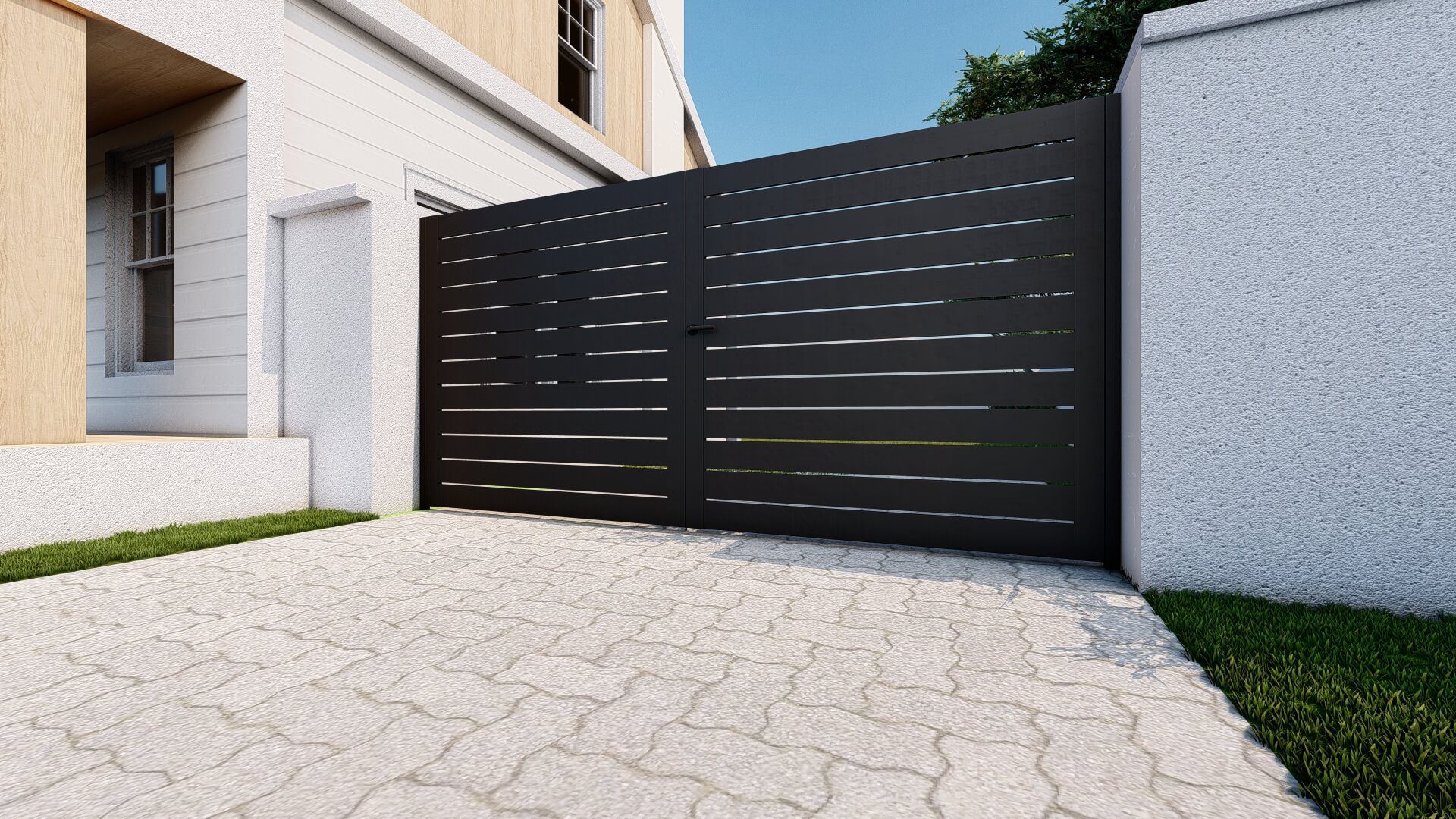
Horizontal-Slat Entry Gate · Grain Valley
Cedar privacy fence double-drive gate install in Grain Valley, MO by RKC Wood Care Pros
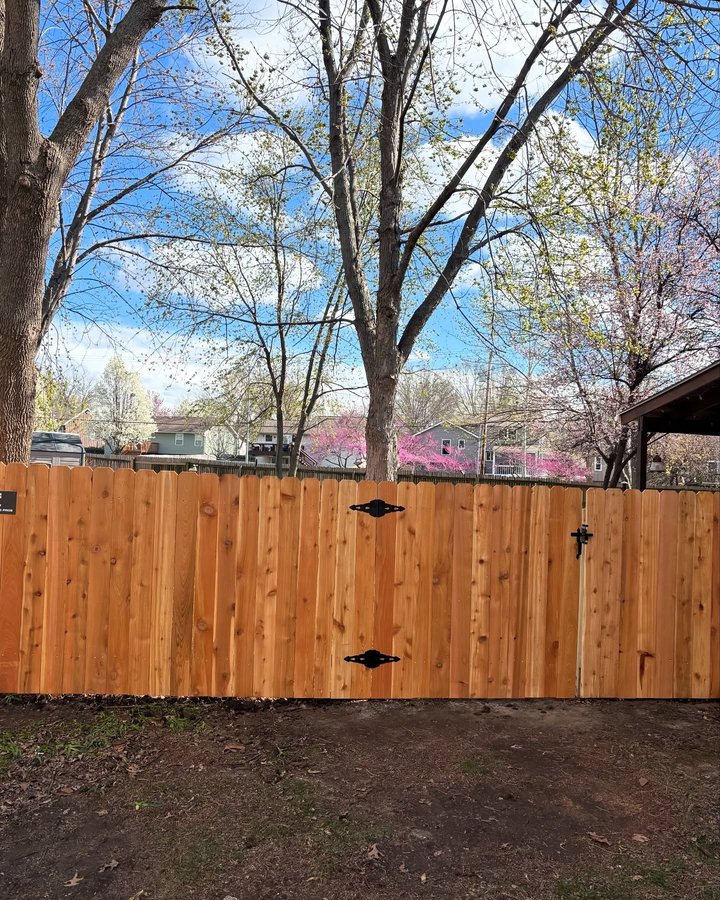
Cedar Privacy Double Gate · Grain Valley
Cedar fence and matching gate install in Grain Valley, MO by RKC Wood Care Pros
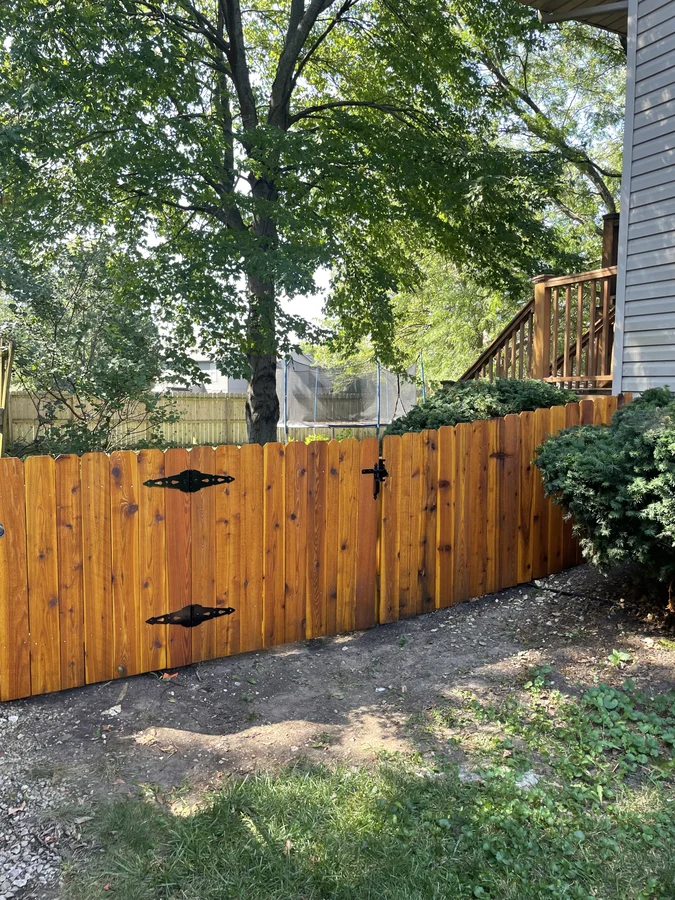
Cedar Fence & Gate · Grain Valley
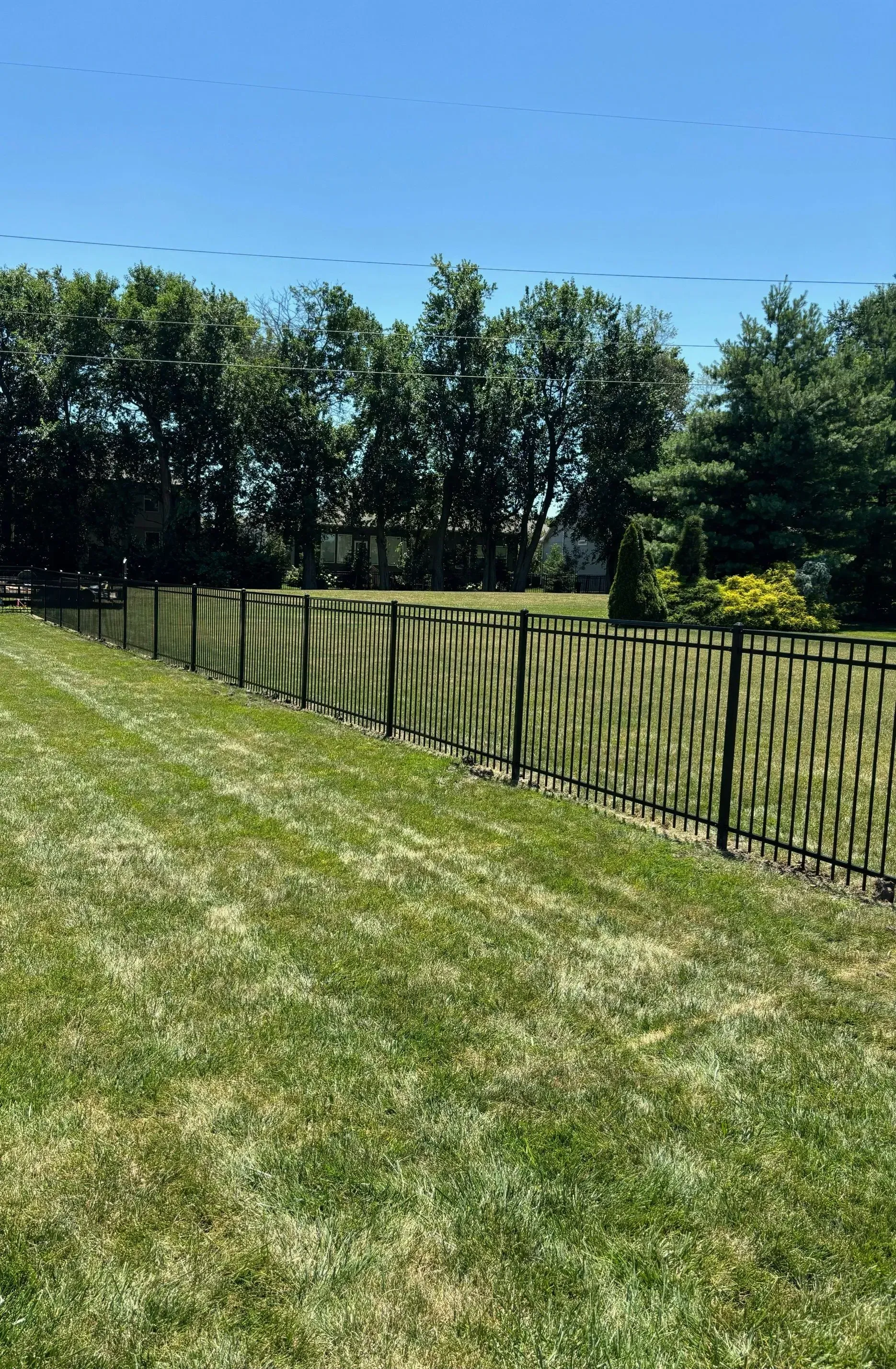
Black iron front-yard fence install in Grain Valley, MO by RKC Wood Care Pros
Black Iron Front-Yard Fence · Grain Valley

REVIEWS

What Kansas City Homeowners Say About RKC

4.9 ★ · 85 Google reviews

Every review is on our Google Business Profile — read them there, unedited.

Read all 85 reviews on Google

GRAIN VALLEY GATE QUESTIONS

Gate Questions Grain Valley Homeowners Ask Most

Gate installation in Grain Valley comes down to type and sizing, blocking the noise, and standing up to the edge-of-metro wind. Below are the questions Grain Valley homeowners actually ask during the estimate — grouped by topic, each answer specific to the noise, the wind, and the first-fence family lots here. If your question isn't listed, call (913) 286-1091 and ask.

Custom gate project in Grain Valley, MO by RKC Wood Care Pros

Gate Types & Sizing

What's the right gate width for a driveway in Grain Valley?
Twelve feet covers most drives in town, and any single leaf up to about fourteen feet is fine on a welded, braced frame. The moment you go wider, the answer flips to two leaves — and here that's a wind decision as much as a weight one. Picture a sixteen-foot slab of cedar hanging off one hinge in a prairie gust: it's a lever and a billboard at the same time. Break it into a pair meeting at a center drop rod and each side carries half of everything. Walk gates are their own thing at three-and-a-half to four feet, sized for a person and a mower, not a truck.
Can a tall privacy gate actually cut down the Speedway and highway noise?
It does the same work the solid fence beside it does — the mass and the lack of gaps are what knock the sound down, which is exactly why a spaced-picket or a sagging, gappy gate lets the drone straight through. Nobody's going to call a gate silent with Valley Speedway running, but a tight board-on-board leaf hung flush to the run means the opening isn't the hole in a fence you built for quiet. The trade-off is the wind, so a gate built for sound gets braced and footed harder than a see-through one.
Can a gate be added to an existing fence, or do the posts need replacing?
The post decides it, not the fence. A hinge post already sunk a genuine 36 inches in concrete — which is what we set, though older builds around town often aren't — can usually carry a new leaf. But if it's shallow, sitting on a surface bracket, or already tipped from a few seasons of gusts, replacing it is the honest call, because a gate can't hang straighter than what it's bolted to. That's why we read post depth and lean at the estimate before we'll put a number on the gate.
What's the difference between a swing gate and a sliding gate here?
Swing gates turn on hinges — one post for a single, two for a double — and need clear ground to arc across. A slide runs sideways instead, cantilevered on rollers or along a track, taking up zero room in front of the drive. Two Grain Valley situations point to a slide: a compact lot where the fence crowds the driveway edge, and a wide, wind-hit opening where you don't want a big leaf standing open to catch a gust mid-swing. It runs $400 to $900 more than the same-size swing, so we default to swinging and slide only when the ground argues for it.

Grain Valley Conditions & Durability

Why do gates lean in Grain Valley when they don't in town?
It's the exposure. Sitting out on the metro's western edge, the town eats the open prairie wind that neighborhoods deeper in the suburbs get to hide from behind other houses and grown trees — and the newest subdivisions are bare graded farmland where nothing breaks the gust at all. A gate is both a lever and a flat sail, so anything set shallow slowly walks itself off plumb, usually inside three seasons. That's the number-one gate complaint we hear here. Beating it isn't complicated: sink the post a real 36 inches, widen and bell it on the side the wind pushes, and run the brace into that same loaded corner.
Is cedar or vinyl the better gate for a Grain Valley family?
Neither is wrong — the fork in the road is whether a stain weekend every couple of years sounds fine or sounds like a chore. Cedar dog-ear owns this market for a reason: it's warm, it's the honest match for the six-foot privacy line a first fence usually is, and it takes stain beautifully. Vinyl wins for the households that want to forget the fence exists, and there the whole game is what's hidden inside — we build a welded metal frame into the vinyl leaf so it fights the wind exactly like its cedar cousins. Below the surface, the post and the hinges are identical either way.
How long does a cedar drive gate last in Grain Valley?
Figure fifteen to twenty years for the gate as a unit, with the steel bones easily outliving the boards, and the cedar itself stretching toward twenty-five if it gets a fresh coat roughly every other year. Age is rarely the villain, though. Around here a gate dies young for one of two reasons — a post set too shallow that the edge-of-town wind pried loose, or bargain-bin hinges that wallowed out under everyday swinging. We spend the budget precisely where nobody sees it, the footing and the hardware, so neither of those is the ending.

Pricing & Hardware

Why are welded gate frames worth more than bolted ones?
Welding eats shop hours — each joint gets cut, fitted, tacked, then burned in with a clean pass — and what you buy for that time is a frame that never loses its shape. Bolted corners have play in them, and on an exposed lot the wind exploits that play in a hurry: the frame goes lopsided in a season or two, the latch drifts out of reach, and the whole leaf starts dragging its catch. The premium runs about 15 to 25 percent on the frame, against a near-certain sag call later. We weld every corner, full stop — bolted gates are the ones we show up to replace.
How do you keep a big double-drive gate from sagging over time?
It comes down to three habits we never break. One: a wide opening becomes two leaves meeting at a center drop rod, so nothing hangs a fourteen-plus-foot span off a lone hinge. Two: each leaf gets a diagonal brace running bottom-hinge to top-latch, which sends the weight down into the post instead of letting the frame fold into a lazy parallelogram. Three: both posts go a true 36 inches down, belled out on the windward face. Sag shows up when a crew skips one of the three — so on ours, none of them gets skipped.
What's the warranty on gate hardware?
Anything the manufacturer stamps — hinges, latches, drop rods, cane bolts — rides on their coverage, generally in the neighborhood of a decade on ball-bearing hinges and five to ten years on straps and latches. The frame is on us: our workmanship warranty says if a welded corner racks, the latch side droops, or a bead fails under normal swinging, we're back out to set it right. And every job carries that no-charge check at the one-month mark, when we re-true whatever the first few weeks nudged and dial the latch and self-close back in.

OTHER GRAIN VALLEY FENCE SERVICES

More Fence Services Available in Grain Valley

Every service below stays in Grain Valley — dedicated pages with local pricing and recent project photos specific to your city. If you're building the gate into a new cedar fence, keeping the stain fresh on an existing run, or straightening a line the wind has pushed over, here's where to go next.

Ready when you are

Get a free estimate — we usually respond the same day.

Call (913) 286-1091