Skip to content
Fence Repair in Grain Valley, MO — First-Year Post Settling, Wind Bracing & Storm Rebuilds

Fence Repair in Grain Valley, MO — First-Year Post Settling, Wind Bracing & Storm Rebuilds

A lot of Grain Valley's fences went in right alongside a brand-new house, on soil that was graded and backfilled for construction rather than settled over decades — and that fill keeps compacting through the fence's first year or two, sometimes tilting a post even though it was set correctly. The open wind on the metro's eastern edge makes a settling fence rack harder than it would somewhere sheltered. We reset what settled on a proper compacted base below the fill line, brace the wind-exposed side where it needs it, and match new construction closely enough that the repair doesn't stand out. Storm damage documented for your insurer. 4.9 stars from 85 Google reviews, 400+ fences across the metro since 2021. Built for Every Storm, and repaired the same way.

★★★★★
4.9
from 85 reviews
Licensed
& Insured · KS + MO
400+
fences installed
A+ BBB Rated 400+ Fences Since 2021 48-Hour Storm Response Post-by-Post Diagnostic
Jump to the repairs we handle ↓

WHAT A REAL GRAIN VALLEY REPAIR CHANGES

The Difference Between Shimming a Gap and Resetting Below the Fill Line

Packing dirt under a settled post buys a season; resetting it on a compacted base below the disturbed fill answers the actual cause. On a brand-new lot the repair is about the soil as much as the fence. This is what changes when the fix answers how new construction settles, not just the gap you can see.

1

The post that settled with the yard, not because it failed

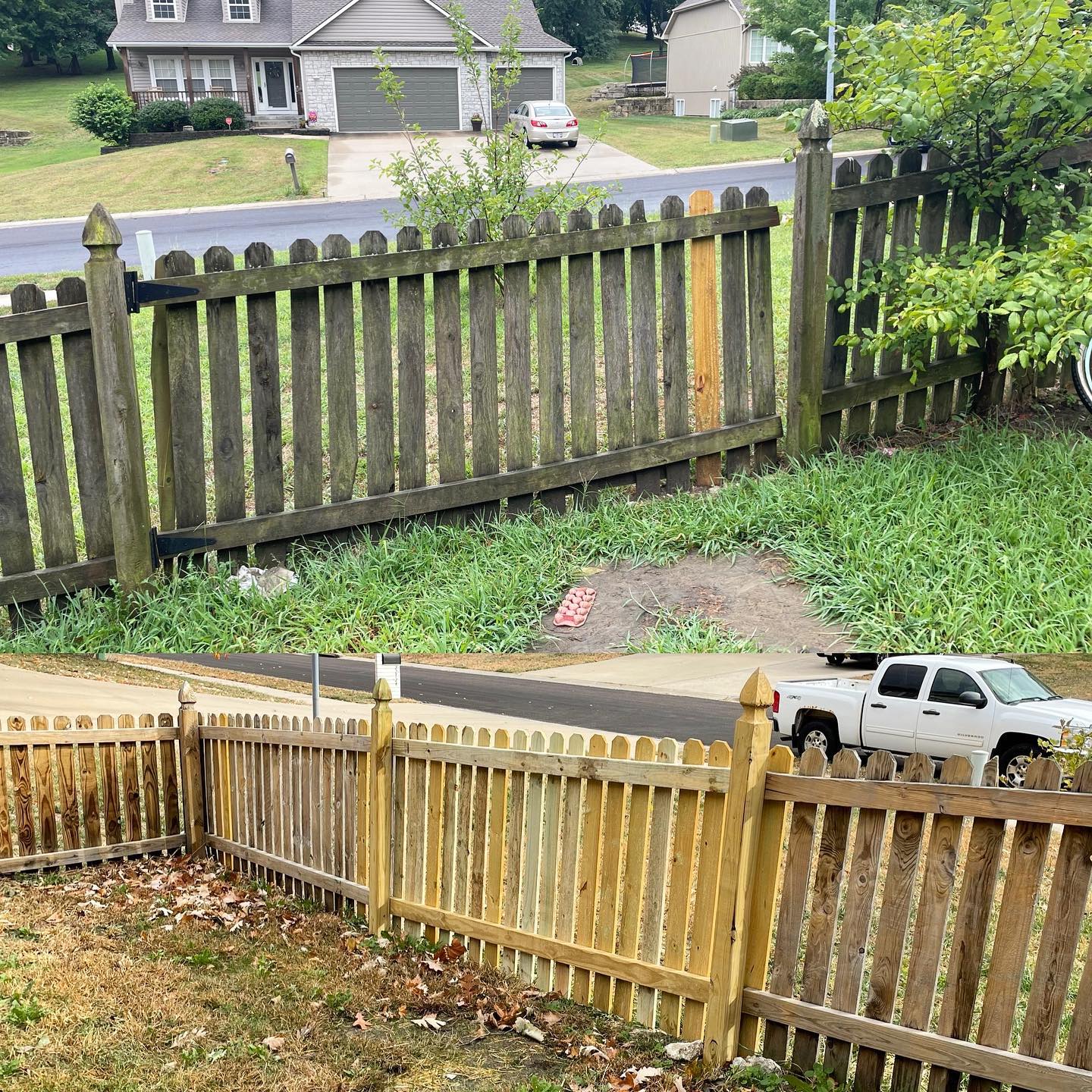
A lot of Grain Valley's fences go in right after the house does, on soil that was regraded and backfilled during construction — not the settled native ground an older neighborhood has. That loose fill compacts unevenly over the first year or two, especially through the first hard freeze-thaw cycle, and a post that was set correctly can still tilt or sink at the base. It reads like a bad install. It's usually just new-lot soil finishing its first year.
2

Wind on the metro's edge makes a settling fence worse

Grain Valley sits at the eastern edge of the built-up metro, open to real prairie wind, and a panel that's already sitting on ground that hasn't fully settled racks harder under that load than the same fence would on established soil. The two problems compound — which is why a fence here can look worse a year in than the same fence would in an older, more sheltered neighborhood.

3

A repair that matches a fence that's still basically new

Most of what we fix in Grain Valley is only a year or two old, so closing the gap is only half the job — matching lumber and finish closely enough that the repair doesn't stand out against a fence that still looks brand new everywhere else is the rest of it.

4

A number before a post gets touched

The walk tells you which posts actually settled versus which ones are fine, whether it's isolated or affects the whole run, and what a wind-side brace or a full panel rebuild costs — in writing, before anything is dug.

WHY GRAIN VALLEY FENCES FAIL

Fill Soil Still Settling, Open Metro-Edge Wind, and Taller Runs That Show It

A Grain Valley repair call is a construction-timeline question as much as a damage question. A Grain Valley fence fails for reasons tied to how new the ground itself still is. Three local conditions drive most of what we repair here.

1

Disturbed fill soil finishing its first year

New Grain Valley subdivisions are built on farmland that's been graded, cut and backfilled for construction, and that disturbed soil isn't as dense as the native ground an established neighborhood has had decades to settle. When a fence goes in during or right after that construction window, its postholes are dug into fill that's still compacting — and the first freeze-thaw cycle often finishes the job, leaving one or two posts a little lower or tilted while the rest of the run holds fine.

2

Open metro-edge wind on top of settling ground

Grain Valley catches real prairie wind on its eastern and northern edges, where there's little built up yet to break it. A fence on ground that's still settling takes that wind load harder than an equivalent fence on established soil, which is why the wind-facing side of a newer run is often the first place a settling problem actually shows.

3

New privacy runs built for Speedway and I-70 noise

A fair number of Grain Valley's taller, solid privacy fences went up specifically to dampen weekend Speedway noise and the I-70 hum, and a bigger, taller panel shows an uneven settle more visibly than a shorter one would — a slight tilt at one post is more obvious across eight feet of solid privacy board than it would be on an open-style fence.

The Grain Valley neighborhoods we repair most run from Rosewood and Greystone to Woodbury, the Sni-A-Bar corridor and Creekside, mostly fences under a few years old. Same 36-inch depth on every reset, below the disturbed fill layer. When a repair tips into a rebuild, the Grain Valley fence installation hub lays out every material and neighborhood.

REPAIR OR REPLACE

How to Tell Whether Your Grain Valley Fence Needs a Fix or a Rebuild

On a newer fence the call almost always turns on how many posts actually settled, not on age. Use this as a rough guide before you call — then we confirm it post by post, since a settled post can sit right next to a perfectly plumb one.

What you're seeingUsually a repairUsually a replacement
A newer fence with one or two posts settled or tilted, gap at the bottom rail Yes — reset the settled posts on a compacted base No
Most posts on a new-build run tilted the same direction Yes — a systematic reset across the row Rarely needed if the boards are sound
A wind-facing panel racking more than the rest of the same-age fence Yes — reset and brace the wind-side posts No
A storm or wind event took out a section Yes — rebuild that section, document for the claim No
Board damage only, posts plumb and solid Yes — board swap only No
Older chain link in central Grain Valley, rusted and leaning Sometimes — re-fabric a sound frame Often — most upgrade to cedar here

Reading the Four Ways a Grain Valley Fence Gives Out

First-year backfill settling

The tell: A fence less than a couple years old, installed on a new-build lot, has one or more posts that have sunk or tilted slightly, opening a gap at the bottom rail even though the wood itself isn't rotted or damaged.

The fix: Reset the affected posts on a compacted gravel base set below the disturbed fill layer, re-plumb, and close the gap — the rest of the run usually needs nothing.

Wind-side racking on settling ground

The tell: The exposed east or north-facing panel of an otherwise sound, same-age fence shows more give or visible rack than the sheltered runs, especially after a windy stretch.

The fix: Reset the wind-side posts to full depth and add a mid-brace where the span is long, so the panel stops flexing on ground that's still settling.

Storm or wind-event section damage

The tell: A section is knocked flat, torn from the posts, or badly racked after a wind event, with the rest of the fence unaffected.

The fix: Rebuild the section to match the standing fence, photographed and itemized apart from any settling-related wear for the insurance file.

Aging central-Grain-Valley chain link

The tell: Older galvanized fabric on the established Main Street or Sni-A-Bar side of town is rusted through or sagging on leaning line posts, distinct from the newer cedar runs on the subdivision side.

The fix: Re-fabric and reset line posts where the frame is sound, or point toward a cedar or vinyl rebuild where it's past that.

REPAIRS WE HANDLE

Diagnostic, Backfill Resets, Wind Bracing & Storm Repairs in Grain Valley

The right scope depends on how the fill soil has actually settled and which side of the lot faces the open wind. Here are the four scopes we run across Grain Valley, what each fits, and real numbers. No repair gets quoted blind.

New-Build Settling Diagnostic Walk in Grain Valley, MO by RKC Wood Care Pros

New-Build Settling Diagnostic Walk — $95–150

Where every Grain Valley job starts

Josh walks the run with you, checking every post for lean or settling, testing which side of the yard is taking the wind, and grading each section one to five. On a newer subdivision fence this is mostly a settling read, not a rot read — the walk tells you which posts actually moved before a number is written.

  • Price: $95–150 (credited to the repair)
  • Typical use: Any Grain Valley fence under a few years old with gaps or rack at the base
Backfill Post Reset in Grain Valley, MO by RKC Wood Care Pros

Backfill Post Reset — $150–350 / post

The signature Grain Valley repair

For posts that settled with the fill soil in year one, we pull each affected post, set it fresh on a compacted gravel base below the disturbed layer, and re-hang the original boards. Most calls here are one to three posts on an otherwise sound, still-new fence — the fix is closing the gap the settling opened, not rebuilding.

  • Price: $150–350 per post
  • Typical use: Settled or tilted posts on fences installed with new construction
Wind-Side Brace & Panel Repair in Grain Valley, MO by RKC Wood Care Pros

Wind-Side Brace & Panel Repair — $200–700 / run

For the exposed edge of a new lot

When the wind-facing side of a newer fence is racking harder than the rest, we reset those posts to full depth and add a mid-brace on longer spans so the panel stops flexing while the ground underneath finishes settling. This is the pairing that shows up most on Grain Valley's open eastern and northern edges.

  • Price: $200–700 per affected run
  • Typical use: Racking or excess flex on wind-exposed newer runs
Storm Section Rebuild & Chain-Link Repair in Grain Valley, MO by RKC Wood Care Pros

Storm Section Rebuild & Chain-Link Repair — $150–1,700

48-hour on-site response

A downed section rebuilds to match what's standing, photographed and documented for your insurer. Aging chain link in the older, established parts of town gets re-fabricked and reset where the frame is sound, or we'll say plainly when a cedar rebuild is the better move.

  • Price: $300–1,700 (section) · $150–600 (chain-link)
  • Typical use: Storm damage and older central-Grain-Valley chain link
Fence repair cost estimate — Grain Valley, MO — RKC Wood Care Pros

GRAIN VALLEY REPAIR PRICING

What Fence Repair Actually Costs in Grain Valley

A Grain Valley price rides on how many posts actually settled, whether the wind side needs bracing, and whether a claim needs papering. Nothing is priced from the curb, and the walk fee folds into the work once you commit. Most Grain Valley jobs settle into one of the three bands here.

Settling Diagnostic

$95–150

credited to the repair

Every post checked for settling, the wind-exposed side tested separately, sections graded one to five, a photo report in hand. Comes off any repair we then perform.

Post Resets & Bracing

$150–700

per post or run

Backfill post resets on the low end, wind-side bracing and panel repair on the high end — most Grain Valley jobs land here.

Sections & Chain Link

$150–1,700

per rebuild

Storm section rebuild on the high end, chain-link re-fabric on the low end. Claim paperwork bundled on storm work.

When most of a run's posts settled together, resetting the whole line fresh usually beats piecing it together post by post. That rebuild pricing sits on the Grain Valley wood and Grain Valley vinyl pages. Either way the estimate is free and line-itemed — ring (913) 286-1091 or set up the walk.

HOW IT GOES

From the Phone Call to the Final Walk in Grain Valley

Four steps, and most Grain Valley jobs run a few hours to about a week end to end. A one- or two-post reset moves fast; a wind-brace pass or storm rebuild takes a bit longer. The wait, when there is one, is the adjuster, not the crew.

1

The walk on a fresh lot

Josh checks every post for settling or lean, pays particular attention to whichever side of the yard faces open ground, and grades each section one to five. A photographed report lands with you before a price. The $95 to $150 fee credits back once you hire us; take the report and go, and it just covers the visit.

2

A scope built around what actually moved

Then a written, itemized estimate — which posts need resetting on a compacted base, whether a wind-side brace makes sense, and a board count if anything's damaged. When a storm caused it, the claim file goes together too, dated photos with wind damage set apart from ordinary first-year settling, in the form Jackson County adjusters expect.

3

The reset, below the fill line

Settled posts get pulled and reset on a compacted gravel base set below the disturbed backfill layer, wind-side runs get braced where spans are long, boards get swapped, and storm sections or tired chain-link get rebuilt to match. A one- or two-post reset usually wraps in a few hours; a fuller rebuild runs a day or two.

4

The closing walk and a first-year check

You pay after we walk it together — posts proven plumb, boards seated tight, the gap closed. Freshly compacted ground can still take a small further set in its first year, so we offer a return visit inside that first year to true up anything that shifts again, no charge.

RECENT GRAIN VALLEY REPAIR WORK

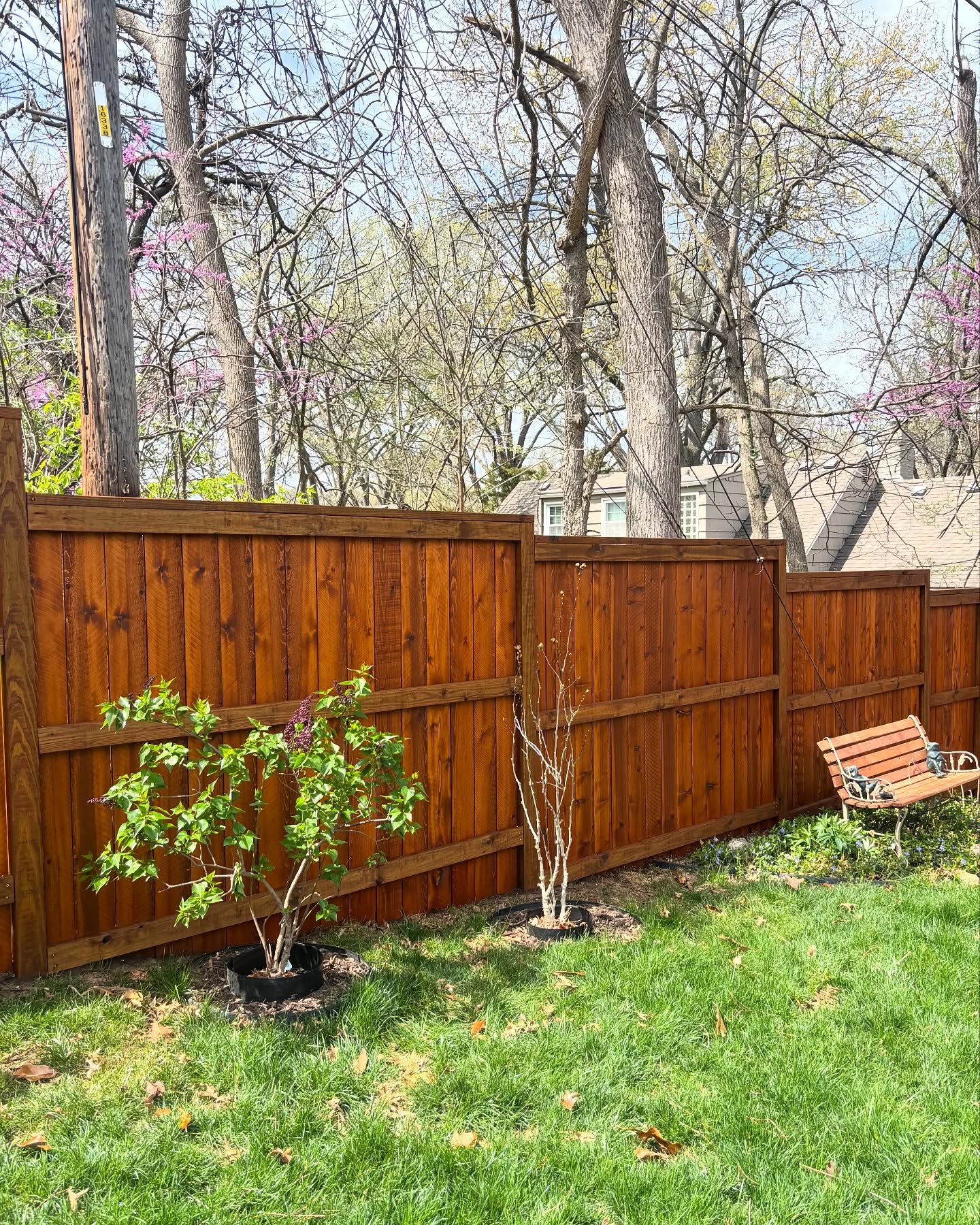
Backfill Post Reset · Grain Valley — Grain Valley, MO — RKC Wood Care Pros
Backfill Post Reset · Grain Valley
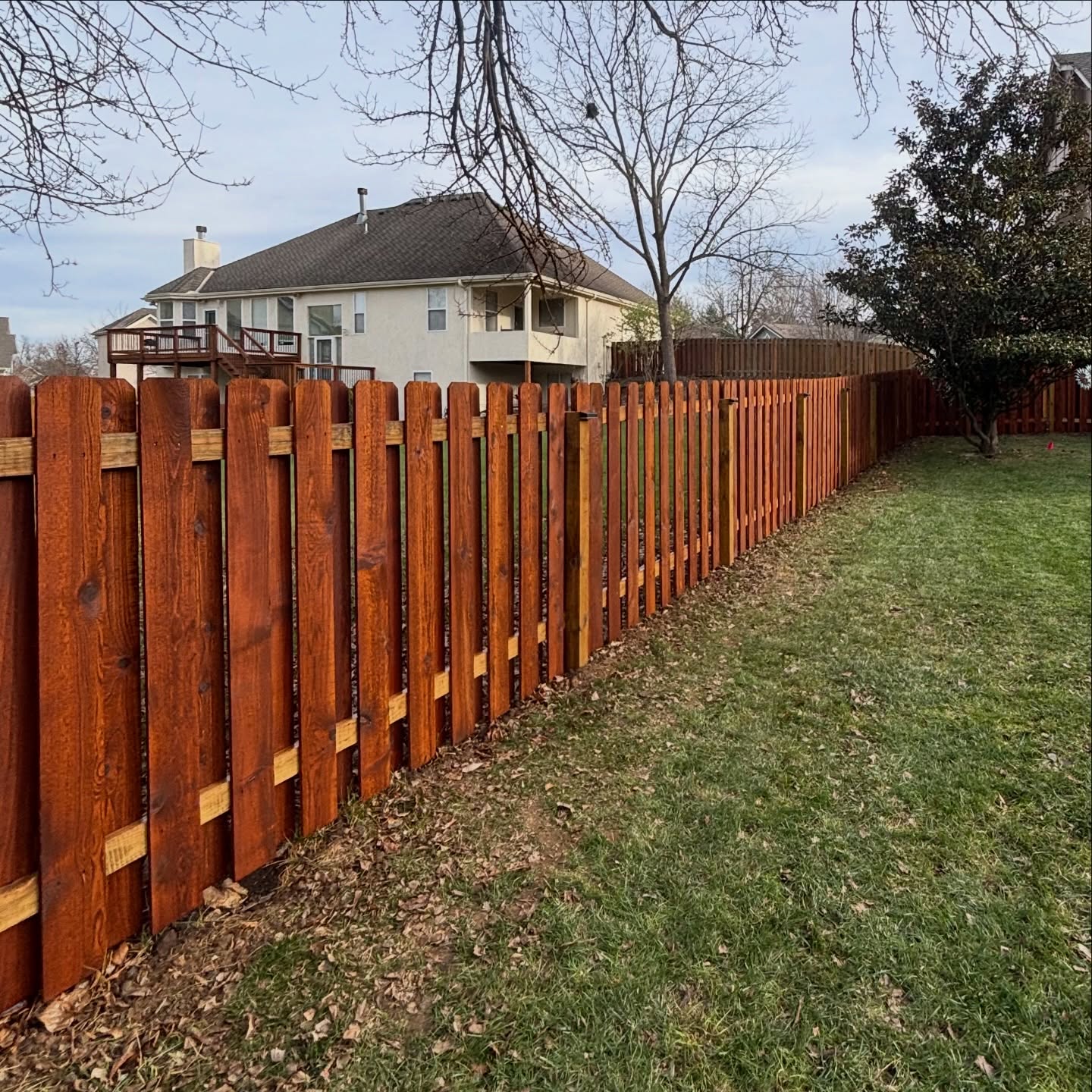
Settling Diagnostic · Rosewood — Grain Valley, MO — RKC Wood Care Pros
Settling Diagnostic · Rosewood
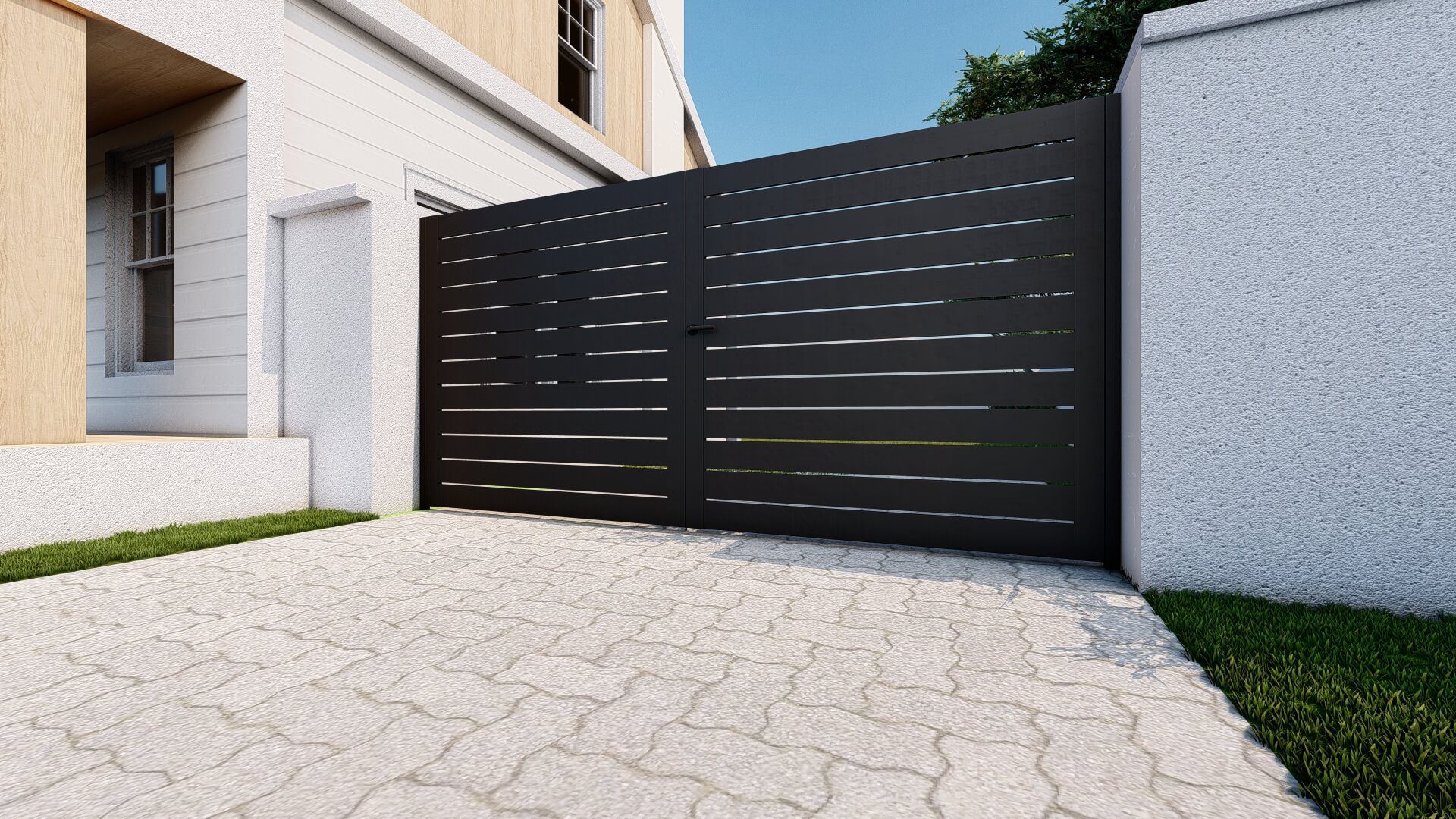
Wind-Side Brace & Gate · Grain Valley — Grain Valley, MO — RKC Wood Care Pros
Wind-Side Brace & Gate · Grain Valley
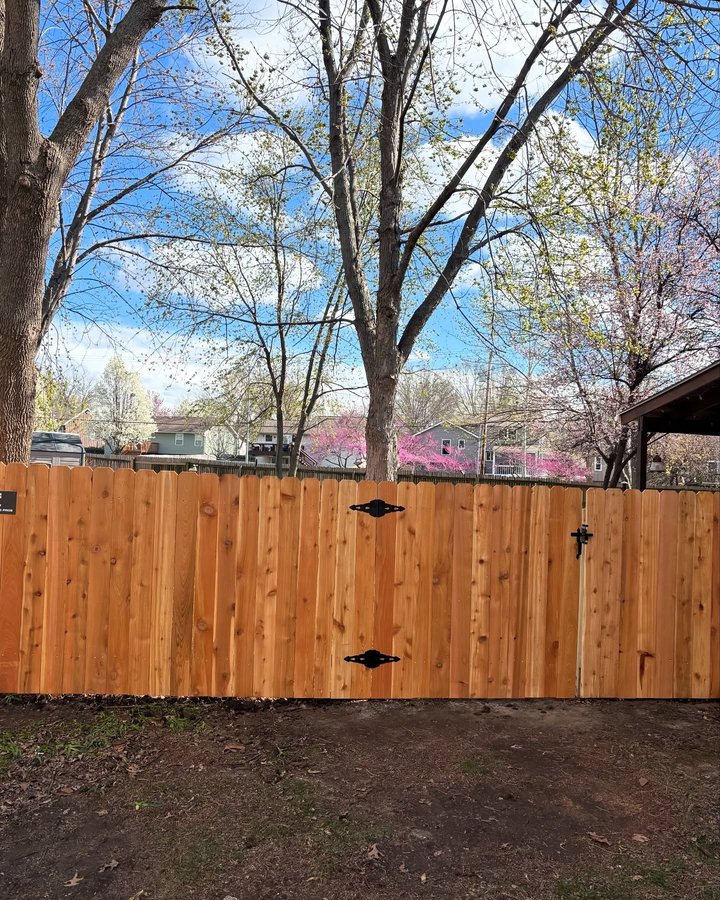
Storm Section Rebuild · Greystone — Grain Valley, MO — RKC Wood Care Pros
Storm Section Rebuild · Greystone

REVIEWS

What Kansas City Homeowners Say About RKC

4.9 ★ · 85 Google reviews

Every review is on our Google Business Profile — read them there, unedited.

Read all 85 reviews on Google

GRAIN VALLEY REPAIR QUESTIONS

What Grain Valley Owners Ask on the Diagnostic Walk

They break into three: what is really failing and why, how storms and claims run, and what it costs. These are what Grain Valley owners raise on the walk, answered against real fill-soil timelines and real prices. If yours isn't here, Call (913) 286-1091 and ask.

Fence repair in Grain Valley, MO by RKC Wood Care Pros

Why It's Failing

My fence is only two years old — why is a post already sinking?
Because it isn't age, it's the ground. New Grain Valley subdivisions sit on soil that was graded and backfilled for construction, and that fill keeps compacting for a year or two after it goes in, especially through the first hard freeze-thaw cycle. A post set correctly into that fill can still settle or tilt a little as the soil finishes moving — it's not a bad install and it's not rot, it's timing. Resetting the affected posts on a compacted base below that fill layer is the fix.
Why does the fence on the east side of my yard look worse than the rest?
That's usually the wind side. Grain Valley sits on the open eastern edge of the metro, and a fence panel on ground that hasn't fully settled takes that open wind harder than the same fence would on established soil — the two problems stack. Resetting and bracing the wind-facing posts specifically is what stops it from getting worse than the sheltered sides of the same fence.
Should I wait to fix it in case the settling isn't done?
No — waiting usually makes it worse, since a settled post keeps opening the gap under repeated wind load in the meantime. What we do instead is reset on a proper compacted base rather than just shimming, which is built to handle any further minor settling instead of needing a redo.

Storms & Insurance

Will insurance cover storm damage to a fence that's only a couple years old in Grain Valley?
Yes, through the homeowner policy's other-structures line, the same as any age fence — age isn't the deciding factor, cause is. What matters is separating genuine storm damage from the ordinary first-year settling this soil produces, which is exactly what our itemized, dated bid does. A claim that blurs the two is what gets kicked back.
How fast can RKC reach storm damage in Grain Valley?
We commit to 48 hours for an on-site look. On the exposed edge of town that matters — an already-settling fence takes a storm harder than one on established ground. We close off any open stretch on that first visit, take the photos the claim needs, and book the repair in, typically two to three weeks out.
What do I need to file a claim?
Dated photos of the damage, our written itemized bid, and the storm date with a rough wind estimate — we provide all three. Keeping storm damage clearly separate from the fill-soil settling that's common on new Grain Valley lots is what keeps a claim here moving instead of getting questioned.

Repair Pricing

What does fence repair cost in Grain Valley?
By the piece: the diagnostic is $95 to $150 and credits back, a backfill post reset runs $150 to $350 a post, wind-side bracing and panel repair $200 to $700 per run, a board swap starts around $150, and a storm section rebuild $300 to $1,700. When the math points to a full rebuild, that pricing lives on the Grain Valley wood and Grain Valley vinyl pages. Every figure is free, written and line-itemed.
Is this covered under my fence installer's warranty since it's so new?
Sometimes, and it's worth checking with whoever installed it first — a workmanship warranty on a recent install may well cover a settling reset. When it doesn't, or the installer's no longer reachable, we handle it as a standard repair. Either way the diagnostic walk gives you a clear, written read on what actually happened before you decide who pays for it.
Do I get the diagnostic fee back?
It comes off any repair we do, so hiring us means you never pay it twice. Walk away and the fee has covered the drive out, checking every post for settling and wind exposure, and a written report you can act on. We don't guess at a settling repair from the curb — telling first-year fill settling from an install defect takes an actual look.

OTHER GRAIN VALLEY FENCE SERVICES

More of What We Do in Grain Valley

RKC installs and repairs every type of fence — wood, vinyl, chain link, ornamental iron, aluminum and commercial security — plus custom gates and in-house staining. When the repair turns into a rebuild, when a gate needs building rather than resetting, or when a fresh stain is the right finish after the fix, here is where to go next in Grain Valley.

Ready when you are

Get a free estimate — we usually respond the same day.

Call (913) 286-1091