Skip to content
Vinyl Fence Installation in Grain Valley, MO — A First Fence That Closes the New Lot for Good, from the Subdivisions to the Acreage East of Town

Vinyl Fence Installation in Grain Valley, MO — A First Fence That Closes the New Lot for Good, from the Subdivisions to the Acreage East of Town

Grain Valley sits on the open eastern edge of the metro, where the wind comes across the country and a shallow-set post leans inside three years. So we set every post 36 inches deep in concrete on a steel-reinforced rail — a fence that holds through the gusts, buffers the Valley Speedway weekends, and never once asks for a stain can. A 6-foot white vinyl privacy fence runs $40 to $55 a foot installed, in white, a warm sand or woodgrain, a country ranch rail for the acreage, or a 4-foot picket for the garden — capped, co-extruded PVC from CertainTeed, Bufftech, and Veka. Cedar is honestly the king of this market, and we build that too; vinyl earns its place as the do-it-once boundary for the first-time family that would rather not spend weekends staining. One owner-run crew lays it out, builds it, and picks up the phone about the warranty years down the line.

★★★★★
4.9
from 85 reviews
Licensed
& Insured · KS + MO
400+
fences installed
A+ BBB Rating 400+ Fences Installed Since 2021 Owner-Operated Free On-Site Estimates
Browse vinyl options ↓

WHY GRAIN VALLEY HOMEOWNERS CHOOSE VINYL

Close the New Yard Once — Vinyl for a Grain Valley First Home

What earns its keep here isn't the sticker — it's a boundary you close on move-in and never touch again: no stain weekend, a solid wall that buffers the Speedway and the wind, and a footing deep enough that the open-edge gusts can't lean it. Cedar isn't the enemy — it's what most of Grain Valley fences with, and for the lowest move-in price and the look of real wood it earns that spot. Push the years out on this exposed edge, though, and cedar keeps asking for more: a stain can every couple of seasons, a leaning post every few springs. We're the Kansas City fence contractor handling install, repair, and staining in-house — and the fence in these cards is the one a first-time family buys a single time.

1

One fence, bought once, done with the new house

A first home already comes with a list of things to keep up. The fence doesn't have to be one of them. Cedar signs you up for a stain can every couple of years; vinyl is the boundary you close on move-in and then forget — a garden hose is the whole maintenance plan. For a young Grain Valley family stretching a first budget, spending once and being done is the entire appeal.
2

A solid buffer for a Speedway Saturday

Valley Speedway runs on weekend nights, and out here the sound carries. A tall, gap-free vinyl privacy panel won't make a race silent, but a solid wall knocks the edge off far better than an open cedar run full of daylight — and it does the same for the wind and the road noise coming off I-70. If a quieter backyard is part of why you're fencing, a tight solid profile is the one to build.

3

Set deep for the open edge of the metro

Grain Valley takes the wind full-on — it's the last band of houses before the country, and shallow-set posts here lean inside three years. Every post we sink drops three feet into concrete below the frost line, a steel core running up inside the sleeve, so there's nothing for a gust to pry against. It's the difference between a fence that stands true through a decade of storms and one you're out straightening every spring.

4

Built for the subdivision and the acreage both

Grain Valley is really two places at once — the tight new subdivisions filling in south and west, and the half-open acreage out toward the rural east. We build for both: a solid privacy wall to close a new backyard, or a low-upkeep vinyl ranch rail to hold a long country line the way split rail used to, minus the rot and the repainting.

LOCAL CONDITIONS · GRAIN VALLEY

Frontier Town, First Homes & the Open-Edge Wind — What Shapes a Grain Valley Fence

Four things about this town decide how a fence gets built: a frontier where new subdivisions meet old farmland, a first-time buyer closing a first yard, a Speedway-and-highway case for a solid sound-buffering wall, and an exposed metro edge where the wind leans anything set shallow. They all point the same direction — a tight solid run, set deep, that holds and hushes and never wants a coat. We take them one at a time below. A new subdivision backyard doesn't get the same plan as a half-open acreage line out east, and none of it is copied off a spec sheet drawn up for another town.

1

The expansion frontier — where the subdivisions meet the farms

Grain Valley is the gateway to the rural east, the spot where the metro's new streets run out and the county begins — a fast-growing, value-minded town with a bit more room than Blue Springs next door. You can read it in the fences: cedar privacy through the new subdivisions, chain link still standing in the older central blocks, and split rail and wire out on the acreage edge. Cedar is honestly the king of this market; vinyl earns its place as the strong second choice for the family that would rather not spend weekends on a stain.

2

A first home, a new lot, and a first fence

The thing driving most fence calls here is a first-time owner in a freshly built subdivision wanting a solid, good-looking boundary for the kids and the dog — often the first season after the sod goes down. That's exactly the job vinyl is built to do once and for all: a private yard closed on day one, priced against a first mortgage, and never asking to be re-budgeted. It's a do-it-once decision, and we treat it like one.

3

Valley Speedway, I-70, and the case for a solid wall

A couple of things make a taller, tighter fence worth the money in Grain Valley. Valley Speedway brings a weekend roar that carries across town, and the I-70 logistics corridor keeps a steady hum on the north side. A gap-free solid vinyl panel is a genuine sound buffer against both — not soundproof, but a real cut — which is part of why so many Grain Valley owners step up from an open fence to a solid privacy run.

4

Farmland turned subdivisions, and the wind off the open edge

The new neighborhoods sit on flat-to-rolling ground that was cropland a few years back — fertile up top, standard heavy KC clay underneath. It's not the soil that tests a fence here; it's the exposure. Sitting on the open eastern edge of the metro, Grain Valley takes prairie gusts with little to slow them, and a shallow post gives up first. A fence Built for Every Storm in this town is a deep-footed one — 36 inches of concrete under every post, so the wind meets a fence that won't budge.

THE LONG-RUN NUMBER, NOT THE STICKER

Vinyl or Cedar in Grain Valley? Run the Fifteen-Year Math

Cedar wins move-in week — it's the lower number when the first-home budget is already tight, and that's exactly why it lines every new street. But the cheaper fence over time is settled by the two bills nobody pencils into a new-home budget: the stain cedar wants every couple of years, and the leaning post this windy edge eventually forces. Vinyl asks a little more up front and then goes quiet. The table walks a typical Grain Valley backyard, cedar beside vinyl, with the re-coats and one wind-forced post repair set in the cedar column where they honestly belong.

Over 15 yearsDog-ear cedarVinyl
The number on move-in weekCedar is the cheaper fence the day the new house closes, which is a real pull when the budget's already stretched thin by a first mortgage — it's why it's the default up and down every Grain Valley streetA little more that same week, but the figure already carries the galvanized rail and there's no coating bill hiding behind it
The bill you forgot to budget forNobody pencils it into the new-home budget, but bare cedar grays out in a couple of Missouri summers and wants sealing every two or three years after — a few thousand dollars and a lost weekend, over and over, on a fence you already paid forThere isn't one — the color is run through the board, so a rinse with a soft brush is the entire lifetime cost after install day
Standing up to the open edgeOut here on the metro's edge the gusts come across open country, and a bare cedar post set shallow starts to lean inside a few years — a repair you're paying for on top of the stainA steel-hearted post buried three feet in concrete rides out the same wind, and the panel between them doesn't gap or rattle loose
Saturday-night soundA gapped or aging cedar run lets the Speedway roar and the road noise wash right throughA tight, gap-free solid panel knocks the edge off the weekend racket far better than a fence full of daylight ever will
The fifteen-year totalAdds up past the vinyl once you stack the seal cycles and the one shallow-post fix the wind forcesLands right about where it started on install day, and not a dollar more chasing it
Who it suitsThe owner who loves real wood, bought on the lowest sticker, and doesn't mind keeping a stain can in the garageThe first-time family that would rather spend once, close the yard, and never think about the fence again

It comes down to your budget today and whether you want the upkeep back later. Set on real wood and happy to keep it up? Cedar's an honest call — the Grain Valley wood page walks the sealing rhythm that holds it. Here for years on an exposed lot? Vinyl earns that gap back — no stain, no post to straighten after the wind. Hand us the yard and we'll quote the two of them side by side.

THE GRAIN VALLEY DURABILITY QUESTION

Will the Wind or the Weather Crack Vinyl? Only the Cheap Kind

A fair thing to ask when you're paying above cedar. The short answer: a capped panel on a reinforced rail, footed deep in the clay, takes the open-edge wind and the summer sun without complaint — what fails is the bargain single-wall board, and what leans is a shallow post, never the vinyl itself. There's no rock to fight in Grain Valley, but the exposure on the metro's edge and the old farm clay underneath are both real, and together they decide how a run gets put together. The four building calls below are what keep a fence here standing when the wind comes across the open country.

It isn't the panel that leans on the edge of the metro — it's the post

Grain Valley sits at the eastern lip of the metro, the last run of subdivisions before the country opens up, so it catches the full prairie gust with nothing in front of it. Around here a fence that fails almost always fails at the base: a post set too shallow works loose in the wind and the whole run starts to lean inside three years, panels still fine. That's a footing problem, not a vinyl problem, and it's why we don't shortcut the hole — every post goes three feet down in concrete on a widened bell so the wind has nothing to lever against.

Old farm clay moves — so the depth is the whole trick

These subdivisions were laid over fertile farmland, and under the topsoil it's the same heavy Kansas City clay that swells damp and tightens dry through the seasons. There's no rock to drill and no exotic soil to outsmart; the honest answer is just reach. We set every post a full 36 inches down, past the frost line, so the clay can breathe through its wet-and-dry year without ever walking the fence out of plumb.

It has to keep its color through a hard Missouri summer

The reason to skip cedar is to skip repainting, so a fence that fades has missed the whole point. The capped, co-extruded stock we run — CertainTeed, Bufftech, Veka — bakes titanium-dioxide sunblock into the outer layer, so white stays white and a woodgrain keeps its warmth straight through the sun and humidity while the wood fence two lots over is already going silver.

The dollar-store single-wall board is the one that shatters

Two very different products share the vinyl label, and only the better one belongs on your lot. What we hang is capped and co-extruded — a tough impact shell fused over the structural core, most of it carrying a class-4 hail rating, the same mark a good roof shingle wears. The bargain single-wall board skips that shell, so it yellows and turns brittle enough to crack in a cold snap. We also leave a breathing gap at every joint, so a run stretches in July and draws back in January without ever popping a seam.

WHAT WE INSTALL MOST

The Vinyl Grain Valley Owners Order Most

Most Grain Valley orders come down to this handful — each with a plain price, a service life you can count on, and the almost-nothing upkeep that's the whole reason a first-time owner picks vinyl over cedar. The right one tracks the job — a solid privacy wall to close a new subdivision backyard, a warm woodgrain to match the block's cedar, a country ranch rail for an acreage line out east, or a picket for a garden or a dog yard. We bring samples to the walk-through, so the color gets picked against your own brick and siding in daylight, not off a chip in a binder.

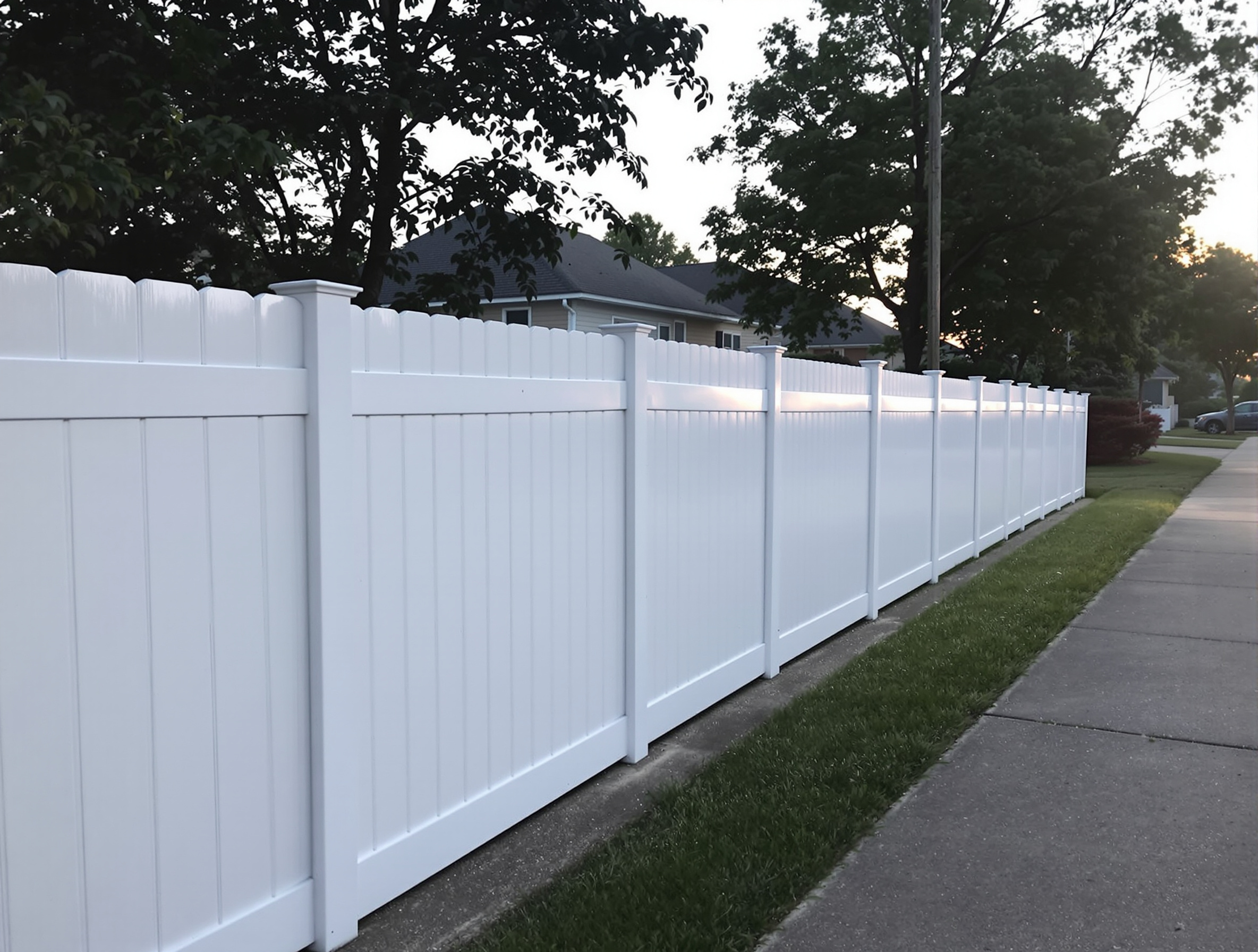
White Privacy — 6 ft vinyl fence by RKC Wood Care Pros in Grain Valley, MO

White Privacy — 6 ft

The first-fence subdivision standard

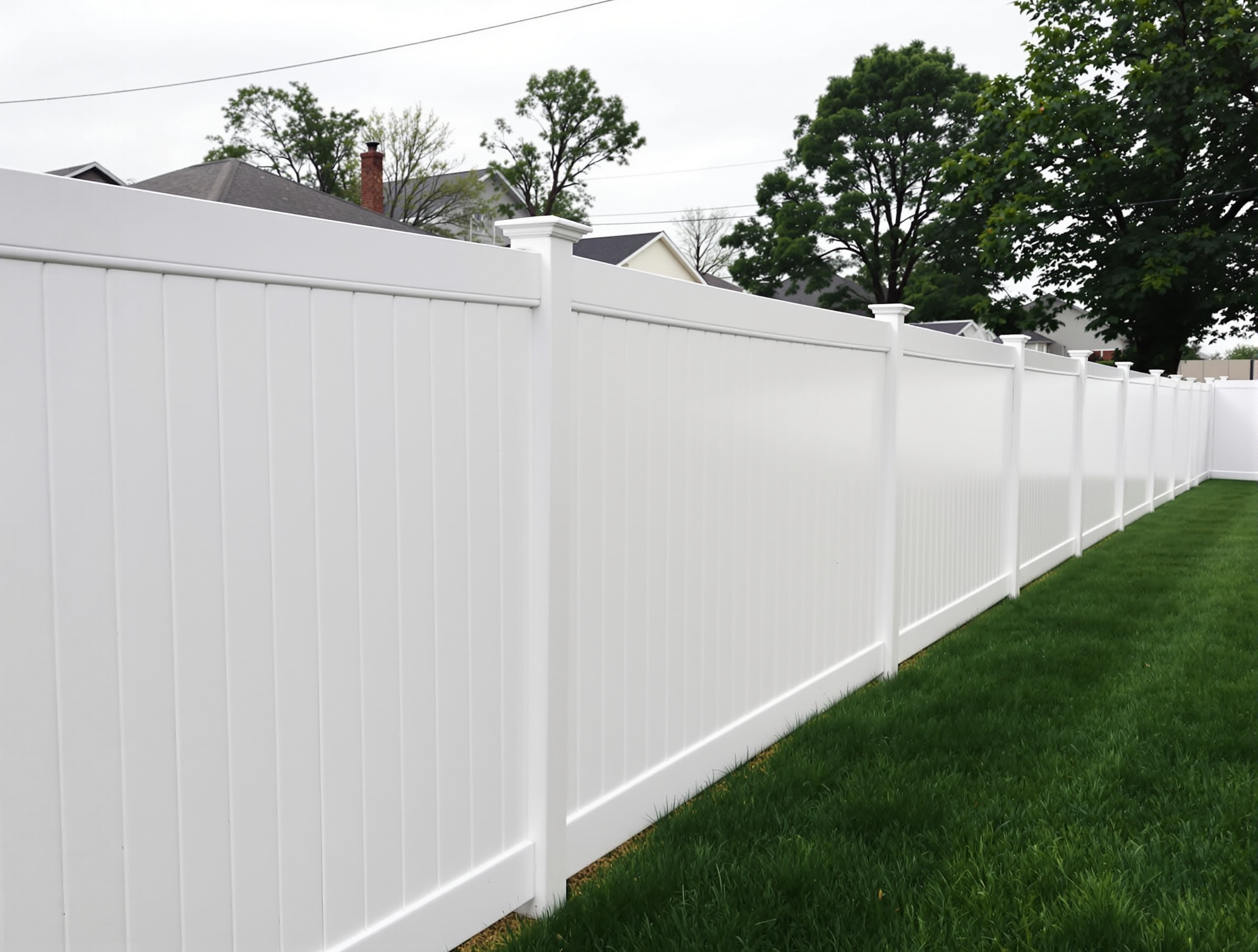
The order that closes a brand-new Grain Valley backyard — Rosewood, Greystone, the streets going up south toward the county line. Solid tongue-and-groove panels in UV-rated white PVC, a galvanized backbone through the rail, on posts driven deep into the old farm clay. For a first-time owner it's the whole boundary settled in one shot: a private yard the kids and the dog can own, and the tightest, gap-free wall going when the Speedway is running on a Saturday night.

  • Price: $40–55/LF installed
  • Lifespan: 30+ years
  • Maintenance: One rinse a year
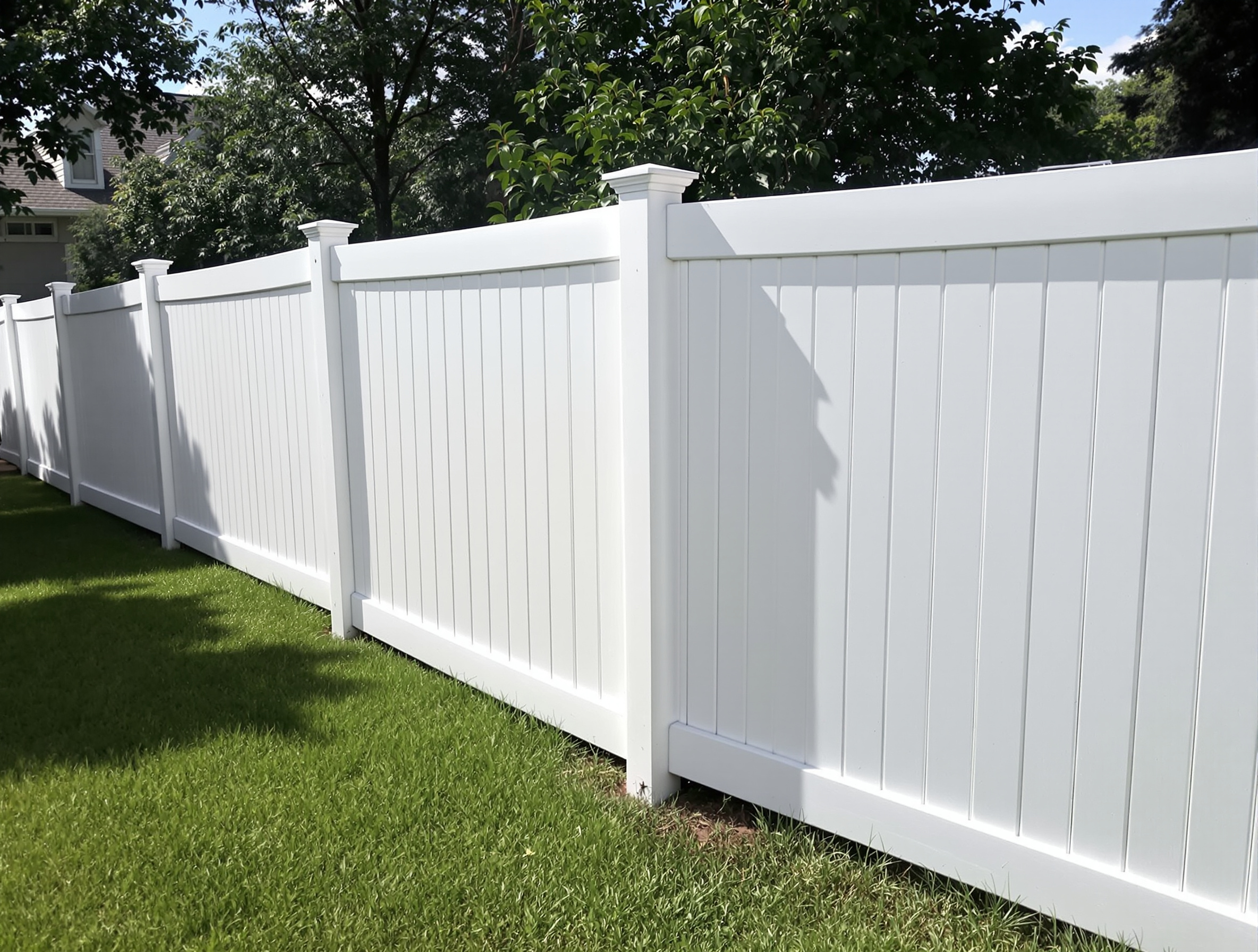
Sand / Woodgrain Privacy — 6 ft vinyl fence by RKC Wood Care Pros in Grain Valley, MO

Sand / Woodgrain Privacy — 6 ft

Warmer against the new brick fronts

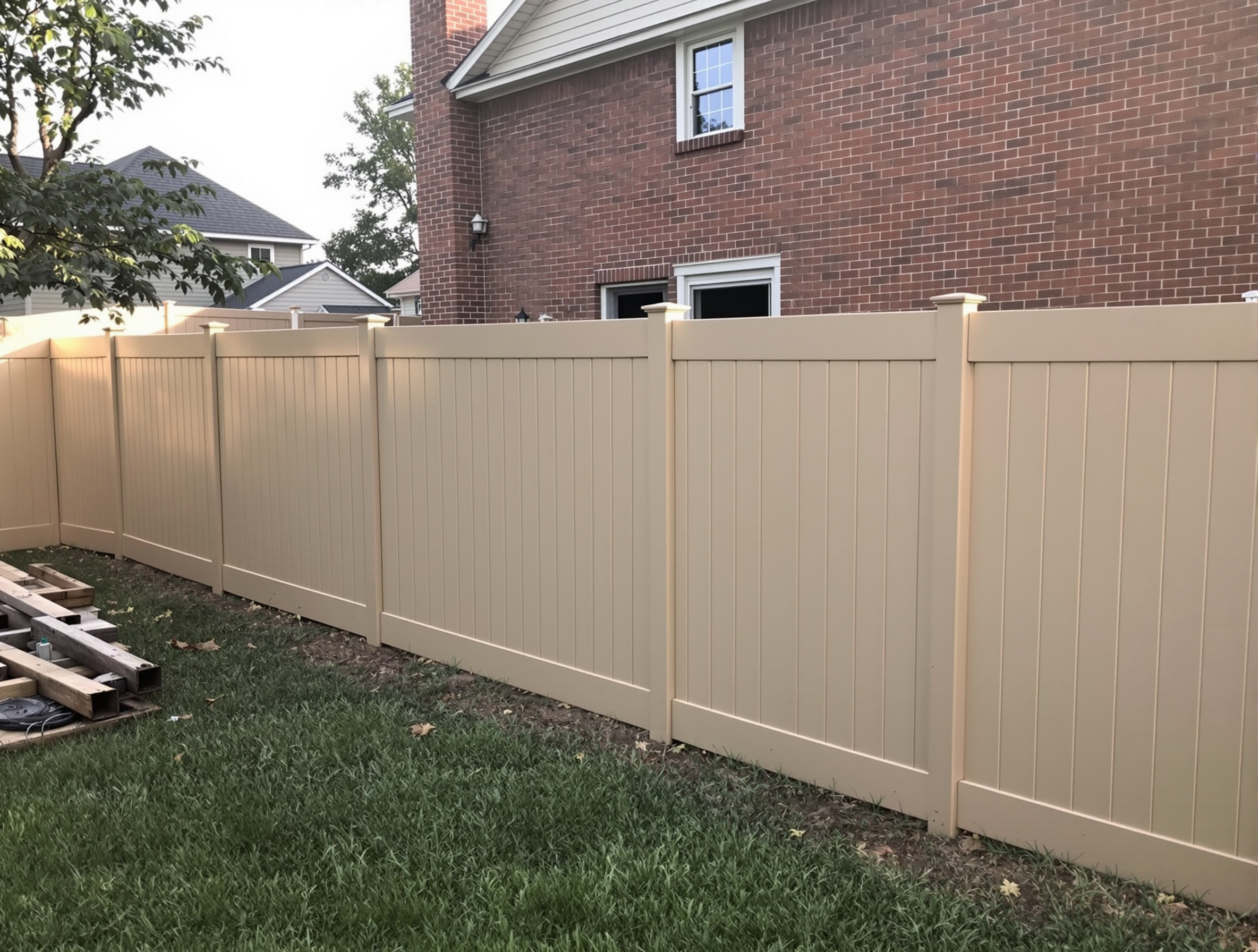
A lot of Grain Valley's new construction pairs a fence with brick and stone, and not everyone wants the fence itself to read stark white. A sand tone or an embossed woodgrain leans warm off the street, closer to the cedar most of the block is fenced in, and it dresses the new house up without buying you a yearly chore. Same reinforced rail, same thirty-year manufacturer backing behind it — the only thing that changes is the color you live with.

  • Price: $42–58/LF installed
  • Lifespan: 30+ years
  • Maintenance: A wash when it needs it
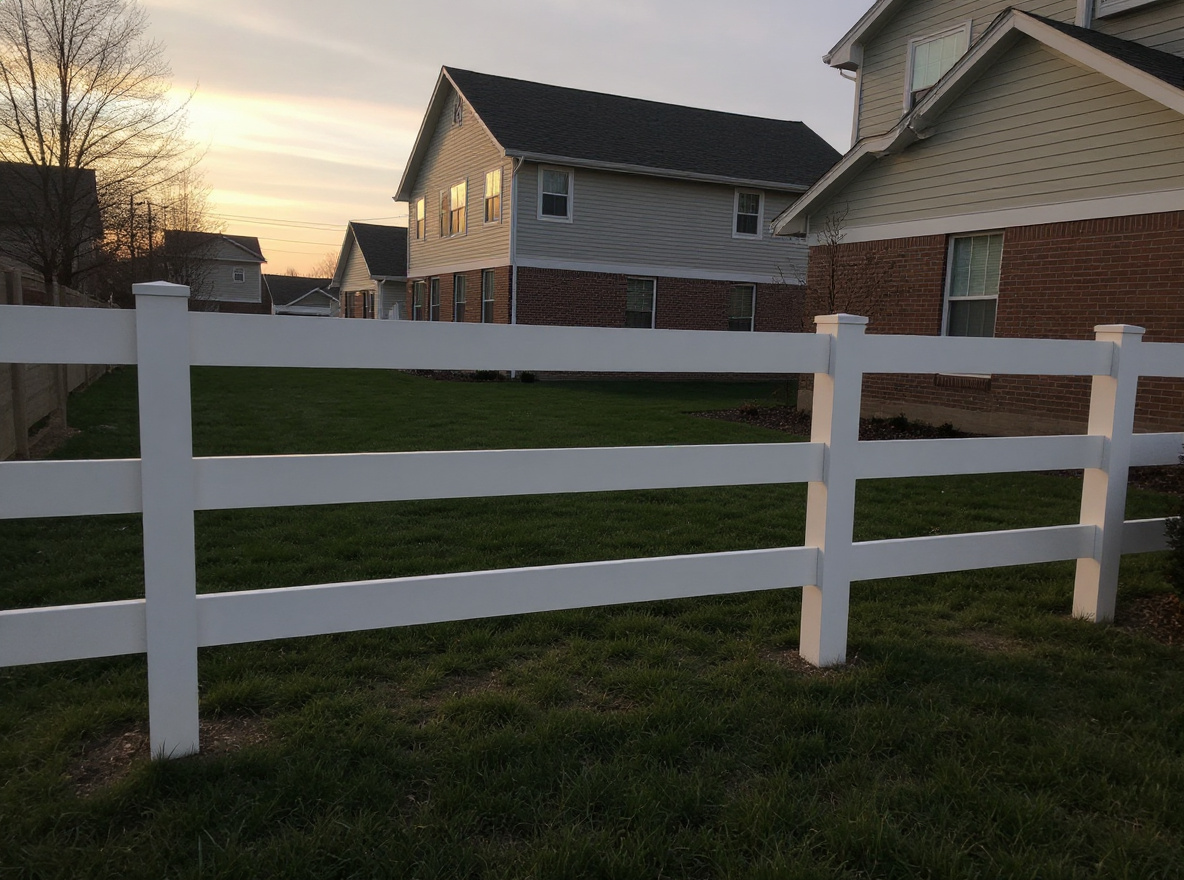
White Ranch Rail — 2 & 3-Rail vinyl fence by RKC Wood Care Pros in Grain Valley, MO

White Ranch Rail — 2 & 3-Rail

For the acreage out the eastern edge

Head out toward the rural east side of town and the fences change — split rail and wire strung around bigger, half-open lots, the kind that rot, sag, and beg for a fresh coat every few years. A vinyl two- or three-rail holds that same open, country-paddock line with none of the upkeep, and takes a welded-wire backing when there's stock or a dog to keep in. It's how you close a long acreage perimeter without walling it off solid.

  • Price: $28–42/LF installed
  • Lifespan: 30+ years
  • Maintenance: Next to none
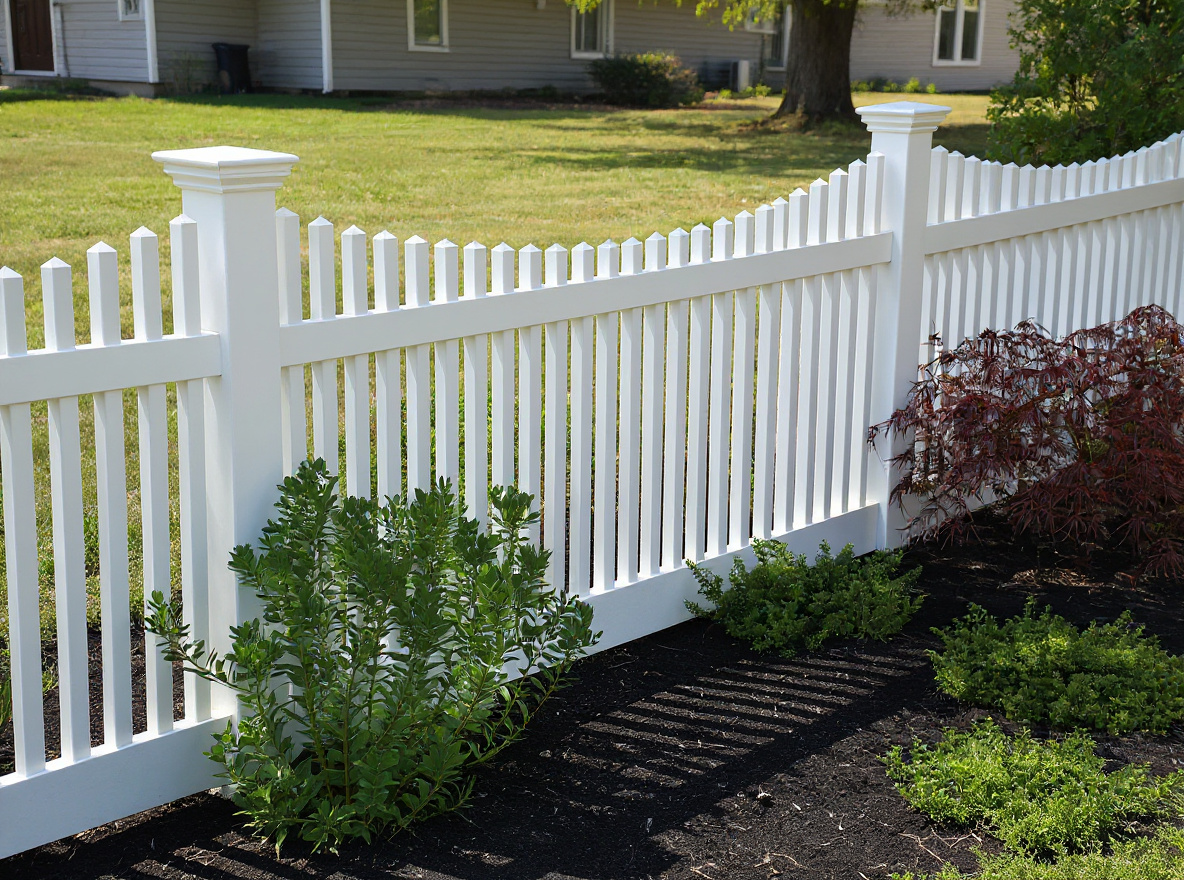
White Picket — 4 ft vinyl fence by RKC Wood Care Pros in Grain Valley, MO

White Picket — 4 ft

For the garden, the dog yard, or a pool edge

Not every run wants to be six feet of solid wall. A 4-foot vinyl picket frames a front garden, fences off a dog yard, or rings a patio and pool without shutting the view down — and it holds its clean white through every Grain Valley summer instead of flaking like a painted wood picket. It pairs naturally with a 6-foot privacy run on the back and sides when you want the open look up front and the closed yard behind.

  • Price: $30–45/LF installed
  • Lifespan: 30+ years
  • Maintenance: Next to none
White vinyl privacy fence pricing — Grain Valley, MO — RKC Wood Care Pros

PRICING A VINYL FENCE ON A GRAIN VALLEY LOT

What a Vinyl Fence in Grain Valley Costs, Broken Down

Around Grain Valley, vinyl runs $28 to $60 a foot depending on the profile and the length of the line — the privacy prices already include the reinforced rail, and every gate is its own line item. These three builds are the ones we bid most. Clearing any leftover builder fencing, extra gates, a step up to a taller solid profile, a ranch rail out on the acreage — each is priced on its own and shown plainly. You get the whole thing on paper, itemized, before a truck ever pulls up, so there are no spoken numbers and no change-order surprises once we start.

White Privacy — 6 ft

$40–55

per linear foot installed

The first-home workhorse — solid, sound-buffering privacy on a reinforced rail, with every gate broken out on its own line.

Sand / Woodgrain — 6 ft

$42–58

per linear foot installed

The warmer face for the new brick-front homes going up across Greystone, Woodbury, and Creekside.

Ranch Rail or Picket

$28–45

per linear foot installed

A two/three-rail for the acreage out east, or a 4-foot picket for a garden or dog yard — priced to the run that's actually there.

Builder fencing to clear, gates to add, a bump up to a taller solid run or out to a ranch rail — each lands on its own line of the estimate, nothing buried — call us at (913) 286-1091 or set up an on-site walk-through.

OUR PROCESS

The Steps Behind Your Grain Valley Vinyl Fence

Four stages take a project from the first call to a fence you stop thinking about — and on an exposed Grain Valley lot it's the deep footing going in before the panels that separates a fence that holds from one leaning by year three. Standing the panels is quick — a day to three on most yards. What decides whether a run stays plumb for a decade or has you calling after a windstorm is the layout and the 36-inch footings that come first.

1

We walk the new lot and lay out the line

On a fresh Grain Valley lot there's usually no old fence to work around, so we start clean: run the tape, stake the corners and the gate openings, and confirm the line sits on your pins, not the neighbor's. We flag the buried utilities, talk through where you want solid privacy versus an open rail or picket, and hand back a written, itemized quote — footage, gates, the profile and color, and the concrete and steel that go underground. Not a number spoken out loud.

2

Locates go in and the panels get ordered

The 811 utility locate is booked first — important on a new build where the yard's services are freshly buried and not yet forgotten. Then you settle the look standing on your own lot in daylight: plain white, a warm sand or woodgrain to match the block's cedar, a country rail for an acreage line, a picket for the garden. We order to that spec, and if there's any leftover builder's fencing or an old wire line in the way, it comes out before we dig.

3

Posts three feet into the clay, then the panels

Every hole takes a post seated a full three feet into poured concrete over a belled base — deep past the frost, deep enough that the open-edge wind can't work it loose the way it does a shallow one. The reinforced rail beds in as each section rises. A typical Grain Valley yard is a one-to-three-day job once the footings have cured, and we keep the run tight to any gentle grade so the bottom stays close to the ground.

4

We walk it with you and hand over the warranty

When it's up we pace the whole line together and swing every gate, making sure each catches square and clears the ground. Your CertainTeed, Bufftech, or Veka coverage gets filed in your name and the paperwork is yours to keep — no stain date to circle, nothing to reset before the next windy stretch. Anything that shifts in the first year, the same crew that built it comes back and squares it up.

VINYL WE'VE RAISED · KC METRO

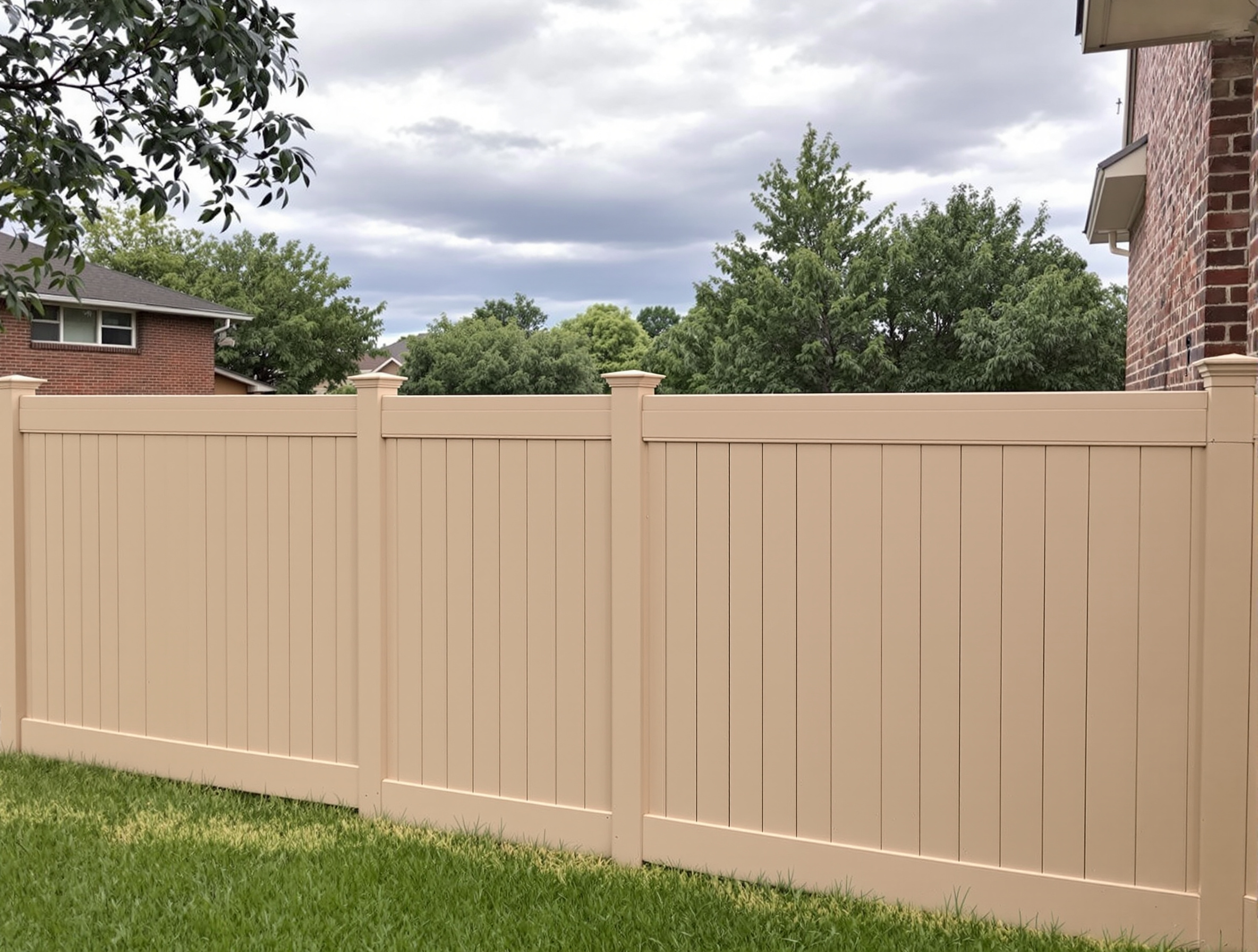
Vinyl fence installation by RKC Wood Care Pros, Kansas City metro
Vinyl install · KC metro
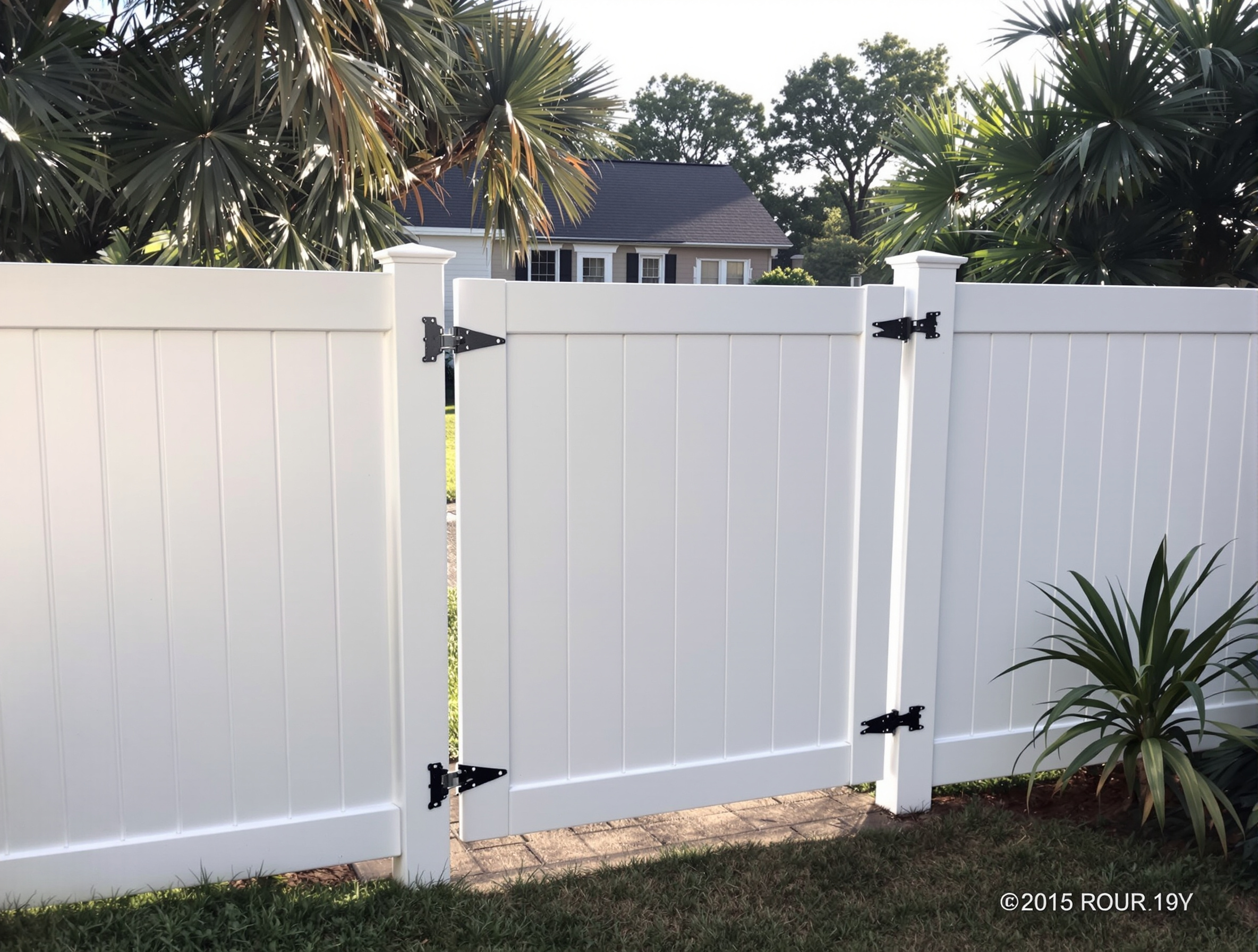
Vinyl fence installation by RKC Wood Care Pros, Kansas City metro
Vinyl install · KC metro
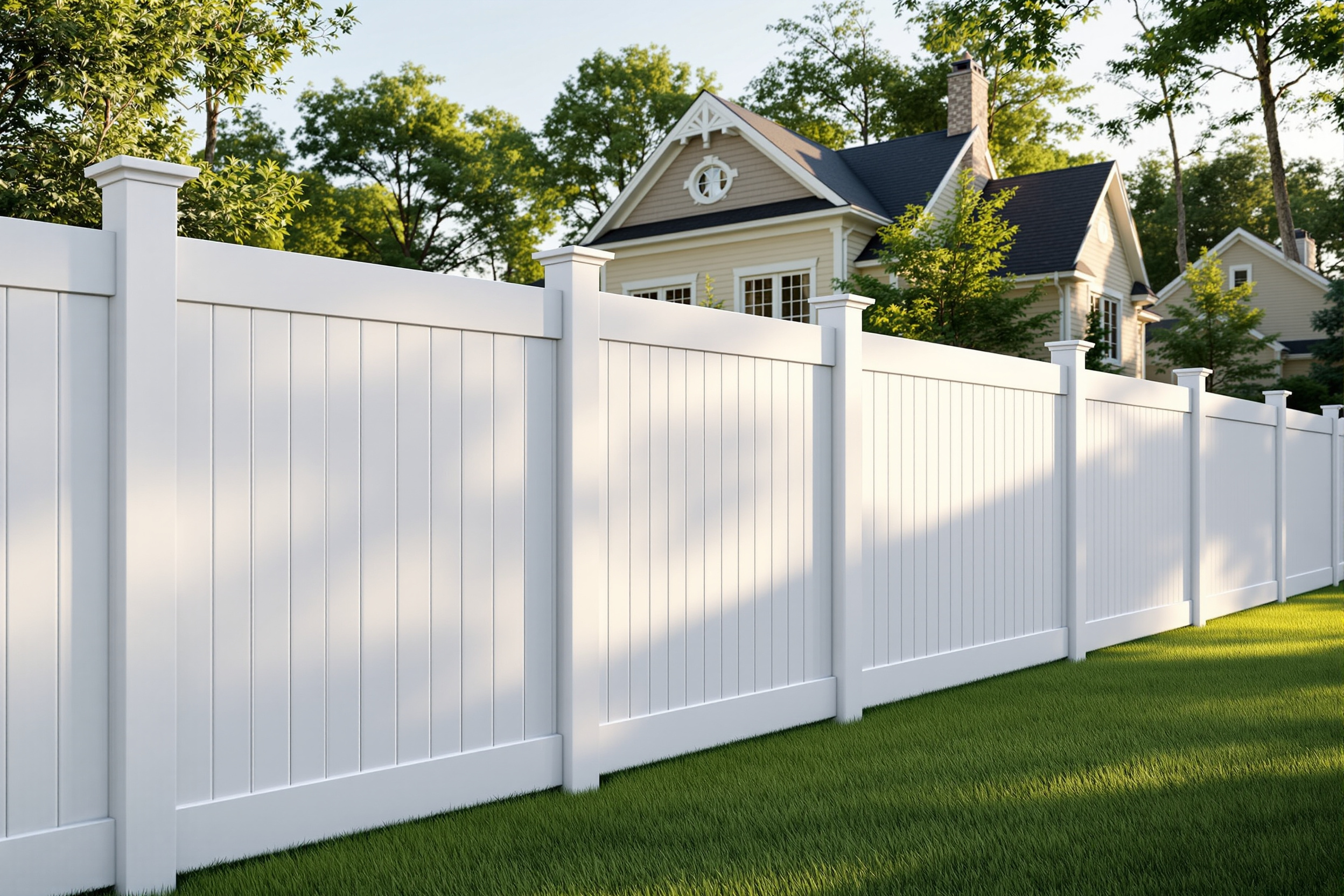
Vinyl fence installation by RKC Wood Care Pros, Kansas City metro
Vinyl install · KC metro
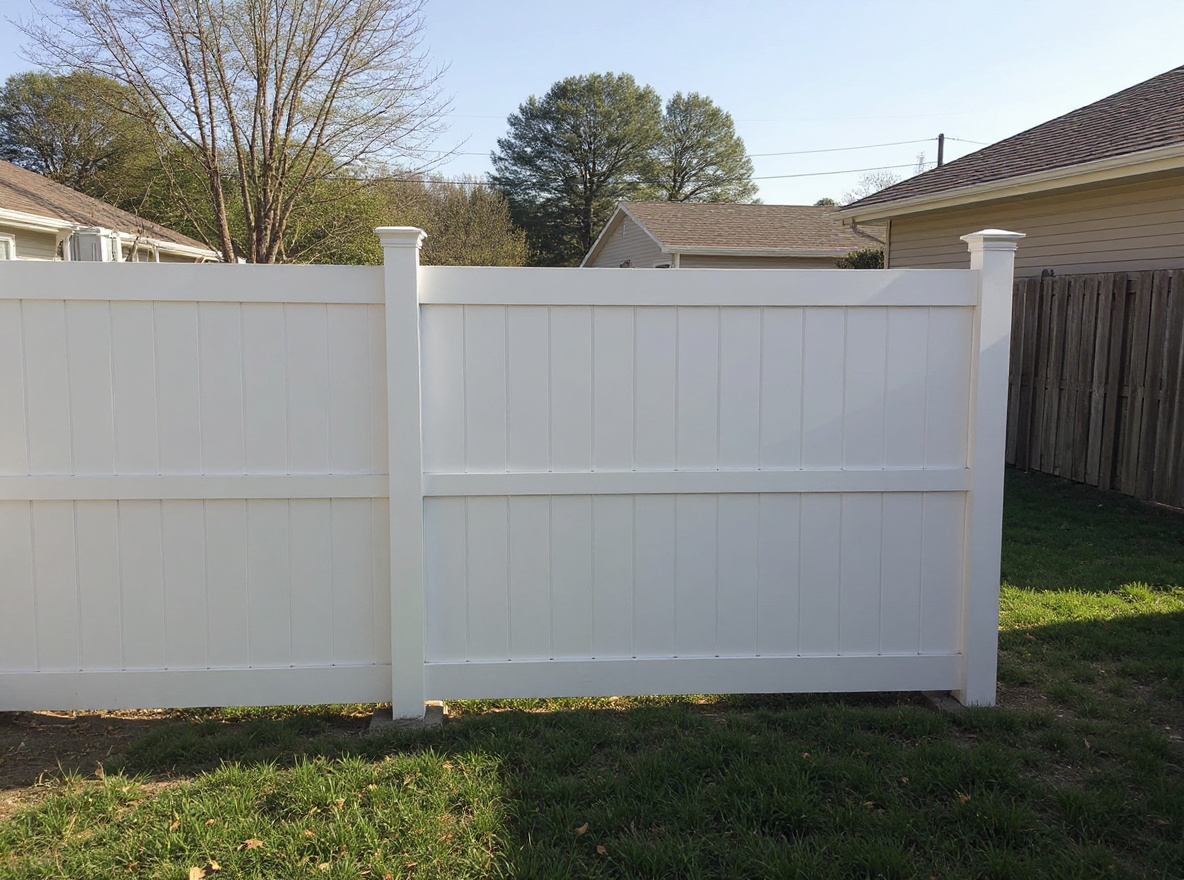
Vinyl fence installation by RKC Wood Care Pros, Kansas City metro
Vinyl install · KC metro

REVIEWS

What Kansas City Homeowners Say About RKC

4.9 ★ · 85 Google reviews

Every review is on our Google Business Profile — read them there, unedited.

Read all 85 reviews on Google

GRAIN VALLEY VINYL FENCE QUESTIONS

Vinyl Fence Questions Worth Asking in Grain Valley

The questions Grain Valley owners raise while the tape's still on the lot and the quote is half-written — sorted by topic, every answer tied to what it really costs here, the cedar it stacks up against, the Speedway-and-highway noise, and the open-edge wind it all has to stand through. Yours not here? Call (913) 286-1091 and ask us straight.

Vinyl fence installation in Grain Valley, MO by RKC Wood Care Pros

Vinyl Materials & Lifespan

How long does a vinyl fence last in Grain Valley?
Plan on thirty years and more from a capped, UV-rated panel on a reinforced rail — and what carries that number is the post holding it up. On Grain Valley's open eastern edge the wind is the real test, and a shallow post is what leans, not the vinyl. We drive every post three feet into concrete over a belled base, past the frost line, so a gust has nothing to work loose. CertainTeed, Bufftech, and Veka each stand behind the panel against fading, cracking, peeling, and chalking, and that protection follows the house to the family that buys it next.
Cedar's cheaper and everyone here has it — why go vinyl on a first home?
No argument that cedar is the going rate on move-in week, and on a stretched first-home budget that matters. The gap shows up later. Bare cedar grays in two summers and wants sealing every two or three years after — money and a weekend each pass, on a fence you already bought — and on this windy edge it's the run you're out straightening every few springs. Vinyl costs a bit more up front and then costs nothing: no stain, no shallow-post reset, a steel rail that holds the gusts, thirty-plus years, warranty in writing. Love the wood and don't mind the upkeep? Cedar's fair. Want it done once? Vinyl wins the long haul — and we'll price both so you decide on real numbers.
Will vinyl actually cut the Speedway and highway noise?
It helps, and honestly, so does any solid fence — but a tight, gap-free vinyl privacy panel does it better than an open or aging cedar run full of daylight. It won't make Valley Speedway silent on a Saturday night; nothing short of a wall will. What a solid six-foot privacy panel does is knock the sharp edge off the roar and the I-70 hum, the same way it buffers the wind. If sound is part of why you're fencing, we'll steer you to a solid profile and a full-height run rather than anything with gaps.
Does vinyl crack or yellow in Grain Valley's weather?
The capped, co-extruded profiles we install bake titanium-dioxide UV blockers into the outer skin, so the summer sun doesn't yellow them — that's the whole point of co-extruded over single-wall. Cracking, when it turns up, is a panel flexing loose at the post on an under-built run, which a reinforced rail and a deep post stop cold. And most of what we hang is rated class-4 for hail, the tier a good roof shingle earns. The cheap single-wall PVC at the bottom of the market is the stuff that fades and goes brittle — which is exactly why it never leaves our trailer.

Pricing & Warranty

What does a vinyl fence cost in Grain Valley?
A 6-foot white vinyl privacy fence runs $40 to $55 a foot installed with the reinforced rail included. A typical Grain Valley backyard is 150 to 200 linear feet, which lands most white privacy projects in the $6,000 to $11,000 range. A warm sand or woodgrain runs $42–$58; a ranch rail for an acreage line and a 4-foot picket both sit lower, $28–$45. Gates, tear-out of any leftover builder fencing, and profile upgrades are each written on their own line, never folded in. Every Grain Valley estimate is free and on paper.
Is the warranty real, and does it transfer when we sell?
Real, and yes. CertainTeed, Bufftech, and Veka each back the panel against fading, cracking, peeling, and chalking, then move to prorated coverage for the next owner when the home changes hands. We register it in your name the day the crew wraps and leave you the documents. In a fast-turning Grain Valley market where young families move in and out on the school calendar, a maintenance-free fence still under live manufacturer coverage is a genuine plus when it's your turn to sell — and any brand that won't put that in writing doesn't go in your yard.
We're out on an acreage lot toward the east — can vinyl do a rail fence?
Yes, and it's a regular call on Grain Valley's rural edge. A vinyl two- or three-rail keeps the open, country-paddock look those bigger lots have always run, without the split-rail's rot, the wire's sag, or the repainting a wood rail demands. It takes a welded-wire backing when you need to hold a dog or stock, and it closes a long perimeter for far less than a solid privacy wall would. For an acreage owner tired of chasing repairs on an old rail line, it's usually the right answer.

OTHER GRAIN VALLEY FENCE OPTIONS

What Else We Build Across Grain Valley

Vinyl isn't the only option — RKC installs and repairs every type of fence in Grain Valley: wood, vinyl, chain link, ornamental iron, aluminum, and commercial security, plus custom gates and in-house staining. Every card below leads to its own dedicated Grain Valley page — pricing, the conditions it's built to handle, and shots from jobs around the area.

Ready when you are

Get a free estimate — we usually respond the same day.

Call (913) 286-1091