Skip to content
Gate Installation in Leawood, KS — Walk, Drive, Estate & Sliding Gates

Gate Installation in Leawood, KS — Walk, Drive, Estate & Sliding Gates

Across Leawood — from the Hallbrook and Mission Farms estates to the capped-cedar runs of Whitehorse — RKC Wood Care Pros builds walk, drive, estate double-drive, and sliding gates finished to a white-glove standard and set to hold. In the metro's most exacting fence market a warped picket or a squeaking latch is what gets noticed, so we build the leaf to a tight, matched reveal — capped, trimmed, stained from the fence's own batch — on a hinge post driven 36 inches through the limestone base, below the Kansas City frost line. Cedar, ornamental steel, or aluminum, welded and rated past the load. 4.9 stars from 85 Google reviews.

★★★★★
4.9
from 85 reviews
Licensed
& Insured · KS + MO
400+
fences installed
A+ BBB Rated 400+ Fences Installed Since 2021 Welded Gate Frames · Galvanized Hardware Free On-Site Estimates
See gate styles in our catalog ↓

WHY LEAWOOD HOMEOWNERS BUILD NEW GATES

In Leawood the Gate Is Judged on Whether You Notice It at All

In the metro's white-glove fence market, the gate's job is to disappear into a flawless line and to hold dead-square where the limestone base fights the post. The reason most Leawood homeowners call about a gate is rarely that it stopped working — these fences were built well the first time. It's the cosmetic tell: the picket that warped, the pool gate that has to latch itself every time, the estate entry that has to read as one line. The gate is the one part that moves and the one part that can't hide a mismatch. That's the whole job here.

1

A gate nobody can find a flaw in

The reason most Leawood gate calls come in isn't a gate that stopped working — structural failures are rare here because these fences were built right the first time. It's the cosmetic tell: a picket that warped, a latch that squeaks, a leaf sitting a hair out of line on an otherwise flawless run. A gate built to a tight, even reveal, capped and trimmed to match, stained from the same batch, and hung on hardware that stays silent is the one part of the property with nothing to call about. In a white-glove market, that's the whole job.
2

A pool gate that latches itself without breaking the view

Pool-safety compliance is the single biggest reason Leawood homeowners call about a gate, and a pool gate carries a duty an ordinary gate doesn't — close and latch on its own, every time, with no thought from you. We set a concealed self-closing hinge to the leaf's weight, mount the latch up top and out of a child's reach, and tune it to catch on the first swing. On the black ornamental enclosures Leawood favors, we match the picket spacing to the fence so the safety hardware never costs you the open sightline you paid for.

3

An estate entry that reads as one continuous line

The half- to full-acre lots across south Leawood, Hallbrook, and Mission Farms take wide entries, and a matched double-drive is where a premium property either looks finished or looks compromised. Two braced leaves meet clean at a center drop rod, both hinge posts go 36 inches down, and the caps and finials answer the fence pillars — so the pair reads as one line across the drive instead of two gates that happen to touch. Built to the property, not to a standard doorway.

4

The one thing on the property with nothing to call about

Most Leawood fences don't fail structurally, so when a gate starts to sag, squeak, or drag, it's the flaw on an otherwise perfect run — and it stands out. A frame welded so it can't twist, a footing driven 36 inches through the limestone base, and hinges rated past the leaf and sealed against a rust streak are what keep the latch finding its catch, silent, at year five and at year ten. On a property where the moving part is usually the first to age, we build it to be the last — which is the whole point in a market that notices everything.

HOW WE BUILD IT

Three Calls That Decide a Leawood Gate — Finish, Footing, Weld

A Leawood gate is a finish problem before it's a hardware problem — first the leaf has to pass a white-glove eye, then it has to hold plumb through a limestone base that stops a shallow post short. This is the market where a warped picket or a squeak is enough to generate a call, so the leaf gets built to the fence's exact finish, not pulled off a shelf. Then it has to stand where amended topsoil sits on rock and 80-plus freeze-thaw cycles work the ground every winter. These three decisions — matching the finish, reaching depth, welding the frame — are what separate a gate still swinging silent in year ten from one that becomes the flaw on a flawless run.

1

The gate is the panel that gets inspected — finish and tolerance come first

Leawood is the metro's white-glove fence market, and structural failure is rare here because most of these fences were built well to begin with. So what generates a call is cosmetic — a single warped picket, a gate that squeaks, a latch sitting a hair proud. That flips the priority order. We build the leaf to a tight, even reveal, carry the run's cap and trim profile straight across it, stain it from the same batch, and hide the hardware where the look demands — so the one part that moves is the one part nobody can find a flaw in. In most towns a gate is judged on whether it works. Here it's judged on whether you notice it at all.

2

Post depth through the limestone base — 36 inches, rock-drilled where it takes it

Under Leawood's amended, manicured topsoil, parts of the city sit on a limestone shelf, and a hinge post that stops short at rock instead of reaching depth heaves out of plumb the first winter — which on a Leawood fence is a cosmetic emergency, not just a structural one. Every gate post we set here goes a full 36 inches into poured concrete, below the Kansas City frost line, and we rock-drill through the shelf where the base demands it rather than setting shallow and hoping. The gate that still hangs dead-square at year ten is the one whose post reached the bottom.

3

Welded frame, hardware rated past the leaf, hidden where the look calls for it

Why a bolted gate eventually fails is mechanical, and in Leawood the failure reads as cosmetic long before it's structural: a bolted joint carries a trace of slack from the day it's built, and a few thousand swings a year grind that slack into a gap, until the leaf hangs a degree off, the latch grabs late, and the gate starts to announce itself with a squeak. We build every corner welded, so there's no slack to grind. Hinges get spec'd to hold the leaf plus a half-again margin in hot-dip galvanized or stainless — never zinc-plated, which streaks rust down a capped cedar gate within one Kansas City summer and ruins the finish you paid a premium for. On the black ornamental pool enclosures around town, the self-closing spring and the latch mount out of sight, so the clean face of the fence carries straight across the gate.

We've built gates across the estates of Hallbrook and Mission Farms, the capped-cedar and ornamental runs through Whitehorse and Worthington, and the wide drives of Leawood South — plus the teardown-and-rebuild lots up north toward Town Center Plaza. Same 36-inch rock-drilled posts, same welded frames, same finish standard on every one.

THE FINISH STANDARD

What a White-Glove Gate Has to Get Right in Leawood

In most towns the terrain decides the gate. In Leawood the finish decides it, because the gate is the most-inspected panel on a property built to be flawless. Find the detail below that matches your fence and your driver to see why it gets noticed here, and the build that makes it pass. A capped-cedar estate run and a self-latching pool enclosure are two different gate problems wearing the same white-glove standard.

The Leawood detail Why it gets noticed here How we build it to pass
Matched caps and trim on a premium capped-cedar run Where Leawood runs cedar, it runs it high-end — capped, trimmed, and stained to a set tone — so a gate that misses the cap profile, or the stain by a shade, is the first thing an exacting eye lands on. We carry the exact cap and trim detail straight across the leaf and stain the gate from the same batch as the run, so the opening reads as part of the fence rather than a piece added to it.
A self-latching leaf on a private-pool ornamental enclosure Pool-safety compliance is the single biggest gate driver in town, and a pool gate has to self-close and self-latch every time — without a surface-mounted latch cutting the open sightline that was the reason you chose ornamental. A concealed self-closing hinge and a top-mounted latch tuned to catch on the first swing, with picket spacing matched to the fence so the safety hardware never costs you the view.
Black steel matched to an aging ornamental system replaced in sections Swapping out worn high-end ornamental is a real Leawood driver, and a new gate hung in a run that stays up has to match the old picket spacing, rail height, and finial — or the repair announces itself down the line. We measure the standing run's spacing and finial and fabricate the leaf to it in heavy-gauge steel, powder-coated to the existing color so the new gate disappears into the old line.
A double-drive with matched finials on a south-Leawood acre lot The half- to full-acre estates in south Leawood take wide entries, and two leaves that don't meet clean at the center — or caps and finials that don't answer the fence pillars — read as a compromise on a property that doesn't make them. Two braced leaves closing on a center drop rod, both hinge posts 36 inches down, caps and finials matched to the pillars so the pair reads as one continuous line across the drive.
A walk gate with nothing to call about — no squeak, no drag In a market where a minor gate squeak is enough to generate a service call, the walk gate you touch ten times a day is the single most-scrutinized panel on the whole property. Sealed, rated hinges and a welded frame set to a tight, even reveal, so the gate swings silent and latches first-try — the detail that keeps the everyday gate off your list.
A footing driven to depth through the limestone base Under Leawood's amended, manicured topsoil, parts of the city sit on a limestone shelf, and a post that stops short at rock heaves the gate out of plumb the first winter — cosmetic ruin on a fence that was otherwise flawless. We rock-drill where the base demands it and still set the hinge post a full 36 inches in poured concrete, below the frost line, so the gate holds square through the freeze-thaw.

What every row shares is the order of operations: before we quote a Leawood gate, Josh reads the finish first — the cap profile, the stain tone, the picket spacing, the pillar detail — and only then the ground it sits in. It's the reason a gate we hang on a Hallbrook estate line looks like it grew there, and why a pool enclosure gate latches itself without ever costing you the view. That match gets settled at the fence, not guessed from a catalog.

GATE TYPES

Walk, Drive, Estate & Sliding — Finished to Your Leawood Line

Which gate you need comes down to the opening and how you use it; which material and finish it wears comes down to the fence it joins. Here are the four gate types we build across Leawood, what each one fits, and real installed pricing. Capped cedar, heavy-gauge ornamental steel, and powder-coated aluminum are swappable within each type — the leaf gets matched to your run while the welded frame and 36-inch rock-drilled footing stay the same underneath.

Walk Gate by RKC Wood Care Pros — Leawood, KS and the Kansas City metro

Walk Gate — 3–4 ft wide

The panel you touch ten times a day

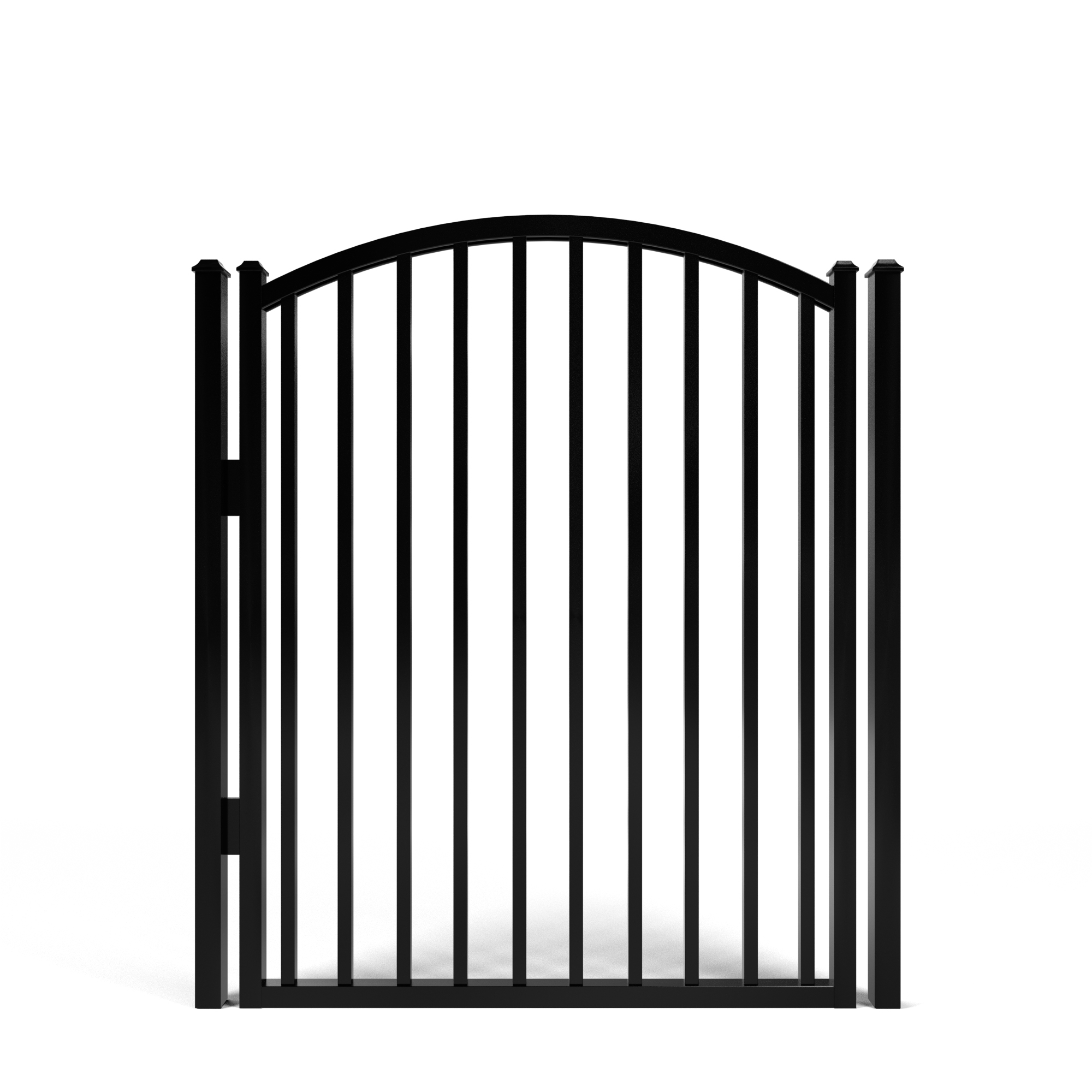
The side-yard and pool-access gate — for the trash cans, the mower, the trip out to the water. It hangs on a welded square-tube frame so it never twists out of true, and on a Leawood pool enclosure it gets a concealed self-closing hinge and self-latch as a matter of course. Clad in capped cedar to vanish into a premium run, or powder-coated steel to keep a sightline open — with hardware sealed so it never gives you the squeak that gets noticed here.

  • Price: $300–600 (cedar) · $450–850 (ornamental)
  • Typical use: Side-yard and pool-enclosure access, matched to a capped-cedar or ornamental line
Single-Drive Gate by RKC Wood Care Pros — Leawood, KS and the Kansas City metro

Single-Drive Gate — 8–14 ft wide

One leaf, finished to match the line

A single leaf across a standard Leawood drive, carrying a diagonal brace welded corner to corner so the gate's own weight bears on steel instead of sagging the latch side down over the years. The caps, finials, and stain get matched to the fence it joins, and the hinge post goes 36 inches down — rock-drilled through the limestone shelf where the base demands it — so the leaf holds dead-square on a fence where a heave would be a cosmetic emergency.

  • Price: $650–1,200 (cedar) · $900–1,800 (ornamental)
  • Typical use: A standard estate-neighborhood drive matched to cedar or ornamental
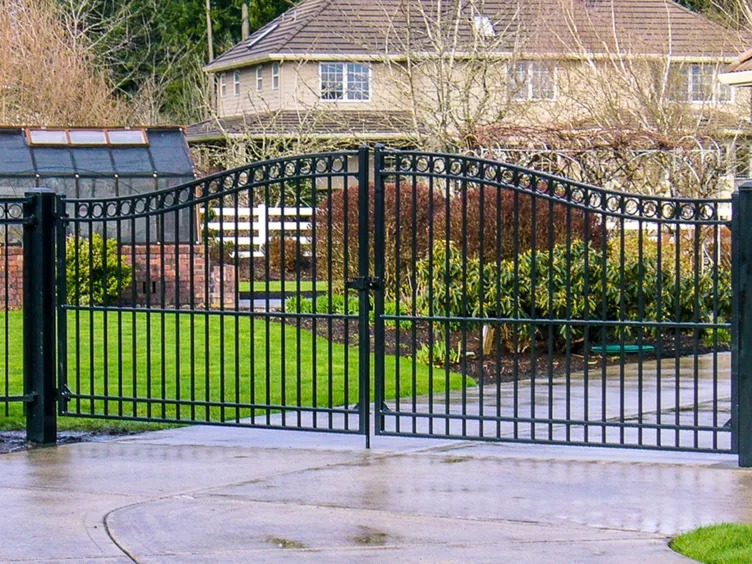
Double-Drive Estate Gate by RKC Wood Care Pros — Leawood, KS and the Kansas City metro

Double-Drive Estate Gate — 14–20 ft wide

Two leaves for the south-Leawood acre lots

A matched pair, each leaf hung from its own pillar post and closing on a center drop rod. Beyond 14 feet a lone leaf becomes too long a lever for a single hinge to hold true, so splitting the opening in two solves it — which is why the wide entries on the Hallbrook and Mission Farms estates almost always run double. Both hinge posts drive 36 inches into the clay and limestone, both leaves are braced, and the caps and finials answer the fence pillars so the two halves read as one line across the drive.

  • Price: $950–2,800 installed
  • Typical use: Wide estate entries on Hallbrook and Mission Farms lots, boat and trailer clearance
Sliding Gate by RKC Wood Care Pros — Leawood, KS and the Kansas City metro

Sliding Gate — 10–20 ft travel

For sloped estate approaches and retaining-wall lines

When a southern Leawood approach rises steeply, a retaining wall borders the drive, or the lot leaves no room for a swing arc, the gate rides a V-track or cantilevers on rollers to the side instead of swinging — needing zero arc clearance. It's the answer for the sloped estate drives where a swing gate would catch on climbing pavement, and for the tighter teardown-and-rebuild lots up north where the fence line sits close to the drive edge.

  • Price: +$400–900 over swing pricing
  • Typical use: Sloped estate drives, narrow rebuild lots, retaining-wall fence lines
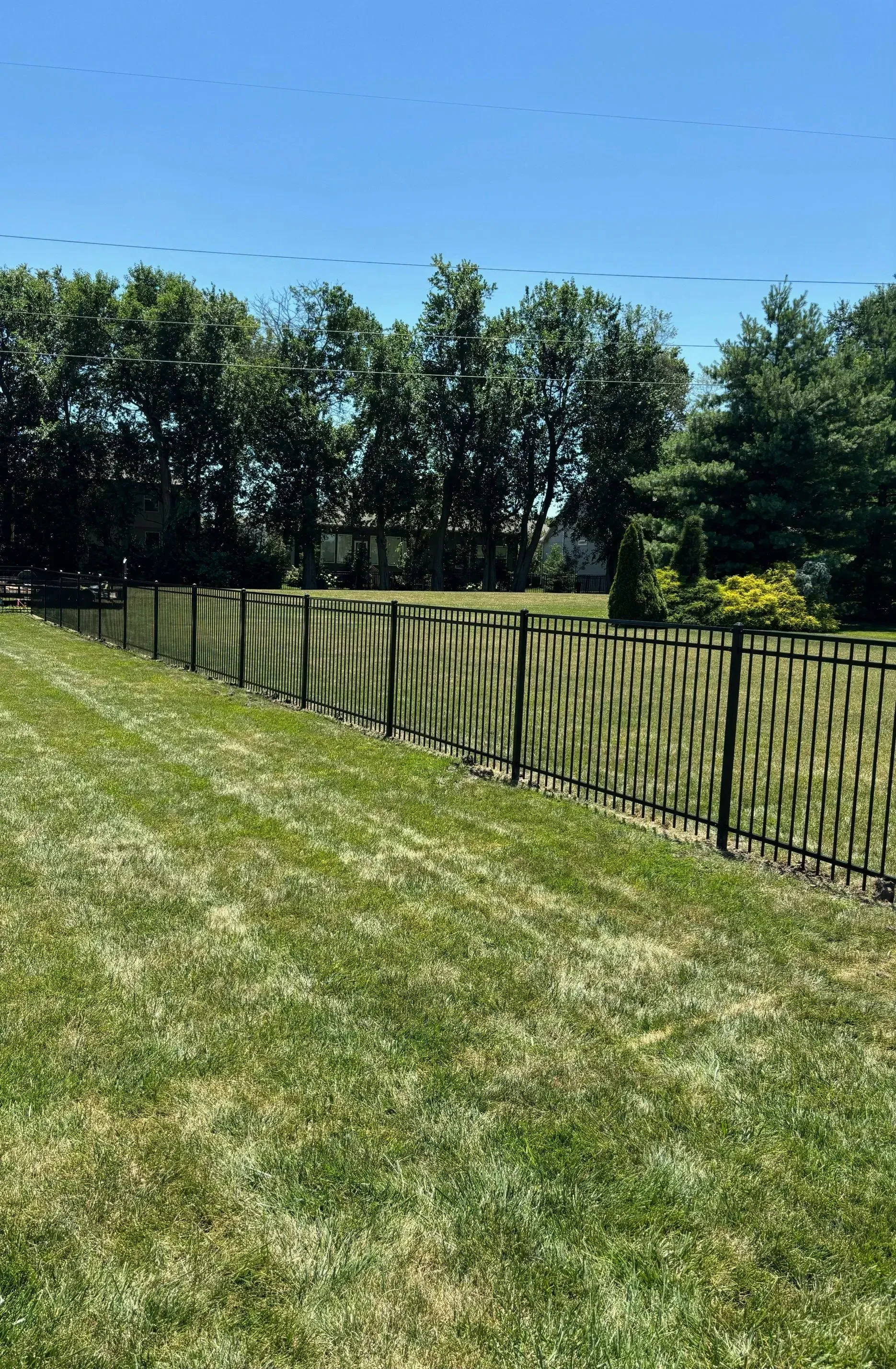
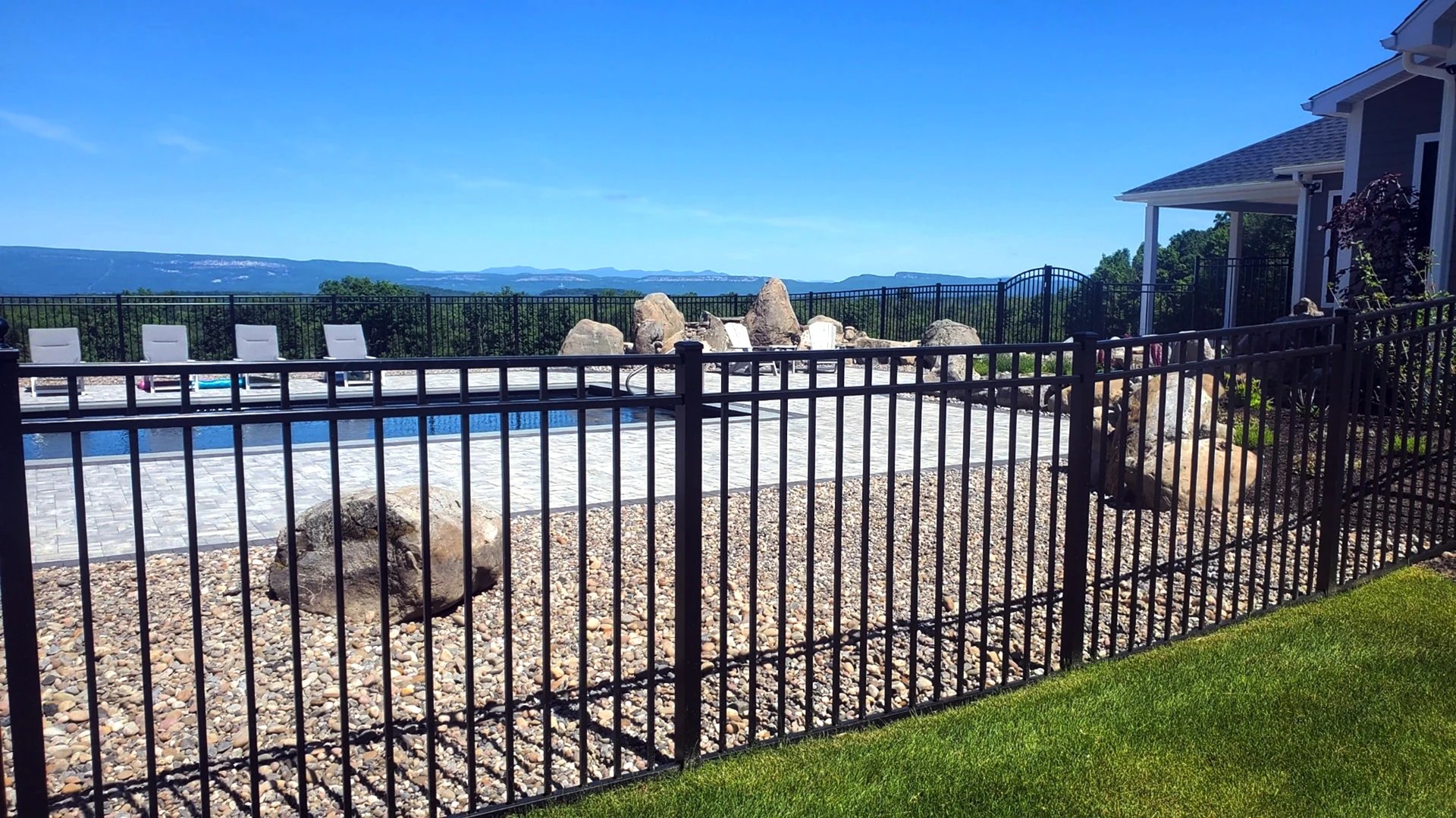
Heavy-gauge black ornamental steel fence and gate line on a Leawood, KS property by RKC Wood Care Pros

LEAWOOD GATE PRICING

What a Gate Runs in Leawood

Price tracks the gate type, the material and finish it matches, the width, and whether the base takes a rock-drill. Every quote includes a welded steel frame, galvanized heavy-duty hardware, and a 36-inch hinge post driven below the frost line. The matched-cap, batch-stain, and fabricated-finial work carries a premium over a stock leaf — priced honestly on the walkthrough. Below are the three configurations we quote most often on Leawood properties.

Capped Cedar or Ornamental Walk Gate

$300–850

installed

Capped cedar or powder-coated steel on a welded frame, sealed rated hinges, self-latch, over a 36-inch footing driven below the frost line.

Single-Drive Driveway Gate

$650–1,800

installed

Cedar $650–1,200 · ornamental steel $900–1,800. Diagonal brace, ball-bearing pivots, caps and finials matched to your fence line.

Estate Double-Drive & Sliding Gates

$950–2,800

installed

Priced on width plus swing or slide hardware. Center drop rod, matched finials, and rock-drilled footings quoted at the on-site walkthrough.

Every Leawood gate estimate is free, written, and itemized — it lists the frame material, hinge and latch spec, and post depth, with the finish match to your fence settled before you sign. Call (913) 286-1091 or request an on-site walkthrough, and see the full gate-type range on the metro Kansas City gate installation hub.

OUR PROCESS

How a Gate Install in Leawood Actually Happens

Four steps from the first read of your fence to the first swing. Most Leawood gate projects run 1 to 3 weeks start to finish. Install days themselves are short — walk gates are often same-day, drive gates one to two days. The stretch out front is fabrication and the rock-drill schedule: the leaf gets built to match your finish and the welded frame comes together while the concrete and drilling are set. Here's what each step actually looks like on a gate install in Leawood.

1

The estimate — Josh reads the finish standard and the ground

Josh comes out himself and measures the opening for real, but half the walk is the fence it hangs on and the base it sits in: the cap and trim profile the leaf has to carry, the stain tone it has to match, the picket spacing on the ornamental run staying up, and whether the lot sits on the limestone shelf that forces a rock-drill. Matching a capped-cedar estate line and matching an aging black-steel pool enclosure are different builds, and that call gets made in your driveway. You leave knowing the gate type and exactly how it'll match; the itemized written quote follows inside the week.

2

Fabricating the leaf to the finish, sizing the post to the load

With the estimate signed, the leaf goes into the shop before it ever reaches your drive. We cut and weld it to carry the fence's cap and trim profile on a capped-cedar run, or the standing run's picket spacing and finial on ornamental, over a heavy-gauge steel frame that does the structural work under the cladding. The post and hardware are then sized to the leaf that fabrication produced — a light 4-foot walk gate and a 16-foot estate leaf are different structural problems, and the wide one takes a heavier post set deeper and a pivot rated well past its weight. We settle the hinge and latch ratings, pick drop rod, cane bolt, or slide roller, and lock the concrete and any rock-drilling into the schedule before we break ground.

3

Posts in first — rock-drilled to depth — frame on top

The first day on site is spent below grade. Hinge posts go down a full 36 inches in poured concrete, and where the hole hits the limestone shelf we bring in the rock-drill rather than stopping short — then the footings cure overnight so nothing shifts once the leaf loads them. The frame and infill go up the following day on hardened footings. Hinges and latch are set and tuned right there against the real slope of your drive, never pre-fixed on a bench, so the leaf hangs to the ground it actually meets and lines up dead-square on the matched reveal. Figure a day on site for a walk gate, one to two for a drive gate.

4

The ten-cycle sign-off and the 30-day return

We don't collect final payment until the gate has been swung ten full cycles with a crew member's eyes on each hinge as it takes the weight — a drag, a scrape, a squeak, or a latch riding a hair proud all get fixed before the truck leaves. Then we put a second visit on the calendar at 30 days, because a fresh footing gives up a fraction of settle in its first month, and a fraction is all it takes to start a catch dragging or a hinge whispering. That return trues the latch, takes up any drift, and re-tests a pool gate's self-close — and it's already inside the price you signed, not a service call later.

GATE WORK — LEAWOOD & THE KC METRO

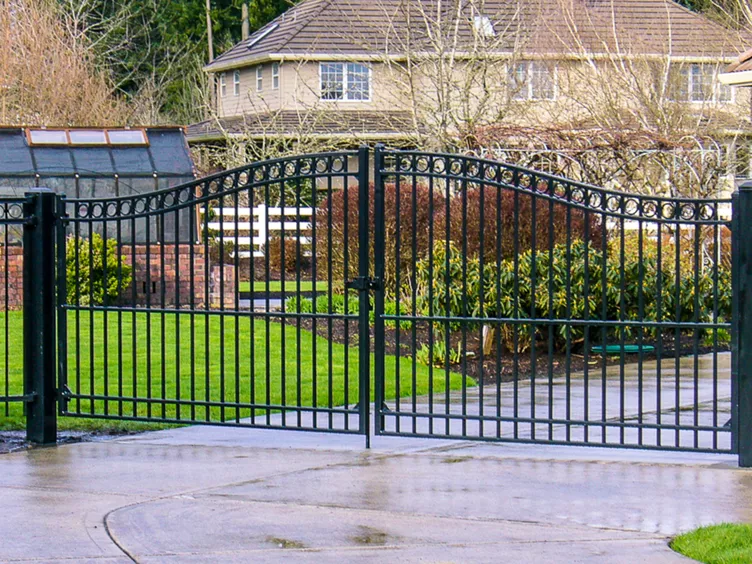
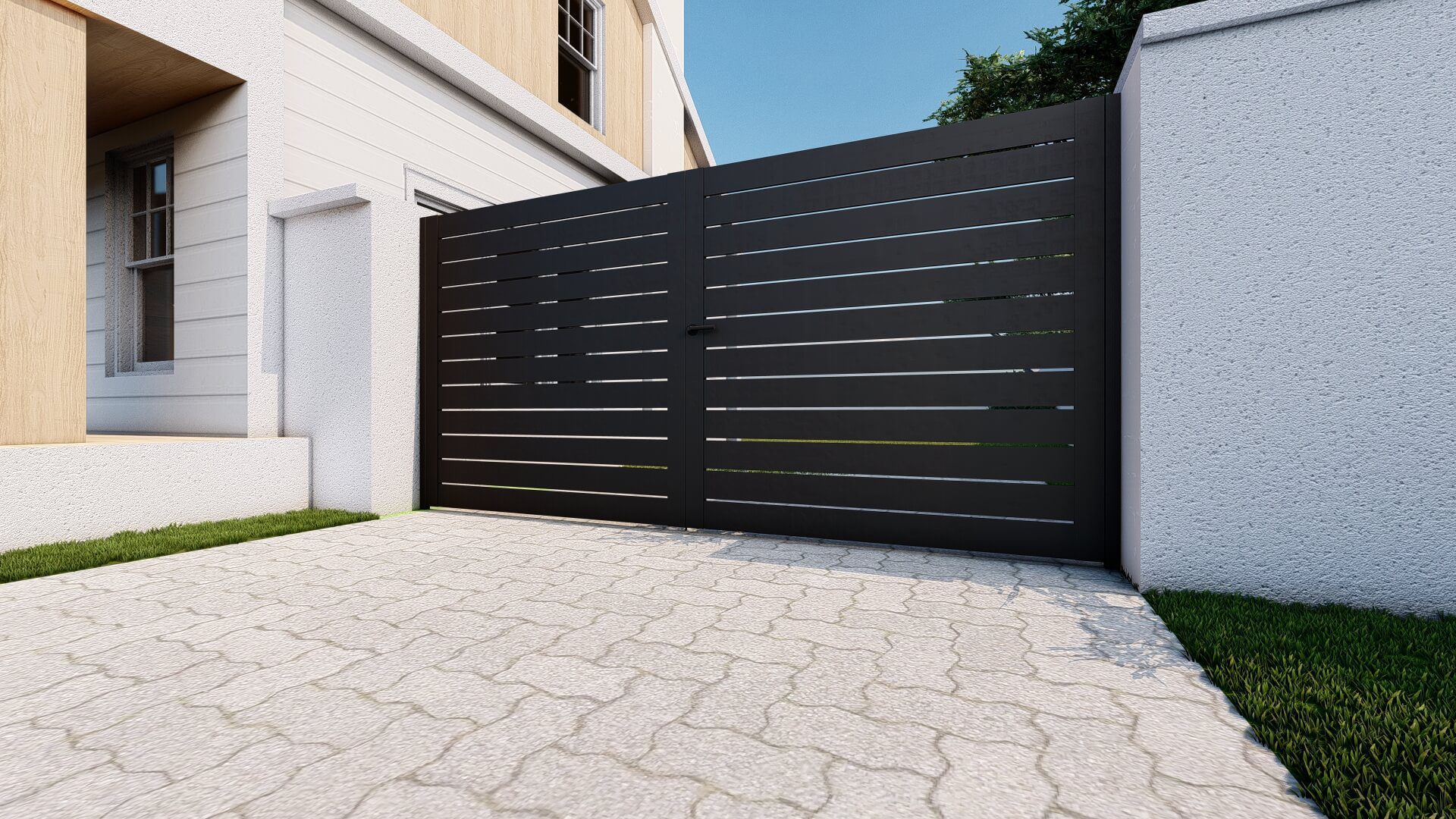
Horizontal-slat single-drive entry gate installed by RKC Wood Care Pros in Leawood, KS
Horizontal-Slat Entry Gate · Leawood
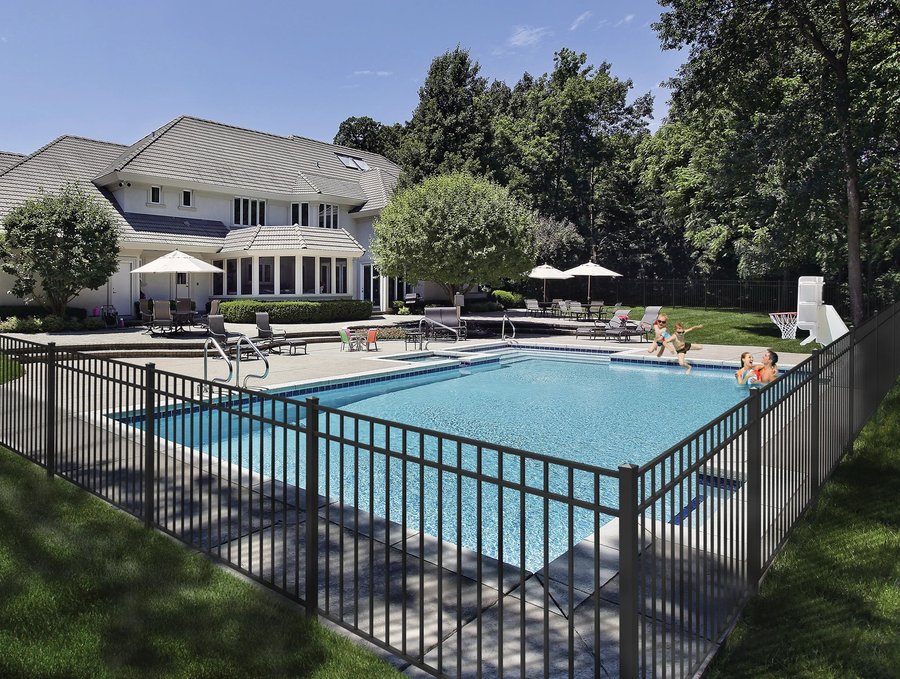
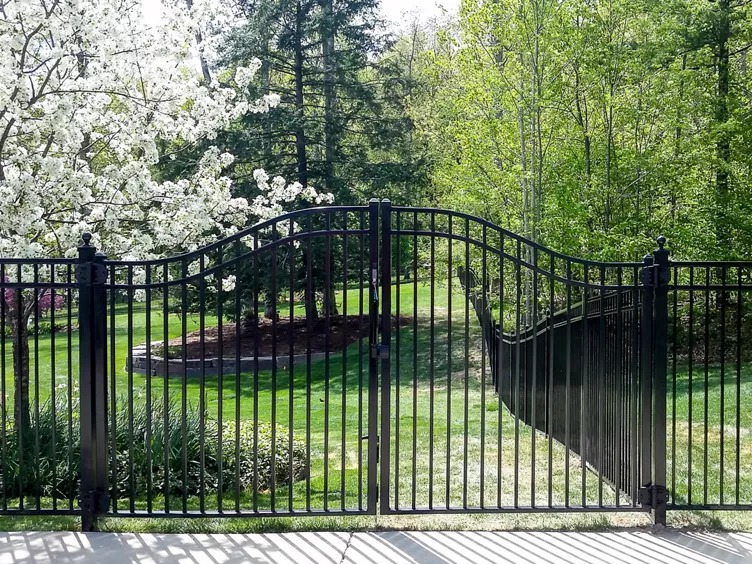
Ornamental pool enclosure and self-latching gate installed by RKC Wood Care Pros in Leawood, KS
Ornamental Pool Gate & Fence · Leawood
Aluminum pool enclosure with self-latching gate by RKC Wood Care Pros in Leawood, KS
Aluminum Pool Enclosure · Leawood
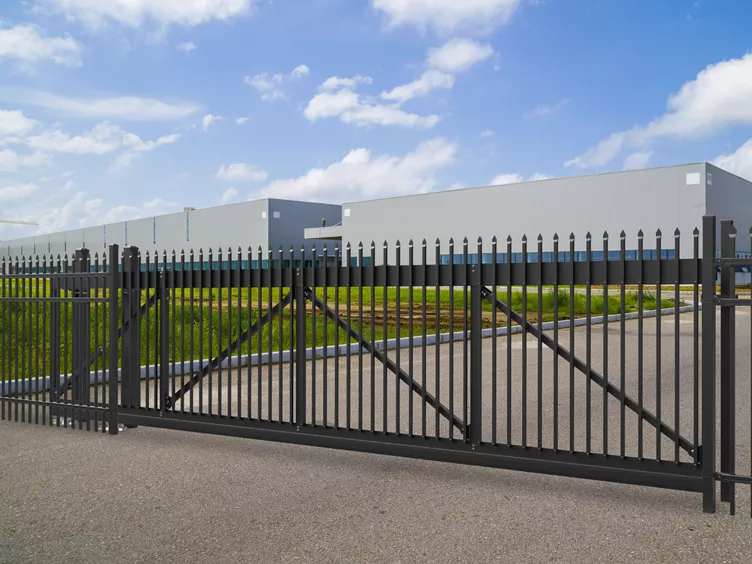
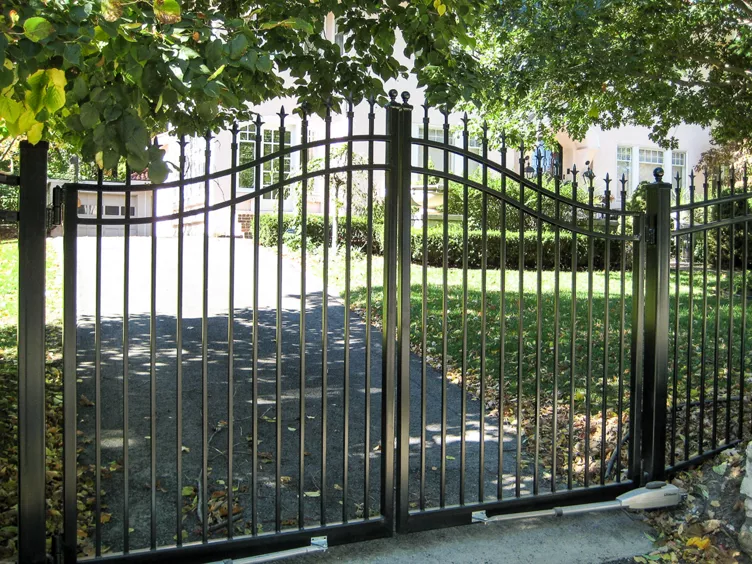
Ornamental iron spear-top estate double-drive gate by RKC Wood Care Pros in the Kansas City metro
Iron Estate Double-Drive · KC Metro

REVIEWS

What Kansas City Homeowners Say About RKC

4.9 ★ · 85 Google reviews

Every review is on our Google Business Profile — read them there, unedited.

Read all 85 reviews on Google

LEAWOOD GATE QUESTIONS

Gate Questions Leawood Homeowners Ask Most

A Leawood gate comes down to matching the finish, holding plumb through the limestone base, and the hardware and price that follow. Below are the questions Leawood homeowners actually ask during the estimate — grouped by topic, each answer specific to matching a premium line, the rock and pool conditions here, and how it all prices out. If your question isn't here, call (913) 286-1091 and ask.

Gate installation in Leawood, KS by RKC Wood Care Pros

Finish & Matching in Leawood

What gate width fits a Leawood driveway?
A single-car Leawood drive usually runs 10 to 14 feet from pillar to pillar, and one welded, braced leaf spans that without complaint. Cross 14 feet — common on the estate lots south of 119th — and the leaf grows into too long a lever for a lone hinge to hold plumb, so we go to a double-drive: a matched pair, roughly 7 to 10 feet each, closing on a center drop rod. Walk gates sit at 3.5 to 4 feet. On a Leawood estate, though, the number that matters alongside width is the finial and cap detail: the leaf has to answer the fence pillars, or the eye catches the mismatch before it catches the size.
Can you match a gate to a premium capped-cedar fence?
That's the standard here, not the exception. Where Leawood runs cedar it runs it capped, trimmed, and stained to a specific tone, so we fabricate the leaf to carry the exact cap and trim profile across the opening and stain it from the same batch as the run — not a close-enough finish that reads as an add-on. Done right, the gate looks like the spot where the fence happens to open, which in the metro's most exacting fence market is the entire point of the job.
Will a new gate match my existing black ornamental fence?
Yes, and on a run that's staying up we build to the fence rather than the other way around. We measure the standing line's picket spacing, rail height, and finial, then fabricate the leaf to it in heavy-gauge steel and powder-coat it to the existing color. Replacing an aging high-end ornamental system in sections is a real Leawood job, and the tell of a good one is that you can't find where the old line stops and the new gate starts.
Why do gates squeak or sag on otherwise good Leawood fences?
Almost always the post or the hardware, not the fence. A hinge post that was set shallow — or stopped short at the limestone shelf instead of reaching depth — heaves in the freeze-thaw and drops the leaf out of square, and an undersized or bargain hinge develops play that turns into a squeak and a drag. On a Leawood run that's otherwise flawless, that one moving part becomes the flaw everyone sees. We prevent it on the install side: a 36-inch rock-drilled footing, a welded frame, and hinges rated past the leaf and sealed against wear.

Leawood Conditions

Does the limestone under Leawood change how gate posts are set?
In parts of the city, yes. Leawood's manicured topsoil is usually amended, but it sits on a limestone base in some areas, and a post hole that hits rock will stop a shallow crew short of depth. We rock-drill through the shelf where it's there and still set the hinge post a full 36 inches into poured concrete, below the Kansas City frost line. Reaching the bottom is what keeps the gate from heaving out of plumb the first winter — which on a premium Leawood fence is a cosmetic problem as much as a structural one.
Do you build self-latching pool gates in Leawood?
Yes — pool-safety compliance for the high-end in-ground pools here is the single biggest gate driver in town, and a pool gate has to close and latch on its own, every time. We set a concealed self-closing hinge to the leaf's weight, mount the latch up top and out of a child's reach, and tune it so it catches on the first swing. On the black ornamental enclosures Leawood favors we match the picket spacing to the fence so the sightline stays open. The self-close gets re-checked on the complimentary 30-day return visit.
How do you build a wide estate entry that still latches true?
A wide entry on a south-Leawood acre lot is a double-drive problem: past 14 feet, one leaf is too long a lever for a single hinge to hold square, so we split it into two braced leaves that meet on a center drop rod. Both hinge posts go 36 inches down against the clay and limestone, both leaves carry a diagonal brace, and the caps and finials are matched to the fence pillars. Halving the span is what keeps a 16- or 18-foot opening latching clean instead of sagging toward the middle by year two.

Pricing & Hardware

Is a welded frame really worth the extra over a bolted one in Leawood?
For a fence built to be flawless, it's not optional — because the alternative shows up as the exact flaw people here call about. A bolted frame carries a bit of slack out of the shop, and a season or two of daily use grinds that slack into a gap that drops the leaf off square and sets off the squeak and drag. A welded frame has nothing to work loose. The premium runs roughly a fifth to a quarter over a bolted frame, and what it buys is never getting the year-five call to tear a sagging gate off an otherwise perfect run. In a market this exacting, that's the baseline, not an upgrade.
Why does a matched, capped, stained gate cost more than a stock gate?
The honest answer is labor and fabrication. A matched Leawood gate needs the exact cap and trim profile carried across the leaf, a stain pulled from the fence's own batch, and — on ornamental — picket spacing and finials cut to the standing run, all riding on a heavy-gauge welded frame. A stock gate skips every one of those steps and reads as an add-on the day it's hung. What the premium buys is a gate that disappears into the line, which on a fence this deliberate is the entire reason you're putting a new gate in it.
What's the warranty on the gate and its hardware?
Two pieces. The moving hardware — hinges, latches, drop rods, cane bolts — carries its manufacturer's coverage, which typically runs about ten years on ball-bearing pivots and five to ten on straps and latches. The gate itself, the part we fabricate and weld, is under our workmanship: if it racks, drops at the latch corner, or throws a weld in ordinary use, we come back and set it right at no cost. And because a new footing settles a hair in month one — enough to start a drag or a squeak on a fence built to be flawless — the complimentary 30-day return is standard on every Leawood gate, tuning out any drift before you'd ever notice it.

OTHER LEAWOOD FENCE SERVICES

More Fence Services Available in Leawood

Every service below stays in Leawood — dedicated pages with local pricing, material notes, and project photos specific to your city. If you're building the fence the gate matches, choosing between capped cedar and ornamental, or bringing an older Leawood line back to square, here's where to go next.

Ready when you are

Get a free estimate — we usually respond the same day.

Call (913) 286-1091